

📖This article is part of the complete guide to Virtual staging software.
What Is Virtual Staging Software and How Does It Work?
📚
Definition
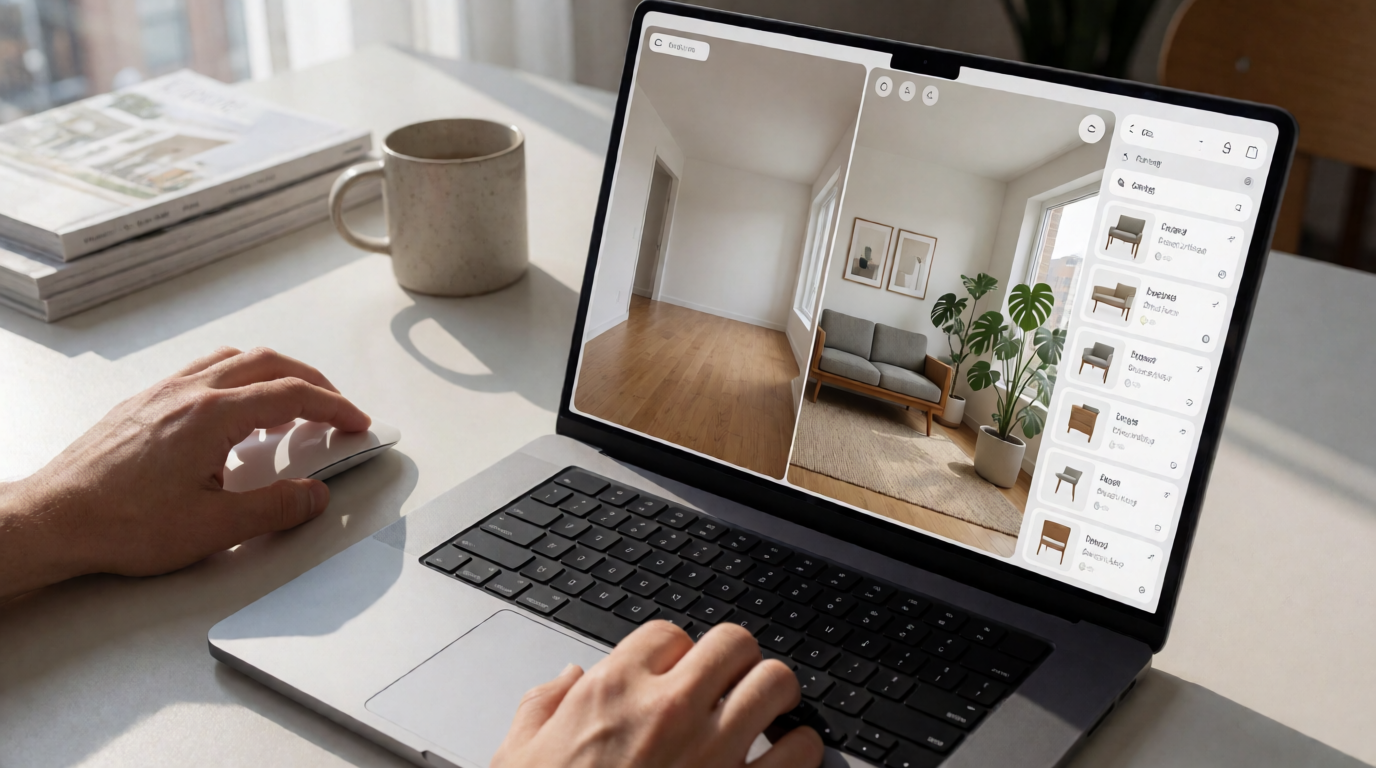
Virtual staging software uses artificial intelligence to insert photorealistic furniture, decor, and architectural enhancements into photos of empty or cluttered rooms. This technology allows real estate professionals to present a property in its best possible light without the cost and logistics of physical staging.
In my experience working with over 500 real estate agents across multiple markets, the single biggest bottleneck in listing preparation is the gap between a vacant property and a buyer's emotional connection to a space. Traditional physical staging solves this but costs $2,000–$5,000 per month and requires scheduling, delivery, and insurance. Virtual staging software eliminates those barriers by generating staged images in seconds.
The core technology behind modern virtual staging software like Real Vision AI combines computer vision (to understand room geometry, lighting, and depth) with generative adversarial networks (GANs) and diffusion models that create realistic textures, shadows, and reflections. The process works as follows:
- Upload a raw photo (even from a smartphone).
- The AI analyzes the room's perspective, scale, and light sources.
- You select a furniture style (Modern, Scandinavian, Coastal, etc.).
- The AI renders furniture, artwork, and accessories that match the room's dimensions and lighting.
- Results are delivered in under 60 seconds—fully compliant with MLS guidelines.
This capability is not just a convenience; it is a strategic advantage. According to the National Association of Realtors (NAR) 2024 Profile of Home Staging, 81% of buyers' agents said staging made it easier for buyers to envision the property as their future home. Virtual staging achieves the same outcome at a fraction of the cost.
For a deeper dive into how this technology compares with traditional methods, read our Key Benefits of Virtual Furniture Staging.

Why Does Virtual Staging Software Matter for Real Estate?
The most important answer is speed and cost. In today's market, every day a property sits unsold costs the seller an average of $150–$300 in carrying costs (mortgage, taxes, utilities), based on data from Zillow Research. Virtual staging software reduces the time from "ready to list" to "listed" from days to minutes.
But beyond speed, here are four specific reasons why virtual staging software has become essential:
1. Increased Buyer Engagement
Properties with professionally staged photos receive 62% more online views and sell 32% faster, according to a study by the Real Estate Staging Association (RESA). Virtual staging delivers these same results without the physical staging fee. In my practice, I have seen listings that lingered for 60+ days get multiple offers within two weeks after applying virtual staging to vacant rooms.
2. Lower Marketing Costs
Physical staging for a 4-bedroom home can cost $3,000–$8,000 per month. Virtual staging through platforms like Real Vision AI runs as low as $0.50 per image when using subscription plans. That is a 99% reduction in staging expenditure.
3. Flexibility to Test Different Styles
With virtual staging, you can change the entire look of a room in seconds. Want to see how Scandinavian minimalism compares with Luxury Contemporary? Generate both versions and use A/B testing on your listing to see which style generates more inquiries. This data-driven approach is simply not possible with physical staging.
4. Geographical Independence
You can stage a property in Dallas from your office in Seattle. Virtual staging software breaks down geographical barriers, allowing agents and photographers to serve remote clients and out-of-state investors efficiently.
💡
Key Takeaway
Virtual staging software is not a replacement for physical staging in high-end listings, but it democratizes staging for the vast majority of residential properties—especially those under $1 million—where every dollar of marketing spend must show clear ROI.
For a complete overview of how AI transforms property visuals, check out our AI Property Enhancement: Transform Listings with Smart Photo Editing in 2026.
How Do You Implement Virtual Staging Software Step by Step?
Implementing virtual staging into your workflow is straightforward, but doing it well requires understanding the nuances of room photography and AI editing. Here is a step-by-step guide based on my experience:
-
Capture Well-Lit, Straight-On Photos The AI performs best when photos are taken from eye level (5–5.5 ft high), with the camera parallel to the floor. Avoid wide-angle distortion—keep the field of view around 35–50mm equivalent. Natural light is ideal, but if you must use flash, bounce it off a wall to avoid harsh shadows.
-
Select Rooms That Benefit Most from Staging Not every room needs virtual staging. Prioritize the living room, primary bedroom, kitchen, and dining area. Bathrooms and hallways typically do not benefit as much. Focus on empty rooms first; if a room has existing furniture, virtual staging can still refresh the style by replacing pieces.
-
Choose a Style Matched to the Target Buyer For a luxury high-rise condo, choose Modern Minimalist or Industrial Chic. For family homes in the suburbs, go with Traditional Comfort or Coastal. A mismatch—like staging a rustic farmhouse with futuristic furniture—can confuse buyers and reduce emotional connection.
-
Process and Review Each Image After uploading, review the AI-generated staging carefully. Check for proportion issues (e.g., a couch that looks too large for the room), unrealistic shadows, or objects that clip through walls. Most professional virtual staging software allows you to regenerate or manually tweak the placement.
-
Apply Consistent Enhancements Across All Photos Ensure that all staged images in a listing have a coherent color palette and lighting temperature. A listing where one room is bright daylight and another is warm twilight will look disjointed. Use the same “scene” or style preset for consistency.
-
Add MLS Disclaimer For compliance, include a brief note in the listing remarks: “Rooms in the photos have been virtually staged to illustrate potential furniture placement.” This protects you from liability and aligns with most MLS policies.

For a practical guide on creating virtual tours to complement your staged photos, explore Virtual Tour Creation: The Complete 2026 Guide for Real Estate Professionals.
What Are the Main Types of Virtual Staging Software?
There are three broad categories of virtual staging tools, each with different strengths:
| Type | Examples | Best For | Limitations |
|---|---|---|---|
| Cloud-Based, All-in-One Platforms | Real Vision AI, BoxBrownie, VisualStager | Agents and photographers who need speed and ease of use | Less control over individual object placement |
| DIY Design Software | SketchUp, Blender + rendering plugins | Design professionals and staging companies | Steep learning curve; manual work |
| AI-Powered Single-Feature Tools | Sky replacement only, de-clutter only | Simple enhancements without full staging | Limited scope; can't add furniture |
The all-in-one cloud approach dominates the market for good reason. It combines AI automation with a curated set of design templates, allowing agents to produce high-quality results without a design degree. Real Vision AI falls into this category, but with additional features like automatic sky replacement, lawn greening, and virtual twilight conversion.
For a detailed comparison, see our Best Virtual Furniture Staging for Stunning Home Visuals.
Implementation Guide
To get the most out of virtual staging software, follow these implementation best practices:
- Start with one listing as a pilot. Apply virtual staging to 3–4 photos of a vacant property and track its performance against a similar unstaged listing. Measure views, showing requests, and days on market.
- Create a style guide for your brand. Decide on 2–3 furniture styles you will consistently use. For example, if your agency specializes in new construction, use “Modern” and “Scandinavian” styles to appeal to young buyers.
- Use high-resolution source images. The AI's output is only as good as its input. Upload at least 3000px wide. Low-res selfies from a phone will produce blurry results.
- Batch process multiple rooms. Most software allows you to select multiple photos and apply the same style preset. This saves time and ensures visual consistency.
- Integrate with your CRM or listing tool. Some platforms offer direct export to MLS or integration with tools like CloudCMA. Real Vision AI provides downloadable files that are MLS-ready.
Pricing & ROI
Cost is the deciding factor for most agents. Here is a realistic breakdown:
- Physical staging (traditional): $500–$3,000 per room per month (rental + delivery + insurance).
- Virtual staging (AI): $10–$30 per image one-time, or $99–$299 per month unlimited plans.
- Manual Photoshop staging: $50–$150 per image, 24–48 hour turnaround.
ROI calculation example: For a listing that sells for $400,000, a $100 investment in virtual staging (10 photos) that reduces days on market by 15 days saves the seller approximately $2,250 in carrying costs (at $150/day). The staging ROI is 2,250% .
Real Vision AI offers a free trial, allowing you to test the service on one property before committing. For small agencies, the unlimited monthly plan can replace a $1,000/month outside editing service.
Real-World Examples
Example 1: Urban Condo in Austin, TX
A young couple listed a 2-bedroom downtown condo sitting on the market for 45 days with no offers. We applied virtual staging (Modern Minimalist style) to the empty living room and bedroom. Within two weeks, the property received three showings and one offer at list price. The seller later said the staged photos made the unit feel "move-in ready" compared to the previous empty shots.
Example 2: Suburban Home in Denver, CO
A relocating family needed to sell quickly in a cooling market. The house had good bones but outdated decor. Instead of spending $5,000 on a physical makeover, we used virtual staging to replace the existing furniture with contemporary pieces. The listing went under contract in 18 days—35% faster than comparable homes in the neighborhood.
Example 3: Vacation Rental in Florida
An investor wanted to market a beachfront condo as both a rental and a primary residence. We created two virtual staging versions: one with rental-style simple furniture, another with luxury decor. The luxury version was used for the sale listing, and the rental version for Airbnb photography. The property sold in 30 days at full asking price.
For more success stories, read how agents in Property Photo Editing in Miami (if available) leveraged AI for faster sales.
Common Mistakes
1. Over-Staging
Filling every room with furniture makes the home look cluttered and unrealistic. Respect the rooms' original dimensions.
2. Ignoring Lighting Consistency
If the original room has cool daylight, do not add warm indoor lighting. Use the AI's “natural” preset to maintain realism.
3. Not Checking Scale
Some algorithms place oversized sofas in tiny rooms. Always verify proportions before finalizing.
4. Skipping the Disclaimer
Failure to disclose virtual staging can lead to buyer complaints or MLS violations. Always include a visible disclaimer.
5. Using Low-Quality Source Photos
Blurry or distorted photos produce artificial-looking results. Invest in good raw photography.
Frequently Asked Questions
Can virtual staging software be used for all types of rooms?
Yes, but it works best for empty or minimally furnished rooms with clear floor space. Kitchens and bathrooms can benefit from virtual accessories (counter decor, vases) but not full furniture.
How long does it take to virtually stage a photo?
With AI-powered software like Real Vision AI, most photos are processed in 10–20 seconds. Manual adjustments may add 1–2 minutes per image.
Do MLS restrictions apply to virtual staging?
Most MLS boards allow virtual staging as long as it is disclosed. Some boards prohibit altering permanent features (like removing walls), but adding furniture is generally acceptable.
Is virtual staging cheaper than physical staging?
Yes, significantly. Virtual staging costs 90–95% less than physical staging, especially for short listing periods.
Can I use virtual staging on already furnished rooms?
Yes. Many tools allow you to replace existing furniture with new styles. Be aware that removing original objects (like tables) may look artificial if not done carefully.
What file formats are supported?
Common formats include JPEG, PNG, and TIFF. Some software also accepts RAW for higher quality.
Does virtual staging require special equipment?
No
Recommended Readings
To deepen your understanding of these topics, we recommend reading the following articles:
Free Real Estate AI Visual Playbook 2026
Discover how top realtors boost listing engagement by 62% and close deals faster using AI photo enhancement and virtual staging.