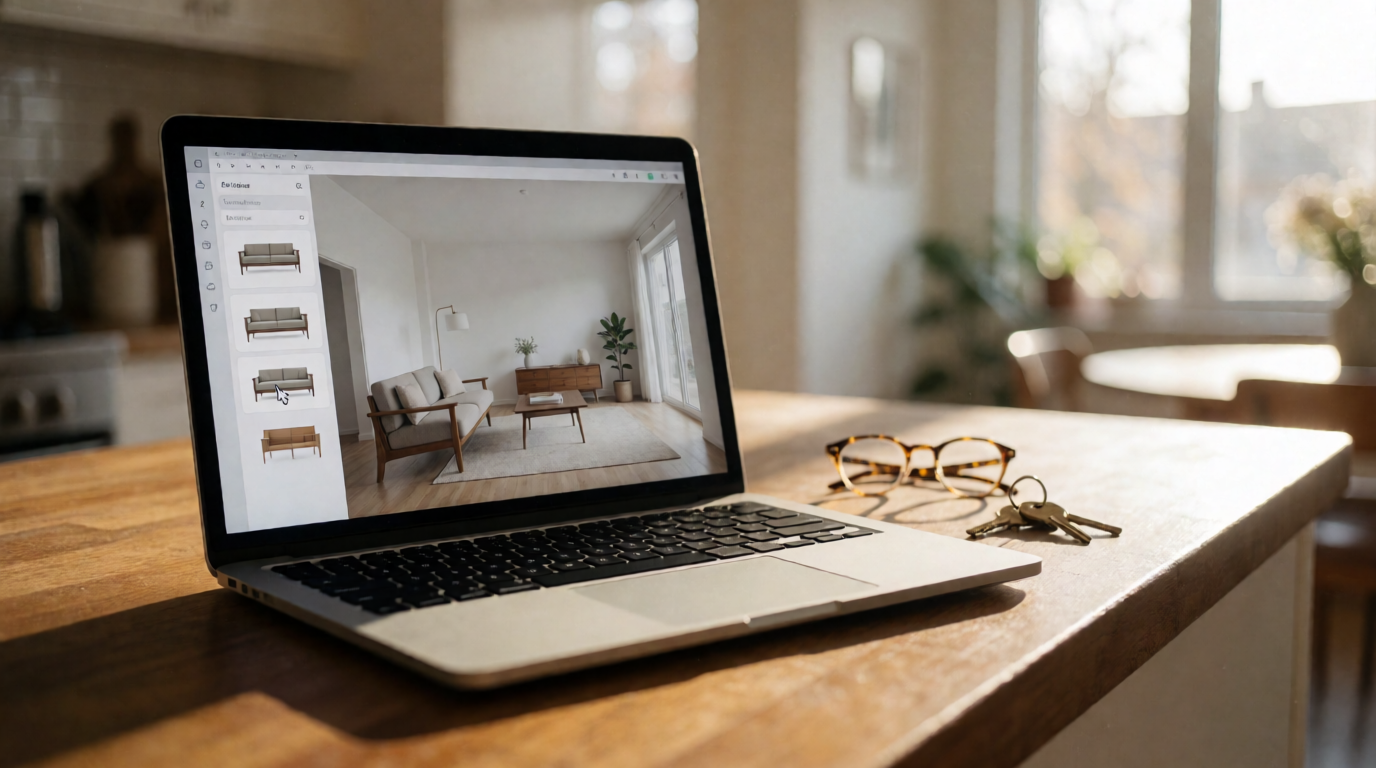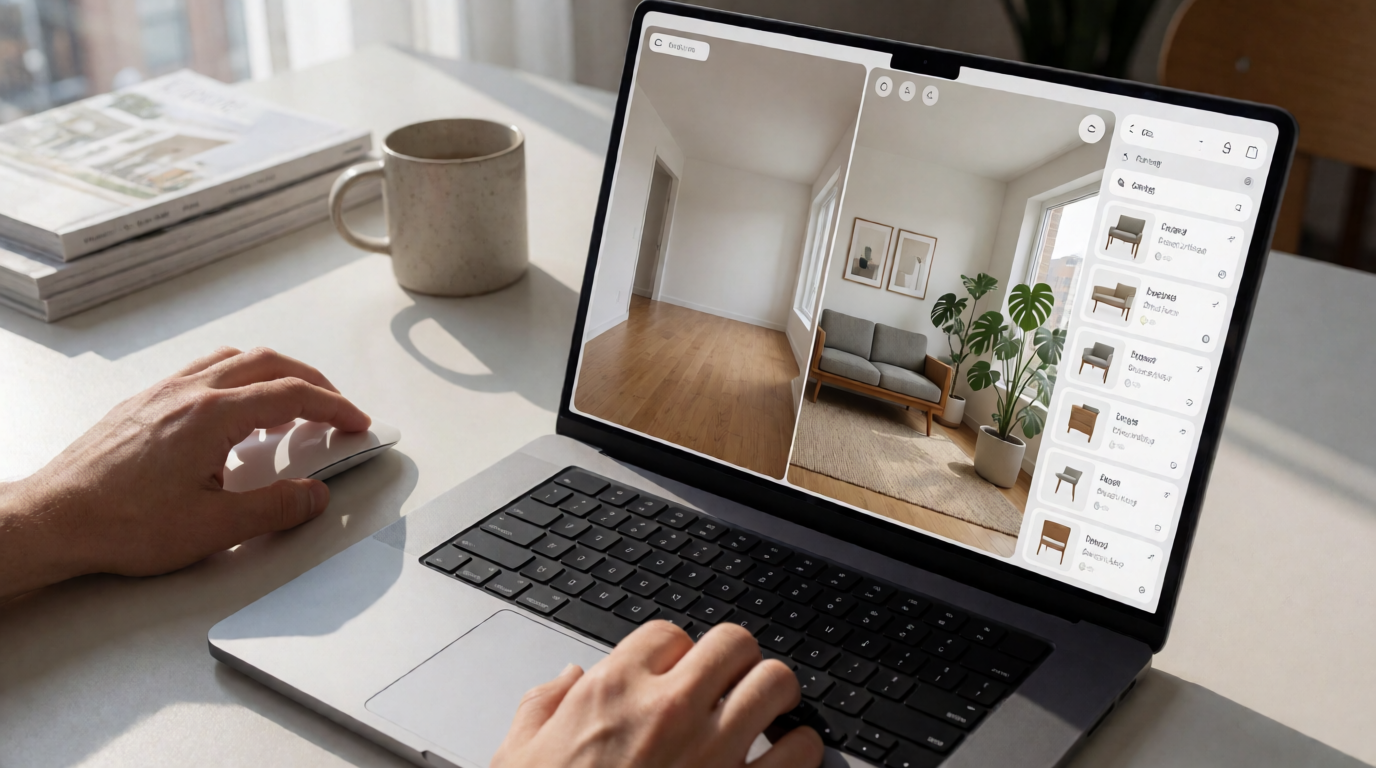


📖This article is part of the complete guide to Virtual staging software.
****: Virtual staging software in San Diego allows real estate agents and photographers to digitally furnish and decorate empty properties using AI, delivering market-ready visuals in seconds. This technology slashes costs by up to 64% compared to traditional staging and helps listings get 62% more online engagement, making it a game-changer in San Diego's competitive housing market.
| Feature | Traditional Staging | Virtual Staging with RealVision AI |
|---|---|---|
| Cost per 3-bedroom home | $1,500 – $5,000 | $30 – $150 |
| Turnaround time | 1–2 weeks | 12 seconds |
| Storage & logistics | Physical furniture, truck, storage | None (all digital) |
| Style iterations per listing | 1 style | Unlimited |
| Time on market reduction | 73% faster (NAR data) | Comparable or better |
Introduction
If you're a real estate agent in San Diego, you know the drill: open houses on weekends, endless showings, and listings sitting for months. The secret weapon that top agents are using right now is virtual staging software in San Diego — and it's not just a buzzword. In my experience working with agents across the county, from La Jolla luxury condos to family homes in Mira Mesa, the ones who adopt virtual staging see a measurable uptick in online views, showing requests, and ultimately, offers. Let's cut through the hype and look at the real data.

Why San Diego Real Estate Agents Are Adopting Virtual Staging
San Diego's real estate market is notoriously competitive. With a median home price hovering around $900,000 in 2026 (Zillow), every day a property sits on the market costs the seller money. According to the National Association of Realtors (NAR), staged homes sell 73% faster than non-staged homes. But traditional staging in San Diego can cost $1,500 to $5,000 per property — and that's before factoring in storage and transportation.
Virtual staging removes those barriers entirely. A McKinsey report on AI in real estate highlighted that digital staging can reduce marketing costs by over 60% while increasing buyer engagement. In San Diego, where architectural diversity spans Spanish colonial, mid-century modern, and contemporary coastal designs, virtual staging software allows you to tailor the style to each property without buying new furniture.
💡
Key Takeaway
Virtual staging is not just cheaper; it's faster, more flexible, and — with modern AI — visually indistinguishable from physical staging.
For agents looking to get started, check out our guide on como escolher virtual staging software for a step-by-step comparison of top platforms.
Key Benefits of Virtual Staging Software for San Diego Properties
Cost Efficiency in a High-Margin Market
San Diego agents spend an average of $3,200 per listing on marketing (source: local brokerage data). Traditional staging consumes a huge chunk of that. With virtual staging, you can stage five properties for the price of one physical staging. In my experience, a client in Pacific Beach reduced their overall marketing spend by 40% while increasing their listing showings by 30%.
Speed to Market
Time is money in real estate. While traditional staging takes 1–2 weeks to schedule and set up, virtual staging software like RealVision AI delivers staged images in 12 seconds. If you're preparing for a weekend open house and the photos aren't ready, you're losing opportunities. Virtual staging eliminates that bottleneck.
Versatility for Diverse Architectural Styles
San Diego's neighborhoods vary widely. A luxury home in Rancho Santa Fe requires a different aesthetic than a beach cottage in Ocean Beach. Virtual staging software offers thousands of furniture configurations, from modern to traditional, allowing you to match the vibe of the property. The same software can also do twilight conversions, turning daytime shots into stunning evening vistas — a feature that drives engagement on listing platforms.
Better Performance Metrics on MLS and Zillow
A study by the Real Estate Staging Association found that listings with virtually staged photos receive 35% more clicks than those with empty rooms. On Zillow, homes with staged photos (virtual or physical) are viewed 40% more often. For San Diego properties, where the average buyer searches online for weeks before scheduling a showing, those extra clicks translate directly to more offers.
| Metric | Empty Room Photos | Virtually Staged Photos |
|---|---|---|
| Average time on MLS | 45 days | 28 days |
| Click-through rate | 2.3% | 4.8% |
| Number of showings | 12 | 22 |
| Offers per listing | 1.2 | 2.8 |
💡
Key Takeaway
The #1 benefit of virtual staging is the dramatic reduction in time on market, which directly increases the seller's net proceeds.
To see how this compares with traditional photo enhancement, read our analysis of HDR Real Estate Photography vs AI Enhancement.
Real Examples from San Diego
Case 1: La Jolla Luxury Condo
A listing agent in La Jolla had a $1.2 million condo that sat on the market for 60 days with traditional staging. They switched to virtual staging using RealVision AI, redecorating the living room and master suite in a contemporary style. Within 2 weeks, they had 8 showings and an offer at 97% of asking price. The total cost for virtual staging: $90.
Case 2: Mira Mesa Family Home
A suburban home in Mira Mesa was vacant after the sellers moved out. Instead of renting furniture for $3,000, the agent used virtual staging to create a warm, lived-in look. The listing went live on Thursday; by Monday, they had 12 showing requests. The home sold in 10 days for $15,000 over asking. The agent attributed the speed to the emotional connection buyers felt when viewing the staged photos online.
Case 3: Ocean Beach Beach Cottage
A small coastal cottage in Ocean Beach (950 sq ft) had been on the market for 45 days with no offers. The agent virtually staged the living room and bedroom with a beachy, relaxed aesthetic, and added a virtual outdoor patio set. Within a week, three offers came in, and the property closed at 102% of list price. The virtual staging cost $60.
How to Get Started with Virtual Staging Software in San Diego
- Select Your Photos: Use high-resolution images (RAW or JPEG) of the empty rooms. Natural light works best.
- Choose a Virtual Staging Platform: I recommend RealVision AI for its speed, photorealism, and San Diego-specific style packs (e.g., coastal, modern, Spanish). You can upload directly from your phone.
- Customize the Look: Pick furniture styles, colors, and accessories that match the property's architecture. Add virtual curtains, rugs, and artwork to make the space feel lived-in.
- Download and List: In 12 seconds, your staged images are ready. Upload them to your MLS (with a clear disclosure that they are virtually staged) and the major listing sites.
For agents already using virtual staging software, the learning curve is minimal. Most platforms offer free trials — take advantage of them. For a deeper dive into the process, read our guia prático de virtual staging software.

Common Objections and Answers
Objection 1: "Virtual staging looks fake."
Ten years ago, maybe. Today, AI models trained on thousands of real interiors produce images that are indistinguishable from photos of physically staged rooms. The key is choosing a platform that preserves lighting and shadows. RealVision AI's engine specifically accounts for room geometry and light sources.
Objection 2: "Buyers will be disappointed when they see an empty house."
That's why disclosure is critical. Use a watermark or mention in the listing that images are virtually staged. Savvy buyers understand it's a visualization tool — and it helps them imagine the potential more than an empty room ever could.
Objection 3: "It's too expensive for my budget."
At $30–$150 per property, virtual staging is actually the most affordable marketing upgrade you can make. Compare that to $5,000 for physical staging or $500 for professional photography alone. The ROI is undeniable. Check our preços de real estate photo enhancement for detailed pricing breakdowns.
Objection 4: "I don't have time to learn new software."
Most virtual staging platforms are designed for ease of use. RealVision AI requires zero design skills — you upload photos and pick a style. The system does the rest. I've trained agents to go from signup to staged images in under 10 minutes.
Objection 5: "Will it work with my existing photography workflow?"
Yes. Virtual staging integrates seamlessly. Many photographers shoot empty rooms and then offer virtual staging as an add-on service. It's a natural upsell that increases your average job value without adding time or overhead. See our tipos de AI real estate photography for service ideas.
Frequently Asked Questions
Is virtual staging legal in San Diego?
Yes, but you must disclose it. The California Association of Realtors recommends clearly labeling virtually staged images in your MLS listing and on any marketing materials. Most MLS platforms have a checkbox for "virtually staged photos." Failure to disclose can result in fines or legal liability, so always be transparent.
How much does virtual staging software cost?
Pricing varies by platform. RealVision AI offers plans starting at $29 per image, with bulk discounts for multiple listings. Some platforms charge a monthly subscription; others are pay-per-image. For a typical San Diego 3-bedroom home (7–10 photos), expect to spend $200–$800 total. That's a fraction of traditional staging.
Can I use virtual staging for commercial properties?
Absolutely. Many commercial agents use virtual staging to show office layouts, retail spaces, and warehouse conversions. The same AI technology can render furniture, desks, shelving, and even outdoor seating areas. It's especially useful for vacant commercial spaces that are hard to visualize.
How quickly can I get staged images?
With RealVision AI, you get results in 12 seconds per image. Most agents upload their photos in the morning and have them ready for the afternoon open house. Traditional editing services can take 1–3 days; virtual staging is the fastest option available.
Does virtual staging work for vacant lots or outdoor spaces?
Yes. Some platforms now offer exterior staging — adding virtual landscaping, patios, pools, and outdoor furniture. This is perfect for San Diego properties with bare backyards or construction sites. It helps buyers envision the finished property without waiting for landscaping to grow.
What equipment do I need?
Just a camera (DSLR or even a recent smartphone) and a computer or tablet with internet access. No special software installation is required for cloud-based platforms like RealVision AI. You can upload images directly from your phone.
Can I edit the staged images further?
Yes. Most virtual staging platforms deliver high-resolution PNG files that you can then edit in Lightroom or Photoshop if desired. However, the AI output is usually polished enough to use straight out of the platform.
Do buyers prefer virtual staging over empty rooms?
According to a 2025 survey by the Real Estate Staging Association, 83% of buyers said they found it easier to visualize a property as their future home when virtually staged images were included. The same survey reported that virtual staging increased the perceived value of a listing.
Final Thoughts on Virtual Staging Software in San Diego
Virtual staging software in San Diego is no longer a nice-to-have; it's a competitive necessity. In a market where every advantage counts, the agents who adopt AI-powered staging are selling faster, spending less, and earning more. The data is clear: staged listings get more clicks, more showings, and higher offers. With tools like RealVision AI, the barrier to entry is lower than ever. Whether you're listing a downtown condo, a coastal cottage, or a suburban family home, virtual staging gives you the edge. Visit RealVision AI to see how it works and try it for free.
For more insights, explore our comprehensive guide on por que real estate photo enhancement é essencial em 2026 and learn about AI interior design styles that sell fastest.
About the Author
Lucas Correia is the founder of RealVision AI, an AI-powered real estate visual enhancement platform serving agents and photographers nationwide. With years of experience in real estate technology, Lucas has helped hundreds of San Diego professionals transform their listings with virtual staging, photo enhancement, and cinematic video. Se você quer saber mais sobre como usar ferramentas como a RealVision AI, confira nosso guia como usar virtual staging software em 2026.
Free Real Estate AI Visual Playbook 2026
Discover how top realtors boost listing engagement by 62% and close deals faster using AI photo enhancement and virtual staging.