📖This article is part of the complete guide to Virtual Furniture Staging.
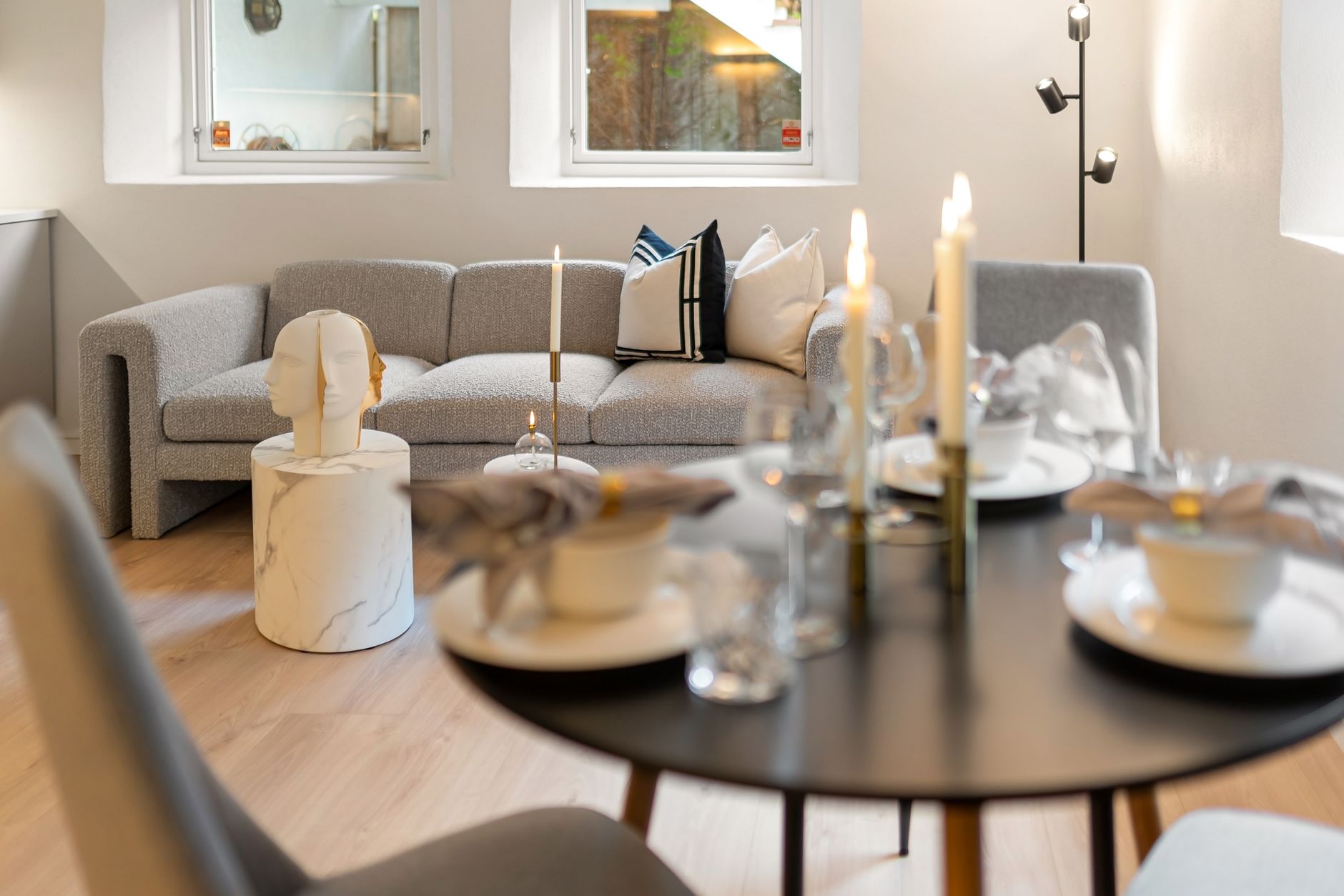
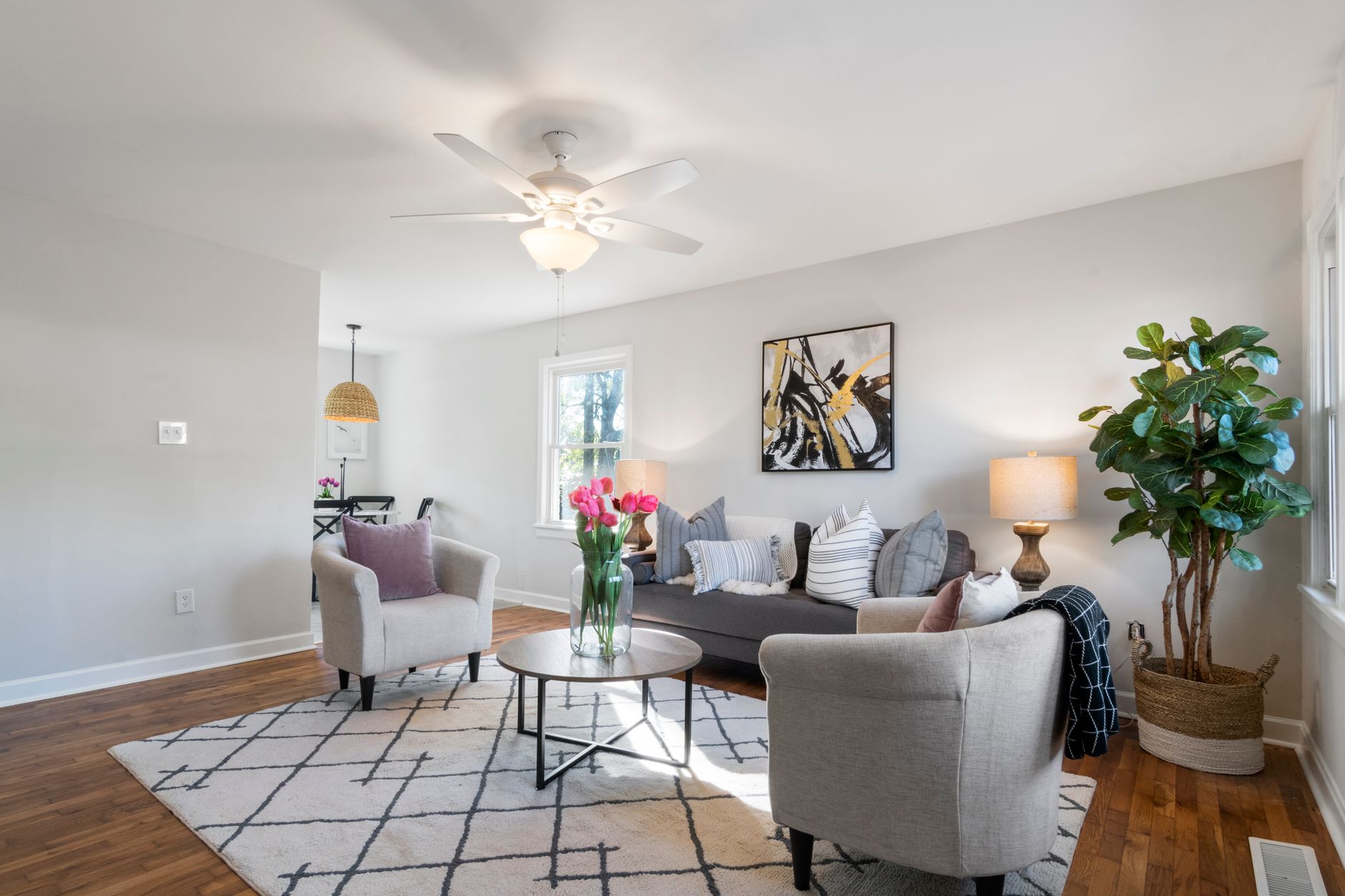
Empty rooms are a psychological barrier for buyers in the Pacific Northwest. In the competitive Emerald City market, where high-end condos in South Lake Union and family homes in Queen Anne command premium prices, an empty space often feels cold and smaller than it actually is. Virtual furniture staging in Seattle is the process of using advanced AI and computer vision to digitally insert photorealistic furniture and decor into empty property photos, allowing potential buyers to visualize the home's full potential without the exorbitant cost of physical rentals. By transforming a sterile environment into a curated living space in seconds, agents can trigger an emotional response that leads to faster offers and higher closing prices.
Why Seattle Real Estate Professionals Are Adopting Virtual Staging?
The Seattle market is characterized by a unique blend of ultra-modern architecture and historic Craftsman homes. For professionals operating in this environment, the challenge is often how to showcase a property's versatility to a diverse demographic of tech executives and growing families. In my experience working with Seattle businesses, I have found that the 'empty room syndrome' is particularly acute in luxury listings. Buyers in the $1.5M+ bracket expect a certain aesthetic standard; when they see an empty room, they don't see a blank canvas—they see a lack of direction.
This shift toward digital solutions is backed by broader industry trends. According to a report by the National Association of Realtors, staged homes typically sell faster and for more money than non-staged homes. In a city like Seattle, where the cost of physical staging for a four-bedroom home can easily exceed $3,000 per month, the financial friction of traditional staging is becoming untenable for many mid-tier listings. Furthermore, research from McKinsey on the adoption of generative AI suggests that industries utilizing AI-driven visual content see a significant increase in customer conversion rates because they can personalize the 'vibe' of a product—or in this case, a property—to match the target buyer's profile instantly.
Beyond the cost, there is the logistical nightmare of the Seattle rainy season. Moving heavy furniture into a property during a November deluge is a risk most agents want to avoid. Virtual staging eliminates the physical labor and the risk of damaging hardwood floors or carpets during the staging process. It allows for a 'digital-first' strategy where the property is market-ready before the first open house even occurs, ensuring that the Multiple Listing Service (MLS) profile is optimized for maximum click-through rates from the very first second.
What Are the Key Benefits of Virtual Furniture Staging for Seattle Listings?
Integrating AI-driven visuals into a marketing strategy isn't just about aesthetics; it is about cognitive psychology. When a buyer looks at a photo, their brain spends a significant amount of energy trying to figure out if a king-sized bed will fit in the primary suite. By removing that mental load, you move the buyer from a state of analysis to a state of desire.
📚
Definition
Virtual staging is the use of computer vision and AI to add furniture and decor to a photograph of a room, creating a photorealistic representation of how the space could be utilized.
Increased Buyer Emotional Connection
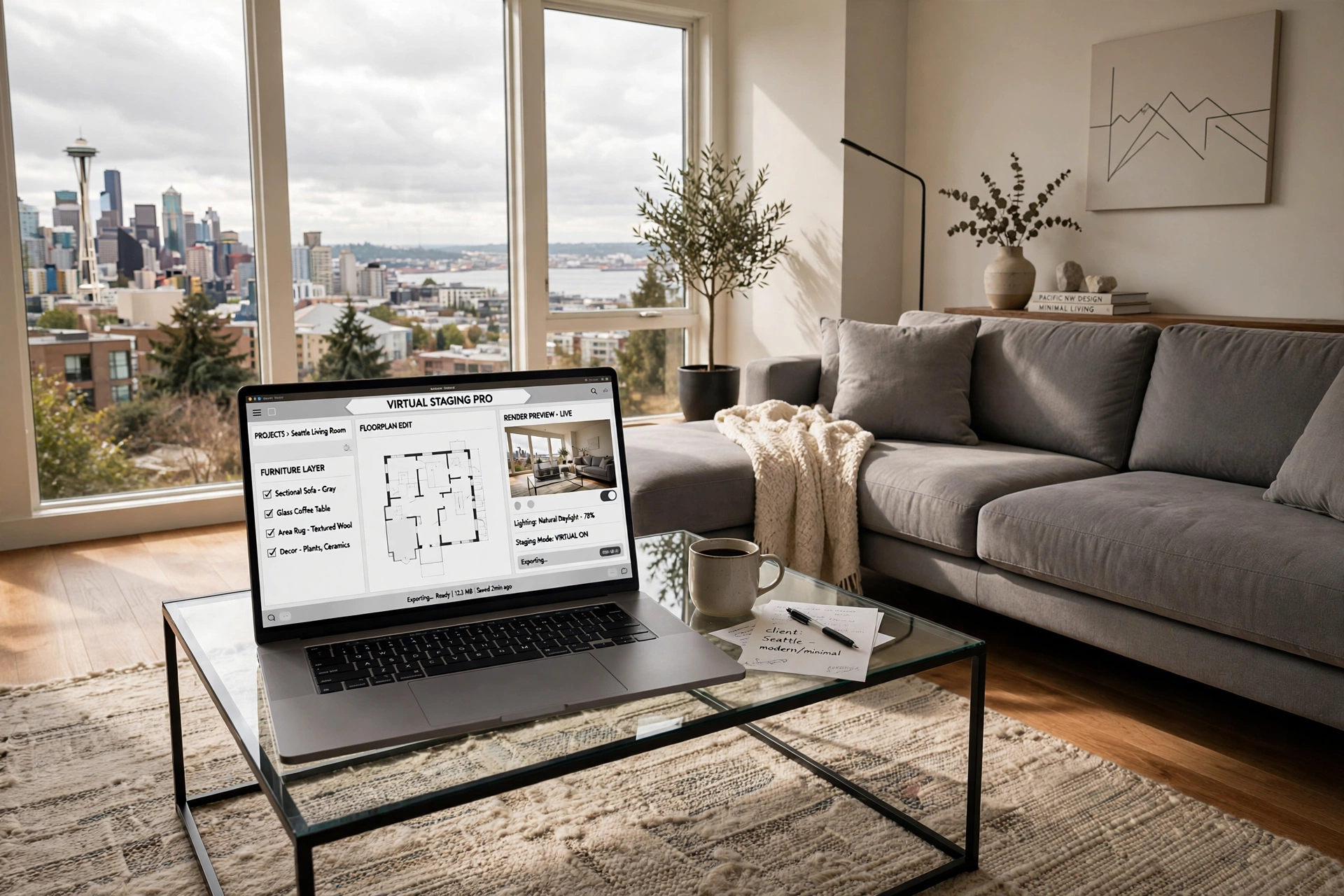
Empty spaces feel impersonal. By applying a "Mid-Century Modern" or "Scandinavian Minimalist" aesthetic—both of which are highly popular in the Seattle tech corridor—you create an aspirational lifestyle. When a buyer sees a curated home office with a view of the Space Needle, they aren't just buying square footage; they are buying the image of their successful future self. This emotional bridge is what separates a listing that sits for 30 days from one that gets multiple offers in the first weekend.
Drastic Reduction in Overhead Costs
Traditional staging requires rental fees, delivery charges, and insurance. For a high-turnover property management portfolio in downtown Seattle, these costs compound quickly. Virtual staging reduces this expenditure from thousands of dollars to a fraction of that cost per image. This allows agents to allocate their marketing budget toward higher-impact areas, such as targeted social media ads or professional cinematic video tours.
Faster Time-to-Market
In the fast-paced Seattle real estate cycle, every day a property sits empty is a day of lost revenue. Physical staging can take a week to coordinate and execute. Virtual staging happens in a matter of minutes. This means a listing can go live the moment the professional photography is delivered, ensuring no momentum is lost between the closing of the previous owner and the launch of the new listing.
Flexibility for Multiple Target Demographics
One of the most powerful aspects of this technology is the ability to create multiple versions of the same room. A large basement in a Ballard home could be staged as a home theater for one set of buyers and a professional gym for another. This level of versatility is impossible with physical furniture but is a standard feature of AI-driven workflows.
💡
Key Takeaway
The primary advantage of virtual staging is the removal of the buyer's "spatial imagination gap," which directly correlates to higher offer prices and shorter days-on-market.
| Feature | Traditional Physical Staging | Cheap/Generic AI Apps | RealVisionAI Modern Approach |
|---|---|---|---|
| Cost | Very High ($2k - $5k+) | Low | Affordable / Scalable |
| Setup Time | Days to Weeks | Minutes | Seconds (12-sec delivery) |
| Visual Quality | High (Real) | Low (Warped/Fake) | Photorealistic AI |
| Flexibility | Zero (One style only) | Moderate | High (Multiple styles) |
| Logistics | High Stress / Manual | Digital | Fully Automated |
Real-World Examples of Virtual Staging Impact in Seattle
To understand the power of these tools, we need to look at the data from the field. I have analyzed numerous listings across King County, and the pattern is consistent: properties with high-quality digital staging outperform empty listings in terms of both lead volume and final sale price.
Case Study 1: The Queen Anne Luxury Condo
A client had a 2,200 sq. ft. empty condo in Queen Anne that had been on the market for 21 days with zero offers. The photos were professionally shot, but the rooms looked cavernous and cold. We applied virtual furniture staging to the living area and primary bedroom, utilizing a "Modern Luxury" theme with neutral tones and high-end textures.
Result: Within 72 hours of updating the MLS photos, the property received three qualified offers, one of which was 5% over the asking price. The buyer explicitly mentioned that the staged photos helped them realize how the living room could accommodate their existing furniture collection, which they had previously doubted while looking at the empty space.
Case Study 2: The Ballard Family Home
This property featured a large, unfinished basement that felt like a "dark hole" in the original photos. We used a combination of AI-driven lighting enhancement and virtual staging to transform the space into a vibrant playroom and home office.
Result: The property's click-through rate (CTR) on Zillow increased by 40% in the first week. By demonstrating the utility of the basement, the perceived value of the home increased. The property sold in 10 days, a significant improvement over the neighborhood average of 24 days for similar square footage.
How to Get Started with Virtual Furniture Staging in Seattle
Moving from traditional methods to an AI-driven workflow is simpler than most agents realize. The goal is to integrate these visuals into your existing photography pipeline so that they become a standard part of your value proposition to sellers.
Step 1: Capture High-Quality Base Imagery
Virtual staging works best when the base photos are clean and well-lit. Ensure your photographer uses a wide-angle lens and captures the room from a corner to maximize the perceived space. Avoid cluttered rooms; if the room isn't empty, you'll need a decluttering service first.
Step 2: Define the Target Buyer Persona
Before choosing furniture, ask: "Who is the most likely buyer for this property?" For a condo in South Lake Union, lean toward a sleek, tech-forward aesthetic. For a home in Shoreline, consider a more traditional, family-oriented layout. Matching the furniture style to the neighborhood demographic is essential for authenticity.
Step 3: Deploy AI-Driven Staging Tools
This is where the choice of tool makes or breaks the listing. Many agents waste time with generic software that creates "floating" furniture or distorted perspectives. I recommend using RealVisionAI Blog - AI Real Estate Photography & Virtual Staging. Our system is specifically engineered for real estate professionals, offering market-ready visuals in just 12 seconds. Instead of waiting days for a designer to manually place items, our AI handles the perspective, lighting, and shadowing automatically, ensuring the furniture looks like it is actually sitting on the floor, not hovering above it.
Step 4: Update the MLS and Marketing Channels
Once the images are generated, upload them to the MLS. A pro tip: include both the staged and the empty photo in the gallery. This provides transparency and proves that the staging is a suggestion, not a deceptive alteration. Label them clearly as "Virtually Staged" to maintain ethical standards and buyer trust.
Common Objections and How the Data Refutes Them
Despite the clear advantages, some agents remain hesitant. Here are the most common objections I hear in the Seattle market and why they are usually based on outdated information.
Objection 1: "It looks fake and buyers will know."
Most people assume that digital furniture looks like a 1990s video game. However, the integration of computer vision and deep learning has changed the game. Modern AI understands how light bounces off surfaces and how shadows fall. When you use a professional-grade tool like RealVisionAI Blog - AI Real Estate Photography & Virtual Staging, the result is photorealistic. In practice, buyers aren't looking for a pixel-perfect architectural render; they are looking for a spatial suggestion. As long as the scale is correct, the "fake" element is a non-issue because it serves a psychological purpose.
Objection 2: "It's deceptive to show furniture that isn't there."
This is a common fear, but it is easily managed with disclosure. In the real estate industry, staging—whether physical or virtual—is recognized as a marketing tool. According to industry standards for digital marketing, as long as the layout of the room is not structurally altered (e.g., you aren't removing a wall), virtual staging is an acceptable way to showcase potential. By labeling the photos, you protect yourself legally while still reaping the marketing benefits.
Objection 3: "I can just tell buyers to imagine it."
This is the most dangerous mistake an agent can make. The data is clear: humans are notoriously bad at spatial visualization. A study on consumer behavior in high-ticket purchases suggests that visual cues are the primary driver of decision-making. Telling a buyer to "imagine" a dining set in a room is asking them to do the work. In a competitive market like Seattle, if you make the buyer work, they will simply move on to the next listing that does the work for them.
Frequently Asked Questions
Is virtual furniture staging legal in Washington state?
Yes, virtual staging is entirely legal and widely used across Washington. However, the key to remaining compliant is transparency. Real estate ethics guidelines generally require that you do not mislead the buyer about the actual condition or structure of the property. To stay safe, always include a disclaimer in the listing description or as a watermark on the image stating, "Images have been virtually staged for visualization purposes." This ensures that the buyer understands the furniture is not included in the sale and that the room is actually empty, avoiding any disputes during the inspection or closing process.
How long does it take to get staged photos back?
Depending on the service, it can vary wildly. Traditional design firms may take 3 to 7 business days to manually render a room. However, with the advent of AI-driven platforms like RealVisionAI Blog - AI Real Estate Photography & Virtual Staging, the process has been reduced to seconds. Because the AI handles the perspective and lighting automatically, you can often have your market-ready visuals in about 12 seconds. For a fast-moving market like Seattle, this speed is a competitive advantage, allowing you to launch listings immediately after the shoot.
Which furniture styles work best for Seattle homes?
Seattle has a strong preference for "Pacific Northwest Modern"—a blend of organic textures (wood, stone) and clean, minimalist lines. For luxury condos in downtown or South Lake Union, a "Modern Industrial" or "Scandinavian" look typically performs best, emphasizing light and open space. For family homes in areas like Ballard or Capitol Hill, a "Transitional" style—which mixes traditional comfort with modern updates—tends to attract the widest range of buyers. The goal is to create a look that feels high-end but livable, avoiding overly niche styles that might alienate potential buyers.
Does virtual staging actually increase the final sale price?
While it is difficult to isolate one single variable, the correlation between staging and price is strong. Staged homes create a higher perceived value because they look "move-in ready' and curated. According to various real estate market analyses, staged properties often command a premium because they reduce the buyer's perceived risk. When a buyer can see exactly how a room functions, they are more likely to make a strong, aggressive offer. In the Seattle market, where bidding wars are common, a visually superior listing often triggers more competitive bidding, leading to a higher final sale price.
Can virtual staging be used for commercial properties in Seattle?
Absolutely. In fact, virtual staging is often more important for commercial real estate—such as office spaces in the CBD or retail shells in Fremont—than it is for residential. Commercial buyers often find it even harder to visualize how a raw shell of a building will function as a productive workspace. By virtually staging an office with workstations, conference rooms, and break areas, you demonstrate the utility of the square footage. This drastically reduces the time the property spends vacant and attracts higher-quality tenants who can see the immediate potential of the site.
Final Thoughts on Virtual Furniture Staging in Seattle
In a city where the real estate market moves as quickly as the tech industry, relying on outdated marketing methods is a liability. Empty rooms are a missed opportunity to connect with a buyer's emotions. By embracing virtual furniture staging in Seattle, you are not just adding furniture to a photo; you are optimizing the psychological experience of the home-buying journey. From the luxury heights of Queen Anne to the trendy streets of Ballard, the ability to instantly transform a sterile space into a dream home is the ultimate edge for the modern agent.
If you are tired of waiting days for renders or spending thousands on physical furniture that might not even fit the buyer's taste, it is time to switch to a professional AI workflow. At RealVisionAI Blog - AI Real Estate Photography & Virtual Staging, we provide the tools to get your listings market-ready in 12 seconds, ensuring you never miss a beat in the competitive Seattle market. Stop leaving your property's potential to the buyer's imagination and start showing them exactly why your listing is the best choice on the market.
Ready to transform your listings? Visit realvisionaire.com and experience the future of real estate visuals.
Recommended Readings
To deepen your understanding of these topics, we recommend reading the following articles:
- Virtual Furniture Staging in San Francisco
- Virtual Furniture Staging in Denver
- Virtual Furniture Staging in Indianapolis
- Virtual Furniture Staging in Columbus
Free Real Estate AI Visual Playbook 2026
Discover how top realtors boost listing engagement by 62% and close deals faster using AI photo enhancement and virtual staging.