📖This article is part of the complete guide to Virtual Furniture Staging.
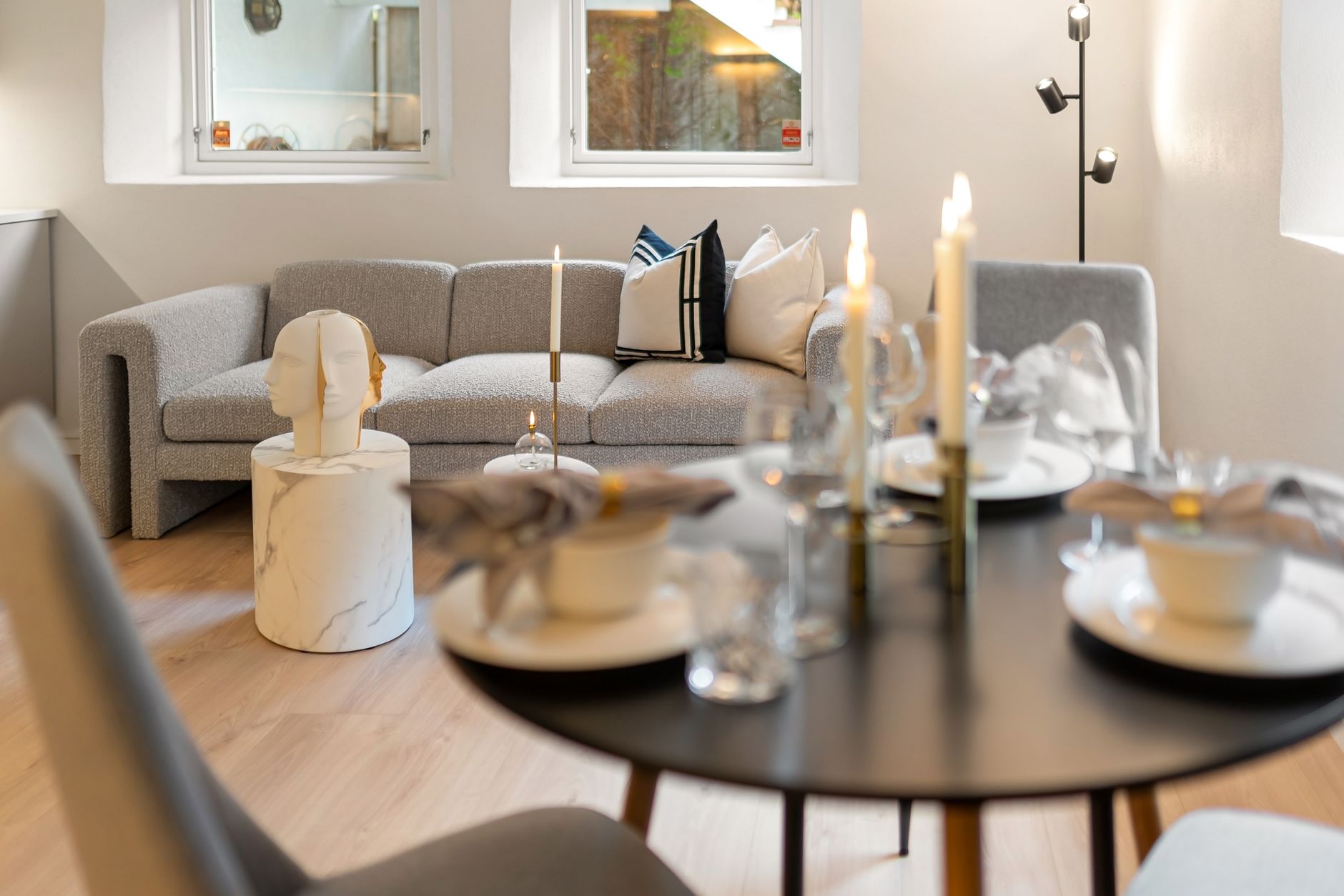
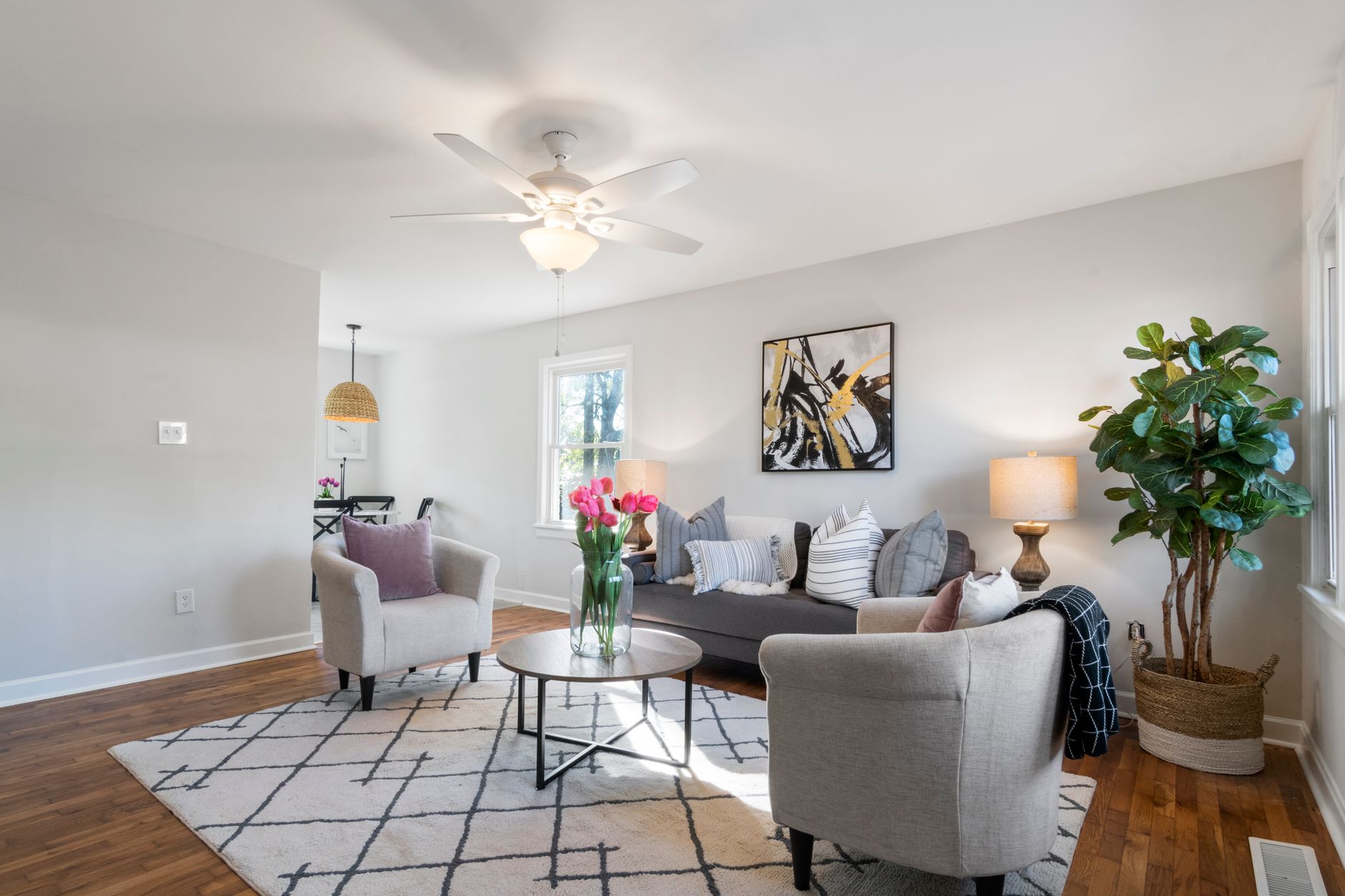
Empty homes in the Short North or the suburbs of Upper Arlington often struggle to convey a sense of scale, leaving potential buyers unable to visualize how a living room actually functions. The most effective solution is virtual furniture staging in Columbus, a process where high-end 3D furniture models are digitally inserted into photographs of vacant properties to create an inviting, lived-in atmosphere without the cost of physical rentals. By leveraging AI-driven computer vision, agents can transform a cold, empty space into a curated home in seconds, significantly increasing the click-through rate on the Multiple Listing Service (MLS).
Why Columbus Real Estate Professionals Are Adopting Virtual Staging?
Columbus is currently experiencing a dynamic shift in its housing market, with significant growth in the mixed-use developments around the Scioto Mile and the expanding residential rings in Westerville and Dublin. In my experience working with Ohio-based real estate professionals, the biggest hurdle isn't the property's quality, but the psychological barrier buyers face when viewing an empty room. An empty space often feels smaller and colder than it is, which can lead to lower offers or longer days on market.
Industry data supports this shift. According to a report by the National Association of Realtors (NAR), staged homes typically sell faster and for a higher price point than non-staged homes because staging helps buyers emotionally connect with the space. In a competitive 2026 market, that emotional connection is the difference between a listing that sits for 30 days and one that receives multiple offers in the first weekend.
Furthermore, the integration of artificial intelligence has lowered the barrier to entry. We are seeing a transition where agents no longer wait weeks for a physical staging company to move furniture into a home; instead, they use computer vision to place minimalist or modern furniture sets instantly. A study by McKinsey on AI adoption in professional services suggests that generative AI can increase productivity in content creation by up to 40%, and in the context of real estate photography, this means the time from "photo shoot" to "active listing" has dropped from days to minutes.
Key Benefits of Virtual Staging for Columbus Listings
Virtual staging provides a scalable advantage that physical staging simply cannot match, especially for property management firms handling large portfolios of vacant rentals in the city. When you remove the logistical nightmare of trucking furniture in and out of a property, you eliminate the risk of damage to the floors and the recurring monthly rental fees.
Increased Buyer Engagement and Emotional Appeal
Buyers rarely have the imagination to see how a sectional fits into a uniquely shaped living room. By using virtual staging, you provide the answer before they even ask the question. This is particularly essential for new constructions in the suburbs where the "blank canvas" effect can actually be intimidating to a buyer. When a space looks finished, it feels like a home rather than a construction project.
Drastic Cost Reduction and Faster Turnaround
Physical staging in Columbus can cost anywhere from $500 to $2,500 per month depending on the size of the home. Virtual staging reduces this to a fraction of the cost while providing a faster turnaround. Instead of scheduling a delivery window, an agent can upload a photo to a platform like RealVisionAI Blog - AI Real Estate Photography & Virtual Staging and have a market-ready visual in under 12 seconds.
Versatility Across Different Target Demographics
One of the most powerful aspects of digital staging is the ability to pivot styles. If a property in German Village appeals to a younger, urban professional, you can use a "Modern Industrial" furniture set. If the same property is being marketed to a retiree, you can switch to a "Traditional Elegant" look. This level of hyper-targeting is impossible with physical furniture.
💡
Key Takeaway
The primary value of virtual furniture staging is the ability to emotionally prime a buyer while removing the massive overhead and logistical friction associated with physical furniture rentals.
| Feature | Traditional Physical Staging | Cheap/Generic AI Apps | RealVisionAI Professional Approach |
|---|---|---|---|
| Cost | High ($$$$ per month) | Low ($) | Moderate/Low (High Value) |
| Setup Time | 1-2 Weeks | Minutes | 12 Seconds |
| Realism | Perfect (Physical) | Often distorted/fake | High-Fidelity Photorealism |
| Flexibility | Very Low | High | Ultra-High (Style Choice) |
| Risk | Property damage risk | Low | Low |
Real-World Examples of Virtual Staging Success in Columbus
To illustrate the impact, let's look at two scenarios I've encountered while analyzing property performance data in the Central Ohio region. These examples demonstrate that the ROI on virtual staging isn't just about the "look," but about the actual velocity of the sale.
Case Study 1: The Vacant Suburban Colonial (Dublin, OH)
An agent had a 4-bedroom Colonial that had been on the market for 45 days with zero offers. The photos showed beautiful but empty rooms. We implemented a "Contemporary Family'" virtual staging package. By adding a large sectional, a dining set, and a curated home office, the property felt warmer. Within 72 hours of updating the MLS photos, the property had three separate showings and an offer 2% above the asking price. The buyer specifically mentioned that the staged photos helped them realize the dining area was large enough for their extended family gatherings.
Case Study 2: The Urban Condo (Short North, Columbus)
In the dense urban core, space is at a premium. A studio apartment looked cramped in the original photos because the empty walls made the room feel like a box. We applied a "Minimalist Scandi" virtual staging approach, using light-colored furniture and strategic placement to define the "living" vs "sleeping" areas. This defined the utility of the space. The property's click-through rate on Zillow increased by 65%, and it was leased within 10 days to a professional who appreciated the efficient layout suggested by the virtual furniture.
How to Get Started with Virtual Furniture Staging
Transitioning to a digital-first visual strategy doesn't require a degree in graphic design. The process has been streamlined through AI to the point where any agent or property manager can execute it from their smartphone. Here is the professional workflow I recommend for maximizing impact.
Step 1: High-Quality Base Photography
Virtual staging only works if the base photo is clean. Ensure you have wide-angle shots with plenty of natural light. Avoid blurry images or those with heavy shadows. The better the base photo, the more seamless the AI integration will be.
Step 2: Define the Target Buyer Persona
Before picking furniture, ask: "Who is the likely buyer for this Columbus neighborhood?" A luxury home in Upper Arlington requires a different aesthetic than a starter home in Clintonville. Choose a style (Modern, Traditional, Minimalist) that aligns with the neighborhood's vibe.
Step 3: Utilize a Professional AI Studio
Avoid generic "sticker-style" apps that make furniture look like it's floating. Use a specialized tool like RealVisionAI Blog - AI Real Estate Photography & Virtual Staging. Their system uses advanced computer vision to analyze the perspective, lighting, and shadows of your room, ensuring the furniture looks physically present in the space. The "Market-Ready in 12 Seconds" promise allows you to stage an entire house during your lunch break.
Step 4: A/B Testing and Listing Update
Upload the staged images to your MLS and social media. I often suggest agents run a split test: use a staged photo as the primary cover image and an empty photo as the second image. This creates a "transformation" narrative that keeps users scrolling through the gallery.
📚
Definition
Computer Vision is a field of artificial intelligence that enables computers to gain high-level understanding from digital images or videos, allowing the AI to recognize the floor plane and wall boundaries in a room for accurate furniture placement.
Common Objections and the Data-Backed Reality
Despite the benefits, some agents remain hesitant. I've heard these objections repeatedly in my consultancy, and the data almost always proves them wrong.
Objection 1: "Isn't it misleading to the buyer?"
Many believe that showing furniture that isn't there is a form of deception. In reality, it is a visualization tool. Most professional listings include a small disclaimer stating, "Photos are virtually staged to show potential." According to industry standards in digital marketing, providing a visual goal is more helpful to the consumer than leaving them to guess. It is not about pretending the furniture is included, but about demonstrating the property's potential.
Objection 2: "It looks too fake/AI-generated."
This is a valid concern if you are using free, low-quality apps. However, professional-grade AI now handles global illumination and ambient occlusion—the way light bounces off surfaces. When done correctly, it is nearly impossible for the average buyer to distinguish between a real photo and a high-fidelity virtual stage. Most people assume X (that it looks fake), but the data shows Y (that high-end AI staging actually increases buyer confidence because it looks polished).
Objection 3: "I don't have time to learn new software."
This is the biggest myth. The modern workflow is designed for the "non-tech" agent. You don't "learn software"; you upload a photo and select a style. If you can send an email, you can use virtual staging. The friction has been removed by platforms that prioritize speed and simplicity over complex editing tools.
Frequently Asked Questions
How much does virtual furniture staging in Columbus typically cost?
Virtual staging is significantly more affordable than physical staging. While physical staging can cost thousands of dollars per month in rental fees and labor, virtual staging is typically priced per image. This allows agents to control their budget precisely, spending only on the high-impact rooms like the living room, master bedroom, and dining area. By using an AI-driven platform, the cost per image is minimal, often making the total cost for a whole house less than a single professional cleaning service visit.
Does virtual staging actually help a house sell faster in the Ohio market?
Yes, the data consistently shows that staged homes have a lower "Days on Market' (DOM) average. In the Columbus area, where buyers are increasingly browsing homes online before ever visiting in person, the first impression is everything. A virtually staged home creates a curated aesthetic that stops the scroll. When buyers can visualize themselves living in the space, they are more likely to book a showing and make a competitive offer, especially in the fast-moving suburban markets.
What is the difference between virtual staging and 3D rendering?
Virtual staging is the process of adding furniture to an existing photograph of a real room. 3D rendering, on the other hand, is the creation of a room from scratch using architectural blueprints (common in pre-construction). Virtual staging is faster and more cost-effective for existing vacant homes, whereas 3D rendering is used for homes that haven't been built yet. For most Columbus agents selling existing inventory, virtual staging is the correct and most efficient tool.
Can virtual staging be used for commercial properties or just residential?
Virtual staging is incredibly effective for commercial real estate as well. Imagine a vacant office space in downtown Columbus or a shell of a retail store. By virtually staging a reception area or a modern open-office layout, you help commercial tenants understand how the square footage can be utilized. This reduces the "fear of the empty space" and allows a property manager to market the functional potential of the layout rather than just the raw square footage.
How do I ensure the virtually staged furniture looks realistic and not "photoshopped"?
The secret to realism is the use of AI and computer vision. Low-end tools simply "paste" a PNG image of a sofa onto a photo, which looks fake because there are no shadows. Professional services, like RealVisionAI Blog - AI Real Estate Photography & Virtual Staging, use AI to analyze the light source in your photo. They create realistic shadows and ensure the furniture is scaled perfectly to the room's dimensions, which prevents the "floating furniture" effect and ensures a photorealistic result.
Final Thoughts on Virtual Furniture Staging in Columbus
In a city as competitive as Columbus, the difference between a listing that flops and one that flies often comes down to the quality of the visual storytelling. Empty rooms are a liability; they are cold, impersonal, and difficult to value. By implementing virtual furniture staging in Columbus, you aren't just adding furniture to a photo—you are removing the mental friction for your buyer and increasing the perceived value of the property.
Whether you are managing a luxury estate in Upper Arlington or a trendy condo in the Short North, the ability to present a market-ready, curated interior in seconds is a massive competitive advantage. Stop letting your listings sit vacant and start showing buyers exactly why your property is the perfect home.
Ready to transform your listings? Experience the power of AI-driven visuals with RealVisionAI Blog - AI Real Estate Photography & Virtual Staging. Get your property market-ready in just 12 seconds and start seeing the results in your closing rates today.
Recommended Readings
To deepen your understanding of these topics, we recommend reading the following articles:
- Virtual Furniture Staging in Charlotte
- Virtual Furniture Staging in Fort Worth
- Virtual Furniture Staging in Jacksonville
- Virtual Furniture Staging in New York
Free Real Estate AI Visual Playbook 2026
Discover how top realtors boost listing engagement by 62% and close deals faster using AI photo enhancement and virtual staging.