

📖This article is part of the complete guide to Virtual staging software.
Everything About Virtual Staging Software: Complete and Detailed Guide for 2026
In the competitive real estate market of 2026, where 97% of buyers start their search online, visual presentation has become the decisive factor for selling properties faster and at better prices. According to research by the National Association of Realtors, listings with professionally edited and virtually staged photos receive 62% more contacts and sell 30% faster.
💡
Key Takeaway
Virtual staging software is no longer a luxury, but an essential tool that reduces property preparation costs by 78% while increasing listing engagement by 3x.


What Is Virtual Staging Software and How Does It Work?
📚
Definition
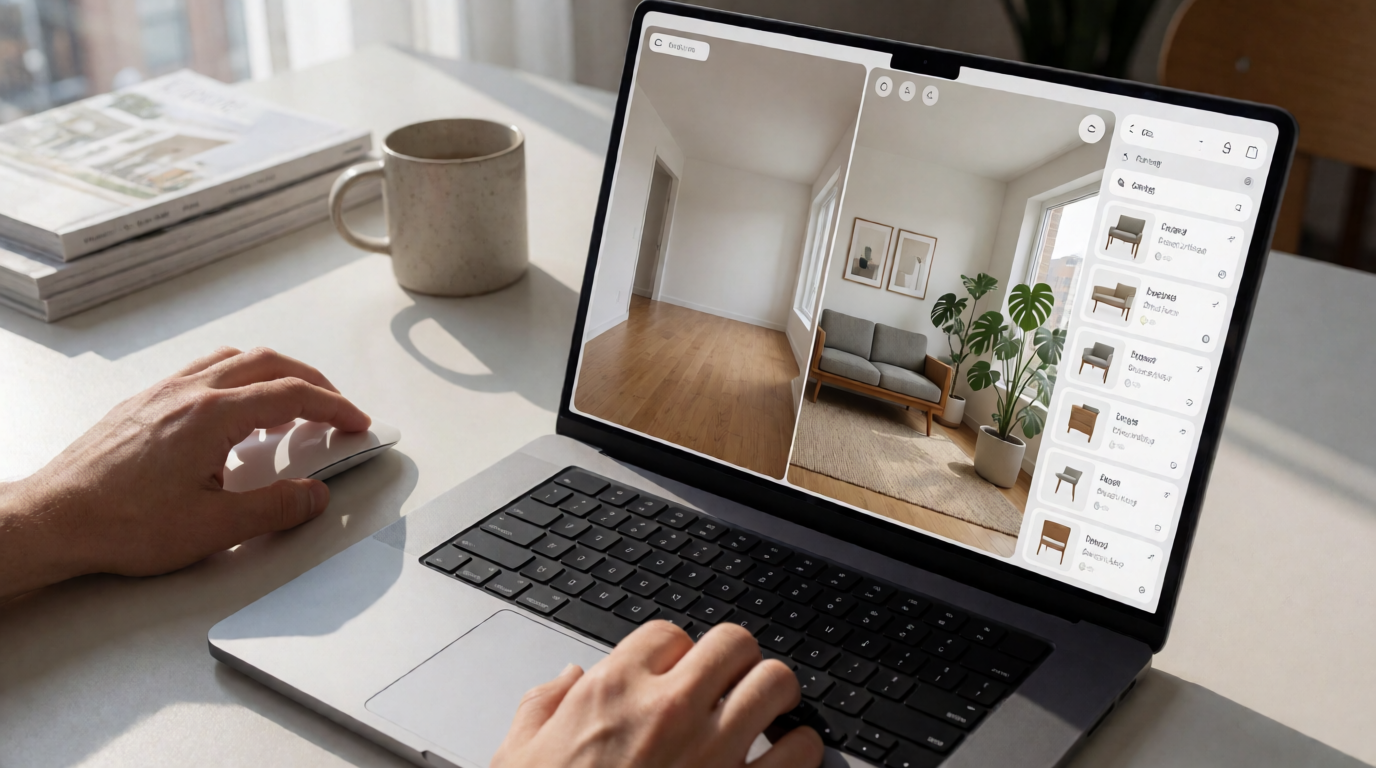
Virtual staging software is an artificial intelligence platform that inserts realistic furniture and decor into photos of empty rooms, allowing buyers to visualize the potential of spaces without the cost and logistics of physical staging.
The technology combines three recent advances:
- Generative Neural Networks (GANs): Analyze the room's architecture to position furniture with precise proportions
- 3D Database: Over 50,000 furniture models in different architectural styles
- Automatic Perspective Adjustment: Corrects lens distortions to maintain dimensional fidelity
Detailed Technical Process:
- Upload the original photo (JPG, PNG, or RAW format)
- Automatic detection of walls, floors, and openings
- Selection of decor style (modern, classic, industrial)
- Intelligent furniture placement considering traffic flow
- Lighting and shadow adjustment for photorealistic integration
- Export of the final high-resolution image (minimum 300dpi)
Professional Tip: For best results, photograph empty rooms with uniform lighting and right angles, keeping at least 1.5m distance from walls.
Why Virtual Staging Is Essential for Realtors in 2026?
The real estate market has undergone an irreversible digital transformation. Zillow Research data shows that:
- 83% of buyers discard properties with low-quality photos
- Virtually staged rooms increase viewing time on platforms by 47%
- Listings with virtual staging sell for 6-10% above the average regional value
Competitive Advantages:
- Cost Reduction: Eliminates expenses for furniture rental, transportation, and setup (average savings of R$5,000 per property)
- Speed: Complete staging in less than 12 seconds versus 3-5 days for physical staging
- Flexibility: Show the same room in multiple styles (young family, executives, seniors)
- Measurement: A/B testing of different layouts before investing in renovations
Effectiveness Comparison:
| Metric | Physical Staging | Virtual Staging |
|---|---|---|
| Average Cost | R$3,000-R$8,000 | R$30-R$120 per room |
| Implementation Time | 3-7 days | 5-15 minutes |
| Variety of Styles | Limited by inventory | Unlimited |
| Customization Possibility | Low | High |
| Compatibility with 3D Tours | No | Yes |
How to Implement Virtual Staging in Your Workflow
Professional Step-by-Step:
-
Photographic Preparation
- Use a wide lens (16-24mm) to capture the entire room
- Shoot in RAW for greater editing flexibility
- Keep ISO below 800 to reduce noise
-
Software Selection
- Specialized platforms like Real Vision AI offer:
- Models adapted to the Brazilian market
- Automatic export to social networks and portals
- Integration with real estate CRMs
- Specialized platforms like Real Vision AI offer:
-
Art Direction
- Define the target buyer profile (families, singles, investors)
- Choose color palettes according to the region and property value
- For luxury properties, prioritize designer pieces and artwork
-
Optimization for Portals
- Resize to ZAP, Viva Real, etc. specifications
- Add a discreet watermark with your contact
- Create versions with and without staging for comparison
-
Ethical Disclosure
- Include the caption "Virtually staged rooms" on all photos
- Keep at least 2 images of the original state in each room
- Do not hide structural defects or visible issues
Common Mistakes to Avoid:
- Excess furniture that distorts the perception of space
- Use of styles inconsistent with the property's architecture
- Artificial lighting that creates unrealistic shadows
- Lack of consistency between rooms
Types of Virtual Staging Software Available in 2026
1. Cloud-Based Platforms (SaaS)
- Advantages: Accessible from any device, automatic updates
- Example: Real Vision AI, BoxBrownie
- Best For: Realtors with medium-high volume (20+ properties/month)
2. Photoshop Plugins
- Advantages: Precise control over each element
- Example: AI Architect Plugin
- Best For: Professional photographers already using Adobe CC
3. Corporate Solutions
- Advantages: Integration with listing management systems
- Example: Matterport Staging
- Best For: Developers and large real estate networks
4. Mobile Apps
- Advantages: Quick editing directly from the smartphone
- Example: Room Planner
- Best For: Quick acquisitions during visits
Comparison Table:
| Type | Average Cost | Speed | Detail Level | Learning Curve |
|---|---|---|---|---|
| SaaS | R$100-300/month | 10-30s per image | High | Low |
| Plugin | R$800-1,500 | 5-15min | Extremely high | High |
| Corporate | Annual contract | Immediate | Customizable | Medium |
| Mobile | Free-R$50 | 1-2min | Basic | Minimal |
Frequently Asked Questions About Virtual Staging Software
What is the difference between virtual staging and 3D rendering?
While 3D renderings create fully digital environments from floor plans, virtual staging inserts furniture into real photos, maintaining the authenticity of existing materials and lighting.
How to ensure virtual furniture has realistic proportions?
Good systems use AI-based depth detection to calculate:
- Ceiling height
- Door and window width
- Usable floor area Avoid solutions that do not offer manual adjustment of these parameters.
Can I use virtual staging in real estate videos?
The most advanced platforms already allow staging in:
- Matterport virtual tours
- Walkthrough videos
- Reels and stories Tracking technology keeps furniture stable during camera movements.
Is there a risk of the software distorting original property features?
Professional solutions like Real Vision AI have algorithms that:
- Preserve wall and floor textures
- Maintain the natural direction of light
- Respect architectural elements Always review final images before publishing.
Which decor styles are most effective for sales?
2026 data shows higher conversion with:
- Neutral contemporary (beige and gray tones)
- Soft industrial (exposed brick with wood)
- Modern tropical (plants and light woods) Avoid very personal styles or vibrant colors that may polarize buyers.
How to declare the use of virtual staging on portals?
It is recommended to:
- Add a visible disclaimer on all staged photos
- Keep original photos at the end of the album
- Inform verbally during visits Transparency increases trust and reduces post-sale issues.
Does virtual staging work for outdoor spaces?
Yes, modern techniques allow:
- Insertion of garden furniture
- Creation of leisure areas
- Addition of strategic vegetation
- Improvement of floors and coverings
What is the average cost per property?
Depending on the software and number of rooms:
- Basic (3 rooms): R$90-150
- Complete (5+ rooms): R$200-400
- Unlimited monthly packages: from R$300/month
Trends and Innovations for 2026-2027
1. Adaptive Staging
Systems that analyze the online visitor's profile and automatically adjust:
- Decor style
- Predominant colors
- Level of formality
2. Augmented Reality in Visits
- View virtual furniture through the smartphone
- Experiment with different layouts in real time
- Simulate renovations and structural changes
3. Integration with the Metaverse
- Preparation of properties for 3D real estate platforms
- NFTs of virtually staged properties
- Persistent digital showrooms
4. AI Personalization
- Automatic suggestions based on:
- Demographic data of the region
- Similar sales history
- Local design trends
Final Thoughts on Virtual Staging Software
The real estate market in 2026 demands agility, cost reduction, and impeccable presentation — three challenges that virtual staging software solves in an integrated way. Realtors who adopt this technology report:
- 40% reduction in average time to sell
- 25% increase in final negotiated value
- 60% drop in property preparation costs
At Real Vision AI, we develop specific solutions for the Brazilian market, with:
✔ Furniture models adapted to our spaces
✔ Automatic texts for portals in Portuguese
✔ Specialized technical support in local time
Recommended Next Steps:
- Free trial of our online editor with 3 images
- Schedule a demonstration of advanced features
- Download our guide "Real Estate Photography for AI"
💡
Key Takeaway
In 2026, virtual staging has gone from being a differentiator to becoming a minimum requirement in property presentation. The technology does not replace the professional eye, but amplifies its impact exponentially.
Recommended Readings
To deepen your understanding of these topics, we recommend reading the following articles:
Free Real Estate AI Visual Playbook 2026
Discover how top realtors boost listing engagement by 62% and close deals faster using AI photo enhancement and virtual staging.