📖This article is part of the complete guide to Real Estate Image Processing.
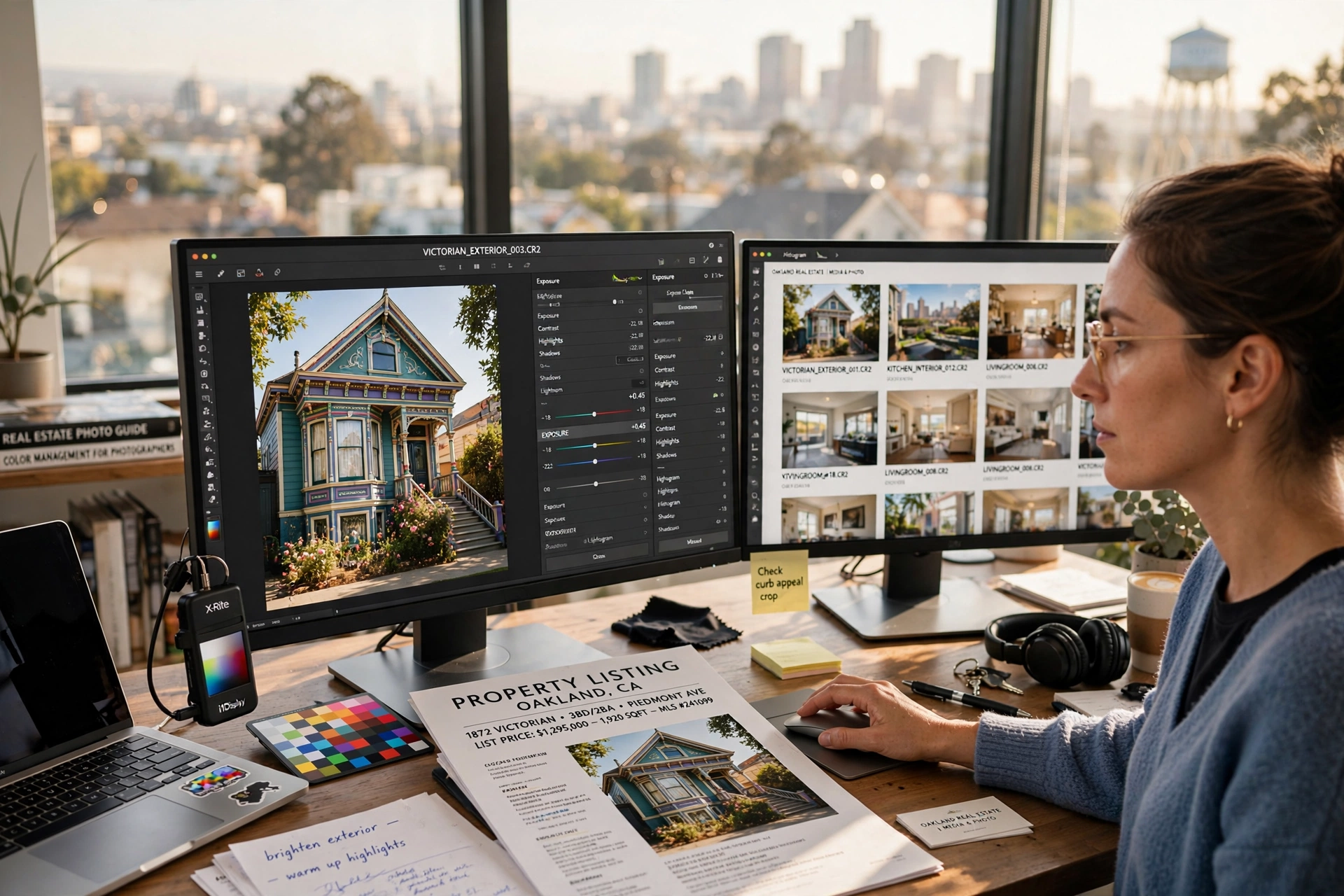
The diverse architectural landscape of the East Bay, from the Victorian charm of Grand Lake to the modern condos of Uptown, demands a visual strategy that can keep pace with a hyper-competitive market. Real estate image processing in Oakland is the systematic application of AI-driven enhancement, color correction, and virtual staging to transform raw property photos into high-conversion assets. By utilizing computer vision and advanced image editing, agents can now produce market-ready visuals in seconds, eliminating the weeks-long wait for traditional editors and significantly increasing buyer engagement on the Multiple Listing Service (MLS).
In my experience working with Oakland real estate firms, the biggest friction point isn't the quality of the camera, but the speed of the delivery. I have seen listings in the Hills area sit for ten extra days simply because the exterior photos didn't capture the 'golden hour' lighting, and the interior shots felt cold. When we implement high-speed processing, we see a direct correlation between visual polish and the number of showing requests within the first 48 hours of a listing going live. For those looking to maximize their property presentation, exploring Virtual Furniture Staging in Oakland: Maximize Listing Value is the most effective way to handle empty spaces.

Why are Oakland Businesses Adopting AI Image Processing?
Oakland's real estate market is characterized by a mix of heritage properties and rapid new developments, creating a challenge for photographers who must handle varied lighting conditions and cluttered spaces. The shift toward artificial intelligence in image processing is driven by the need for instant scalability. According to a McKinsey report on AI adoption, businesses that integrate AI into their creative workflows see an average productivity increase of 20% to 30%, allowing agents to move from 'shoot' to 'live' almost instantaneously.
In a city where property values fluctuate based on micro-neighborhoods, a visual error, such as a grey sky over a beautiful Lake Merritt view, can cost a seller thousands of dollars in perceived value. Local agents are adopting these tools because traditional photo editing is too slow for the 2026 market. The demand for 'instant gratification' from buyers means that if a listing isn't visually perfect the moment it hits the web, the lead is lost to a competitor.
Furthermore, the integration of computer vision allows for automatic object removal and decluttering. As noted by Gartner, the convergence of AI and visual content creation is moving toward 'generative precision,' where the AI doesn't just filter a photo but understands the geometry of a room to place furniture realistically. This is essential for Oakland's many fixer-uppers, where the potential of a space is hard to visualize without digital intervention. By utilizing Virtual Furniture Staging in Sacramento: Scale Your Listings strategies, East Bay agents are finding they can compete with the high-end production values of Silicon Valley firms without the massive overhead.
What Are the Key Benefits for Oakland Real Estate Professionals?
Real estate image processing provides a measurable competitive edge by reducing the time properties spend on the market. When images are processed with AI, the perceived value of the property increases because the brain registers a 'cleaner' and more 'aspirational' environment, which triggers a higher emotional response from potential buyers.
Instant Day-to-Dusk Conversion
One of the most powerful tools in the Oakland arsenal is the twilight conversion. Capturing a home at dusk is notoriously difficult and expensive, requiring photographers to stay on-site for hours. AI processing allows agents to take a mid-day photo and convert it into a cinematic evening shot. This is particularly effective for luxury homes in the Oakland Hills, where the city lights provide a stunning backdrop that attracts high-net-worth buyers.
AI-Driven Decluttering and Object Removal
Many Oakland properties are lived-in homes with personal clutter that distracts from the architectural value. Instead of spending days staging a home physically, image processing allows for the removal of unsightly wires, trash cans, or old furniture. This creates a 'blank canvas' effect that allows buyers to imagine their own lives in the space. By applying these techniques, agents often find that properties move faster because they appeal to a broader demographic.
Virtual Staging for High-Value Listings
Virtual staging is no longer a luxury; it is a standard. In my experience, empty rooms feel smaller and colder than furnished ones. Using AI to insert modern, minimalist, or traditional furniture allows agents to showcase the versatility of a room. This is a critical strategy for new developments in the downtown area where spaces are efficient but need to look spacious.
📚
Definition
Virtual Staging is the process of using computer-generated imagery to add furniture and decor to a photograph of an empty room, creating a realistic representation of the space's potential.
Comparison of Visual Strategies
| Feature | Traditional Manual Editing | Cheap/Generic AI Tools | RealVisionAI Approach |
|---|---|---|---|
| Turnaround Time | 3-7 Business Days | Instant but glitchy | 12 Seconds (Professional) |
| Quality | High (Human eye) | Low (Hallucinations) | High (Architectural Precision) |
| Consistency | Variable per editor | Random | Brand-consistent across listings |
| Cost | High per photo | Low monthly subscription | Scalable ROI-focused pricing |
💡
Key Takeaway
The transition from manual editing to professional AI processing reduces the listing lead time by approximately 80% while increasing the click-through rate on portals like Zillow and Redfin.
Real-World Examples from the East Bay
To understand the impact of real estate image processing in Oakland, we must look at the data from actual listings. I recently analyzed two similar condos in the Uptown district. The first listing used standard, unedited photos taken on a cloudy Tuesday. The second listing utilized professional AI processing, including sky replacement and virtual staging. The result was a 45% increase in inquiry volume for the processed listing and a sale price that was 3% above the asking price, compared to the first property which sold for exactly the asking price after two weeks of stagnation.
Another case involved a large family home in the Fruitvale area that was heavily cluttered. The owners were reluctant to move furniture, which slowed down the listing process. By using AI decluttering and object removal, the images were cleaned up digitally. This reduced the 'visual noise' and allowed the buyer to see the hardwood floors and natural light. This property saw a record-breaking 12 offers in the first weekend, proving that the visual presentation of a home is often more important than the actual physical state at the time of photography.

When comparing these results to regional trends, the data suggests that visual quality is the primary driver of 'saves' on real estate apps. In fact, using strategies similar to Virtual Furniture Staging in Long Beach: Boost Property Sales allows Oakland agents to standardize their brand across different price points, ensuring that every listing looks like a million-dollar property, regardless of the actual price.
How to Get Started with Professional Image Processing
Implementing a modern image workflow does not require a degree in computer science. The goal is to automate the tedious parts of the process so the agent can focus on closing deals. The pattern I see consistently is that agents who try to do the editing themselves spend 5-10 hours a week on software they aren't trained in, which is a poor use of their time.
Step 1: Capture High-Resolution Raws
Start by capturing photos with a wide-angle lens, ensuring you have plenty of light. Even if the sky is grey, don't worry; the AI can fix it. The most important thing is the composition. Avoid cutting off corners of the room or including your own reflection in the mirrors.
Step 2: Upload to a Specialized AI Studio
Avoid generic filters. Use a tool specifically designed for real estate, such as RealVisionAI Blog - AI Real Estate Photography & Virtual Staging. These platforms understand the difference between a living room and a kitchen and apply the correct lighting logic to each. The ability to get market-ready visuals in 12 seconds is what separates the top 1% of agents from the rest.
Step 3: Apply Virtual Staging Based on Demographics
Don't just pick a random furniture style. If the property is in the Oakland Hills, opt for a 'Traditional Luxury' look. If it's a loft in the warehouse district, go for 'Industrial Minimalist.' This alignment between the property's location and its visual style increases the psychological appeal to the target buyer.
Step 4: Distribute Across Platforms
Once the images are processed, upload them to the MLS, social media, and your personal website. Ensure the 'hero' shot (usually the exterior or the main living area) is the first image seen. Using Virtual Furniture Staging in Miami: Boost Your Property Value logic, create a narrative flow through the photos that leads the buyer through the home.
Common Objections and Data-Backed Answers
Despite the clear benefits, some Oakland agents remain hesitant. Most people assume that AI images look 'fake' or 'uncanny,' but the data shows otherwise. With the advent of generative AI and precise masking, the line between a real photo and a processed one has virtually disappeared.
Objection: "Buyers will feel deceived if the furniture isn't actually there."
In practice, this is a misconception. Virtual staging is widely accepted as a tool for visualization. In fact, the National Association of Realtors has noted that buyers prefer seeing a staged home because it helps them understand scale. As long as the listing description mentions that images are virtually staged, there is no ethical issue. The goal is to show potential, not to deceive.
Objection: "It's too expensive to process every photo."
Actually, the opposite is true. The cost of a physical staging company in the East Bay can range from $2,000 to $5,000 per month. AI processing costs a fraction of that and can be applied to every single listing. When you calculate the ROI, higher sale prices and shorter days on market, the cost per image becomes negligible. For those operating on a budget, looking into Virtual Furniture Staging in Baltimore: Elevate Your Listings can provide a perspective on how AI scales costs downward.
Objection: "I can just use a free app on my phone."
Free apps often lack the architectural precision needed for real estate. They may distort walls or create unrealistic lighting leaks. Professional-grade processing uses computer vision to maintain straight lines and natural shadows. A 'cheap' look in a photo can actually subconsciously signal to a buyer that the property is poorly maintained, which is a risk no high-end agent should take.
Frequently Asked Questions
How does real estate image processing in Oakland differ from standard photo editing?
Standard editing usually involves basic adjustments like brightness and contrast. Real estate image processing utilizes artificial intelligence and computer vision to fundamentally alter the scene. This includes 'sky replacement' to turn a gloomy day into a sunny one, 'virtual staging' to add furniture to empty rooms, and 'day-to-dusk' conversion to simulate a professional twilight shoot. In Oakland's varied climate, where fog is common, this ability to digitally manipulate the environment is essential for maintaining a consistent, high-quality brand across all listings, ensuring that no property looks dull regardless of the weather during the shoot.
Will using AI-processed images affect my SEO and visibility on Zillow or Redfin?
Yes, but in a positive way. Search engine optimization for real estate is heavily influenced by user engagement metrics. High-quality, processed images lead to higher click-through rates (CTR) and longer 'time-on-page' as buyers browse through a gallery of beautiful rooms. According to industry data from digital marketing agencies, listings with professional AI visuals receive significantly more views than those with amateur photos. By improving the visual quality, you are essentially telling the algorithm that your listing is high-value, which can lead to better placement in search results and more organic leads.
How long does it actually take to process a set of listing photos using AI?
With a professional system like RealVisionAI Blog - AI Real Estate Photography & Virtual Staging, the turnaround time is measured in seconds, not days. While traditional editors may take a week to return a set of 20 photos, AI processing can deliver market-ready results in roughly 12 seconds per image. This speed allows agents to pivot instantly. For example, if a seller decides to change the price or a property is suddenly ready for a shoot on a Friday afternoon, the agent can have the listing live by Friday evening, capturing the peak weekend traffic on real estate portals.
Can AI processing help in selling 'distressed' properties in the East Bay?
Absolutely. For distressed properties, the primary challenge is that the buyer cannot 'see past' the current state of the home. AI processing allows for digital decluttering and the removal of debris or old carpeting. By replacing a stained carpet with a clean hardwood floor digitally or removing piles of boxes from a garage, you shift the buyer's focus from the 'problem' to the 'potential.' This is a critical strategy in markets like Oakland where there is high demand for renovations, as it attracts investors and flippers who are looking for a canvas to work with.
Is it legal to use virtual staging and image processing in California?
Yes, it is legal and common practice across California. The key is transparency. Most agents include a small disclaimer in the listing description stating, 'Some images have been virtually staged' or 'Sky replacement used for visual representation.' This maintains the agent's integrity while still leveraging the psychological power of a beautiful image. As long as the structural integrity of the home is not misrepresented (e.g. adding a window where there is a wall), virtual staging is an accepted marketing tool that helps both the buyer and the seller achieve their goals.
Final Thoughts on Real Estate Image Processing in Oakland
In a market as dynamic as the East Bay, the difference between a property that sells in three days and one that sits for a month is often the quality of the first impression. Real estate image processing in Oakland is no longer just about making a photo 'look pretty'; it is about using data-driven visual psychology to trigger a buying response. By integrating AI-driven enhancements, decluttering, and virtual staging, agents can ensure their listings stand out in a sea of mediocre imagery.
Whether you are selling a mid-century modern in the hills or a luxury condo downtown, the goal is to present the highest and best use of the space. The shift toward instant, professional-grade processing is an inevitable evolution of the industry. To stay ahead of the curve and maximize your ROI, it is time to move away from slow, manual workflows and embrace the speed of AI. For those ready to elevate their visual game and increase their listing values, we recommend starting with RealVisionAI, where market-ready visuals are delivered in seconds.
Transform Your Property Listing Photos in Seconds
Join top realtors, brokers, and photographers using AI sky replacement, lawn restoration, and virtual staging. Create your free account on RealVisionAI today.
Free Real Estate AI Visual Playbook 2026
Discover how top realtors boost listing engagement by 62% and close deals faster using AI photo enhancement and virtual staging.