

Which Approach to Commercial Real Estate Photography Should You Choose?
High-value asset listings fail when the imagery doesn't match the price tag. For a multi-million dollar office complex or a sprawling industrial warehouse, the choice of commercial real estate photography usually boils down to three paths: high-end traditional architectural firms, mid-tier freelance specialists, or AI-enhanced rapid processing. If you are prioritizing immediate market entry and scale, the AI-enhanced route is the only logical choice; if you are building a legacy brand for a trophy asset, a traditional architectural firm is the standard.
In my experience working with high-volume property managers, the biggest friction point isn't the quality of the initial photo, but the turnaround time. I've seen listings sit empty for three weeks simply because a photographer took ten days to deliver "perfect" edits. When we integrate Real Estate Visual Marketing: The 2026 Guide to AI-Driven Sales strategies, we move from a bottleneck to a competitive advantage by separating the capture phase from the enhancement phase.

Understanding the Mechanics of Commercial Real Estate Photography
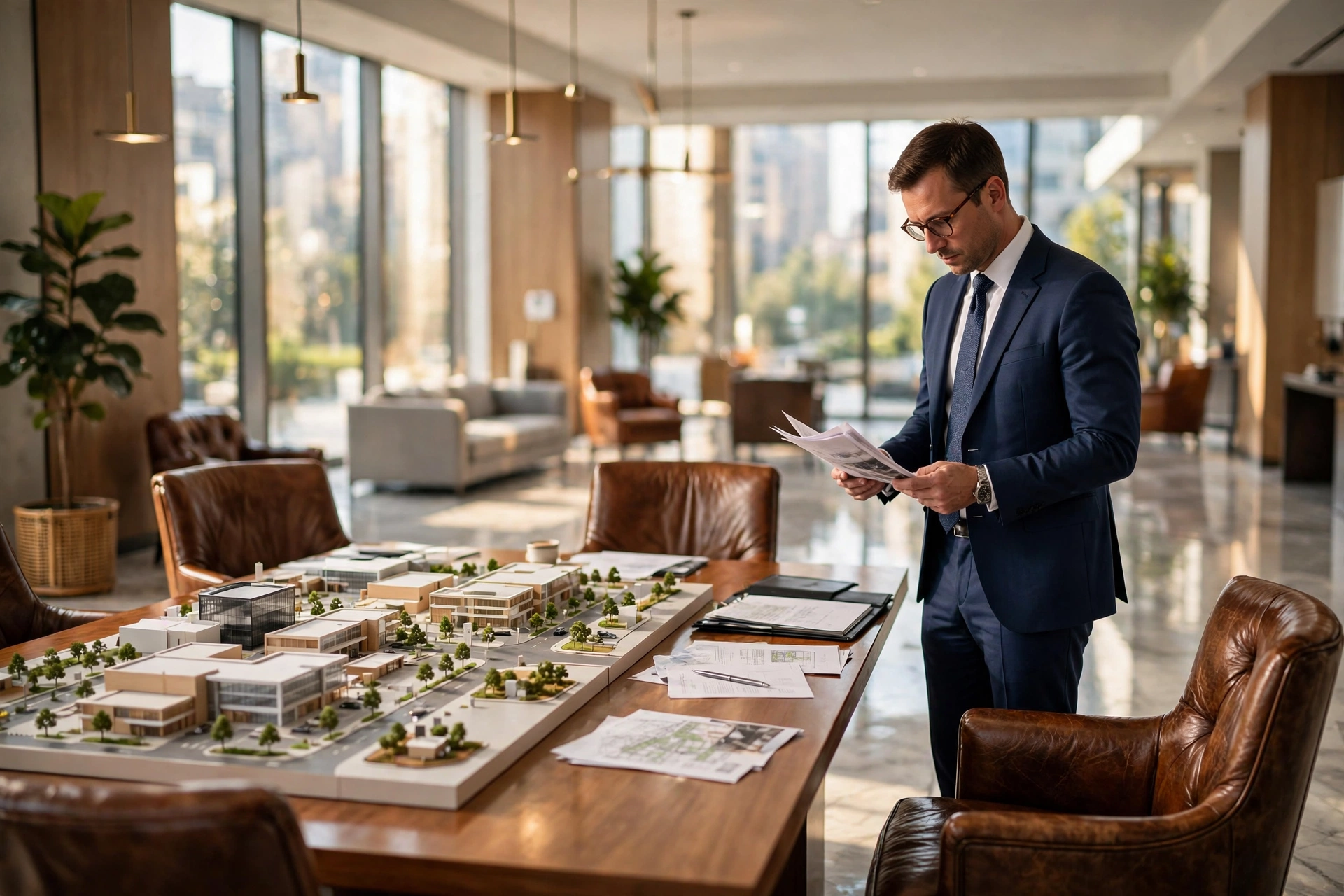
To choose the right path, you first need to understand that commercial imaging is fundamentally different from residential work. While a home is about "emotion" and "coziness," a commercial asset is about "utility," "scale," and "efficiency." You aren't selling a dream bedroom; you are selling a logistical advantage or a corporate image.
📚
Definition
Commercial real estate photography is the specialized practice of capturing industrial, retail, and office properties to emphasize their functional value, architectural scale, and investment potential for B2B stakeholders.
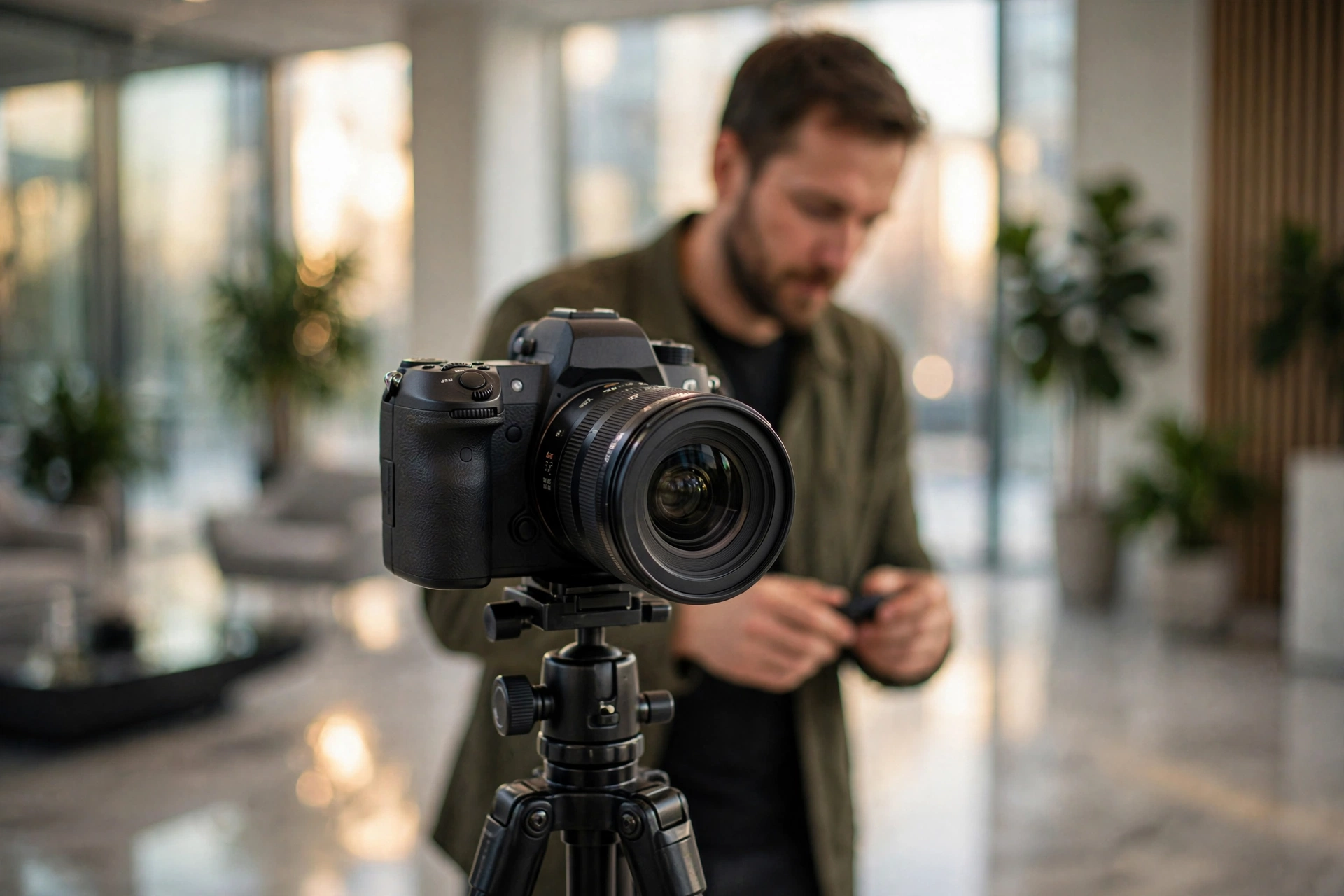
The technical requirements are significantly higher. Wide-angle lenses are mandatory, but they must be used without distorting the vertical lines of a skyscraper—a process known as vertical correction. Lighting is another hurdle; industrial warehouses often have "mixed lighting" (yellow sodium lamps mixed with blue daylight), which creates a color cast that is notoriously difficult to fix manually.
According to a report by Gartner on the digitalization of physical assets, the integration of computer vision and automated image processing in the 2026 market has reduced the cost of high-end visual assets by nearly 40% while increasing the speed of deployment. This shift is why the "which" in your decision is no longer just about the photographer's eye, but about the post-processing pipeline they use. Most traditional photographers still rely on manual masking in Photoshop, which is a slow, linear process. Modern firms are moving toward AI Property Enhancement for Beginners tools that can handle sky replacement and lighting correction in seconds rather than hours.
Why the Right Imaging Strategy Directly Impacts Your ROI
The cost of a vacant commercial square foot is staggering. In the commercial sector, a "days-on-market" (DOM) metric is directly tied to the perceived value of the asset. If a property looks dated or gloomy in its primary photos, investors will subconsciously lower their offer price before they even step foot on the property.
Data from McKinsey's analysis of AI adoption in real estate indicates that listings with high-quality, professionally enhanced imagery see a 22% increase in inquiry rates compared to those with basic photography. This isn't just about "looking pretty"; it's about reducing the perceived risk for the buyer. A clean, bright, and decluttered industrial space suggests a well-maintained asset, whereas a dark, grainy photo suggests deferred maintenance.
When you fail to invest in the correct level of Real Estate Image Processing, you aren't just losing views; you are losing leverage. In a competitive bidding environment, the agent with the most "market-ready" visuals controls the narrative. This is why many firms are now asking Is AI Property Enhancement Worth It? and finding that the ability to instantly convert a grey, rainy Tuesday shot into a "golden hour" masterpiece is more valuable than hiring a photographer who insists on waiting for the perfect weather.
The consequence of poor imagery is a "valuation gap." We have seen cases where the lack of professional virtual staging in a vacant office shell led to a 5-10% drop in initial offer prices because the buyers couldn't visualize the space's potential. Using Digital Staging Services: Scaling Real Estate Listings in 2026 allows you to bridge this gap by showing the asset at its highest and best use.
Practical Application: Implementing a High-Conversion Visual Pipeline
Choosing the right photography is only half the battle; the other half is the workflow. To maximize your asset's visibility, you need a pipeline that moves from capture to MLS (Multiple Listing Service) in under 48 hours.
Here is the professional framework for implementing this:
- The Capture Phase: Hire a photographer who understands "commercial composition." They should focus on the "hero shot" (the exterior that defines the building) and the "utility shots" (parking, loading docks, HVAC systems).
- The Enhancement Phase: Instead of waiting for the photographer's slow internal editing process, upload the raw files to a specialized AI studio. This is where RealVisionAI Blog - AI Real Estate Photography & Virtual Staging excels. By using their 12-second processing, you can handle sky replacement, grass restoration, and daylight-to-dusk conversions instantly.
- The Staging Phase: For vacant commercial shells, use virtual staging to create "mock-up" offices. This prevents the "empty warehouse feel" and helps tenants imagine their operations in the space.
- The Distribution Phase: Optimize the images for both the MLS and high-resolution pitch decks.
💡
Key Takeaway
The most efficient commercial real estate workflow decouples the photographer from the editor. By using AI-driven enhancement, you remove the human bottleneck and ensure your listing is live while the property is still "hot" in the market.
Now, here's where it gets interesting: the use of "twilight" shots. Traditionally, a photographer had to return to the property at 6:00 PM to capture the building with the lights on. This doubled the cost. By leveraging Types of AI Property Enhancement for Real Estate, you can now perform a "day-to-dusk" conversion on a photo taken at noon, achieving the same high-end luxury feel at a fraction of the cost.

Comparing Your Options: Which One Fits Your Asset?
Depending on the budget and the goal of the listing, you will likely choose one of these three paths. The mistake I see constantly is a property manager using a "residential" photographer for a "commercial" asset. A residential photographer focuses on the kitchen; a commercial photographer focuses on the ceiling height and the loading bay.
| Option | Pros | Cons | Best For |
|---|---|---|---|
| Traditional Architectural Firm | Highest artistic quality, prestige, total control. | Very expensive, slow turnaround (2-4 weeks), rigid schedules. | Trophy Assets, Landmark Buildings, Corporate HQ. |
| Mid-Tier Freelance Specialist | Balanced cost, decent quality, faster than firms. | Inconsistent editing, limited tools, variable reliability. | Small to Mid-sized Retail, Boutique Offices. |
| AI-Enhanced Rapid Pipeline | Instant turnaround, consistent quality, lowest cost per image. | Requires high-quality base photos, lacks "artistic" nuance. | Industrial Portfolios, Rapid-turnover Listings, Multi-family. |
If you are managing a portfolio of 50+ industrial units, the "Traditional" route is financially impossible. You need the scalability of AI Property Enhancement: Pricing and Value Guide to keep your overhead low while maintaining a professional image. For a single, high-stakes $100M skyscraper, however, the "Traditional" route provides the prestige required for that specific buyer demographic.
Common Questions and Misconceptions
Most guides get this wrong by suggesting that "more photos are always better." In the commercial world, this is a myth. A flood of mediocre photos actually degrades the perceived value of the property. You don't need 100 photos; you need 15 perfect ones.
Myth 1: "AI photography looks fake."
The reality is that poorly executed AI looks fake. However, professional-grade tools like those at RealVisionAI use computer vision to maintain the structural integrity of the building. When you use Vantagens de Real Estate Image Processing, the AI doesn't "invent" a building; it corrects the lighting and color to match how the human eye perceives a space, not how a camera sensor captures it.
Myth 2: "You only need a drone for the exterior."
While drones are great, they cannot replace ground-level "hero" shots. A drone shot shows the location; a ground shot shows the quality of the facade. You need both to create a complete narrative.
Myth 3: "Virtual staging is deceptive."
Actually, in the commercial sector, virtual staging is seen as a "concept plan." As long as it is labeled as "virtually staged," it serves as a powerful tool to help a tenant understand how a 10,000 sq ft open floor plan could be divided into offices and breakrooms.
Frequently Asked Questions
Which is better: a specialized commercial photographer or a general real estate photographer?
A specialized commercial photographer is significantly better for B2B assets. Generalists often use "HDR" settings that make commercial spaces look surreal or "glowy," which can look unprofessional to a corporate investor. Commercial specialists understand the importance of "leading lines" and the specific requirements of industrial photography, such as capturing the sheer scale of a warehouse without making it look distorted. If you are listing a professional asset, the investment in a specialist, combined with Best AI Property Enhancement Tools: Top Rankings 2026 for post-processing, is the only way to ensure a high-value perception.
How do I know if my current photography is costing me money?
If your listing has high "impressions" on the MLS but very low "showing requests," your photography is the problem. This "conversion gap" indicates that people are interested in the location (the data), but they are turned off by the visuals (the emotion). According to industry benchmarks from the National Association of Realtors, listings with professional imagery are 32% more likely to generate a lead. If your images are dark, blurry, or outdated, you are essentially filtering out the highest-quality buyers who expect a premium presentation for a premium asset.
Can AI really replace the need for a physical photographer in commercial real estate?
No, AI cannot replace the photographer, but it replaces the editor. You still need a human on-site to manage the composition, move the furniture, and ensure the angles are correct. However, the traditional "editing" phase—which used to take days—is now handled by AI. By using Passo a Passo: AI Property Enhancement, you can take the raw photos and instantly apply professional-grade lighting and sky replacements. The photographer captures the "soul" of the building, and the AI ensures it is "market-ready" for the global audience.
What is the most important shot in a commercial listing?
The "Hero Shot" is the most important. This is the primary exterior image that appears in search results. It must communicate the building's scale, its condition, and its accessibility. If the hero shot is a grey, overcast image, users will often skip the listing entirely without looking at the interior. This is why we recommend using a "day-to-dusk" conversion to make the building look inviting and prestigious. For those wondering When to Use Real Estate Image Processing for Your Listings, the answer is: always, starting with the hero shot.
How does virtual staging work for an empty industrial space?
Virtual staging for industrial or commercial spaces isn't about adding "decor"; it's about adding "function." Instead of adding a sofa, you add a professional workstation, a shipping pallet, or a reception desk. This allows the prospective tenant to visualize the operational flow of the space. By using AI Property Enhancement: A Comprehensive Comparison, you can test different layouts—such as a warehouse with a small office vs. a full-scale distribution center—to see which visual narrative attracts the most high-value leads.
Final Thoughts on Commercial Real Estate Photography
Choosing the right imaging strategy is not about finding the "cheapest" option, but about aligning your visual quality with the asset's valuation. If you are listing a trophy property, go for the prestige of an architectural firm. But for the vast majority of the commercial market, the winning formula is a combination of a skilled photographer and a rapid AI enhancement pipeline.
The ability to turn around a listing in 12 seconds rather than 12 days is a massive competitive advantage in 2026. Don't let your assets sit empty because of a slow editing process. Whether you need a day-to-dusk conversion or a full virtual staging overhaul, the tools available at RealVisionAI Blog - AI Real Estate Photography & Virtual Staging are designed to make your listings market-ready instantly.
Stop settling for "good enough" photos. Upgrade your visual strategy today and see the difference in your inquiry rates. Explore the professional tools at realvisionaire.com to transform your commercial portfolio.
Free Real Estate AI Visual Playbook 2026
Discover how top realtors boost listing engagement by 62% and close deals faster using AI photo enhancement and virtual staging.