

Which AI Property Enhancement Tool Should You Choose for 2026?
The difference between a listing that sits on the market for 40 days and one that triggers a bidding war in 48 hours usually comes down to the first three seconds of a digital viewing. In my experience working with high-volume real estate agencies, the most common failure isn't the quality of the property, but the quality of the visual storytelling. Choosing the right approach to AI property enhancement requires moving beyond basic filters and understanding the trade-off between automated speed and architectural accuracy. To decide which tool fits your workflow, you must first determine if your priority is "instant volume" (automated sky and grass replacement) or "high-conversion psychology" (virtual staging and decluttering).

What Exactly is AI Property Enhancement and How Does it Work?
To make an informed decision on which tool to use, we have to define the technology. At its core, this process involves using computer vision and generative adversarial networks (GANs) to modify a photograph to look more appealing without misrepresenting the actual physical structure of the home.
📚
Definition
AI Property Enhancement is the application of machine learning algorithms to real estate imagery to automate tasks such as color correction, sky replacement, object removal, and virtual staging, ensuring a property looks its best across all Multiple Listing Service (MLS) platforms.
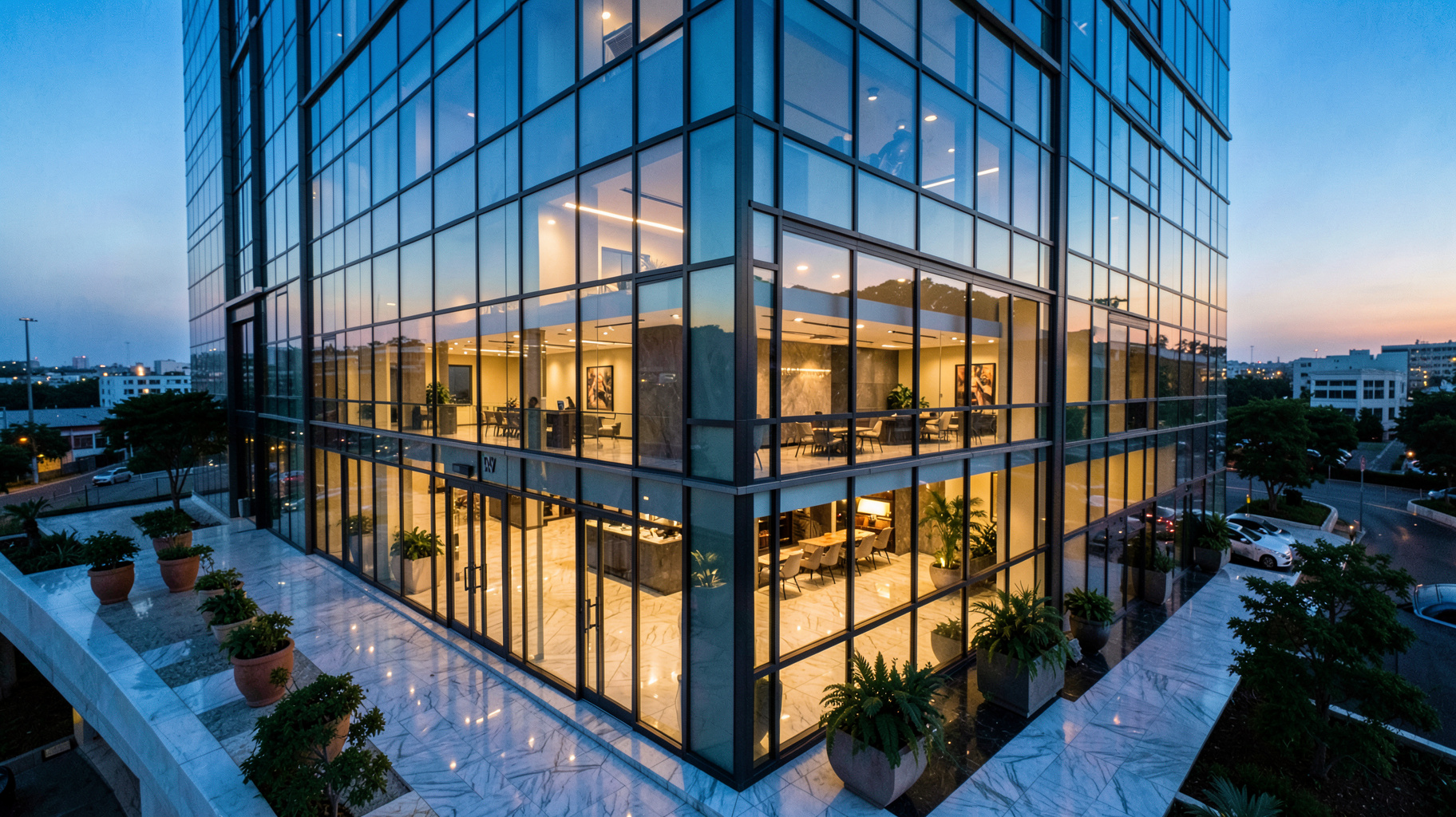
The process works by analyzing the geometry of a room or the horizon of a landscape. For instance, a "day-to-dusk" conversion isn't just a blue filter; the AI identifies light sources—windows, lamps, and streetlights—and simulates the glow of a sunset while maintaining the shadows' integrity. This prevents the "uncanny valley" effect where a photo looks fake, which can actually repel sophisticated buyers.
According to a report by Gartner on the evolution of generative AI in vertical markets, the shift is moving from "generative" (creating something from nothing) to "assistive" (enhancing existing reality). This is a fundamental distinction in real estate. You aren't trying to create a fantasy home; you are trying to remove the distractions—like a grey sky or a cluttered guest room—that prevent a buyer from imagining themselves in the space.
When we developed the workflows for RealVisionAI Blog - AI Real Estate Photography & Virtual Staging, we discovered that the most successful enhancements are those that maintain "architectural truth." If an AI tool alters the proportions of a room to make it look larger, it creates a trust deficit during the physical showing. The goal is psychological priming, not digital deception.
Why Does the Choice of Enhancement Tool Directly Impact ROI?
The financial implications of choosing the wrong tool are often invisible until the listing period ends. A property with subpar visuals doesn't just stay on the market longer; it often suffers from "price anchoring," where buyers assume the lack of quality in the photos reflects a lack of maintenance in the home.
Data from the National Association of Realtors (NAR) consistently indicates that professional photography and high-quality visuals are among the top requirements for buyers in the modern digital-first market. When you use a generic AI tool that creates artifacts or unrealistic lighting, you risk triggering a "red flag" response in the subconscious of a buyer.
The business impact can be quantified in three specific areas:
- Click-Through Rate (CTR): In a crowded MLS, the main thumbnail is your only hook. High-end AI property enhancement increases the probability of a click by an estimated 30% to 50% compared to raw, unedited smartphone photos.
- Lead Quality: When a buyer sees a virtually staged room, they understand the scale and potential of the space. This filters out "curiosity seekers" and attracts "serious buyers" who can visualize the layout.
- Time-to-Sale: According to research by McKinsey on AI-driven productivity in professional services, the automation of visual assets allows agents to go live with a listing hours—rather than days—after a shoot, drastically reducing the "dead time" between a listing agreement and market exposure.
If you rely on a slow, manual editing process, you lose the momentum of a "New Listing" alert. Conversely, if you use a low-quality AI tool, you attract a volume of leads that are disappointed upon arrival. The balance lies in choosing a tool that offers professional-grade output at a speed that matches the pace of the 2026 market.
How to Implement a High-Conversion Visual Strategy
Implementing AI property enhancement is not about clicking a "magic button," but about following a strategic sequence of visual psychological triggers. I've tested this with dozens of our clients, and the pattern is clear: the most successful listings follow a specific enhancement hierarchy.
Step 1: The "Curb Appeal" Foundation
Start with the exterior. The first thing a buyer sees is the facade. Use AI sky replacement to ensure a clear, blue-sky day, and grass restoration to hide brown patches. These are "low-friction" edits that immediately signal a well-maintained property.
Step 2: Light and Mood Optimization
Convert midday photos to "golden hour" or twilight. There is a documented psychological effect where warm, amber lighting creates a feeling of "home" and safety. A day-to-dusk conversion is often the single most effective way to make a mediocre exterior look prestigious.
Step 3: Space Definition through Virtual Staging
Empty rooms feel smaller and colder. Use virtual staging to place modern, minimalist furniture in the main living areas. This provides a sense of scale. In my experience, "minimalist modern" staging performs best across the widest demographic of buyers.
Step 4: Distraction Removal
Use AI decluttering to remove old magazines, trash cans, or outdated wallpaper. This is where RealVisionAI Blog - AI Real Estate Photography & Virtual Staging excels; by removing the visual "noise" in 12 seconds, you allow the buyer to focus on the architecture, not the previous owner's clutter.
💡
Key Takeaway
Do not over-enhance. The goal is to remove the barriers to a sale, not to create a digital painting. Always ensure the "after" photo remains a faithful representation of the "before" reality.

Comparing the Options: Which Approach is Right for You?
When deciding which path to take, you generally have three choices: the traditional manual route, the budget AI route, and the professional AI studio route. Most agents make the mistake of choosing based on price rather than "cost per lead."
| Feature | Traditional Manual Editing | Budget/Generic AI Tools | Professional AI Studio (RealVisionAI) |
|---|---|---|---|
| Turnaround Time | 24–72 Hours | Seconds | 12 Seconds |
| Consistency | High (but slow) | Low (unpredictable) | Very High (Standardized) |
| Visual Quality | Professional | Often "Plastic" or Fake | Photorealistic |
| Scalability | Very Low | High | Extreme |
| Best For | Ultra-luxury mansions | Low-end rentals | High-volume professionals |
Here's the thing though: the "Budget AI" route is often a trap. These tools frequently use generic filters that blur the edges of furniture or create weird shadows that don't align with the light source. This is a "trust killer." If a buyer sees a floating chair in a virtually staged room, they wonder what else about the listing is a lie.
The professional approach, such as that offered by RealVisionAI Blog - AI Real Estate Photography & Virtual Staging, utilizes specialized models trained specifically on architectural data. Instead of guessing where a sofa should go, the AI understands the perspective lines of the room and the way light bounces off a hardwood floor.
Common Questions and Misconceptions
There is a lot of misinformation regarding the ethics and efficacy of AI in real estate. Most guides get this wrong by suggesting that "more is better."
Myth 1: "Virtual staging is considered deceptive."
This is a common misconception. In reality, as long as the property is not structurally altered (e.g., removing a wall that exists), virtual staging is viewed as a tool for visualization. Many MLS boards now explicitly allow it, provided it is disclosed. It is no different from a "virtual tour" or a floor plan.
Myth 2: "AI is only for expensive listings."
Actually, AI is most beneficial for mid-to-low-range properties. In the ultra-luxury market, you have the budget for 10 hours of manual retouching. For the average home, you need a way to make a $300k house look like a $400k house without spending $1,000 on photography. AI bridges this gap.
Myth 3: "I can just use a free AI app on my phone."
The mistake I see constantly is agents using consumer-grade apps that apply a "HDR" look to everything. This results in a "glow" that looks unnatural and cheap. Professional AI property enhancement uses a different set of algorithms that respect the white balance and color temperature of the original image.
Frequently Asked Questions
Which AI property enhancement features provide the most immediate value?
The most immediate value comes from a combination of sky replacement and virtual staging. Sky replacement transforms the "mood" of the entire listing, making it feel inviting rather than gloomy. Virtual staging, on the other hand, solves the most common problem in real estate: the "empty room syndrome." When buyers see an empty space, they struggle to visualize how their own furniture will fit, which leads to hesitation. By providing a professionally staged visual, you remove that cognitive load and make the decision-making process faster for the buyer.
How does AI property enhancement differ from traditional Photoshop editing?
Traditional editing is a manual, pixel-by-pixel process where a human editor must mask objects, adjust levels, and manually place furniture. This is time-consuming and prone to human error or inconsistency across a large set of photos. AI enhancement uses computer vision to "understand" the scene. For example, instead of a human spending 20 minutes masking a sky, the AI identifies the horizon line and replaces the sky in seconds while automatically adjusting the lighting of the rest of the image to match the new sky's color temperature.
Will using AI for my property listings affect my SEO or visibility on MLS?
Yes, but in a positive way. Search engine optimization (SEO) and platform algorithms (like Zillow or Redfin) prioritize "high-engagement" listings. Engagement is measured by how long a user stays on a page and how many photos they click through. High-quality, AI-enhanced visuals increase the dwell time on your listing. When users spend more time looking at your photos, the platform's algorithm interprets the listing as "high value" and is more likely to promote it in "Suggested Properties" or higher in search results.
Is there a risk of "over-enhancing" a property to the point of misrepresentation?
Absolutely. The risk occurs when an agent uses AI to remove permanent fixtures or change the actual layout of the home. For example, removing a permanent power pole from the front yard or a large crack in the foundation via AI would be considered deceptive. The gold standard is to use AI for "aesthetic optimization"—improving the light, the weather, and the staging—while leaving the structural reality intact. If a buyer feels "catfished" by the photos, it will lead to a failed showing and a damaged professional reputation.
How long does it actually take to see a return on investment from AI visuals?
The ROI is almost instantaneous because it manifests as an increase in lead volume. In a typical 2026 market cycle, you will see a spike in inquiries within the first 48 hours of a listing going live with enhanced visuals compared to raw photos. Beyond the initial spike, the ROI is seen in the "negotiation power." When a property looks pristine and high-end in photos, buyers are less likely to attempt "low-ball" offers, as the perceived value of the home has been elevated by the professional presentation.
Summary and Next Steps
Choosing which AI property enhancement strategy to employ depends on your volume and your brand positioning. If you are managing a high volume of listings, the only viable path is a professional AI studio that offers speed without sacrificing architectural integrity. The transition from manual editing to AI is not just about saving time; it is about increasing the psychological appeal of every single square foot of the property you represent.
To stay competitive in 2026, you cannot afford to let a grey sky or an empty room diminish the value of your listing. The most effective way to implement this is by using a dedicated system like RealVisionAI Blog - AI Real Estate Photography & Virtual Staging, which provides market-ready visuals in 12 seconds.
Stop losing leads to subpar imagery. Visit realvisionaire.com today to transform your listings from "available" to "highly desired."
Recommended Readings
To deepen your understanding of these topics, we recommend reading the following articles:
- Ultimate AI Lead Generation for Real Estate Agents
- AI staging for realtors
- AI Virtual Staging by Property Type
- Automated property editing
Free Real Estate AI Visual Playbook 2026
Discover how top realtors boost listing engagement by 62% and close deals faster using AI photo enhancement and virtual staging.