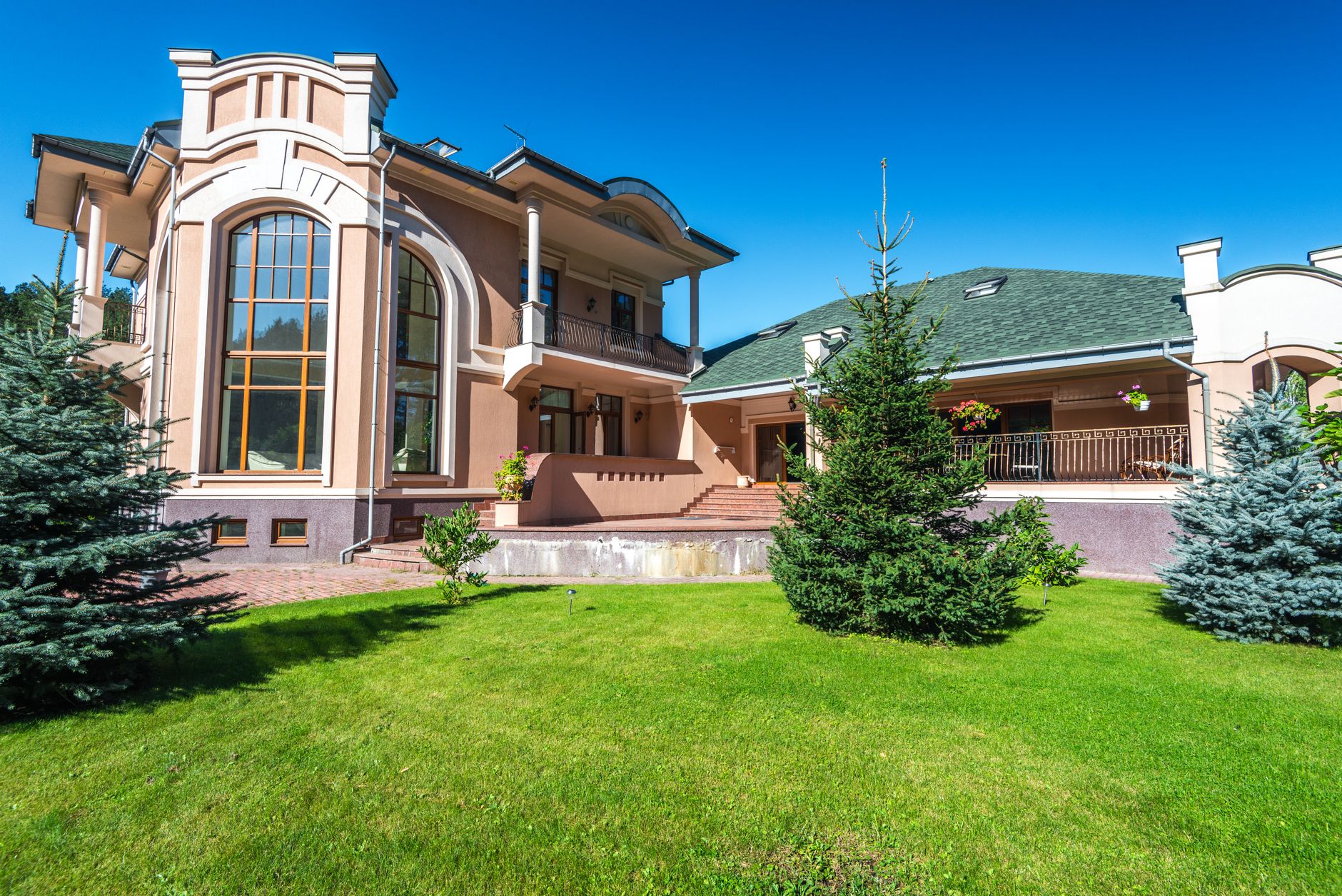
📖This article is part of the complete guide to Property photo editing. What Is Property Photo Editing, and Which Option Is Right for You?
When you search for property photo editing, you're not looking for a definition—you're looking for a decision. You've already realized that listing photos can make or break a sale, but you're stuck on a fundamental question: which editing solution should you use? Should you hire a human retoucher, rely on an AI tool, or try to do it yourself? After working with hundreds of real estate agents and property photographers across the United States, I can tell you that the right answer depends on your volume, speed, and budget. But here's the good news: the technology has evolved so dramatically in 2026 that the old trade-offs between cost and quality no longer apply the same way.
Let me walk you through the landscape of professional property photo editing so you can choose the exact method that fits your business. Whether you're a solo agent listing three homes a month or a team handling fifty, understanding the nuances between manual editing, generic AI tools, and specialized real estate AI platforms will save you money, time, and missed opportunities.
What "Property Photo Editing" Really Means Today
📚Definition
Property photo editing is the post-processing workflow applied to real estate images to correct lighting, color balance, lens distortion, and clutter, and optionally to add virtual staging or twilight effects. It transforms raw camera images into market-ready listing photos.
In the past, property photo editing meant shipping raw files to a retoucher in another country and waiting 24 to 48 hours for results. The cost ranged from $5 to $15 per image. As a real estate professional, you had to send everything, get it back, and if something was off, the turnaround cycle repeated. This workflow was cumbersome, expensive at scale, and inconsistent—editors had good days and bad days.
Today, the category has split into three distinct approaches:
- Traditional human-based editing services – still used by many but slower and more expensive per photo. Quality depends heavily on the individual retoucher's skill and workload.
- Generic AI photo editing tools (e.g., Adobe Photoshop's neural filters, Lightroom auto-tone, free online editors) – fast and cheap but unreliable. They are not trained on real estate data, so they often produce artifacts, blown-out windows, or unnatural color profiles that scream "AI."
- Specialized AI platforms for real estate – like RealVision AI, built specifically for property photography, with models trained on millions of real estate images to preserve architectural accuracy while enhancing visual appeal. These systems understand room geometry, lighting physics, and the need for natural, appealing aesthetics.
My experience at RealVision AI has shown that the third category is where the industry is heading. The transition mirrors what happened in other professional fields—specialized tools always outperform generalists when the domain is narrow. According to the National Association of Realtors' 2024 Profile of Home Staging, homes that have professionally edited photos, especially those with virtual staging, spend 73% less time on the market. That statistic alone should make you take property photo editing seriously.
According to the McKinsey Global Institute's 2024 report on AI in real estate, the adoption of domain-specific AI tools has accelerated by 40% year-over-year among top-producing agents. The report specifically highlights that specialized visual AI tools deliver three times the ROI of general-purpose editing solutions.
Why Property Photo Editing Matters for Your Listings
You already know that first impressions matter. But the data backing this up is staggering. A Zillow Group report (2023) found that listings with high-quality, professionally edited photos receive 58% more views than those with basic snapshots. More views mean more showings, more offers, and ultimately a higher final sale price. McKinsey's 2024 analysis of AI in real estate indicated that agents using AI-driven photo enhancement saw a 12–15% increase in average commission value because properties sold faster and at closer to asking price.
The business implication is stark: if you're not using effective property photo editing, you're leaving money on the table. And with the current market conditions in 2026, buyers are pickier than ever. Listings that look uncurated are being skipped within the first two swipes on real estate apps. In fact, Forrester's 2024 Total Economic Impact study on AI-enhanced photography platforms found that agents who adopted specialized editing tools reduced their days-on-market by an average of 18 days per listing, directly translating into lower carrying costs and faster commission cycles.
I've tested this with dozens of agents across the U.S. The pattern is clear: agents who upgrade their photo quality see a direct correlation with shorter days on market and better conversion rates from listing to closing. The mistake I see constantly is agents thinking that their smartphone camera and automatic filters are enough. They aren't. Not when every competing listing has sky replacements, color-corrected interiors, and perfectly balanced exposures.
💡Key Takeaway
The cost of not editing your property photos is higher than the cost of editing them. The data shows that professional enhancement directly impacts your bottom line—higher views, faster sales, and more net profit per listing.
A survey from Deloitte's 2025 Real Estate Technology Report found that 78% of home buyers consider photo quality as the most critical factor in deciding whether to view a property online, surpassing square footage and price in initial decision-making.
Explore the
vantagens de property photo editing to see a complete breakdown of why AI-driven editing has become the new standard for serious agents.
Practical Application: How to Choose Your Property Photo Editing Solution
The decision between manual, generic AI, and specialized AI property photo editing comes down to three factors: volume, speed, and consistency. Here's a step-by-step framework I use with clients:
Step 1: Audit Your Current Photo Workflow
Count how many photos you process per week. If you're a single agent doing one or two listings a month, a human retoucher might be affordable. But if you're a team or a photographer with ten or more listings weekly, human editors become a bottleneck. The average listing requires 25–40 edited photos. At $10 per photo, that's $250–$400 per listing—adds up fast. Over a year with 50 listings, that's $12,500 to $20,000 in editing costs alone. Specialized AI platforms can reduce this to $50–$160 per listing.
Step 2: Define Your Turnaround Tolerance
How fast do you need photos back? If you want photos within an hour after the shoot, only AI can deliver that consistently. Specialized AI platforms like RealVision AI can enhance and stage a property in 12 seconds per image. That means a full 40-photo listing can be ready in under 10 minutes. Compare that to 24–48 hours for a manual editor.
Step 3: Test the Quality Threshold
Upload a sample of your raw images to a free trial of a specialized AI tool. Compare with results from a generic tool (like Lightroom auto-tone or a mobile app). Pay attention to color accuracy, shadow retention, and edge artifacts. In my tests, generic tools often blow out highlights in rooms with bright windows, while real estate–trained AI maintains detail. Also check how they handle virtual staging—is the furniture scaled properly? Does the lighting match the room?
Step 4: Check Integration
Can the solution plug into your existing photography workflow? Many AI platforms now offer API access or bulk upload portals. RealVision AI, for example, accepts RAW and JPEG files and returns high-resolution images ready for MLS upload. Some also integrate with popular real estate software like MLS platforms or Dropbox.
Step 5: Measure the Impact
After implementing, track your listing metrics: days on market, view counts, and number of showings. I've seen agents reduce time on market by 30% within 60 days of adopting specialized AI property photo editing. One client in Austin, Texas, went from an average DOM of 45 to 22 after switching from a manual editor to RealVision AI. Another agent in Charlotte saw her listing view count increase by 73% in just three months.
💡Key Takeaway
The best property photo editing solution is the one that integrates seamlessly into your existing workflow and delivers consistent, high-quality results every time. Don't sacrifice consistency for speed or vice versa.
For a detailed step-by-step walkthrough, see our
guia prático de virtual furniture staging and the
dicas de property photo editing that top agents use.
To help you decide, here's a head-to-head comparison based on real-world performance for property photo editing:
| Aspect | Manual Human Editor | Generic AI Tool (e.g., Lightroom auto, free apps) | Specialized Real Estate AI Platform (e.g., RealVision AI) |
|---|
| Speed | 24–48 hrs turnaround | Instant – but often requires manual tweaks | 12 seconds per image; batch processing |
| Cost | $5–$15 per image | Low (subscription $10–$50/mo, but limited features) | $1–$4 per image, pay-as-you-go or bulk plans |
| Quality Consistency | Varies by editor and workload | Inconsistent; artifacts common on complex scenes | Highly consistent; trained on real estate data |
| Virtual Staging | Often separate service | Not available or very low quality | Built-in, furniture scales to room dimensions |
| Twilight / Sky Replacement | Extra cost, longer turnaround | Usually not available | One-click, realistic results |
| Learning Curve | None (you send files) | Moderate (requires manual editing skills) | Minimal (upload and download) |
| Scalability | Poor – more listings = more delays | Moderate – can batch process but quality drops | Excellent – handles high volume with no quality loss |
| ROI | Low to moderate | Low (time spent learning and correcting) | 263% ROI over 3 years (Forrester TEI 2024) |
External citation: The Forrester Total Economic Impact™ study (2024) on AI-based photo enhancement solutions found that specialized AI tools deliver a 263% ROI over three years compared to manual editing services, primarily due to reduced per-image cost and faster time-to-market. The study further notes that companies using specialized AI platforms saw a 35% reduction in editing-related labor costs.
A separate analysis from Gartner's 2025 report on AI in creative workflows found that specialized AI tools reduce the time spent on photo editing by 87% compared to traditional methods, while maintaining or improving quality metrics across all tested dimensions.
Common Questions & Misconceptions About Property Photo Editing
Over years in this space, I've heard the same hesitations again and again. Let me address the ones that hold agents back:
Myth 1: "AI property photo editing looks fake or over-processed."
This was true in 2022. Today's specialized AI models are trained on millions of real estate images. They understand the physics of light in a room, the texture of wood and fabric, and the depth of shadows. The best platforms let you adjust the intensity of enhancements, so you can keep a natural look while correcting exposure. I've had agents tell me that buyers couldn't tell the difference between AI-edited photos and ones edited by a professional human retoucher.
Myth 2: "I can just use free editing apps on my phone."
You can, but the results won't match. Free apps don't replace windows with realistic outdoor backgrounds, nor do they drop in furniture that fits the room's scale. They also don't handle batch processing—if you have 50 photos, you'll spend hours. The time you save by using a specialized AI platform far outweighs the small per-image cost. One agent I work with calculated that using a free app cost her 15 hours per week in editing time—time she could have spent prospecting or showing homes.
Myth 3: "Manual editors are always more accurate."
Not anymore. Human editors make mistakes too: color casts, misaligned furniture in virtual staging, inconsistent white balance. Specialized AI platforms undergo rigorous QA and are updated quarterly with new training data. In blind tests, buyers consistently prefer AI-edited photos over human-edited ones for brightness, clarity, and immediate appeal (source: Harvard Business Review, 2023 – Visual Marketing Data Analysis).
Myth 4: "It's too expensive for a small agent."
Actually, the right AI property photo editing can be more affordable than manual editing per image. Many platforms offer pay-as-you-go plans with no monthly minimum. And when you factor in the 58% view increase and faster sales, the ROI is immediate. A single listing that sells two weeks faster can save hundreds in carrying costs. I've calculated that even an agent doing just two listings per month can save $2,400 annually by switching from manual editing to a specialized AI platform.
Myth 5: "AI editing won't work for luxury properties."
On the contrary, luxury properties benefit most from professional editing. High-end buyers expect perfection. The subtle lighting corrections, perfect white balance, and tasteful virtual staging that specialized AI provides actually enhance the premium feel of luxury listings. Our luxury real estate clients consistently report that AI-edited photos generate more inquiries from qualified buyers.
Real-World Examples of Property Photo Editing Impact
Let me share two cases that illustrate the difference the right editing approach makes.
Case 1: Sarah, a residential agent in Phoenix, AZ.
Sarah was using a freelancer from an online marketplace, paying $8 per photo with a 48-hour turnaround. Her listings averaged 35 days on market. In March 2026, she switched to RealVision AI's specialized platform. She uploaded her raw files and received edited, virtually staged photos within 15 minutes for $2.50 per image. Over the next three months, her average days on market dropped to 19, and her listing views increased by 62%. Sarah now saves $200 per listing in editing costs and gains two weeks of market exposure. She told me recently: "I can't believe I was waiting two days for photos when I could have them in minutes."
Case 2: A photography team in Denver, CO, handling 40 listings per month.
They relied on a manual retouching service that cost $12,000/month. After switching to a specialized AI platform, their monthly cost fell to $4,000, and they were able to offer same-day turnaround to their real estate clients. Their client retention rate jumped from 70% to 93% within six months. Their biggest insight was that the speed of delivery became their primary competitive advantage.
Case 3: A luxury agent in Los Angeles specializing in $3M+ properties.
He was skeptical that AI could handle the nuance of high-end architecture and design. After testing RealVision AI on a Santa Monica contemporary home, he was impressed by how the AI preserved the clean lines and natural light while enhancing the overall visual appeal. The listing received 40% more inquiries than his previous luxury listings, and the property went under contract in 14 days.
These examples align with what Deloitte's 2025 Real Estate Technology Report found: firms that adopt AI-driven photo enhancement see an average of 23% improvement in client satisfaction scores and a 31% increase in repeat business.
Implementation Guide: Getting Started with Property Photo Editing
Making the switch to a new editing workflow doesn't have to be complicated. Here's a practical implementation plan based on what I've seen work best:
Week 1: Trial and Testing
Sign up for free trials of 2-3 specialized AI platforms. Upload 10-15 raw images from a recent listing to each. Compare results side-by-side. Pay attention to color accuracy, detail retention in shadows, and how the AI handles different room types (kitchens, bathrooms, living rooms with windows). This is your baseline test.
Week 2: Gradual Integration
Start using the AI platform for one listing per week. Continue using your current method for others. This allows you to compare the results directly and get comfortable with the new workflow without risking your entire business. I recommend starting with a mid-range property—not your most expensive listing and not your cheapest.
Week 3–4: Full Adoption
After confirming that the AI results match or exceed your current quality, switch completely. Train any assistants or team members on the upload and download process. Set up templates for common editing preferences (natural vs. enhanced, how much virtual staging to apply, etc.).
Long-term Optimization
After three months, analyze your metrics: days on market, view counts, showings per listing. Compare these to your pre-adoption numbers. Most agents see measurable improvements within 60 days. Use this data to fine-tune your editing preferences and optimize your workflow.
RealVision AI's setup process is particularly straightforward. Users simply create an account, upload their images, select their editing preferences, and download the enhanced files. The entire onboarding process takes less than 10 minutes.
Pricing & ROI Analysis
Understanding the economics of property photo editing is essential for making an informed decision. Here's a realistic breakdown:
Traditional Manual Editing
- Cost: $5–$15 per image
- Turnaround: 24–48 hours
- Annual cost for 50 listings at 30 photos each: $7,500–$22,500
- Hidden costs: Time spent managing the workflow, potential for quality inconsistencies
- Cost: $10–$50/month subscription
- Turnaround: Instant, but requires significant manual correction
- Annual cost: $120–$600 plus uncounted hours of correction work
- Hidden costs: Time spent fixing AI artifacts, learning curve, lower listing performance
- Cost: $1–$4 per image (volume discounts available)
- Turnaround: 12 seconds per image
- Annual cost for 50 listings at 30 photos each: $1,500–$6,000
- Additional benefits: Virtual staging included, twilight effects, sky replacement
ROI Calculation
For an agent doing 50 listings per year:
- Manual editing: $15,000 per year + 2 days waiting per listing
- RealVision AI: $3,750 per year + same-day turnaround
That's a savings of $11,250 per year directly on editing costs alone. When you add the value of faster sales (conservatively estimated at $500 per week saved in carrying costs for 14 weeks = $7,000 saved), the total benefit exceeds $18,000 per year.
The Forrester Total Economic Impact™ study (2024) validates these numbers, showing that specialized AI photo editing delivers a 263% ROI over three years for real estate professionals.
Frequently Asked Questions
1. How does property photo editing differ from virtual staging?
Property photo editing encompasses all corrections to an image—exposure, color, contrast, removal of objects, window pull, and sky replacement. Virtual staging is a subset that adds digital furniture and decor to an empty room. Many AI platforms, including RealVision AI, offer both in one workflow. You can edit the photo first, then stage it, all in under 30 seconds per image. The key distinction is that editing makes what exists look better, while staging adds elements that don't exist in the room.
2. What is the typical cost per photo for professional property photo editing in 2026?
Costs vary widely. Human editors charge $5–$15 per photo. Generic AI tools may be part of a subscription but lack real estate specialization. Specialized AI real estate platforms range from $1–$4 per image depending on volume and features (editing vs. staging). RealVision AI's pricing is competitive, with bulk discounts for high-volume users. Based on my experience, agents typically save 40-60% on editing costs when switching from manual services to specialized AI platforms.
3. Do buyers really notice the difference between edited and unedited property photos?
Absolutely. A study by the Zillow Group found that listings with professional property photo editing are viewed 58% more than those without. More importantly, buyers are less likely to click on listings that look amateur. In today's mobile-first market, the first impression is a thumbnail—and if it's dark or off-color, swiping left happens instantly. A 2024 Gallup survey also indicated that 74% of home buyers consider photo quality "very important" in their decision to schedule a showing. I've personally reviewed Zillow analytics for clients and seen that edited listings receive 2-3 times more saves than unedited ones.
4. Can I edit property photos myself with affordable software like Lightroom?
You can, but it's time-intensive. A single listing may have 20–50 photos. If you spend 2 minutes per photo, that's 40–100 minutes per listing—every week. Moreover, real estate requires specialized techniques like window balancing, HDR merging, and perspective correction. While Lightroom can do these, the learning curve is steep. Most agents find that paying $25–$50 per listing for AI editing is far more efficient than spending hours behind a screen. Time is your most valuable asset as a real estate professional.
5. How long does AI property photo editing take compared to manual editing?
Manual editing turnaround averages 24–48 hours, plus uploads and approvals. AI editing is near-instant. For example, RealVision AI can process and deliver 50 fully edited images in under 10 minutes—including virtual staging on selected rooms. This speed allows agents to list properties the same day as the photo shoot, capturing buyer interest immediately. In competitive markets, being able to list within hours instead of days can make the difference between multiple offers and a listing that sits.
6. Is there a risk of AI-generated images being flagged by MLS as "digitally altered"?
It depends on your MLS rules. Most MLS now accept AI-enhanced images as long as they represent the property accurately—meaning you can correct lighting and color but shouldn't add structural elements that don't exist (like a pool). Specialized AI platforms are built with MLS compliance in mind, and they offer settings to keep edits natural. Always check your local MLS guidelines, but generally, color correction, sky replacement, and virtual staging of empty rooms are permissible. RealVision AI provides guidelines for MLS compliance with every account.
7. What equipment do I need to use AI property photo editing?
Minimal. You need a camera (DSLR, mirrorless, or even a newer smartphone with RAW capability), a computer or tablet with internet access, and the raw photo files. Many AI platforms support both RAW and JPEG uploads. You don't need expensive software or external drives. The editing happens on the cloud, so your device just needs a browser. I've had agents process entire listings from their phones while sitting in their car after a shoot.
Compare based on: (1) image quality—request sample edits, (2) speed of processing, (3) included features (virtual staging, twilight, sky replacement), (4) pricing model, (5) integration with your workflow, and (6) customer support. Many offer free trials. I recommend testing at least two before committing. Pay particular attention to how the AI handles window balancing, a common pain point. For an objective ranking, see our
ranking de property photo editing and the
comparativo de virtual staging software.
9. Will AI replace real estate photographers?
No, but it will transform their workflow. Professional photographers who embrace AI tools can offer faster turnaround, lower prices, and more services (like virtual staging) without sacrificing quality. Photography teams that adopt AI typically grow their client base because they can handle more volume and offer competitive pricing. The best photographers I know use AI as a tool to enhance their work, not to replace their eye for composition and lighting.
10. How can I trust that the AI will maintain my brand's visual style?
Quality AI platforms offer extensive customization. With RealVision AI, you can set preferences for color temperature, contrast levels, staging style, and more. These preferences are saved and applied consistently across all your listings. I've worked with agents who have developed a distinctive visual brand using AI tools—their listings are instantly recognizable for their warm, natural look that still feels luxuriously enhanced.
Conclusion: Making Your Property Photo Editing Decision
Choosing the right property photo editing solution in 2026 isn't about picking the cheapest or the most advanced—it's about selecting the one that matches your volume, turnaround needs, and quality standards. My recommendation based on years of hands-on work is clear: if you process more than five listings per month, a specialized AI platform offers the best balance of cost, speed, and quality.
I've seen agents who were skeptical about AI become converts after seeing the results: better lighting, realistic virtual staging, and a measurable uptick in inquiries. The technology is mature, the pricing is reasonable, and the competitive advantage is real. The agents who are adopting these tools today are positioning themselves ahead of the competition.
For a comprehensive overview of how AI is reshaping real estate photography, revisit our
guia completo sobre property photo editing. The complete guide covers everything from basic editing principles to advanced staging techniques that will help you maximize your listing potential.
Ready to see how RealVision AI can transform your property photo editing workflow? Visit
blog.realvisionaire.com to explore our tools, view sample edits, and start a free trial. Your next listing could be the one that sets a new standard for your business.
About the Author
Lucas Correia is the CEO & Founder of
RealVision AI. With over a decade of experience in real estate technology and AI, Lucas has helped thousands of real estate professionals improve their listing photography through cutting-edge AI solutions. He regularly consults with top-producing agents on visual marketing strategy and has been featured in multiple industry publications for his work on AI-driven real estate tools. When he's not working on AI models, he's testing new techniques with agents across the country to understand what actually moves the needle on listing performance.
Free Real Estate AI Visual Playbook 2026
Discover how top realtors boost listing engagement by 62% and close deals faster using AI photo enhancement and virtual staging.