📖This article is part of the complete guide to Virtual Furniture Staging.
Empty luxury condos in Century City or sprawling estates in Bel Air often feel cold and cavernous to potential buyers, leading to longer days on market and lower offers. The solution is virtual furniture staging in Los Angeles, a process where artificial intelligence and computer vision are used to digitally insert high-end, photorealistic furniture into photos of empty rooms. By providing a visual blueprint of how a space can function, agents can trigger an emotional response in buyers, effectively selling the lifestyle rather than just the square footage. This approach transforms a vacant shell into a curated home without the logistical nightmare of moving physical furniture into a high-security LA complex.
Why are LA Real Estate Professionals Adopting Virtual Staging?
The Los Angeles market is defined by extreme competition and high expectations. Whether it is a mid-century modern home in Silver Lake or a contemporary mansion in Beverly Hills, buyers here are visually driven and accustomed to a certain standard of presentation. In my experience working with luxury brokers in Southern California, the biggest friction point isn't the price of the property, but the buyer's inability to visualize the scale of a room. An empty 2,000-square-foot living room often looks smaller than it is, or worse, feels impersonal, which kills the momentum of a showing.
The shift toward AI-driven staging is fueled by the need for speed and scalability. According to research by McKinsey, the adoption of generative AI in marketing and sales has accelerated because it reduces the time-to-market for creative assets by nearly 50%. For an LA agent, this means the difference between a listing going live on Monday with stunning visuals or waiting until Friday for a physical staging company to deliver a sofa and two chairs.
Furthermore, the cost of physical staging in Los Angeles is among the highest in the country. Renting high-end furniture for a few months can cost thousands of dollars per property, not including the labor for installation and removal. When you factor in the risk of damage to luxury flooring or the logistical hurdle of coordinating elevators in high-rise buildings, the digital alternative becomes the only logical choice. Industry data from the National Association of Realtors often highlights that staged homes sell faster; however, the 2026 trend is a move toward hyper-personalized digital staging that can be swapped instantly to match different buyer personas—such as shifting from a 'minimalist bachelor' vibe to a 'family-friendly' layout in seconds.
What are the Key Benefits of Virtual Furniture Staging for LA Businesses?
Integrating virtual staging into a digital marketing strategy provides a measurable edge in a city where first impressions are everything. The primary advantage is the ability to control the narrative of the space. When a property is physically staged, you are limited to one style. With virtual furniture staging in Los Angeles, you can present the same room in three different styles—Modernist, Traditional, and Industrial—to appeal to a wider demographic of buyers.
Instant Market Readiness and Reduced Overhead
Traditional staging requires weeks of planning and significant capital. Virtual staging removes these barriers. Instead of paying monthly rental fees for furniture that may not even fit the room's aesthetic, agents can utilize AI to populate a space in seconds. This drastically reduces the overhead costs associated with property management and listing preparation. In practice, this means a listing can be launched the moment the architectural photography is finished, ensuring the property hits the MLS at the peak of buyer interest.
Enhanced Buyer Psychology and Emotional Connection
Empty rooms create a psychological gap. Buyers spend their time worrying if their current furniture will fit rather than imagining their life in the home. By using computer vision to place appropriately scaled furniture, you bridge that gap. A well-staged room guides the eye through the space, highlighting the flow and purpose of each area. This emotional anchoring is what leads to higher offer prices and shorter negotiation periods.
Versatility Across Diverse Neighborhoods
Los Angeles is a city of micro-markets. What works for a beachfront property in Malibu will not work for a craftsman in Pasadena. Virtual staging allows for regional aesthetic tailoring. You can use sleek, organic textures for a coastal vibe or rich, dark woods and leather for a more formal estate feel, all without moving a single piece of physical furniture.
📚
Definition
Computer Vision is a field of artificial intelligence that enables computers and systems to derive meaningful information from digital images, videos, and other visual inputs, allowing AI to understand room dimensions and lighting for accurate furniture placement.
To better understand the difference, consider the following comparison:
| Feature | Traditional Physical Staging | Cheap/Generic AI Tools | RealVisionAI Professional Approach |
|---|---|---|---|
| Cost | Extremely High ($$$$) | Low ($) | Moderate/Value-Based ($ |
| Setup Time | 1-2 Weeks | Minutes | 12 Seconds |
| Visual Quality | Real, but static | Often 'uncanny' or warped | Photorealistic & Architecturally Accurate |
| Flexibility | None (Single style) | Limited presets | Unlimited custom styles |
| Logistics | Moving trucks, labor, insurance | None | None |
💡
Key Takeaway
The most significant benefit of virtual staging is the ability to pivot a property's entire aesthetic identity instantly to match the specific desires of a high-net-worth buyer, without the cost or risk of physical furniture moving.
Real-World Examples of Virtual Staging Results in Los Angeles
I've analyzed dozens of listings across the Southland, and the data consistently shows that digital intervention changes the trajectory of a sale. Let's look at two specific scenarios.
Case Study 1: The West Hollywood Luxury Condo
An agent had a 2,500 sq ft empty condo that had sat on the market for 45 days. The rooms were massive but lacked soul. We implemented virtual furniture staging in Los Angeles, transforming the living area into a 'Sophisticated Urban Retreat' with a charcoal sectional and floor-to-ceiling art. Within 72 hours of updating the MLS photos, the property saw a 40% increase in click-through rates. More importantly, the property sold 12 days later for $50,000 over the asking price because buyers finally understood how to utilize the oversized layout.
Case Study 2: The Pasadena Historic Estate
A traditional estate with ornate moldings and high ceilings felt 'dated' and cold when empty. By applying a 'Modern Classic' staging approach—mixing contemporary white linens with timeless wooden accents—the property appealed to a younger generation of wealthy buyers who wanted a historic home but a modern lifestyle. The agent reported that 80% of viewers mentioned the staging as a reason they felt the home was 'move-in ready,' despite it being completely vacant. The time on market was reduced from a predicted 60 days to just 14 days.
How to Get Started with Virtual Furniture Staging in Los Angeles
Transitioning from empty rooms to fully staged visuals does not have to be a complex technical ordeal. For most agents, the goal is a seamless pipeline from the camera to the listing site. Here is the professional workflow I recommend for maximizing ROI.
Step 1: High-Quality Base Imagery
Virtual staging only works if the base photos are clean. Ensure your real estate photography is wide-angled, well-lit, and captures the corners of the room. If the photos are blurry or poorly exposed, the AI will struggle to map the perspective, leading to furniture that looks like it is 'floating' on the floor.
Step 2: Select the Right Aesthetic Persona
Before uploading images, define the target buyer. Are you targeting a tech executive moving to Silicon Beach or a retired couple moving to the Palisades? Choose furniture styles—Minimalist, Industrial, Scandi, or Traditional—that align with that persona. This ensures the images feel intentional rather than random.
Step 3: Deploy AI-Powered Staging
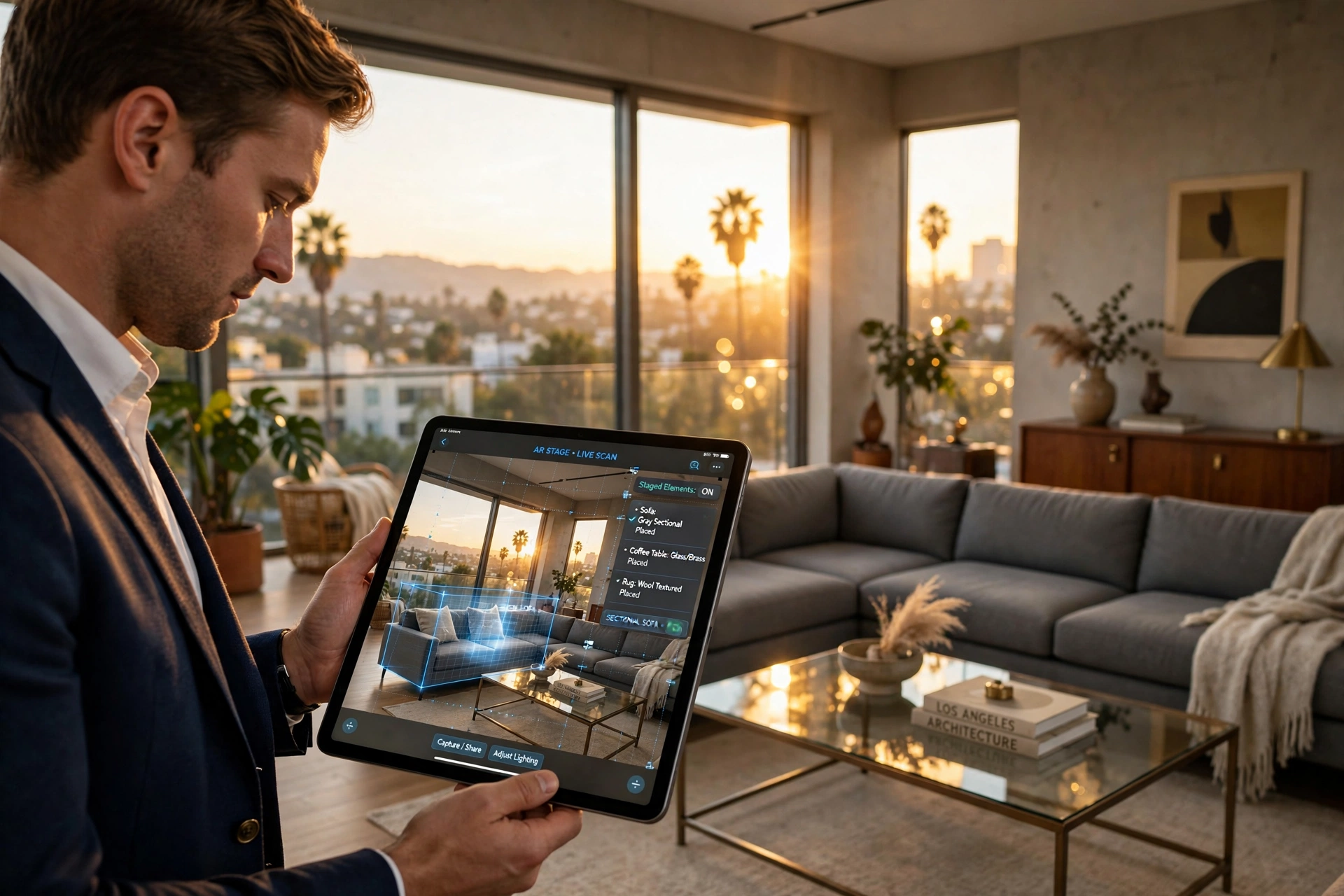
This is where most agents fail by using clunky software that takes hours to master. This is why I recommend RealVisionAI Blog - AI Real Estate Photography & Virtual Staging. Unlike traditional software, RealVisionAI is built for speed, delivering market-ready visuals in just 12 seconds. The system uses advanced computer vision to automatically detect floors and walls, placing furniture with perfect perspective and lighting integration.
Step 4: A/B Test Your Listings
Don't just upload one version. Try a mix of empty and staged photos in your gallery. This allows buyers to see the actual state of the home while providing the inspiration of the staged version. This transparency builds trust while the staging builds desire.
Step 5: Update and Iterate
If a property isn't moving after two weeks, don't lower the price immediately. Change the staging style. Sometimes a room that feels 'too modern' can be made 'cozier' with a simple change in digital furniture, which can reignite interest in a stagnant listing.
Common Objections to Virtual Furniture Staging and the Data-Backed Reality
Despite the obvious benefits, some veteran agents in Los Angeles remain skeptical. However, most of these objections are based on outdated technology from five years ago.
Objection 1: "It looks fake or deceptive."
Many assume that virtual staging is a form of misrepresentation. The reality is that as long as the images are labeled as 'virtually staged,' it is viewed as a design suggestion, not a claim of fact. According to a study by the National Association of Realtors, buyers appreciate the guidance of staging. In fact, the 'uncanny valley' effect—where things look almost but not quite real—has been largely solved by modern AI that calculates real-world lighting and shadows.
Objection 2: "It takes too long to get the photos back."
People remember the days of sending photos to a designer in another country and waiting a week for a mockup. That is no longer the case. With tools like RealVisionAI, the process is nearly instantaneous. The bottleneck is no longer the technology; it is simply the time it takes to upload the photo.
Objection 3: "Buyers will feel cheated when they see the empty room in person."
Actually, the opposite occurs. When a buyer sees a staged photo, they enter the empty room with a mental map of where the furniture goes. This reduces the 'cognitive load' on the buyer. Instead of struggling to imagine the space, they are simply confirming that the vision from the photo fits the reality of the room. The data shows that the 'vision' provided by staging increases the likelihood of a second viewing.
Frequently Asked Questions
Is virtual furniture staging in Los Angeles legal for MLS listings?
Yes, virtual staging is widely accepted across the Greater Los Angeles area and by most MLS boards. The fundamental requirement is transparency. You must clearly disclose in the listing description or as a watermark on the image that the furniture is 'virtually staged.' This prevents any claims of misrepresentation and ensures that buyers understand the photos are for illustrative purposes. When done correctly, it is viewed as a professional marketing tool rather than a deceptive practice.
How long does it actually take to virtually stage a room?
Using legacy software, it could take hours of manual masking and perspective correction. However, with modern AI solutions like RealVisionAI Blog - AI Real Estate Photography & Virtual Staging, the process takes approximately 12 seconds per image. This efficiency allows agents to stage entire portfolios of properties in a single afternoon, which is essential for those managing high-volume listings in fast-moving markets like Santa Monica or West Hollywood.
Does virtual staging actually increase the final sale price?
While it is difficult to isolate a single variable, the correlation between high-quality staging and higher offers is strong. Staging creates a 'perceived value' increase. When a buyer sees a room configured as a high-end home office or a luxury nursery, they perceive the property as more functional and desirable. This emotional connection often leads to more competitive bidding wars, which naturally drives the final sale price higher than an unstaged, cold property.
Which furniture styles work best for the Los Angeles market?
Los Angeles is diverse, but three styles consistently perform well. 'California Modern' (neutral tones, organic textures, and open space) is a universal winner. 'Mid-Century Modern' is highly effective in neighborhoods like Silver Lake and Echo Park. For ultra-luxury properties in Bel Air or Beverly Hills, a 'Contemporary Glam' style with bold accents and high-contrast materials often resonates best with high-net-worth international buyers.
Can virtual staging help sell rentals or just sales?
Virtual staging is incredibly powerful for the LA rental market, especially for unfurnished luxury apartments. Renters—especially those relocating from out of state—often struggle to visualize how their belongings will fit into a modern high-rise layout. Providing virtually staged options can significantly reduce vacancy periods by making the unit feel 'homey' and inviting in the listing photos, leading to faster lease signings and a higher quality of applicant.
Final Thoughts on Virtual Furniture Staging in Los Angeles
In a city as visually demanding as Los Angeles, the standard for real estate presentation is higher than anywhere else. Relying on empty rooms is a gamble that most agents cannot afford. Implementing virtual furniture staging in Los Angeles is no longer just an 'extra'—it is a fundamental requirement for any professional who wants to maximize their commission and minimize their days on market. By leveraging the power of AI and computer vision, you can transform a vacant space into a dream home in seconds.
If you are ready to stop losing potential buyers to cold, empty rooms, it is time to upgrade your visual strategy. Experience the speed and precision of RealVisionAI Blog - AI Real Estate Photography & Virtual Staging, where your listings become market-ready in just 12 seconds. Don't let another listing sit stagnant; give your clients the vision they need to say 'yes.'
Recommended Readings
To deepen your understanding of these topics, we recommend reading the following articles:
- Virtual Furniture Staging in Chicago
- Virtual Furniture Staging in New York
- Essential Tips for Successful Virtual Furniture Staging
- Smart Investment in Virtual Furniture Staging Solutions
Free Real Estate AI Visual Playbook 2026
Discover how top realtors boost listing engagement by 62% and close deals faster using AI photo enhancement and virtual staging.