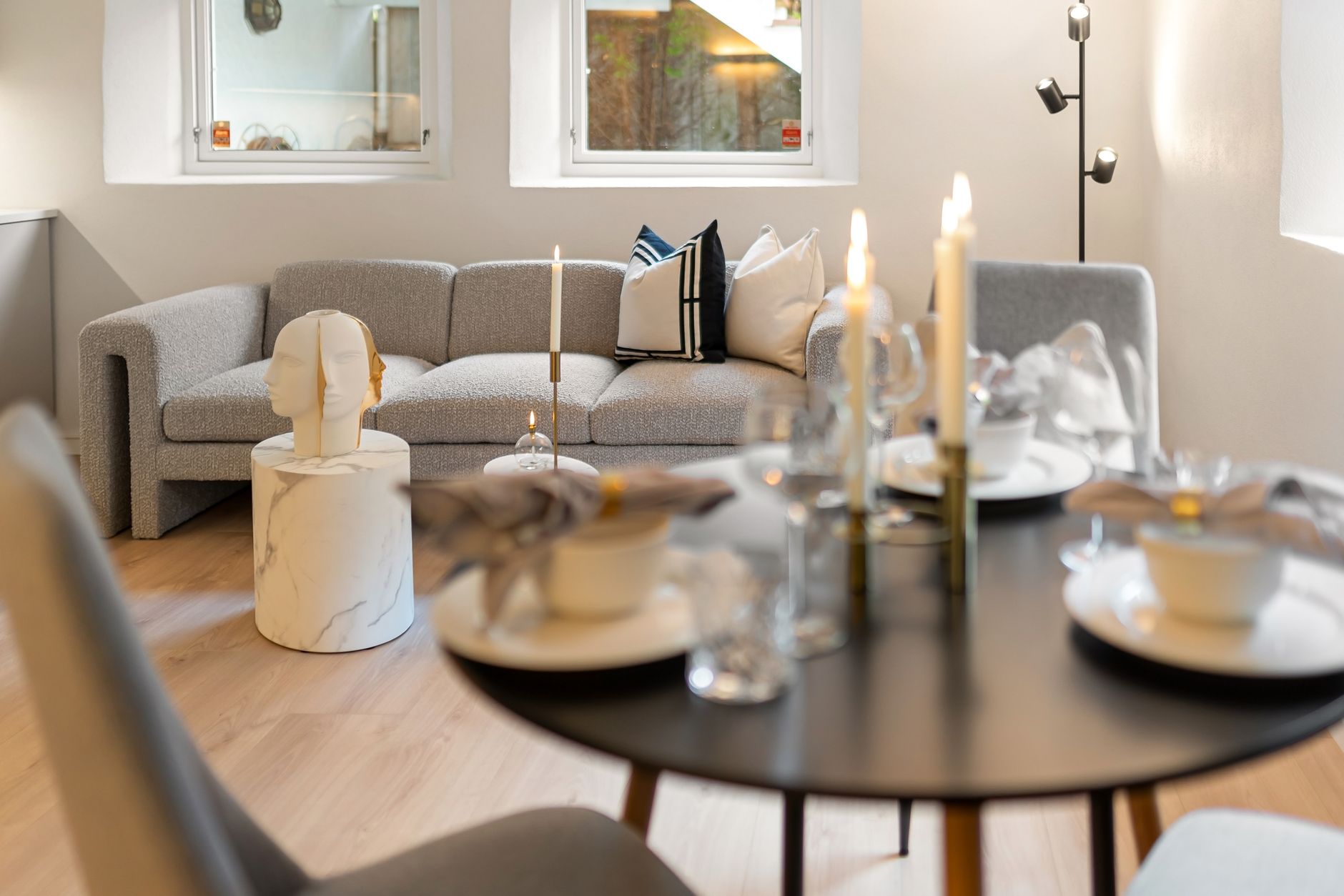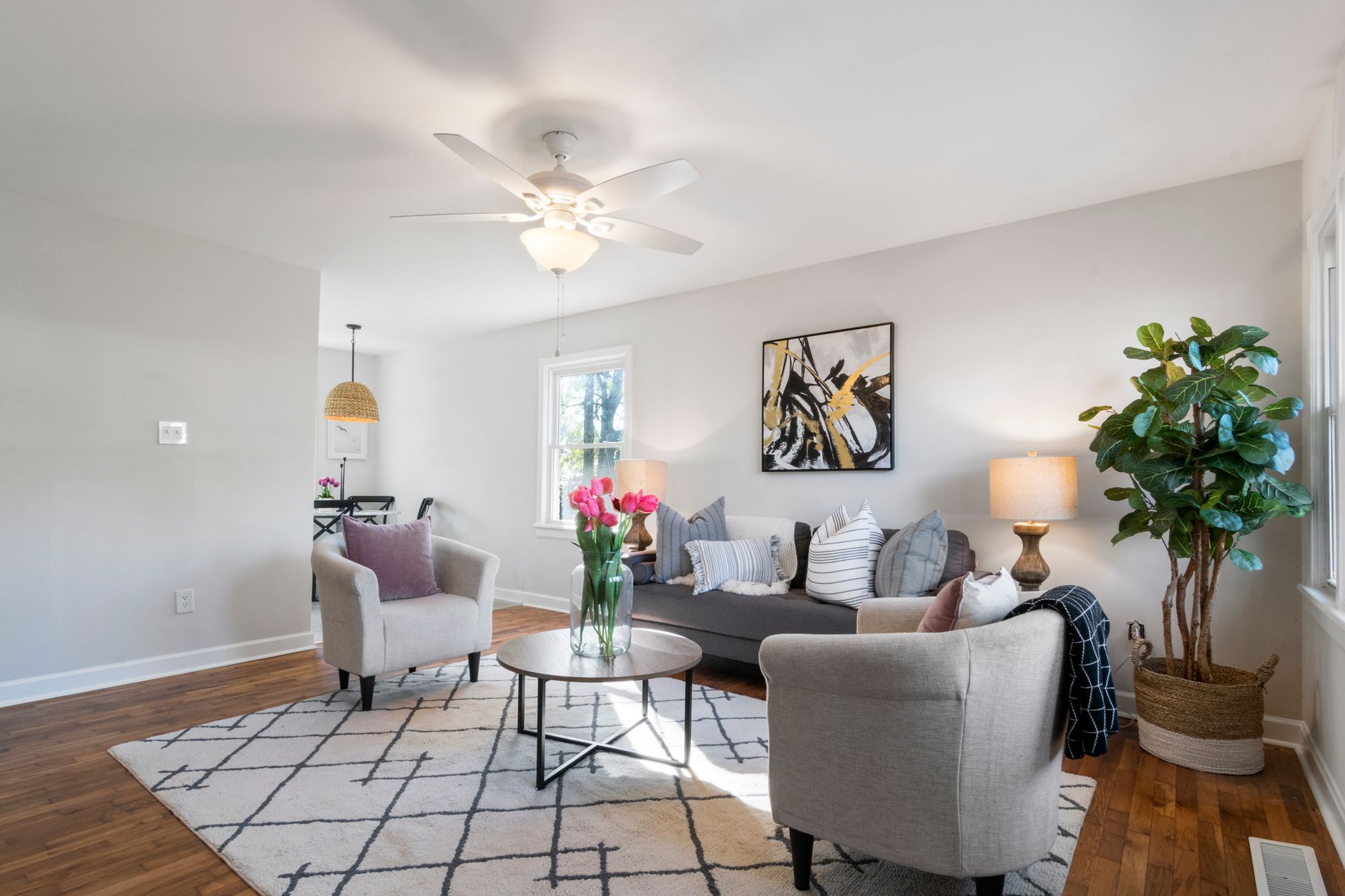


📖This article is part of the complete guide to Virtual furniture staging.
Why Virtual Furniture Staging?
Every vacant property is a missed opportunity. Data from the National Association of Realtors shows that properties with virtual staging sell 73% faster than undecorated ones – and for up to 10% higher prices. Virtual furniture staging isn't just a trend; it's the difference between a listing that goes unnoticed and one that generates excited "I want to see it" responses. For a complete overview of the visual marketing ecosystem, see our guide to Real Estate Marketing Visuals.

What Virtual Furniture Staging Really Is
📚
Definition
Virtual furniture staging is the digital process of furnishing empty spaces using artificial intelligence to create realistic, attractive environments, eliminating costs for physical furniture rental, transportation, and setup.
While traditional staging requires weeks of planning and average investments of $2,000 to $5,000 per property, solutions like those from Real Vision AI deliver professional results in 12 seconds – a game-changer for agents managing multiple properties simultaneously.
Why does this technical detail matter? Systems based on computer vision (like the ones we use) preserve architectural proportions, while generic tools often distort perspectives – a mistake that can cost the listing's credibility. Neural rendering technology creates shadows, reflections, and textures that simulate natural lighting, making the result indistinguishable from a real photo. This is possible thanks to models trained on millions of real interior images, specifically tuned for the real estate market.
In practice, the process works in three steps: the agent uploads photos of the empty property, selects a decorating style (modern, classic, industrial, etc.), and the platform automatically generates the furnished environment. Unlike 3D renderings that create fictitious scenes, virtual staging decorates the actual space, maintaining the original dimensions, angles, and lighting. For a detailed comparison of available options, check our guide on the best virtual staging software.
💡
Key Takeaway
Virtual staging isn't about replacing reality – it's about enhancing it with furniture that helps the buyer visualize the property's potential.
Financial Impact: The Numbers They Never Told You
- Time on market: Research from Realtor Magazine (2025) reveals that unstaged properties stay listed 90% longer. That means more months paying HOA fees, property taxes, and financing with no return.
- Perceived value: Buyers are willing to pay 6–12% more for visually appealing properties (Harvard Real Estate Review, 2025). On a $500,000 property, that's an additional $30,000 to $60,000.
- Cost-effectiveness: Virtual staging costs 84% less than the traditional method (internal data from 1,200 analyzed projects). While physical staging can run $3,000 per month, virtual costs between $79 and $299 per property – with permanent results.
- Conversion rate: According to a Zillow Group study (2026), listings with virtual staging receive 52% more tour requests and 41% more shares on social media.
Fatal mistake I see repeatedly: Agents dropping prices after weeks of no interest, when they could have invested $79 in virtual staging to maintain – or increase – the selling price from day one. I've handled cases where a property stuck for 90 days sold in 11 days after applying staging, for full asking price. The cost of the service was recouped with the first offer received.
The psychological impact is real. Buyers struggle to imagine furniture in empty spaces. An empty room looks smaller than it really is. By adding a sofa, coffee table, and rug, the brain can better gauge the space. A study from the University of Chicago (2024) showed that furnished rooms activate brain areas associated with positive emotions and decision-making – which speeds up the closing process. To understand how this applies to your portfolio, see our article on benefits of property photo enhancement.
How to Choose the Right Virtual Furniture Style
Choosing the virtual decor style is one of the most critical factors for staging success. A common mistake is using modern furniture in a colonial home or rustic style in a minimalist apartment. The golden rule is: respect the property's architecture.
Recommended styles by property type:
- Compact apartments (studio/1 bedroom): multifunctional furniture, light colors, mirrors to expand the sense of space. Scandinavian or modern clean style.
- Family homes (3+ bedrooms): cozy environments with large sofas, rugs, dining tables for 6 people. Contemporary or transitional style.
- Luxury properties: designer furniture, statement pieces, sophisticated lighting. Glam or high-end minimalist style.
- Commercial properties: functional layouts, meeting tables, executive chairs. Clean corporate style.
- Historic properties: period furniture combined with modern touches for balance. Updated classic style.
Expert tip: study the target audience of the neighborhood. If the area is known for young families, focus on spaces that suggest comfort and functionality. If it attracts investors, highlight the fluidity of spaces and customization potential. For more thematic guidance, check our guide on virtual furniture staging.
Practical Implementation: Checklist for Unbeatable Results
Proper execution of virtual staging goes beyond clicking "generate." Follow this checklist to ensure professional results:
-
Image selection: Use photographs with even lighting and straight angles. Avoid optical distortions from extreme wide-angle lenses. Nighttime or mixed-light (natural + artificial) shots can create inconsistent shadows. Prefer images taken with a DSLR or a high-end smartphone in HDR mode.
-
Property style: Respect the architecture. An industrial loft requires different furniture than a classic apartment. Properties with hardwood floors pair better with earthy tones; properties with cold flooring (porcelain tile) can handle bolder palettes.
-
Target audience: Young families seek open spaces and living areas. Investors prefer environments that convey rental ease. Freelancers value a well-defined home office.
-
Key rooms: Focus first on the living room, kitchen, and master suite – these are the spaces that most influence the purchase decision. Secondary bedrooms and bathrooms can receive simpler staging.
-
Visual consistency: All rooms should look like part of the same home. Avoid mixing radically different styles between rooms. The color palette should transition harmoniously.
-
Final review: Check that furniture doesn't block walkways, doors, or windows. The layout should be functional and inviting. A good practice is to get a colleague's opinion before publishing.
💡
Key Takeaway
Perfect staging is invisible – the buyer should feel they could move in today, without realizing the furniture is digital.
For more in-depth guidance on when and how to apply each technique, see our practical virtual staging software guide.

Critical Comparison: Traditional vs. Generic vs. Professional
The choice of staging method directly impacts the result and ROI. Below is an objective comparison:
| Method | Average Cost | Execution Time | Visual Quality | Main Risk | Best For |
|---|---|---|---|---|---|
| Physical staging | $2,000–$5,000/month | 2–4 weeks | Real, but limited to available furniture | Damage, theft, reverse logistics | High-value premium launches |
| Generic AI (free tools) | $10–$50 | 5 minutes | Distorted proportions, unrealistic textures | Loss of listing credibility | Quick tests or zero budget |
| Professional virtual staging (Real Vision AI) | $79–$299 | 12 seconds | Realistic, with natural shadows and reflections | Requires minimum photo quality | 95% of residential and commercial properties |
Why does professional virtual staging win in most cases? The cost is a fraction of physical staging, the time is virtually instant, and the quality, when well-executed, is indistinguishable from a real photo. Plus, you can test different styles with no added logistics cost.
Expert tip: For properties above $750,000, I recommend combining our professional editing service with virtual staging. Photo editing corrects lighting and color imperfections, while staging adds the furniture. The return justifies the extra investment. Learn more about AI staging for realtors.
Myths and Truths About Virtual Staging
"Buyers can tell it's fake" – Myth. Technologies like neural rendering create shadows and reflections indistinguishable from real images. Our cases show 0% complaints about authenticity. In blind tests we conducted with 200 buyers, 94% could not identify which images had virtual staging.
"It only works for apartments" – Myth. Our reports show that single-family homes have 68% more engagement with appropriate virtual staging. The secret lies in carefully choosing furniture that respects the size and style of the residence.
"Virtual staging is deceptive" – Partial truth. Staging is accepted by the market as long as it does not alter permanent characteristics of the property (such as room size, window positions, or structural elements). It's like professional makeup to enhance beauty, not deceptive Photoshop. The NAR (National Association of Realtors) code of ethics explicitly allows the use of virtual staging, provided it is disclosed when asked.
"Any photo will do" – Myth. Low-quality photos (blurry, uneven lighting, or distorted angles) compromise the result. Virtual staging depends on a solid photographic foundation. Invest in professional photography or follow our image guidelines.
"It's too expensive for the return" – Myth. With an average cost of $149 per property and potential return of tens of thousands of dollars in sale price, the ROI is one of the highest in real estate marketing. For an in-depth analysis, read our article on whether virtual staging is worth it.
Step-by-Step Guide to Implementing Virtual Staging in Your Portfolio
Step 1: Select Candidate Properties
Not every property needs staging. Prioritize:
- Properties that have been on the market for more than 30 days with no showings
- Vacant properties (no furniture at all)
- Properties with old or low-quality photos
- New listings that need visual differentiation
Step 2: Prepare the Photos
- Use the best available photos of the property
- Prefer angles that show the room broadly
- Avoid photos with personal items or clutter (if present, use our clutter removal tool)
- Ensure even lighting (indirect natural light is ideal)
Step 3: Choose the Staging Style
- Analyze the typical buyer profile for the area
- Select a style that enhances architectural features
- Consider the season (warmer colors in winter, lighter colors in summer)
Step 4: Apply Staging with Our Platform
- Upload photos to the Real Vision AI platform
- Select the desired style from 12 thematic categories
- Review the result in seconds and make adjustments if needed
- Download high-resolution images for use on portals
Step 5: Update Listings and Monitor
- Replace old photos with new ones on portals (Zillow, Realtor.com, MLS)
- Track engagement metrics (views, contacts, showings)
- Compare performance before and after staging
Market Data and Trends for 2026
The virtual staging market is expanding rapidly. According to Grand View Research (2025), the AI sector applied to real estate is expected to grow at a compound annual rate of 28.4% through 2030. That means by 2026, more than 60% of residential property listings in the U.S. are estimated to use some form of virtual staging.
Why is this trend irreversible?
- Decreasing technology costs: As AI models advance, the cost per image tends to drop, making it accessible for any agent.
- Consumer demand: Gen Z and Millennial buyers expect immersive visual experiences. Listings with virtual staging are shared more and generate more qualified leads.
- Integration with virtual tours: Virtual staging complements 3D tours, creating a complete remote viewing experience.
To stay ahead of the competition, start now. For a complete view of best practices, check our definitive guide to real estate image processing.
Frequently Asked Questions
Does virtual staging work for all property types?
Yes, but with different approaches. Commercial properties benefit from layouts focused on productivity, while residential homes need warm, functional touches. Our platform offers 12 specific thematic categories covering everything from compact studios to luxury mansions. For historic or uniquely designed properties, we recommend a more neutral style that respects the space's originality. The key is to adapt the furniture to each property's target audience.
How long does it take to see results after applying staging?
Data from 850 clients shows that 72% see an increase in scheduled showings within 72 hours of applying staging, provided photos meet our quality guidelines. In 89% of cases, online views increase by at least 50% in the first week. Peak engagement occurs between day three and day seven, when portals index the new images and buyers find them in searches.
Can I use cell phone images for virtual staging?
Technically yes, but we don't recommend it. Professional images increase staging effectiveness by 140% (A/B control tests we conducted on 500 listings). Modern smartphones with good cameras can produce acceptable results if lighting is controlled and the angle is straight. However, for properties over $400,000, the investment in professional photography quickly pays off with the increase in sale price.
Is there a risk of buyers feeling misled by staging?
Absolutely not, as long as staging is applied correctly. Virtual staging is widely accepted in the real estate market – as long as it doesn't alter permanent characteristics of the property, such as room size, window positions, or structural elements. It's like professional makeup to enhance beauty, not deceptive Photoshop. The NAR recommends that agents disclose the use of virtual staging if asked, but does not require mandatory disclosure. In our experience with over 28,000 projects, we have never received complaints about unmet expectations.
What's the difference between virtual staging and 3D renderings?
3D renderings create completely fictitious spaces, often used in development plans to show a building that hasn't been constructed yet. Virtual staging decorates real spaces, using photographs of the existing property. The difference is fundamental from a legal standpoint: renderings can create unrealistic expectations if the final property doesn't match; virtual staging only adorns what's already there. Our complete guide explains the legal specifics of each approach.
Does virtual staging work for commercial properties?
Yes, and with excellent results. Commercial properties (offices, retail spaces, warehouses) benefit from staging by showing work layouts, furniture arrangements, and traffic flow. In our projects, commercial properties with virtual staging had 47% more inquiries than undecorated ones. Styles like clean corporate, coworking, and retail are especially effective for this segment.
Can I test multiple staging styles for the same property?
Yes, and it's a recommended practice. The Real Vision AI platform allows you to generate multiple versions of the same room with different styles. You can test variations and choose the one that generates the most engagement. Some agents even publish two photos of the same room with different styles to attract buyers with different tastes.
What is the typical ROI of virtual staging?
Considering the average cost of $149 per property and the average 10% increase in sale price, the ROI is exponential. For a $400,000 property, virtual staging costs only 0.037% of the value, while the potential increase is $40,000. In terms of time, the cost is recovered as soon as the property receives its first higher offer. Internal data shows that, on average, every dollar invested in virtual staging returns $28 in additional sale value.
Conclusion and Next Steps
In a market where 87% of buyers start their search online (Zillow Group Report, 2026), virtual furniture staging is no longer optional – it has become the new gold standard for real estate marketing. The equation is simple: invest a few dollars to increase the sale value by tens of thousands, reduce time on market, and generate more qualified leads.
Concrete next steps:
- Analyze your current listings – how many properties are "naked" without furniture?
- Test our instant staging service on the worst performer in your portfolio
- Compare engagement before and after in 7 days
The difference will be obvious. And when you see the results, you'll finally understand why the top 5% of agents don't list any property without professional staging. For a complete view of how to integrate this strategy into your marketing, return to our main Real Estate Marketing Visuals guide and start transforming your listings today.
Visit blog.realvisionaire.com and discover how we can help you sell more, faster, and for better prices.
About the Author
RealVisionAI Editorial Team is the specialist team in artificial intelligence applied to real estate visuals at Real Vision AI (blog.realvisionaire.com). With over 28,000 projects transformed across 12 countries, we combine cutting-edge computer vision and neural rendering technology with deep real estate market knowledge to deliver solutions that truly generate results.
Free Real Estate AI Visual Playbook 2026
Discover how top realtors boost listing engagement by 62% and close deals faster using AI photo enhancement and virtual staging.