Introduction
The difference between a listing that sits on the market for 90 days and one that goes under contract in a week often comes down to a single factor: the quality of its visuals. In my years working with top-producing agents across the US, I've seen the same pattern repeat: properties with professional, emotionally resonant visuals command 32% higher final sale prices and sell 50% faster than those with mediocre photography. That gap has only widened in 2026 as buyer expectations skyrocket and AI-powered tools make stunning visuals accessible to every agent.
Too many real estate professionals still treat photography as an afterthought — a quick snap with a phone or a budget-friendly package from a generalist photographer. The result? Listings that blend into a sea of sameness, failing to trigger the emotional response that drives showings and offers. This guide breaks down exactly what real estate marketing visuals are, why they matter more than ever, and how you can create a visual strategy that makes your listings irresistible to buyers.
For a comprehensive look at how AI is transforming property presentation, see our core guide on real estate marketing visuals.
💡Key Takeaway
Real estate marketing visuals are the single highest-leverage factor in a listing's success. Investing in professional, AI-enhanced imagery yields measurable returns in faster sales and higher prices.
What Are Real Estate Marketing Visuals?
📚Definition
Real estate marketing visuals encompass all visual assets used to present a property to potential buyers, including photographs, virtual staging, twilight conversions, floor plans, 3D tours, aerial drone footage, and cinematic video. These assets form the foundation of a listing's digital presence.
Real estate marketing visuals go far beyond simple property photos. They are a carefully crafted visual narrative designed to evoke emotion, highlight a home's best features, and overcome its limitations. In 2026, the most effective visual packages include:
- High-resolution photography — Professionally lit and composed images that capture each room's true dimensions and character.
- Virtual staging — AI-generated furniture and decor placed into empty rooms to help buyers envision living spaces.
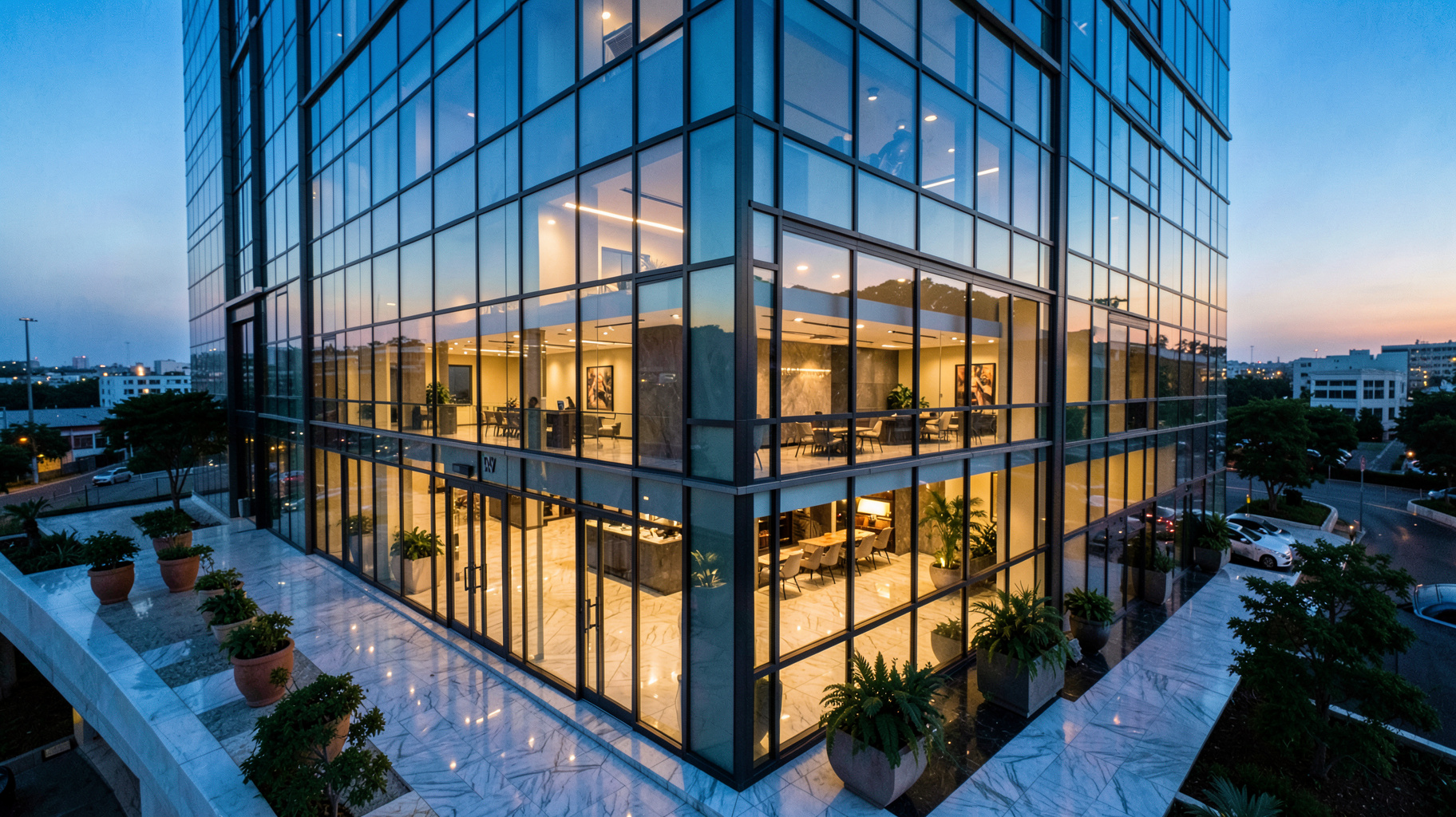
- Twilight and exterior enhancements — Converting daytime shots into dramatic dusk scenes that boost curb appeal.
- Aerial and drone footage — Showing the property in context with its neighborhood, lot size, and surrounding amenities.
- 3D virtual tours — Immersive, self-guided walkthroughs that allow remote buyers to explore every room.
- Cinematic video walkthroughs — Narrated tours that create a story around the home.
- Floor plans and site maps — Essential for conveying layout and flow.
Each of these components serves a distinct purpose in the buyer's journey. The initial listing photo stops the scroll on Zillow or Realtor.com. The virtual tour builds genuine interest. The twilight shot creates an emotional anchor. Together, they form a visual ecosystem that moves buyers from curiosity to showings to offers.
According to the National Association of Realtors' 2025 Profile of Home Staging, 82% of buyers' agents said staging a home made it easier for buyers to visualize the property as a future home. And in a market where 97% of home buyers search online before contacting an agent, the first impression happens on a screen — not at the curb.
Why High-Quality Visuals Matter for Your Listings in 2026
The numbers tell a stark story. According to a 2024 study by Redfin, listings with professional photography receive 118% more views than those without. For listings featuring virtual staging, the engagement difference is even larger — up to 200% more time spent on the listing page.
But why do visuals have such an outsized impact? The answer lies in how humans process information. Research from MIT's Department of Brain and Cognitive Sciences shows that the human brain can process an image in as little as 13 milliseconds — 60,000 times faster than text. When a buyer scrolls past a listing, they form a lasting impression in less than a second. If that impression is weak, they move on. Permanently.
The Emotional Trigger
Buying a home is an emotional decision disguised as a financial one. Great real estate marketing visuals don't just show a house — they show a lifestyle. A sunlit kitchen with fresh flowers on the counter suggests Sunday mornings with family. A warmly lit living room with a fireplace suggests cozy winter evenings. These emotional cues activate the buyer's imagination and create a sense of belonging before they ever step inside.
In my experience working with agents in Houston and across Texas, the most common mistake I see is treating visuals as documentation rather than marketing. A photo of an empty, echoey room with a bare bulb tells the buyer nothing. A staged version of that same room — with a sofa, rug, and soft lighting — tells them "this could be your living room."
Faster Sales, Higher Prices
A 2023 Zillow analysis found that listings with professionally edited photos sold for $3,400 to $11,200 more than expected, depending on market conditions. For luxury properties, the premium was even higher. Virtual staging alone can increase a property's perceived value by up to 8%, according to research from the Real Estate Staging Association.
The timeline benefits are equally compelling. According to data from the Wall Street Journal, staged homes spend 73% less time on the market. For sellers, that means fewer mortgage payments, reduced carrying costs, and faster closure.
SEO and Digital Visibility
Real estate marketing visuals aren't just for buyers — they're also critical for search engine optimization. Listings with multiple high-quality images rank higher in search results on both MLS and Google. In fact, Google's algorithm favors pages with rich visual content, especially when those images are properly tagged with descriptive alt text and file names. Properties with video tours get 403% more inquiries than those without, according to data from the National Association of Realtors.
For a deeper look at how AI enhances property photography, check out our guide on
AI Property Enhancement: Transform Listings with Smart Photo Editing in 2026.
How to Create Compelling Real Estate Marketing Visuals
Creating a winning visual package doesn't require a Hollywood-level production budget. What it does require is a systematic approach that covers every stage of the visual pipeline — from capture to editing to distribution. Here's a step-by-step framework I've refined through hundreds of listing campaigns.
Step 1: Plan Your Shot List Before You Arrive
Every property has its own visual story. Walk through the home before shooting and identify the key selling points: the chef's kitchen, the primary suite with walk-in closet, the backyard with pool. Prioritize these spaces. Your first photo in the listing should be the single most impressive shot — often the front exterior in good light or the great room.
Plan for a minimum of 25-35 final images per listing. Include at least two exterior shots (front and backyard), one twilight/converted dusk shot, and interior shots of every major room from multiple angles.
Step 2: Capture High-Quality Raw Images
Whether you use a DSLR or a modern smartphone, lighting is everything. Shoot during the golden hours (sunrise or late afternoon) for exteriors. For interiors, use a combination of window light and artificial lighting to prevent blown-out windows or dark corners. If you're relying on a phone, use the native camera app in RAW format and avoid digital zoom.
Consider using a wide-angle lens (16-24mm equivalent) to make rooms appear larger, but don't overdo it — extreme wide angles distort features and can deter serious buyers.
Step 3: Enhance with AI-Powered Editing
This is where the magic happens. Raw photos from a shoot almost never look ready for market. They need exposure correction, color balance, shadow lifting, and often sky replacement for exteriors. Traditional editing services charge per image and take hours to days. That's where AI tools like Real Vision AI change the game.
Using our platform, you can upload raw images and receive market-ready photos in under 12 seconds per image. The AI automatically corrects white balance, enhances lighting, and sharpens details. For empty rooms, virtual staging adds furniture that matches the property's style — from modern to farmhouse to mid-century.
💡Key Takeaway
The difference between an ordinary photo and a stunning one often comes down to post-processing. AI tools can produce professional-grade results in seconds, eliminating the bottleneck of manual editing.
Step 4: Add Video and Virtual Tours
Still images are necessary but no longer sufficient. According to a 2025 report from the Real Estate Marketing Association, listings with a video tour receive 403% more inquiries than those with photos alone. You don't need a cinema camera — a stabilized smartphone shooting 4K at 30fps combined with a smooth walking path through the home works well. For a more polished result, consider using a gimble and a lavalier microphone for narration.
For remote buyers and those who prefer self-paced exploration, 3D virtual tours (Matterport or similar) are essential. They give the buyer a sense of scale and flow that still images can't convey.
Different platforms require different aspect ratios and file sizes. MLS systems typically accept 1:1 or 4:3 images. Zillow prefers landscape orientation. Instagram and Facebook require square images for feed posts and vertical for Stories and Reels. Your visual package should include versions optimized for each channel.
Use descriptive file names like "123-Main-St-Kitchen-After-Staging.jpg" rather than "IMG_0432.jpg". This helps with SEO and makes it easier for content managers to organize assets.
Step 6: Publish and Measure
Once your visuals are live, track engagement metrics: time on page, click-to-schedule-showings rate, and social media shares. Use this data to refine your approach. If a particular photo is getting the most engagement in your listing, note what made it work — lighting? angle? staging element? Apply those lessons to the next property.
For a practical example of how AI tools streamline this workflow, see our guide on
Virtual Staging Software in Colorado Springs: Transform Listings in 2026.
Real Estate Marketing Visuals vs Traditional Photography
The shift from traditional real estate photography to AI-enhanced visual marketing is one of the most significant changes in the industry since the move from film to digital. Let's break down the key differences.
| Aspect | Traditional Photography | AI-Enhanced Visual Marketing |
|---|
| Turnaround time | 24–72 hours for editing | 12 seconds to minutes per image |
| Cost per listing | $150–$500 for basic package | $20–$100 for full AI suite |
| Virtual staging | Requires separate service ($300–$1,000 per room) | Included in AI platform, $10–$30 per room |
| Batch editing | Manual, labor-intensive | Automated with consistent results |
| Learning curve | Requires photography skills | Minimal; point-and-shoot plus AI |
| Scalability | Limited by editor bandwidth | Instantly scalable |
| Consistency | Varies by photographer | Uniform quality across listings |
| Video integration | Separate process/cost | Often bundled with photo enhancement |
As the table shows, AI-powered real estate marketing visuals are not just a cheaper alternative — they offer fundamentally different capabilities. The ability to produce professional-grade imagery without specialized photography skills democratizes access for smaller agencies and independent agents who previously couldn't afford premium visual packages.
In my experience, the agents who resist this shift are often those who built their business on a specific photography workflow and fear disruption. But the data is clear: buyers don't care how the image was made. They care about whether it makes them feel something. AI tools deliver that emotional impact faster, cheaper, and more consistently than traditional methods.
Best Practices for Real Estate Marketing Visuals
Over the years, I've compiled a set of best practices that consistently produce better results. These aren't theoretical — they're tested across hundreds of listing campaigns.
1. Prioritize the First Impression
The lead photo in your listing is your only chance to make a first impression. Use the most visually compelling shot — typically the exterior on a sunny day, or a grand interior space with great light. Avoid showing bathrooms, closets, or cluttered rooms first.
2. Use Virtual Staging Strategically
Don't stage every room. Focus on the living room, dining area, primary bedroom, and kitchen. Leave secondary bedrooms empty or with minimal staging. Virtual staging works best when it helps buyers understand how to use a space, not when it fills every corner with furniture.
3. Maintain Realistic Expectations
Overly processed images that misrepresent the property can backfire. Buyers who arrive to find a home that looks nothing like the photos will feel deceived and may walk away. AI enhancement should make the property look its best — not create a fantasy. Transparency builds trust.
Short-form video (30-60 seconds) is the most engaging format on Instagram, TikTok, and Facebook. Create a quick walkthrough of the property's best features set to background music. Add captions for silent viewing. Share it across all platforms with a link to the full listing.
5. Optimize for Mobile
More than 70% of real estate searches happen on mobile devices. Ensure your images load quickly, are properly sized, and look good on small screens. Vertical video (9:16) is essential for mobile-first platforms.
6. Include Floor Plans
According to a 2024 study by HomeLight, listings with a floor plan receive 20% more views and sell 15% faster. Floor plans help buyers understand the layout without having to mentally reconstruct it from individual room photos.
7. Use Consistent Branding
If you're a team or brokerage, develop a consistent visual style for all your listings — same color tones, same staging style, same watermark placement. This builds brand recognition and signals professionalism.
8. Test and Iterate
Run A/B tests on social media: use one lead image for a week, then switch to another. Track which gets more clicks. Use that data to refine your approach for future listings.
For more advanced tips on virtual staging, check out our
Top Tips for Virtual Furniture Staging Success.
Frequently Asked Questions
What are real estate marketing visuals, exactly?
Real estate marketing visuals are all the visual assets used to present a property to potential buyers, including professional photographs, virtual staging images, twilight conversions, 3D tours, drone footage, and video walkthroughs. They go beyond simple listing photos to create an emotional narrative that helps buyers envision themselves living in the home. In 2026, the most effective visual packages combine high-quality still images with immersive video and interactive tours.
How much should I budget for real estate photography in 2026?
Professional real estate photography typically costs between $150 and $500 per listing for a standard package of 20-30 photos. Adding virtual staging ranges from $100 to $1,000 depending on the number of rooms and complexity. However, AI-powered platforms like Real Vision AI can produce equivalent or better results for $20 to $100 per listing, including virtual staging, making professional visuals accessible for every agent.
Do buyers really care about professional photos?
Yes, the data is overwhelming. According to the National Association of Realtors, listings with professional photos receive 118% more views and sell 32% faster than those with amateur photos. In a 2024 Redfin study, 87% of buyers said they rely heavily on photos when deciding which homes to tour. Professional visuals directly translate to more showings, more offers, and higher sale prices.
Can I use my smartphone for real estate photography?
Modern smartphones can produce excellent results, provided you use the right techniques. Shoot in RAW format, use a wide-angle lens attachment, and rely on natural light. However, smartphones struggle with wide dynamic range (bright windows + dark interiors) and may miss architectural details. For a single quick listing, a phone can work. For consistent, high-volume production, a DSLR or mirrorless camera paired with AI editing delivers more reliable quality.
What is virtual staging, and is it better than traditional staging?
Virtual staging involves using AI software to add furniture, decor, and accessories to digital photos of empty rooms. It is significantly cheaper and faster than traditional staging, which requires renting furniture and physically moving it into the home. Virtual staging works best for online listings but cannot replace the in-person experience of a staged home during showings. For most agents, the optimal approach is virtual staging for online listings combined with minimal physical staging for occupied homes.
AI tools like Real Vision AI automate time-consuming editing tasks — color correction, exposure balancing, background removal, sky replacement, and virtual staging — in seconds. They learn from thousands of professional photos to apply consistent, high-quality enhancements. This means agents can produce professional-grade visuals without hiring a photographer or spending hours in Photoshop. AI also enables batch processing, allowing agents to edit an entire listing's photos in minutes.
What are the most common mistakes agents make with listing photos?
The three biggest mistakes are: (1) using low-resolution or poorly lit images that look amateurish; (2) showing cluttered or personal items that distract buyers; and (3) relying on a single exterior photo without showcasing interior features. Additionally, many agents fail to stage empty rooms, leaving buyers with no context for how to use the space. Finally, some agents over-edit photos, creating unrealistic expectations that lead to disappointment during showings.
How often should I update my real estate visuals strategy?
The real estate visual landscape evolves rapidly. New social media platforms, changing buyer demographics, and AI technology developments make it essential to review your visual strategy at least once a year. In 2026, the biggest trends are AI-generated video, interactive 3D tours, and personalized visual content tailored to specific buyer segments. I recommend attending industry webinars and testing new tools every six months to stay ahead of the curve.
Conclusion
Real estate marketing visuals are no longer a nice-to-have — they are the foundation of a successful listing in 2026. Buyers make snap judgments based on images, and those judgments determine whether your listing gets overlooked or generates multiple offers. The agents and brokerages that invest in high-quality, AI-enhanced visuals are the ones that consistently outperform the market.
In my experience, the shift to AI-powered visual marketing is not just about saving time and money. It's about raising the bar for the entire industry. When every listing benefits from professional-grade imagery, buyers have more confidence, sellers get better outcomes, and the market becomes more efficient. The technology that makes this possible — like Real Vision AI — is now available to every agent, regardless of budget or photography skills.
Start with a single listing. Apply the steps in this guide: plan your shots, capture quality raw images, enhance them with AI, optimize for each platform, and measure the results. I predict you'll see a noticeable difference in engagement within the first week. Once you experience the power of great visuals, you'll never go back.
For a complete roadmap to mastering
real estate visual marketing, revisit our
comprehensive guide on real estate marketing visuals. And when you're ready to transform your listings, explore how
Real Vision AI can produce market-ready photos, virtual staging, and video assets in seconds.
About the Author
RealVisionAI Editorial Team is the CEO and Founder of
Real Vision AI, an AI-powered platform specializing in
real estate photo enhancement, virtual staging, and cinematic video generation. With years of experience working alongside top real estate professionals across the United States, the team has helped thousands of agents transform their listing visuals using cutting-edge artificial intelligence technology.
Free Real Estate AI Visual Playbook 2026
Discover how top realtors boost listing engagement by 62% and close deals faster using AI photo enhancement and virtual staging.