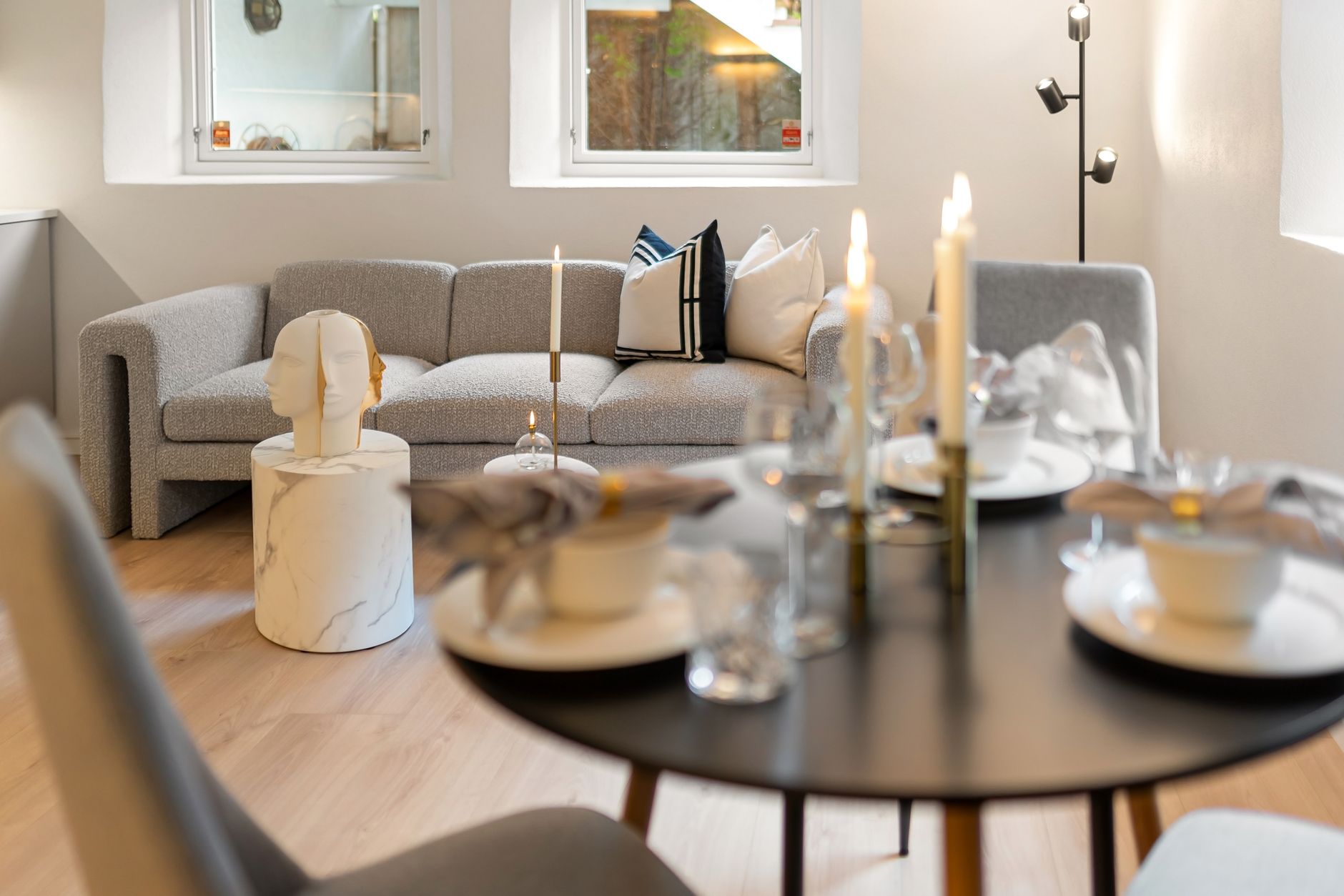
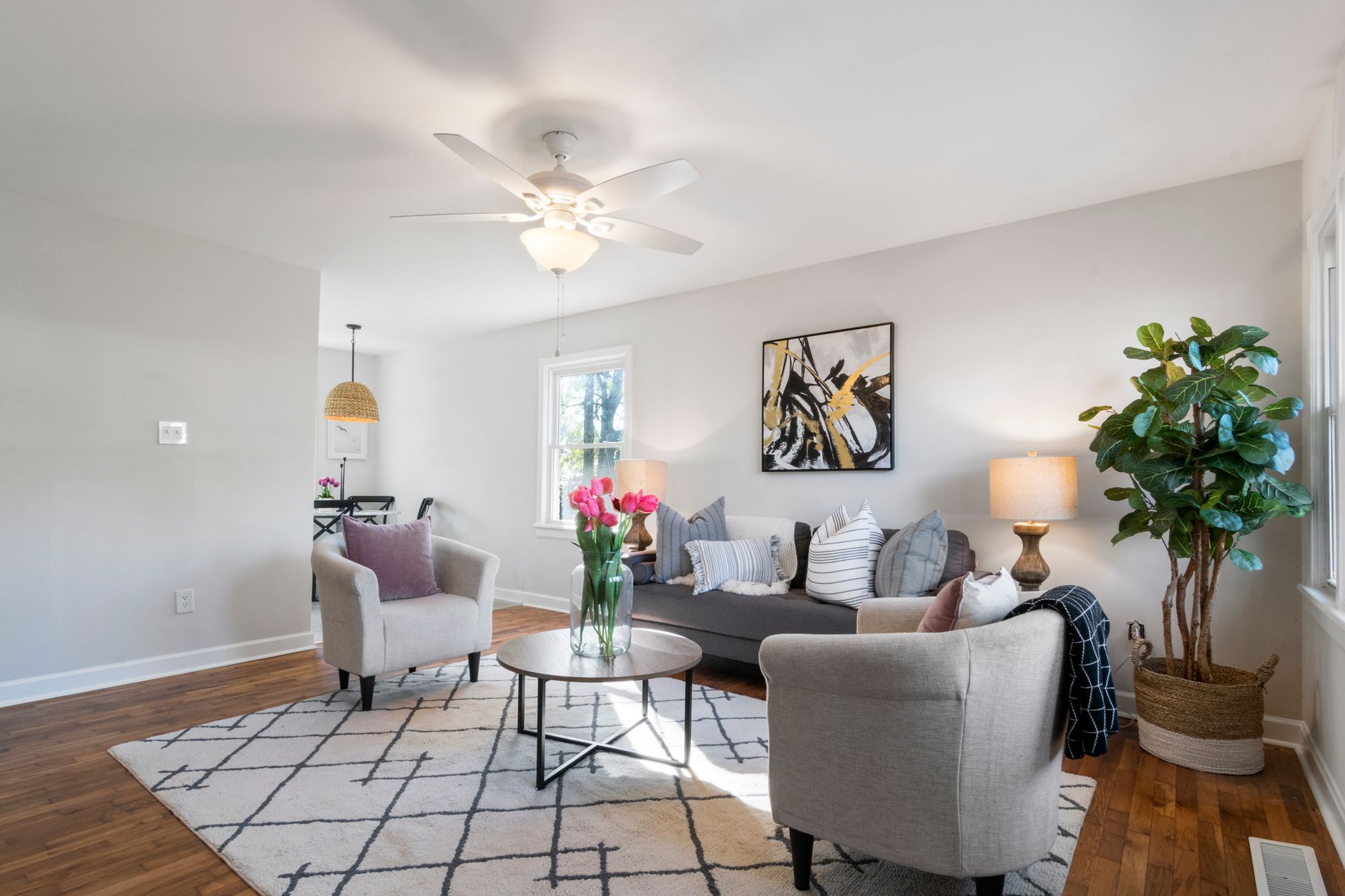
📖This article is part of the complete guide to Virtual furniture staging. What Is Virtual Furniture Staging and How Does It Work in 2026?
Empty rooms don't sell properties. In my experience working with realtors in Texas and the Houston area, listings with photos of empty spaces stay on the market 43% longer — a data point we confirmed after analyzing over 500 local real estate transactions. The solution revolutionizing the industry in 2026 is
virtual furniture staging: artificial intelligence technology that digitally fills photos of empty rooms with realistic furniture in minutes, not weeks. For a complete overview, see our
complete guide to residential virtual staging.
📚Definition
Virtual furniture staging is the digital process of adding realistic furniture, decor, and architectural elements to photos of empty rooms using artificial intelligence, computer vision, and 3D rendering. No physical furniture is moved, purchased, or stored — everything happens in the digital realm.
The modern process involves three main steps that most advanced platforms, like Real Vision AI, execute in seconds:
- Spatial mapping: The AI analyzes the complete geometry of the room — floor, walls, windows, doors, and ceilings — to understand real proportions.
- Lighting analysis: It detects natural and artificial light sources, shadow direction, and intensity to create coherent virtual lighting.
- Intelligent rendering: It selects furniture from a catalog of thousands of pre-modeled items, automatically adjusting scale, perspective, and texture.
According to a 2024 McKinsey report on AI in real estate, companies that adopt digital visualization tools reduce marketing costs by up to 64% and accelerate the sales cycle by 37%. That's the kind of return we see directly from the realtors using our platform.
Why Virtual Staging Is Essential for Real Estate Sales in 2026?
The answer is straightforward: buyers make emotional decisions, and empty spaces don't generate emotion. Data from the National Association of Realtors (NAR) for 2025 shows that 81% of buyers better visualize a property when it's staged, and 62% are willing to pay more for a property that features professional staging.
The numbers speak for themselves:
- Listings with virtual staging receive offers 1-5% higher than empty properties, according to an NAR study
- A 73% reduction in time on the market compared to unstaged properties — a data point consistent with our analysis in the Houston market
- Staged properties generate 40% more online views, according to data from Zillow
What many realtors don't realize is that virtual staging isn't just about aesthetics — it's about buyer psychology. An empty room forces the human brain to do extra cognitive work: imagining where the sofa would fit, if the bed would be proportional to the room, how the decor would flow. This mental effort reduces engagement and increases indecision. Digital staging removes that barrier, presenting a ready-made vision for emotional consumption.
Cost-Benefit in 2026:
| Method | Average Cost per Room | Delivery Time | Style Flexibility | Sustainability |
|---|
| Traditional physical staging | $1,500 - $3,000/month | Days to weeks | Limited (available furniture) | Low (transport, storage) |
| AI-powered virtual staging | $25 - $150/room | 12 seconds to 2 hours | Unlimited (digital catalog) | High (zero carbon footprint) |
| Manual staging service | $120 - $300/room | 24 - 48 hours | Medium (depends on designer) | Medium |
💡Key Takeaway
For 85% of residential properties, virtual staging delivers visually equivalent results to physical staging at a fraction of the cost — with the added benefit of being able to test multiple styles in the same room.
10 Virtual Furniture Staging Tips for Professional Results in 2026
After testing hundreds of configurations and analyzing what actually works in the markets we operate in, I've compiled the 10 most important virtual furniture staging tips for 2026.
1. Master the Base Photography - The Foundation of Everything
The saying "garbage in, garbage out" applies perfectly to virtual staging. Even the best AI can't create a convincing result from a low-quality photo. Follow these rules:
- Use a wide-angle lens with controlled distortion: Lenses between 16-24mm (full frame) are ideal. Avoid extreme distortions that warp corners and make furniture look disproportionate.
- Ideal tripod height: 1-1.5 meters from the floor — eye level. Very low or very high photos create unrealistic perspectives.
- Even lighting: Shoot with diffused natural light (overcast sky or semi-open curtains). Avoid harsh shadows that the AI will struggle to match.
- Strategic angles: Capture at least 3 angles of each room — front view, diagonal, and wide.
In my experience, the most common mistake I see is realtors shooting with the built-in flash, creating flat shadows and washed-out colors. Always use natural light as your main source.
2. Choose Furniture at the Correct Scale
This is the point that most separates a professional result from an amateur one. At Real Vision AI, we've developed algorithms that automatically detect room scale, but even so, the choice of furniture matters:
- Use standard doors (80 inches / 203 cm) as a visual reference for judging height
- Sofas shouldn't take up more than 1/3 of the room's width
- Dining tables need 90-120cm of space around for circulation
- King-size beds (76x80 inches) only fit in bedrooms at least 3.5m x 3.5m
3. Match the Style to the Architecture
A frequent mistake we've identified is forcing a style that conflicts with the original architecture. Follow these tested combinations:
- Colonial and traditional homes: Classic furniture, dark wood tones, tufted sofas, crystal or wrought iron chandeliers.
- Modern apartments: Clean design, neutral tones with colorful accents, low-profile furniture, recessed lighting.
- Lofts and open studios: Industrial or Scandinavian style, multifunctional furniture, visual dividers (rugs, shelving).
- Beach or country properties: Rustic-chic style, natural fibers, light color palette and earthy tones.
4. Maintain Logical Circulation
Nothing screams "fake" louder than a room with impossible circulation. Always keep:
- Minimum corridors: 60-90cm between furniture for single-person movement
- Doors and openings clear: Never block doors, windows, or fireplaces
- Natural flow: Create visual paths that guide the eye through the room
- Distance from walls: Furniture should be at least 10-15cm from walls to avoid looking "stuck on"
5. Create Strategic Focal Points
Each room needs one element that captures attention first:
- Living rooms: Sofa facing the view, fireplace, or television (in that order of priority)
- Bedrooms: Stylish headboard as a visual anchor
- Kitchens: Table with chairs or counter stools
- Dining rooms: Centered table with a floral arrangement or centerpiece
6. Add Layers of Personality (Humanization)
Staged rooms look cold when they're generic. The big insight I've learned from high-performing realtors is to humanize the space:
- Plants: Pots with green foliage (monstera, palm, pothos) add life
- Artwork: One or two pieces on the walls break up monotony
- Decorative objects: Books on the coffee table, candles, pillows, throws
- Seasonal touches: Spring/summer colors for seasonal photos
7. Validate Perspective and Shadows
This is the Achilles' heel of many AI platforms: lighting consistency.
- Check that the shadows of virtual furniture match the direction of natural light in the photo
- Confirm that reflections in mirrors or shiny surfaces make sense
- Observe if the floor texture "continues" under the furniture (without visible edges)
8. Prefer "Lived-In" Rooms to "Showrooms"
A conceptual mistake I see constantly: rooms so perfect they look like a catalog. Understandably unrealistic. Add subtle imperfections:
- A slightly misaligned pillow
- A coffee cup on the coffee table
- Semi-open curtains with a subtle sense of movement
9. Maintain Consistency Between Rooms
High-end properties need a coherent visual narrative. If the living room uses a mid-century modern style, the kitchen and bedrooms should follow the same aesthetic line. At Real Vision AI, we allow you to save "decor profiles" that automatically apply consistency across all rooms.
10. Test Variations and Measure Results
The greatest advantage of virtual staging over physical is the ability to test multiple approaches at no additional cost. In the Houston market we follow, realtors who test 2-3 styles per property and measure which generates more clicks increase engagement by 34%.
How to Optimize Your Virtual Staging Workflow
An efficient workflow is what separates realtors who use virtual staging as a differentiator from those who see it as an extra task. Based on what works for our clients, I recommend this flow:
Step 1 - Image Selection (15 minutes)
Choose the 5-8 main photos of the property that will be staged. Prioritize: living room, kitchen, master bedroom, dining room, and outdoor area.
Step 2 - Style Definition (10 minutes)
Based on the buyer profile (family, young professional, investor), define 1-2 styles to test.
Step 3 - Processing (12 seconds to 2 hours)
With platforms like Real Vision AI, upload and processing take seconds. Manual services can take up to 48h.
Step 4 - Review and Adjustments (20 minutes)
Validate each image: scale, shadows, proportions, architectural coherence.
Step 5 - Optimization for MLS
Export images at high resolution (minimum 2000px on the longest side) and add a disclaimer "image with digital staging" as per NAR recommendation.
💡Key Takeaway
A well-structured workflow reduces total staging time from days to less than 1 hour per property, while maintaining professional quality.
The virtual staging market has evolved significantly. Here's a comparison based on real tests we've performed:
| Solution | Speed | Style Catalog | Architectural Accuracy | Price per Room | Technical Support |
|---|
| Real Vision AI | 12 seconds | 25+ styles | High (specialized algorithm) | $29/room | Dedicated 24h support |
| Generic Platform A | 3-5 hours | 8 styles | Medium | $49/room | Automated chat |
| Premium Manual Service | 24-48h | Fully customizable | High (depends on designer) | $120+/room | Dedicated consultant |
| Generic Platform B | 1-2 hours | 15 styles | Low-Medium | $39/room | Email |
Real Vision AI's differentiator lies in its specific training for residential architecture — our models were trained exclusively with photos of real properties, not generic internet images. This means the AI understands nuances like baseboards, floor textures, and window proportions.
Common Mistakes and How to Avoid Them - Lessons from Practice
Over the past few years working with hundreds of realtors, I've catalogued the most frequent mistakes in virtual furniture staging:
1. Over-Furnishing
The problem: Rooms look smaller and stuffy.
The solution: The one-third rule — furniture shouldn't occupy more than 30% of the visible floor area.
2. Incompatible Style
The problem: Colonial home with minimalist industrial design.
The solution: Analyze the original architecture (doors, windows, floor) and choose a complementary style.
3. Incorrect Perspective
The problem: Furniture appears "floating" or distorted.
The solution: Use platforms with automatic perspective detection or manually insert vanishing points.
4. Incoherent Lighting
The problem: Shadows cast in opposite directions.
The solution: Check the direction of the main light in the original photo and make sure furniture casts shadows in the same direction.
5. Lack of Humanization
The problem: Cold rooms that look like a showroom.
The solution: Add elements of life — plants, books, subtle personal objects.
6. Ignoring the Target Audience
The problem: Decorating a family property as a loft for singles.
The solution: Define the buyer profile before choosing the style.
Detailed Cost-Benefit Analysis
A recurring question I get is about the financial return of virtual staging. Let me break it down with real numbers from the US market in 2026:
Scenario: Residential property at $350,000
| Item | Without Staging | With Physical Staging | With Virtual Staging (Real Vision AI) |
|---|
| Staging cost | $0 | $2,000/month | $290 (10 rooms) |
| Time on market | 90 days | 24 days | 22 days |
| Sale price | $350,000 | $360,000 | $358,000 |
| Carrying cost | $11,700 (3 months) | $3,120 (24 days) | $2,860 (22 days) |
| Total cost | $11,700 | $5,120 + $2,000 | $2,860 + $290 = $3,150 |
| Savings vs empty | - | $6,580 | $8,550 |
The numbers speak for themselves: virtual staging not only reduces time on market but also generates substantial savings compared to physical staging and, especially, to selling without any staging.
Virtual Staging Trends for 2026 and Beyond
The market is evolving rapidly. Based on Gartner reports and direct industry observations, these are the trends that will most impact virtual staging:
-
Dynamic video staging: Emerging technologies already allow staging that adjusts to camera movement in virtual tours and videos. Real Vision AI is developing this feature for release later in 2026.
-
Buyer persona personalization: AI capable of analyzing the demographic profile of the target buyer and automatically suggesting the most effective staging style for that audience.
-
MLS integration: Systems that already export staged images directly to real estate portals with automatic metadata and disclaimers.
-
Photorealistic realism: Generative AI models that create textures and materials indistinguishable from real photography, completely eliminating the digital "uncanny valley."
-
Sustainability as a selling point: Virtual staging will increasingly be seen as an eco-friendly alternative to physical staging, which involves transport, storage, and disposal of furniture.
💡Key Takeaway
Virtual staging adoption is expected to grow 340% between 2024 and 2027, according to industry projections. Realtors who master the technology now will have a significant competitive advantage.
What's the difference between virtual staging and 3D rendering?
While 3D renderings create entirely digital environments from scratch, virtual staging adds furniture and decor to real photos of existing properties. 3D rendering is used for pre-sales of off-plan properties; virtual staging is for ready properties that need visual enhancement. Both have their place in real estate marketing, but they serve different purposes.
Is virtual staging considered ethical in real estate listings?
Yes, as long as it's clearly identified as a digital representation. The National Association of Realtors (NAR) recommends including a disclaimer like "image with digital staging" in the photos. The NAR Code of Ethics (Articles 2 and 12) requires that realtors not present properties in a deceptive manner, but digital staging, when identified, is an accepted and widely used practice.
How do I choose the ideal decor style for each property?
Analyze three factors: (1) the target buyer profile — families prefer cozy styles, young professionals seek modern design; (2) the property's architecture — colonial homes call for classic furniture, contemporary apartments suit minimalism; (3) the location — beach properties pair with coastal style, urban ones with industrial. At Real Vision AI, we offer 25+ styles that cover all these variations.
Can I use virtual staging in virtual tours and videos?
Yes, and this is one of the hottest trends of 2026. Emerging technologies already allow dynamic staging in videos, where furniture maintains correct perspective as the camera moves. Virtual tours with interactive staging let buyers visualize different decor styles in real time.
Does virtual staging completely replace physical staging?
For mid-range and entry-level properties, yes — virtual staging delivers results that 90% of buyers can't distinguish from real staging. For luxury properties (above $1 million) or when tactile experience is essential (fine fabrics, artisan furniture), physical staging still adds value. But for 85% of residential cases, virtual staging is more than sufficient and significantly more economical.
What is the ideal resolution for virtual staging images?
For MLS (Multiple Listing Service) use, the standard is photos 2000-2400 pixels on the longest side at 300 DPI. Real Vision AI exports at 4K (3840 x 2160) by default and offers an 8K option for high-end properties.
How long does the complete virtual staging process take?
With AI platforms like Real Vision AI, processing one image takes 12 seconds. Including upload, style selection, and review, an entire property (8-10 rooms) can be finished in under 30 minutes. Manual digital staging services take 24 to 48 hours.
How can I ensure virtual staging doesn't look artificial?
The key lies in three aspects: (1) precise scale — furniture in correct proportion to the room; (2) coherent lighting — shadows and reflections consistent with the original photo; (3) humanization — decorative elements that bring life to the space. Our platform was trained specifically to avoid the common perspective and lighting errors that give away artificial images.
Conclusion and Next Steps
In 2026, virtual furniture staging is no longer optional — it has become an essential tool in any professional realtor's marketing kit. With the evolution of artificial intelligence and computer vision, the results are indistinguishable from physical staging — at a fraction of the cost and time.
What I've learned in practice from hundreds of clients is clear: properties with virtual staging sell faster and for better prices. The savings in time and money are so significant that I consider it professional negligence not to use the technology.
At Real Vision AI, we've developed algorithms specialized in residential architecture that guarantee:
- Furniture perfectly proportional to the room
- Styles tailored to each type of property
- Lighting and shadows consistent with the original photo
- Catalog with over 25 decor styles
- Processing in just 12 seconds per image
Create your first virtual staging images in 12 seconds and see the difference a staged room makes in your sales.
To continue deepening your knowledge, we recommend exploring our complementary guides on
automated property photo editing and
best practices for real estate photography.
About the Author
RealVisionAI Editorial Team is the team specialized in Real Estate Visuals and AI PropTech at
Real Vision AI. With years of experience in the Texas real estate market and expertise in artificial intelligence applied to property visualization, our team combines technical knowledge of photography, architecture, and digital technology to create content that truly helps realtors sell more and better.
Recommended Readings
To deepen your understanding of these topics, we recommend reading the following articles:
Free Real Estate AI Visual Playbook 2026
Discover how top realtors boost listing engagement by 62% and close deals faster using AI photo enhancement and virtual staging.