
How Much Should You Invest in Commercial Real Estate Photography to Maximize ROI?
High-end commercial property listings typically require a budget ranging from $500 to $2,500 per project, depending on the scale of the asset and the level of post-production required. While residential shots are often commoditized, commercial real estate photography is a strategic investment in asset positioning. In my experience working with commercial brokers, those who treat imagery as a marketing expense rather than a capital investment often see their properties linger on the market 30% longer than those with high-production visuals.
If you are managing a portfolio of office spaces, industrial warehouses, or retail complexes, the cost is not just about the "click" of the shutter; it is about the perceived value of the square footage. When we analyzed listing performance at RealVisionAI Blog - AI Real Estate Photography & Virtual Staging, we found that properties with professional architectural lighting and AI-enhanced clarity commanded higher price-per-square-foot inquiries. For those scaling their operations, integrating Investing in AI Property Enhancement for Real Estate allows for high-end results without the prohibitive cost of traditional full-scale shoots for every single unit.

What Exactly is Commercial Real Estate Photography and How is it Priced?
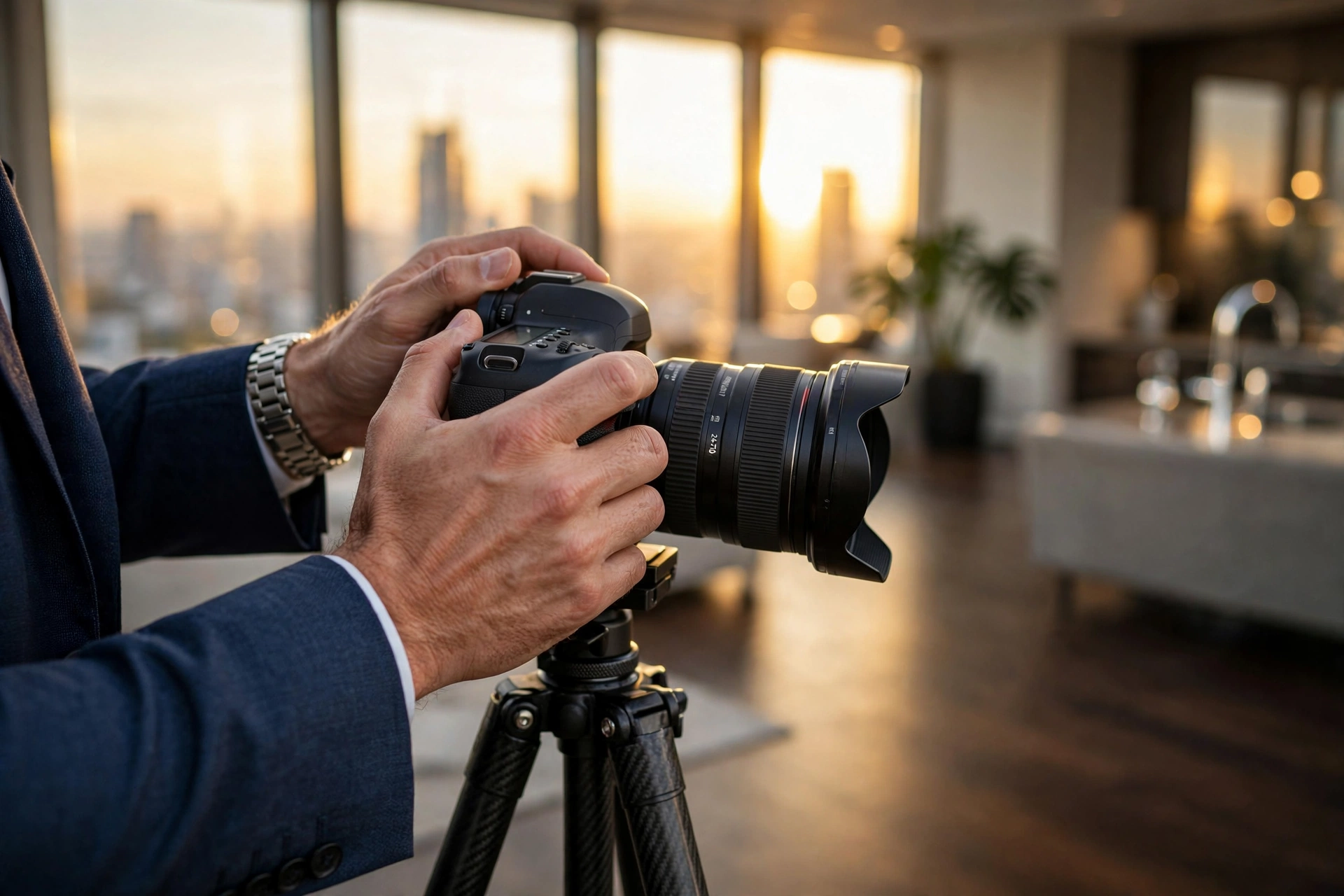
To understand the investment, we must first distinguish it from standard real estate photography. Commercial work focuses on the utility, scale, and architectural intent of a space. It requires specialized gear, such as tilt-shift lenses, to prevent vertical distortion in skyscrapers, and advanced HDR (High Dynamic Range) techniques to balance harsh interior fluorescent lighting with bright exterior windows.
📚
Definition
Commercial Real Estate Photography is the professional art of capturing commercial properties—such as warehouses, office buildings, retail spaces, and hotels—using architectural principles to highlight the asset's economic value and functional capacity.
Pricing is generally structured in three ways: per-image, per-hour, or per-project. Per-image pricing often ranges from $25 to $100 per shot, which is common for smaller retail strips. However, the industry standard for corporate assets is the project-based fee. This fee covers the pre-shoot consultation, the actual photography, and the extensive post-production process. According to a report by the American Institute of Architects, architectural precision in imagery directly correlates to how institutional investors perceive the maintenance and quality of a building.
Now, here's where it gets interesting: the "hidden" cost is often the post-production. A raw photo of a vacant warehouse is rarely appealing. The investment includes "digital cleaning," which removes distracting elements, corrects skewed lines, and optimizes color temperature. Many firms now supplement these costs by using Types of AI Property Enhancement for Real Estate to handle the tedious parts of editing, such as sky replacement or grass restoration, which drastically reduces the total billable hours of a human editor.
Why Does High-End Commercial Imagery Impact the Bottom Line?
The primary reason to invest heavily in commercial visuals is the reduction of "Days on Market" (DOM). In the commercial sector, every day a property sits vacant represents a direct loss in rental income and an increase in carrying costs. When a listing looks premium, it attracts "A-grade" tenants who are less likely to negotiate aggressive concessions.
According to research from Gartner, visual content that provides a high-fidelity representation of a physical space increases lead conversion rates by up to 40% in the B2B sector. In the commercial real estate world, your photos are the first "showing." If the imagery is subpar, institutional buyers may not even book a physical tour, assuming the property is poorly maintained.
The business impact is quantifiable. For a $10 million office building, a 1% increase in the final sale price—driven by a perceived "premium" status created by world-class visuals—results in an additional $100,000 in equity. Comparing a $2,000 photography budget to a $100,000 gain in valuation makes the investment a no-brainer. Furthermore, the use of Real Estate Visual Marketing: The 2026 Guide to AI-Driven Sales helps firms maintain a consistent brand image across a global portfolio, which is essential for REITs (Real Estate Investment Trusts) and large-scale property managers.
The consequence of neglecting this is "listing fatigue." Once a property has been on the MLS for 60 days with mediocre photos, the market perceives it as "problematic" or "undesirable." At that point, simply changing the price is rarely enough; you must refresh the visual narrative to restart interest.
How to Implement a Commercial Photography Strategy Step-by-Step
Implementing a high-ROI visual strategy requires more than just hiring a photographer; it requires an asset-mapping approach. The mistake I made early on—and that I see constantly—is letting the photographer decide which rooms to shoot. As the asset manager, you must dictate the "story" of the property.
- Asset Audit: Identify the "Hero Shots." For a warehouse, this is the loading dock efficiency and the ceiling height. For an office, it is the lobby's prestige and the natural light in the workspaces.
- Staging and Preparation: Commercial spaces are often cluttered. Instead of spending thousands on physical staging, we recommend Digital Staging Services: Scaling Real Estate Listings in 2026 to virtually populate a vacant office, showing potential tenants how the space could actually function.
- Execution of the Shoot: Ensure the photographer uses a tripod and a wide-angle lens that does not distort the space. The focus should be on "leading lines" that draw the eye through the property.
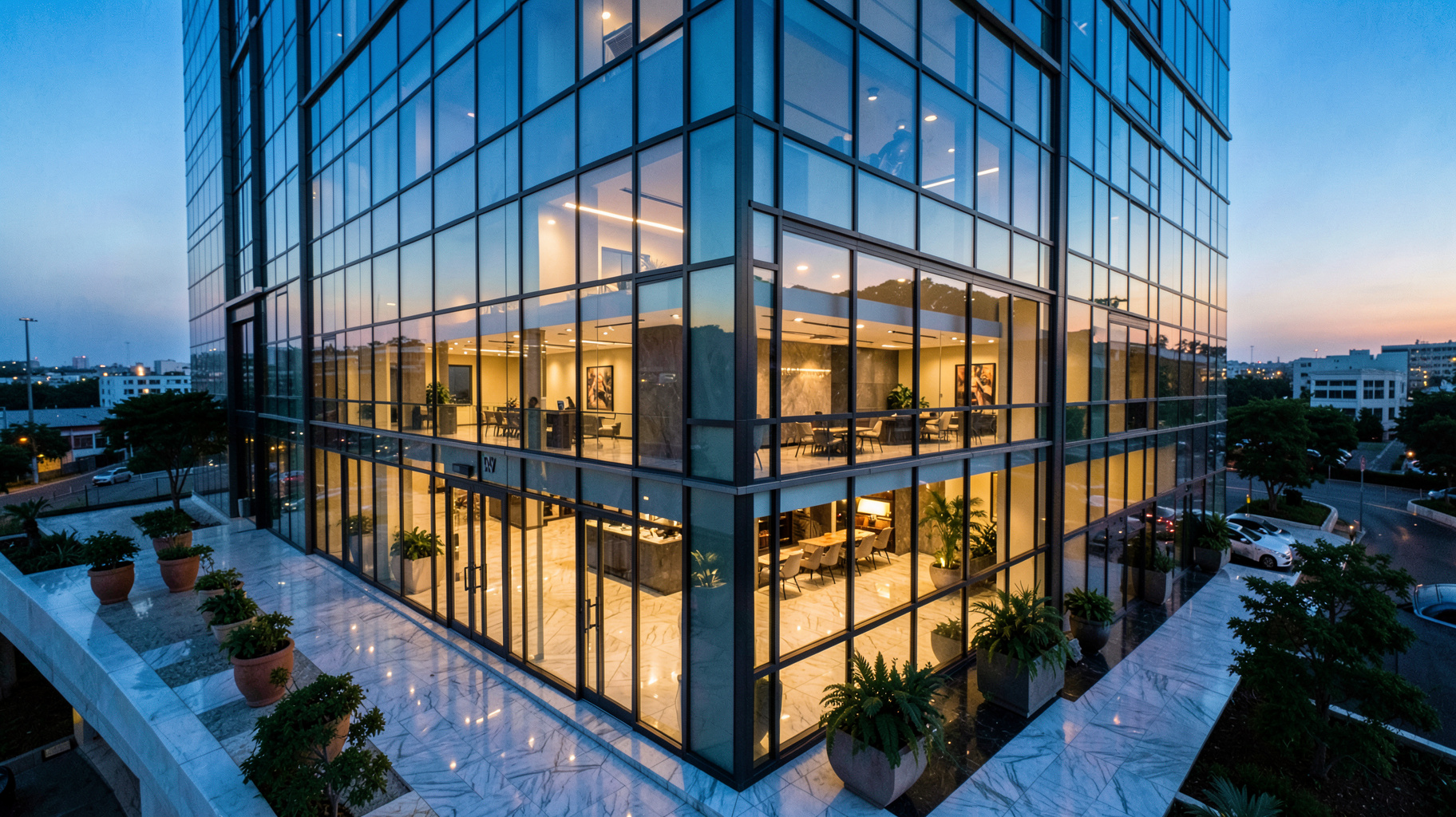
- AI-Driven Post-Production: This is where the magic happens. Use tools from RealVisionAI Blog - AI Real Estate Photography & Virtual Staging to convert dull midday shots into "Golden Hour" twilight images. This creates an emotional response of luxury and success.
- Distribution: Don't just put photos on the MLS. Use them in high-impact pitch decks, LinkedIn sponsored posts targeting CEOs, and immersive virtual tours.
💡
Key Takeaway
The highest ROI is achieved not by taking more photos, but by taking strategic photos and enhancing them with AI to remove vacancies and add atmospheric value.
For those who need a rapid turnaround, exploring AI Property Enhancement Perto de Mim options allows local brokers to get their listings live in hours rather than weeks, which is a massive competitive advantage in fast-moving urban markets.
Comparing Commercial Visual Approaches
When deciding how to allocate your budget, you will likely face three distinct paths. The choice depends on whether you are listing a single high-value trophy asset or managing a high-volume portfolio of industrial units.
| Approach | Cost Profile | Pros | Cons | Best For |
|---|---|---|---|---|
| Traditional Architectural Firm | High ($2k - $10k+) | Museum-quality, perfect lighting, high prestige. | Very slow turnaround, extremely expensive. | Trophy assets, Skyscrapers, Landmark Hotels. |
| Generic Freelancer | Low ($200 - $600) | Cheap, fast, readily available. | Low consistency, "fish-eye" distortion, poor editing. | Small retail shops, low-end industrial. |
| AI-Enhanced Studio (RealVisionAI) | Mid ($500 - $2k) | High speed, consistent "luxury" look, scalable. | Requires initial high-quality base shots. | Mid-to-high-end Commercial Portfolios, REITs. |
That said, the "Generic" approach is a dangerous gamble. In the commercial world, a "cheap" photo often signals a "cheap" property. If you are listing a space for $50 per square foot, but your photos look like they were taken with a 2010 smartphone, you are creating a cognitive dissonance that pushes buyers toward the competition. This is why analyzing Is AI Property Enhancement Worth It? is a critical step for any modern broker; the ability to get "Architectural Firm" quality at "Freelancer" speeds is the ultimate leverage.
Common Questions and Misconceptions About Commercial Investment
Most guides get this wrong by suggesting that "more photos are better." In commercial real estate, volume can actually dilute the impact. A curated gallery of 15 breathtaking images is far more effective than 50 mediocre ones.
Myth 1: "A drone shot is enough for industrial properties."
Wrong. While a drone shows the perimeter and access, it doesn't sell the interior volume. The real value of a warehouse is in the clear height and the slab quality. If you don't have high-end interior shots showing the scale of the interior, the drone shot is just a map, not a marketing tool.
Myth 2: "AI editing is 'dishonest' or misleading."
This is a common misconception. There is a clear line between "altering the structure" (which is unethical) and "optimizing the presentation." Using Benefícios de AI Property Enhancement to replace a grey, rainy sky with a blue one or to remove a stray trash can from a parking lot is not deception—it is professional presentation. It is the digital equivalent of cleaning the windows before a showing.
Myth 3: "I can just use a high-end smartphone."
While sensors have improved, smartphones cannot handle the dynamic range of a commercial space. The "blown-out" windows (pure white) that occur in phone photos are a hallmark of amateurism in commercial listings. Professional gear and Vantagens de Real Estate Image Processing are required to balance the light and maintain the professional integrity of the asset.
Frequently Asked Questions
How much does a standard commercial real estate photography package typically cost?
For a mid-sized commercial asset, you should expect to pay between $600 and $1,500. This usually includes a half-day shoot, 20 to 30 high-resolution edited images, and basic color correction. However, if the project requires specialized services like "Day-to-Dusk" conversion or virtual staging for multiple layouts, the price can climb to $2,500. The investment varies based on the complexity of the lighting and the number of distinct areas that need to be captured. It is essential to budget for post-production, as this is where the asset's value is truly highlighted.
Does investing in professional photography actually increase the rental price?
Yes, because it increases the perceived value of the asset. When a potential tenant sees high-end imagery, they associate the property with a higher standard of management and quality. According to industry data from the National Association of Realtors (though focused on residential, the principle holds for commercial), high-quality visuals lead to higher offer prices. In the commercial sector, this manifests as a tenant's willingness to accept a "premium" rent because the space feels like a prestigious place to conduct business.
What is the difference between architectural photography and commercial real estate photography?
Architectural photography is often an art form focused on the design and aesthetics of a building, often used for portfolios by architects. Commercial real estate photography is a marketing tool. While it uses architectural techniques, its primary goal is to sell or lease the space. This means focusing on "selling points" like parking capacity, ceiling height, and accessibility. While an architect might want a moody, artistic shot, a broker needs a bright, clean image that shows exactly how a business can operate within that space.
How long does the post-production process take for commercial images?
Traditional workflows can take 5 to 10 business days, which is often too slow for the fast-paced commercial market. However, by leveraging the tools at RealVisionAI Blog - AI Real Estate Photography & Virtual Staging, this window is slashed to under 24 hours. AI-driven processing allows for near-instant sky replacement and lighting adjustments. For brokers, this speed means they can get a listing live while the lead is still hot, preventing the "lead leakage" that happens when buyers have to wait days for visuals.
Should I use virtual staging for commercial offices?
Absolutely. A vacant office is a blank canvas that many tenants find difficult to visualize. By using Digital Staging Services: Scaling Real Estate Listings in 2026, you can show a tenant exactly how a 5,000-square-foot floor plate can be divided into a reception area, a conference room, and a series of open-plan workstations. This removes the cognitive load from the buyer and makes the "yes" much easier. It is significantly cheaper than renting physical furniture for a one-day shoot and far more flexible.
Final Thoughts on Commercial Real Estate Photography
Investing in commercial real estate photography is not about "pretty pictures"; it is about risk mitigation and value maximization. Every dollar spent on high-end imagery is a hedge against vacancy. By combining professional capture with the cutting-edge tools provided by RealVisionAI Blog - AI Real Estate Photography & Virtual Staging, you ensure that your assets are positioned as the most desirable options in your market.
If you are currently managing a portfolio that feels "stale" or is taking too long to lease, it is time to audit your visuals. From AI Property Enhancement Pricing Guide to full-scale architectural shoots, the right strategy depends on your asset's goals. Don't let a lack of visual polish be the reason a high-value tenant chooses a competitor's property.
To start elevating your property visuals today, visit realvisionaire.com and discover how "Market-Ready Listing Visuals in 12 Seconds" can transform your portfolio's performance.
Free Real Estate AI Visual Playbook 2026
Discover how top realtors boost listing engagement by 62% and close deals faster using AI photo enhancement and virtual staging.