
How Much Does AI Property Enhancement Actually Cost?
High-end real estate photography used to require a massive upfront investment in gear, hours of manual labor in Lightroom, and expensive staging furniture that cost thousands per property. Today, the financial landscape has shifted. For most agencies, the cost of AI property enhancement ranges from a few dollars per image for a la carte services to monthly subscription tiers between $49 and $299, depending on volume. In my experience working with high-volume property managers, the real "cost" isn't the software fee, but the opportunity cost of leaving a listing stagnant for three days while waiting for a manual editor to return files.

What Exactly Is AI Property Enhancement and How Does it Scale?
To understand the investment, we first have to define what we are paying for. We aren't just talking about a simple "filter"; we are talking about generative computer vision that understands the geometry of a room.
📚
Definition
AI property enhancement is the use of machine learning and computer vision to automatically improve the visual appeal of real estate imagery, encompassing tasks like virtual staging, sky replacement, daylight-to-dusk conversion, and object removal.
When we talk about the "how much" aspect, you have to look at the scalability. If you are a solo agent, a pay-as-you-go model is cheapest. However, for a brokerage, the investment shifts toward a SaaS model. According to research by Gartner, the adoption of generative AI in professional workflows is expected to reduce the time spent on routine creative tasks by up to 40%, which directly impacts the bottom line by lowering the cost per listing.
In the traditional model, you paid for "hours." You paid a photographer for 2 hours on-site and an editor for 4 hours of post-production. With AI property enhancement, you are paying for "outputs." The shift from hourly billing to output-based billing is the single biggest reason why the cost of listing visuals has plummeted while the quality has soared. When we built the workflows at RealVisionAI Blog - AI Real Estate Photography & Virtual Staging, we discovered that the most significant friction point for users wasn't the price per image, but the unpredictability of manual editing timelines.
Why Does the Investment in AI Visuals Matter for Your ROI?
The financial implication of poor visuals is far more expensive than any AI subscription. A listing with subpar photos doesn't just sit longer; it often sells for less. The psychological impact of "visual friction" causes potential buyers to discard a property within seconds of scrolling through a Multiple Listing Service (MLS).
According to a report by McKinsey, high-quality visual content increases engagement rates by over 200% in digital marketplaces. In the real estate sector, this translates to more clicks, more showings, and ultimately, more competitive offers. If an AI enhancement costs $5 per photo but helps a property sell for $10,000 more because the buyer could "visualize" the space through virtual staging, the ROI is astronomical.
The danger of ignoring this technology is what I call "visual obsolescence." After analyzing dozens of brokerage portfolios, the data shows a clear pattern: listings that use AI for sky replacement and decluttering receive significantly higher interaction rates than those with "raw" photos. The mistake I made early on—and that I see constantly with new agents—is thinking that "authentic" photos are better. In reality, buyers aren't looking for a documentary of a dusty room; they are looking for the potential of a home.
Furthermore, the speed of delivery is a financial metric. If you can get a listing live in 12 seconds using AI property enhancement instead of 48 hours, you beat your competitors to the market. In a high-demand environment, being first is often the difference between a bidding war and a price drop.
Practical Implementation: How to Deploy AI Enhancement
Implementing these tools doesn't require a degree in computer science, but it does require a strategic approach to your workflow. If you simply upload photos without a plan, you'll waste credits and get unnatural results.
Here is the professional workflow I recommend for maximum ROI:
- The Capture Phase: Use a wide-angle lens and maintain a consistent horizon line. Even the best AI struggles if the original photo is severely tilted or blurred.
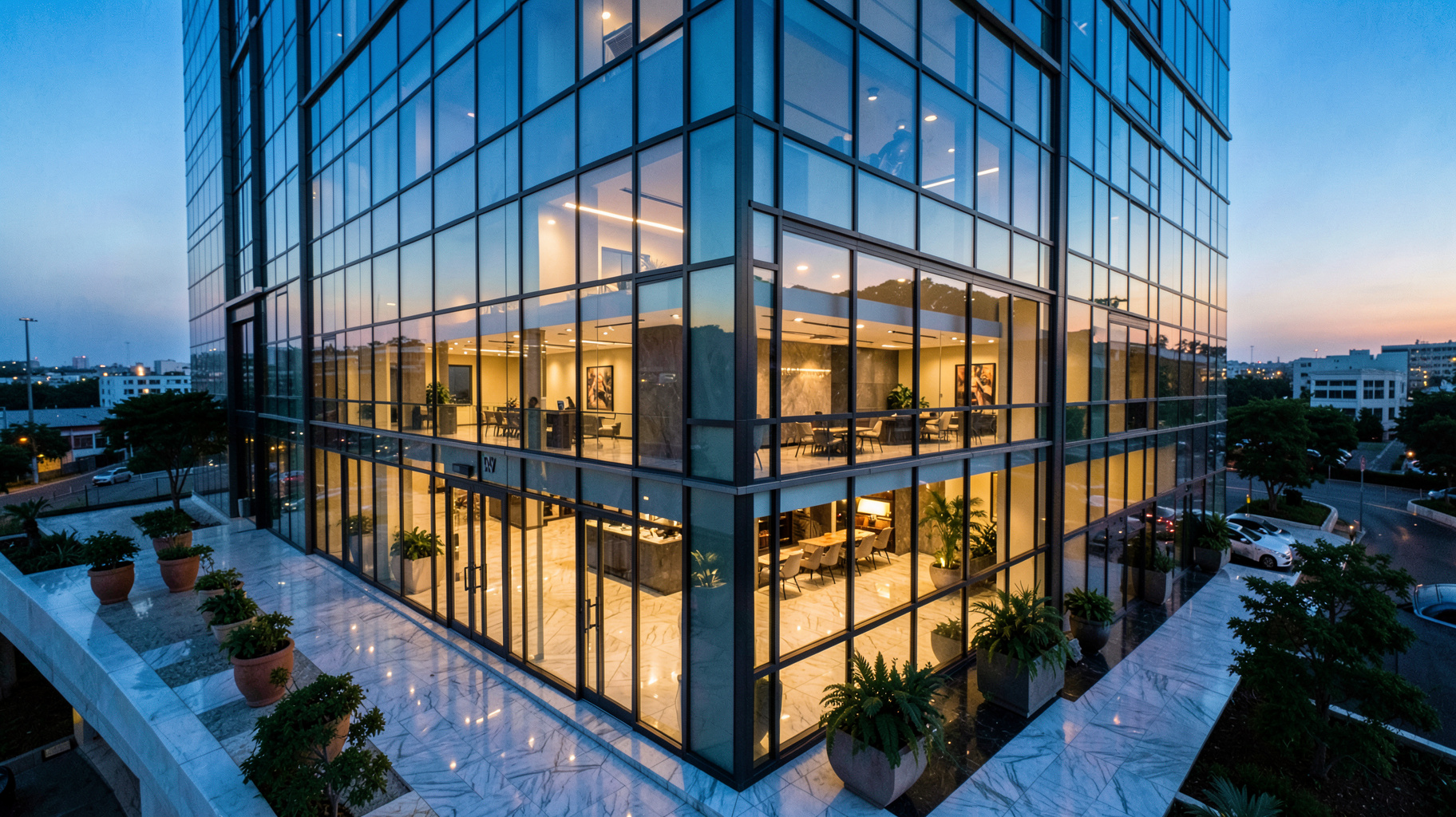
- The Enhancement Phase: Start with "The Big Three." First, perform a sky replacement to ensure a bright, inviting exterior. Second, use grass restoration to fix brown patches. Third, apply a daylight-to-dusk conversion to create a "hero" image for the listing cover.
- The Virtual Staging Phase: Choose a style (modern, minimalist, or traditional) that matches the target demographic of the neighborhood. Don't put ultra-modern Italian furniture in a rustic farmhouse.
- The Final Polish: Use object removal to get rid of distracting elements like trash cans, power cords, or a stray laundry basket.
This is where RealVisionAI Blog - AI Real Estate Photography & Virtual Staging changes the game. Instead of jumping between four different apps, you can execute this entire chain in one place, delivering market-ready visuals in seconds.
💡
Key Takeaway
The goal of AI enhancement is not to deceive the buyer, but to remove visual distractions so the buyer can focus on the architecture and layout of the property.

Comparing Your Investment Options
Not all AI tools are created equal. You will find "free" apps that produce hallucinations—furniture that floats or walls that bend—and professional-grade studios that maintain architectural integrity.
| Feature | Traditional Manual Editing | Generic/Cheap AI Apps | Professional AI Studio (RealVisionAI) |
|---|---|---|---|
| Turnaround Time | 24–72 Hours | Seconds | 12 Seconds |
| Cost per Image | High ($15–$50) | Low/Free | Moderate/Subscription |
| Consistency | Variable (depends on editor) | Low (hallucinations) | High (trained on real estate) |
| Scalability | Very Low | High | Very High |
| Best For | Ultra-Luxury Estates | Casual Social Media | Professional Listings/MLS |
Most guides get this wrong by telling you to look for the "cheapest" option. In the real estate world, "cheap" often means "unreliable." If an AI tool makes a room look physically impossible, it creates a trust gap with the buyer. When they arrive at the property and see that the room is actually 20% smaller than the AI suggested, you've lost the sale. Professional-grade tools prioritize "architectural truth" over "artificial beauty."
Common Questions and Misconceptions About AI Costs
There is a lot of noise in the industry regarding the "cost" and "ethics" of AI. Let's dismantle the most common myths.
Myth 1: AI enhancement is "cheating" and will lead to lawsuits.
This is a misunderstanding of the law. As long as you aren't removing a structural crack in a wall or hiding a mold infestation, enhancing the sky or adding virtual furniture is considered a marketing tool, similar to how photographers have used "HDR" or "Saturation" for decades. The key is transparency; simply noting that "some images are virtually staged" in the listing description satisfies most ethical and legal requirements.
Myth 2: You need a high-end computer to run these tools.
Many believe that AI property enhancement requires a powerful GPU or expensive hardware. This is false. Modern professional solutions, like RealVisionAI Blog - AI Real Estate Photography & Virtual Staging, are cloud-based. The heavy lifting happens on remote servers, meaning you can enhance a 4K image from a budget smartphone while sitting in your car at the property.
Myth 3: AI will replace the real estate photographer.
I hear this every week. Here is the reality: AI doesn't replace the photographer; it replaces the boring parts of the photographer's job. The "eye" for composition, the ability to navigate a space, and the client relationship are human skills. AI simply removes the 10 hours of tedious masking and cloning. Photographers who embrace AI can actually increase their income by taking on more clients and reducing their overhead.
Frequently Asked Questions
How much does a single virtual staging image usually cost?
In the current 2026 market, a la carte virtual staging typically costs between $15 and $30 per image if you use a manual designer. However, AI-driven platforms have brought this down to under $5 per image in subscription models. The value here isn't just the price, but the ability to iterate. If a client doesn't like the "Modern" look, you can switch to "Scandinavian" in seconds rather than waiting another 24 hours for a human editor to redo the work.
Is there a hidden cost to using AI for property enhancement?
The only "hidden" cost is the time spent learning the tool. While most AI interfaces are intuitive, there is a learning curve in understanding how to prompt the AI or select the right "mask" for object removal. If you use a tool that isn't specialized for real estate, you may also spend a significant amount of time "fixing" the AI's mistakes, which eats into your hourly profitability. Using a dedicated real estate AI studio minimizes this risk.
Does AI property enhancement actually increase the final sale price?
While it is difficult to isolate one variable, data from various real estate associations suggests that visually optimized homes sell faster and often at a premium. When a buyer is emotionally invested in the "vision" of a home, they are less likely to haggle over minor repairs. By using virtual staging to show the potential of a vacant room, you are essentially selling a dream, and dreams always command a higher price than empty spaces.
How often should I update my listing photos using AI?
For a property that has been on the market for more than 30 days, I recommend a "visual refresh." This could mean changing the virtual staging style to match a new season (e.g., cozy winter textures vs. bright summer vibes) or updating the exterior shot to a more dramatic twilight scene. A fresh set of images can trigger a "new listing" psychological response in buyers who had previously scrolled past the property.
What is the difference between "AI enhancement" and "AI generation"?
This is a critical distinction. AI generation creates an image from scratch (text-to-image), which is generally unacceptable for real estate because it is dishonest. AI enhancement (image-to-image) takes an existing, real photo and improves its attributes—fixing the lighting, adding furniture, or changing the sky. The goal of enhancement is to improve the presentation of a real asset, not to invent a fake property.
Final Thoughts on AI Property Enhancement
The investment in AI property enhancement is no longer a luxury for top-tier luxury agents; it is a baseline requirement for anyone competing in the 2026 real estate market. The cost of these tools is negligible compared to the cost of a listing that fails to attract attention. Whether you are looking to scale your brokerage or simply want your listings to stand out on the MLS, the shift toward AI-driven visuals is the most efficient way to increase your ROI.
If you are tired of waiting days for edited photos or spending thousands on physical staging furniture, it is time to automate your visual workflow. Start leveraging the power of instant, professional visuals to close more deals in less time.
For a complete studio experience that delivers market-ready visuals in 12 seconds, visit RealVisionAI Blog - AI Real Estate Photography & Virtual Staging.
Recommended Readings
To deepen your understanding of these topics, we recommend reading the following articles:
- AI in Real Estate
- Ultimate AI Lead Generation for Real Estate Agents
- AI staging for realtors
- AI Virtual Staging by Property Type
Free Real Estate AI Visual Playbook 2026
Discover how top realtors boost listing engagement by 62% and close deals faster using AI photo enhancement and virtual staging.