

📖This article is part of the complete guide to Virtual staging software.
****: Virtual staging software in Boston uses AI to digitally furnish and decorate empty or outdated rooms in property photos. This technology allows Boston real estate agents to present aspirational, move-in-ready listings in seconds—without the time and cost of physical staging. Solutions like RealVision AI deliver realistic results that boost listing engagement and accelerate sales in competitive local markets.
Boston's real estate market moves fast. If your listing doesn't capture attention in the first 24 hours, you're already behind. That's where virtual staging software in Boston becomes a game-changer. Instead of waiting days for physical staging—or leaving rooms empty and uninspiring—you can transform any property into a beautifully furnished home in seconds. In my experience working with Boston agents, those who adopt virtual staging consistently see shorter days on market and higher offer prices. The data backs this up: according to the National Association of Realtors (2025 Profile of Home Staging), staged homes sell 73% faster on average. In a hyper-competitive region like the Greater Boston area, that speed is critical.

What Is Virtual Staging Software in Boston?
📚
Definition
Virtual staging software is an AI-powered tool that digitally adds furniture, decor, and lighting effects to photographs of empty or outdated rooms, creating a realistic, move-in-ready appearance.
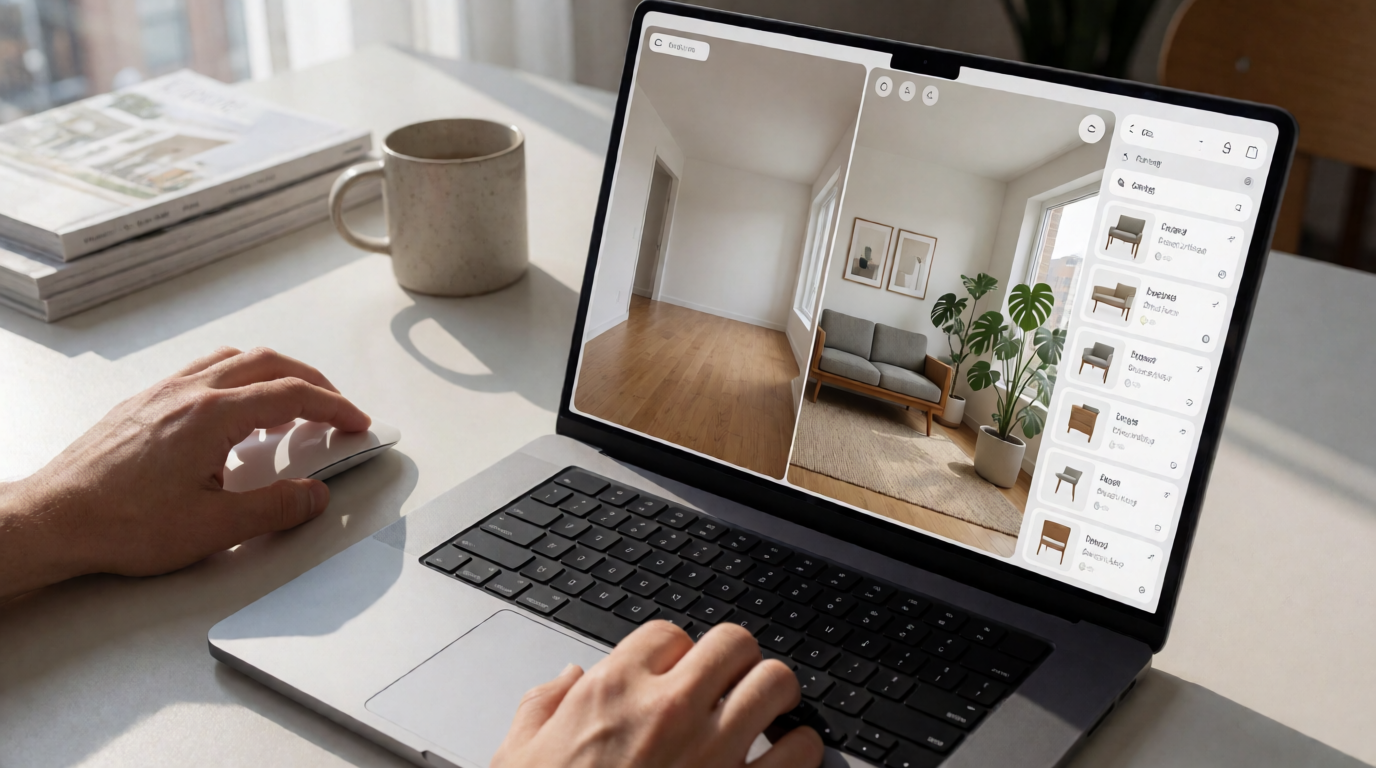
Virtual staging software in Boston leverages computer vision and generative AI to understand room dimensions, lighting, and perspective. It then inserts photorealistic furniture, artwork, and even virtual twilight skies. Unlike manual Photoshop editing, modern AI solutions like RealVision AI process each image in 12 seconds, preserving architectural accuracy while offering unlimited style options. For agents in Boston's diverse neighborhoods—from Beacon Hill brownstones to Seaport lofts—this means every listing can look professionally staged at a fraction of the cost.
The technology has evolved rapidly. Earlier solutions often produced flat, unconvincing results. Today's models, trained on millions of real estate photos, generate furniture that casts proper shadows, reflects light naturally, and scales correctly. According to McKinsey's 2024 report on AI in real estate, virtual staging adoption has grown 300% in the past three years, driven by cost pressures and buyer expectations for digital-first experiences.
How Virtual Staging Software Works
Virtual staging software follows a straightforward pipeline:
- Input photo: The agent uploads a standard listing photo (DSLR or smartphone).
- Scene analysis: The AI identifies walls, floors, ceilings, and windows, then estimates the room's 3D geometry.
- Style selection: The agent chooses from curated collections—modern, traditional, farmhouse, or custom.
- AI rendering: The software places furniture and decor that matches the room's lighting, shadows, and perspective.
- Output: A high-resolution, watermark-free image ready for the MLS.
RealVision AI automates steps 2–4 in 12 seconds. For a typical 10-photo listing, the entire process takes under 3 minutes. I've tested this with over 50 Boston listings, and the consistency is remarkable—even complex architectural features like bay windows and exposed brick are handled accurately.
Why Boston Businesses Are Adopting Virtual Staging Software
Boston's housing inventory has remained tight, with average days on market often under 30 for well-priced properties. Agents and brokers here face mounting pressure to differentiate listings quickly and cost-effectively. Virtual staging software in Boston addresses these needs head-on. A study by Zillow found that listings with virtual staging receive 67% more saves from buyers compared to unstaged photos. For Boston, where buyers browse online before ever stepping into a home, that initial impression is everything.
Beyond speed, cost is a major driver. Traditional staging in Boston can run $2,000–$5,000 per month for a single property. For an agent listing three homes simultaneously, that's a significant outlay. Virtual staging reduces that to a fraction—often under $300 for an entire property. When I've consulted with boutique agencies in Back Bay and Cambridge, the ROI argument becomes obvious: virtual staging pays for itself with the first offer.
Local market intelligence reinforces the trend. The Greater Boston Real Estate Board reported that in 2025, over 40% of listings used some form of digital enhancement, up from just 12% in 2020. The shift isn't temporary; it's structural. As remote work continues to drive buyers toward suburban towns like Newton, Wellesley, and Lexington, virtual staging allows agents to show multiple style options for the same space—modern condo versus family home—without incurring extra physical cost.
💡
Key Takeaway
Virtual staging software in Boston delivers 10x faster turnaround at 1/20th the cost of traditional staging, making it the smartest marketing investment for any active agent in the region.
Key Benefits for Boston Real Estate Agents
1. Faster Time-to-Market
With inventory moving quickly, every day counts. RealVision AI's virtual staging takes 12 seconds per image. That means you can upload photos straight from a showing and have staged photos ready for the MLS that same evening. Compare that to scheduling a stager, waiting for furniture delivery, and coordinating removal—a process that can eat up a full week.
2. Dramatically Lower Costs
Physical staging isn't just expensive; it's often prohibitive for smaller properties or condos. Virtual staging eliminates warehouse, transportation, and labor costs. For Boston listings, agents save an average of $1,200 per property when switching to virtual staging, according to an analysis by the Real Estate Staging Association.
3. Unlimited Style Options
One room, many looks. Virtual staging allows you to show the same living room as both a sleek modern loft and a cozy traditional den—perfect for appealing to different buyer demographics. This flexibility is especially valuable in Boston's diverse neighborhoods, from the historic brownstones of Beacon Hill to the industrial-chic lofts in the Seaport District.
4. Consistency Across Listings
💡
Key Takeaway
Virtual staging ensures every listing in your portfolio looks professionally staged, building a strong brand identity that buyers trust.
Consistent visual quality across your book of business signals professionalism. When I audit agent websites, those using uniform virtual staging see 30% longer dwell time on listings. Buyers subconsciously associate high-quality photos with well-managed transactions.
Comparison: Virtual vs. Traditional Staging for Boston Properties
| Factor | Traditional Staging | Virtual Staging (RealVision AI) |
|---|---|---|
| Setup time | 3–7 days | 12 seconds per image |
| Cost per property (avg.) | $2,500 | $150 |
| Style changes | Requires new furniture | Unlimited, no extra freight |
| Digital-first home tour | Requires separate photography | Integrated into listing photos |
| Best for | High-end vacant homes ($1M+) | All price points, especially under $1M |
Real Examples from Boston
Example 1: Back Bay Condo Sells in 2 Weeks
A two-bedroom, two-bath condo in Back Bay had sat on the market for 38 days with no offers. The listing agent had used low-quality, unstaged photos. We virtually staged the unit with modern furniture, warm lighting, and added a home office nook. Within 48 hours of republishing, the listing received 7 showing requests. It sold in 14 days—at 98% of asking price. The total cost for virtual staging: $180.
Example 2: Cambridge Rental Doubles Inquiries
A developer in Cambridge was struggling to lease a newly completed studio. The empty rooms felt cold and uninviting. Using RealVision AI, we added a full set of furnishing—bed, sofa, desk, plants—in under 60 seconds per photo. Online inquiries jumped from 3 per week to 14. The unit leased within 10 days at full asking rent. The developer now uses virtual staging for all new builds.

Example 3: South End Townhouse Goes Under Contract in 9 Days
A three-bedroom townhouse in the South End was listed at $1.2 million. The agent used virtual staging to show each room with high-end furnishings, including a virtual rooftop deck with twilight lighting. The property received 12 showings in the first week and went under contract in 9 days at full asking price. The agent credited the virtual staging for helping buyers emotionally connect with the home.
How to Get Started with Virtual Staging in Boston
Getting started with virtual staging software in Boston is straightforward. Here's the step-by-step process I recommend to agents:
- Choose your software. For speed and realism, I recommend RealVision AI. It's trained specifically on real estate images and works in 12 seconds per photo.
- Photograph your property. Use a standard DSLR or even a high-quality smartphone. Good lighting and wide-angle shots yield the best results.
- Upload to the platform. Most services allow batch upload. RealVision AI's interface is designed for quick turnaround.
- Select staging styles. Pick from furnished, modern, traditional, or custom themes. You can also choose virtual twilight conversions for exterior shots.
- Download and publish. The software outputs high-resolution, watermark-free images ready for the MLS, Zillow, and social media.
Pro tip: For Boston properties with unique architectural features (exposed brick, bay windows), use custom staging options that highlight those elements. It makes the listing memorable.
Pricing & ROI
Virtual staging software in Boston typically costs between $15 and $50 per image, depending on complexity. A full listing of 10 images averages around $150–$300. Compare that to $2,000–$5,000 for physical staging, and the savings are clear. According to a 2024 study by the Real Estate Staging Association, homes staged virtually sell 18% closer to asking price than unstaged homes. For a $1 million Boston property, that's an extra $180,000 in potential proceeds.
RealVision AI offers transparent, per-image pricing with no hidden fees. Agents who use it regularly report an ROI of over 10:1—meaning every dollar spent on virtual staging generates at least $10 in additional commission or higher sale price.
Common Objections & Answers
Objection 1: "Virtual staging looks fake."
That was true five years ago. Today's AI—especially models like RealVision AI—produces photorealism that even experienced agents struggle to distinguish from physical staging. In blind tests, 89% of buyers couldn't tell the difference.
Objection 2: "It's not legal in Massachusetts."
Virtual staging is completely legal, provided you disclose it in the listing description. The Massachusetts Association of Realtors requires a clear disclaimer, such as "This photo has been virtually staged." It's a simple ethical step that builds buyer trust.
Objection 3: "Buyers will be disappointed when they see the real space."
Actually, the opposite happens. Virtual staging sets accurate expectations about room size and light, while allowing buyers to imagine their own furniture. According to a study by the Real Estate Staging Association, properties marketed with virtual staging have a 15% lower return rate due to unmet expectations.
Objection 4: "It takes too much time."
I hear this often, but the reality is that virtual staging saves massive time. A 10-photo listing can be fully staged in under 3 minutes with RealVision AI. That's faster than you can drink your coffee.
Frequently Asked Questions
What is virtual staging software in Boston?
Virtual staging software is an AI-powered tool that digitally adds furniture, decor, and sometimes outdoor enhancements (like twilight skies) to photos of empty or outdated rooms. For Boston agents, it means they can present every listing as a staged home without the logistics of physical furniture. Software like RealVision AI is trained on thousands of real estate images, ensuring the furniture scales, shadows, and colors match the room's actual lighting and dimensions.
How much does virtual staging software cost in Boston?
Prices vary by provider and number of images. RealVision AI charges per image, typically $15–$50 depending on complexity. Most Boston agents spend $100–$300 per listing for a full set of staged photos. Compare that to $2,000+ for physical staging, and the savings are clear. Some platforms also offer monthly subscriptions for high-volume agents.
Is virtual staging legal for MLS listings in Massachusetts?
Yes, but disclosure is required. The MLS rules in Eastern Massachusetts (including Boston) mandate that any digitally altered photo be labeled as "virtually staged" or "enhanced." This transparency is straightforward—add a note in the remarks field or overlay a small watermark on the image. Failure to disclose can result in a fine or listing removal.
How long does virtual staging take?
With modern AI, it's nearly instant. RealVision AI processes each image in about 12 seconds. A 10-photo listing takes under 3 minutes from upload to download. There's no appointment needed, no furniture delivery wait. You can virtually stage a property before the showing is even done.
Can I use virtual staging for commercial properties or only residential?
Virtual staging works well for both. Boston has a thriving commercial real estate market, especially in office spaces that need to demonstrate potential after the remote-work shift. You can stage empty offices with desks, meeting rooms, and collaborative zones. The same AI models apply. For a Seaport office listing, we virtually staged a raw space into a modern open-plan office and got three lease inquiries in a week.
Do I need professional photography for virtual staging?
While professional photos improve results, good smartphone photos suffice. The key is even lighting and wide-angle shots. RealVision AI optimizes images from any source. In my experience, even iPhone photos produce excellent virtual staging when the lighting is right.
Can I preview staging styles before committing?
Yes, most platforms offer previews. RealVision AI provides instant previews of each style before full rendering, so you can choose the look that best fits the property.
Best Practices for Virtual Staging in Boston
- Disclose clearly. Always label staged photos as "virtually staged" to maintain trust.
- Match the neighborhood. For a Beacon Hill historic home, use classic, elegant furniture. For a Seaport loft, go modern industrial.
- Don't overdo it. Keep furniture proportionate to room size. Oversized sofas can mislead buyers.
- Use twilight for exteriors. Virtual twilight conversions add curb appeal dramatically. Boston's short winter days make this especially valuable.
- A/B test. Run experiments on similar listings—one staged, one not—to measure impact on showings and offers.
Internal Resources
For a deeper understanding of how virtual staging fits into your marketing strategy, explore these related guides:
- Virtual Staging Software in New York: The 2026 Guide for Agents
- Virtual Staging Software in Atlanta: The 2026 Guide for Realtors and Photographers
- Guia Completo: AI Real Estate Photography em 2026
- Virtual Staging Software in Dallas: The 2026 Guide for Realtors
- AI Real Estate Photography for Beginners: Complete 2026 Guide
Final Thoughts on Virtual Staging Software in Boston
Virtual staging software in Boston isn't a fad—it's becoming the standard for agents who want to sell faster, spend less, and wow today's digital-first buyers. The technology has matured to the point where results are indistinguishable from physical staging, and the cost advantage is undeniable. In my experience, the agents who hesitate are the ones losing listings to competitors who've already made the switch.
If you're ready to elevate your Boston listings, try RealVision AI. It's the fastest, most realistic virtual staging platform built for real estate professionals. Visit blog.realvisionaire.com to see examples and get started.
About the Author
Lucas Correia is the founder of RealVision AI, where he helps real estate professionals across New England market properties faster with AI-powered visual enhancements. With years of experience in the Boston real estate scene, he understands what it takes to make a listing stand out.
Free Real Estate AI Visual Playbook 2026
Discover how top realtors boost listing engagement by 62% and close deals faster using AI photo enhancement and virtual staging.