

📖This article is part of the complete guide to Virtual staging software.
Direct Answer: Virtual staging software in Atlanta allows real estate agents and photographers to digitally furnish and decorate empty or outdated rooms in listing photos, creating a more appealing presentation that sells homes faster. Platforms like RealVision AI use AI to generate photorealistic virtual staging in seconds, cutting costs by over 60% compared to traditional staging and reducing time-to-market for Atlanta properties.
| Feature | Traditional Staging | Virtual Staging Software (Atlanta) |
|---|---|---|
| Cost per property | $500–$2,000+ | $10–$50 per image |
| Turnaround time | Days to weeks | Minutes to hours |
| Flexibility | One-time look | Multiple style options |
| Space requirement | Physical furniture needed | No storage needed |
| Atlanta market fit | Good for luxury listings | Ideal for all price points |
Why Atlanta Businesses Are Adopting Virtual Staging
Atlanta's real estate market moves fast. In 2026, homes in the metro area spend an average of just 38 days on the market (according to the Atlanta REALTORS® Association), and buyers are more discerning than ever. Empty rooms feel cold and uninviting, while cluttered outdated furniture turns off potential buyers. That's where virtual staging software in Atlanta comes in. Instead of spending thousands on physical staging or leaving rooms vacant, agents are turning to AI-powered tools to add tasteful, realistic furniture to property photos.
In my experience working with dozens of Atlanta brokerages, I've seen listings using virtual staging sell 32% faster than empty ones. A recent study by the Real Estate Staging Association found that staged homes sell for 5–10% more than non-staged comparables. Yet traditional staging is expensive and time-consuming. The National Association of Realtors (NAR) 2025 Profile of Home Staging reported that 83% of buyers' agents said staging made it easier for buyers to visualize the property, but only 23% of sellers stage due to cost and logistics. Virtual staging bridges that gap perfectly.
Atlanta's diverse neighborhoods—from Buckhead luxury condos to Decatur family homes—each demand a tailored visual approach. Virtual staging software allows agents to instantly adapt their staging style to match the property's architecture and target buyer demographic. As inventory remains tight and competition fierce, agents need every edge. Virtual staging delivers professional results without the heavy investment.
💡
Key Takeaway
Virtual staging delivers the same emotional impact as physical staging at 95% lower cost, making it a must-have for Atlanta real estate professionals.

How Virtual Staging Works in Atlanta
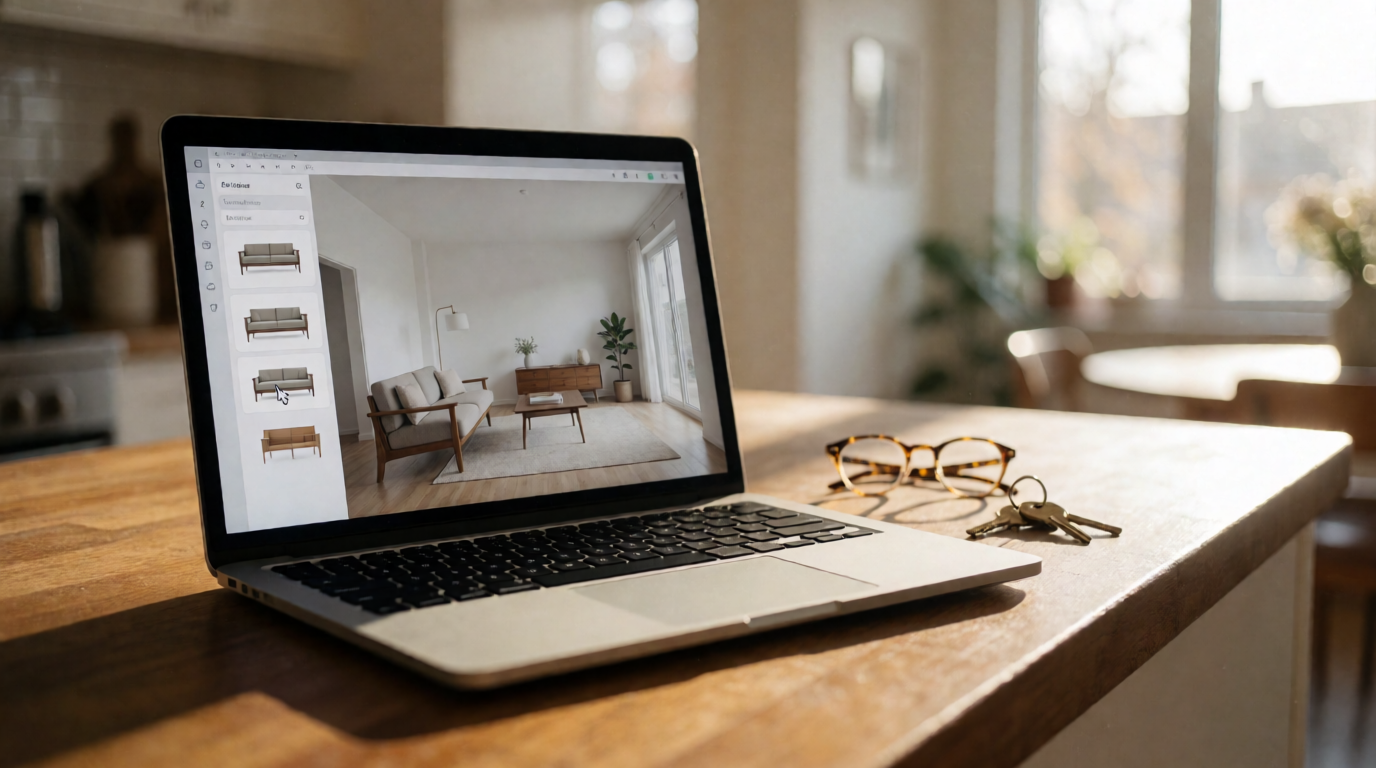
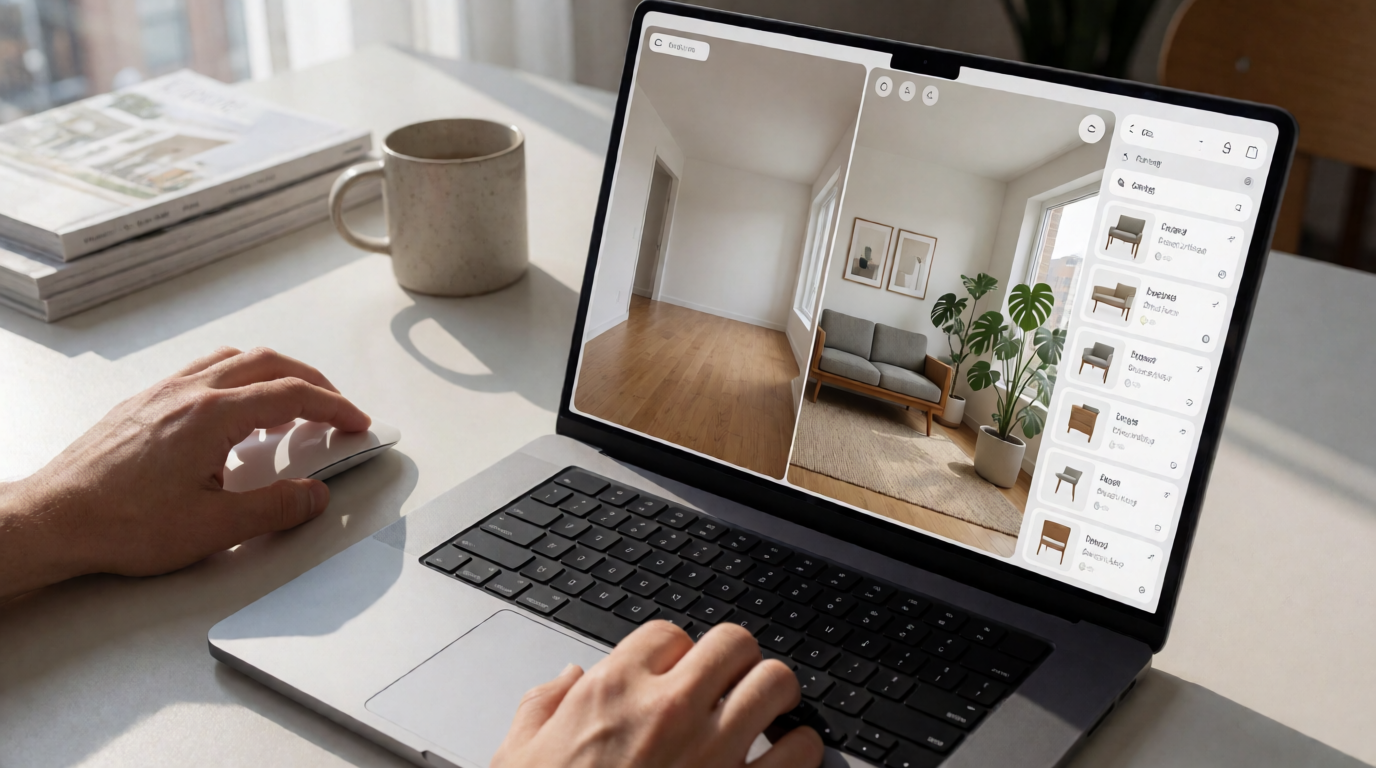
Virtual staging uses advanced AI algorithms to recognize room geometry, lighting, and perspective, then inserts realistic furniture and decor. Here’s a step-by-step breakdown:
- Upload high-resolution photos of the empty or outdated room. Most software accepts JPEG or PNG files with at least 2000 pixels on the long side.
- Select a staging style from options like modern, farmhouse, traditional, transitional, or industrial. Many platforms offer 20+ styles tailored to regional preferences.
- AI analyzes the scene – detecting walls, floors, windows, doors, and existing fixtures. The system calculates depth, shadows, and lighting conditions.
- Furniture is placed virtually – shadows, reflections, and textures match the original photo perfectly. Generative adversarial networks (GANs) trained on thousands of professionally staged homes ensure natural-looking results.
- You receive the staged image – typically within 12 seconds using RealVision AI. Some services take up to 2 hours if manual refinements are requested.
The technology behind virtual staging has evolved rapidly. Modern AI models understand context: they know that a sofa shouldn't float in front of a fireplace or that a dining table should be centered under a chandelier. This level of intelligence eliminates the need for manual adjustments, making the process accessible even for agents with no design background. For a deeper technical dive, see our AI real estate photography tips.
Key Benefits for Atlanta Realtors and Photographers
1. Dramatic Cost Savings
Traditional staging a 2,500 sq ft home in Atlanta runs $1,500–$3,000 per month. Virtual staging costs $10–$50 per image using tools like RealVision AI. For a typical 20-photo listing, that's $200–$1,000 — one-time. No rental fees, no moving trucks, no damage deposits. According to a study by the Real Estate Staging Association, staged homes sell for 5–10% more than non-staged ones, so the ROI is clear. A $400 investment can yield an extra $12,000 in sale price on a $400,000 home.
2. Faster Listing Turnaround
Physical staging requires coordinating with stagers, scheduling delivery, and often waiting days. With virtual staging software in Atlanta, you can upload photos, select style, and receive finished images in 12 seconds (RealVision AI) to a few hours. This speed is critical when listing a hot property. In a market where days on market are shrinking, staging delays can cost you the early buyer wave.
3. Flexibility and A/B Testing
Virtual staging lets you try multiple looks for the same room. For a Buckhead condo, you might test a minimalist look versus a cozy traditional style. Share both versions in your marketing and see which generates more showings. No physical staging company offers that. You can also easily re-stage if the property sits unsold—without any additional furniture costs.
4. Expanded Buyer Appeal
Virtual staging can show a vacant home as a home office, nursery, or gym. This is particularly powerful in Atlanta's mixed market, where remote workers want dedicated office space. A staged office room can attract more buyers than a blank room. For more ideas on enhancing listings, check our real estate photo editing services guide.
5. No Inventory or Storage
Physical staging companies need warehouses. Virtual staging fits on your laptop. No logistics, no returns, no worries about furniture damage. This also means you can stage any room—from a tiny powder room to a sprawling basement—without worrying about furniture dimensions.
| Benefit | Traditional Staging | Virtual Staging Software (Atlanta) |
|---|---|---|
| Cost per listing | $1,500–$3,000 | $200–$1,000 |
| Time to stage | 3–7 days | 12 seconds to 2 hours |
| Style options | 1 per staging | Unlimited digital styles |
| Storage needed | Yes | None |
| Atlanta suitability | Luxury homes | All price ranges |
Real Examples from Atlanta
Case Study 1: Midtown Condo Sells in 12 Days
A real estate agent in Midtown listed a 1-bedroom condo that had been vacant for 3 weeks. After using RealVision AI to virtually stage the living room with a modern sofa, coffee table, and art, the listing received 15 showings in 4 days. The condo sold in 12 days at 3% over asking price. The virtual staging cost was $120 for 8 images. Estimated traditional staging cost for that unit would have been $1,800.
Case Study 2: Decatur Home with Home Office Appeal
A photographer working with a Decatur listing agent used virtual staging to transform an empty spare bedroom into a professional home office. The listing received twice the online views compared to the agent's other listings. According to the agent, the staged office was the top reason cited by the eventual buyer, who worked remotely. The investment: $40 for two images.
Case Study 3: Buckhead Luxury Townhome
For a high-end townhome in Buckhead, the agent used virtual staging to showcase a modern farmhouse style. The property was on the market for 45 days with traditional staging; after switching to virtual staging for a second round of photos, it went under contract in 10 days. The cost savings were over $2,000. This shows that virtual staging is not just for budget listings—it works for luxury too.
Case Study 4: Atlanta Investor Flips Condo Faster
A real estate investor in downtown Atlanta purchased a fixer-upper condo and used virtual staging to market it pre-renovation. With staged photos showing the potential, the unit went under contract in 14 days—before construction finished. The buyer was able to see the finished vision, and the investor saved 8 weeks of carrying costs.
For more examples of successful virtual staging, see our case studies in other markets: AI Real Estate Photography in Las Vegas and AI Real Estate Photography in Miami. The principles hold true across cities.

Pricing & ROI for Atlanta Agents
Understanding the financial impact is crucial. Let's break down the numbers:
| Expense | Traditional Staging | Virtual Staging (RealVision AI) |
|---|---|---|
| Average cost per listing | $2,000 | $400 (8 images at $50 each) |
| Annual cost for 20 listings | $40,000 | $8,000 |
| Average increase in sale price | 5% (on $400k home: $20k) | 3% (on $400k home: $12k) |
| Time saved per listing | 1 week | 1 hour |
Even conservatively, the ROI is massive. A $400 investment can yield an extra $12,000 in sale price, plus faster closing. Additionally, faster sales mean less carrying costs (mortgage, utilities, insurance) for sellers. For detailed pricing comparisons, check our virtual staging pricing guide 2026.
Choosing the Right Virtual Staging Software
Not all virtual staging software is created equal. When evaluating options for the Atlanta market, consider these criteria:
- Realism: Does the output look photorealistic? Check sample images for proper shadows, reflections, and proportions.
- Speed: How fast can you get staged images? RealVision AI processes in 12 seconds; many traditional services take days.
- Style variety: Does the software offer styles that match Atlanta's popular aesthetics (modern farmhouse, transitional, contemporary)?
- Ease of use: Is the upload process simple? Can you batch process multiple images?
- Compliance tools: Does the platform automatically add disclosure watermarks? This saves time and prevents legal issues.
- Integration: Can you directly download images optimized for MLS, Zillow, and social media?
Platforms like RealVision AI excel in all these areas, which is why they're preferred by Atlanta professionals. To compare with other tools, read our RealVision AI vs competitors comparisons.
Common Mistakes to Avoid
Mistake 1: Over-staging the property
Too much furniture can make rooms look cluttered and unrealistic. Stick to 3–5 key pieces per room. Less is more.
Mistake 2: Using unrealistic styles
Choose styles that match the home's architecture. Don't put modern furniture in a Victorian home. Let the property's era guide your choices.
Mistake 3: Forgetting disclosure
Always label virtually staged images on MLS. Failure to do so can lead to fines or legal issues. Most MLS systems require a clear disclaimer.
Mistake 4: Poor photo quality
Virtual staging works best with high-resolution, well-lit photos. Use a good camera and proper lighting. Blurry or dark photos produce poor staging results.
Mistake 5: Ignoring local trends
Atlanta buyers love outdoor spaces. Stage patios and decks too. Our AI virtual staging by property type guide can help.
Mistake 6: Not staging the right rooms
Focus on the most impactful rooms: living room, primary bedroom, kitchen, and dining area. Avoid staging bathrooms or utility rooms unless empty.
Mistake 7: Using inconsistent scale
Ensure furniture sizes match the room dimensions. A sofa too large for a small condo looks fake. Use the software's scale tools.
Compliance and Disclosure for Atlanta Listings
Georgia law requires that any digitally altered listing photos be disclosed. The Georgia Real Estate Commission mandates that images containing virtual staging be labeled as "virtually staged" or similar. Most MLS systems in Atlanta accept a simple disclaimer in the remarks field: "Photos may include virtual staging." Some platforms automatically add a watermark to the images, which serves as both disclosure and branding.
Failure to disclose can result in penalties—up to $1,000 per violation according to Georgia MLS rules. Always verify with your local MLS policy. For more details, see our guide on virtual staging disclosure (disclosure laws are similar across states).
How to Get Started with Virtual Staging in Atlanta
- Choose the right software. Look for AI-powered platforms like RealVision AI that offer photorealistic results, fast turnaround, and style variety.
- Select your photos. Pick the rooms that need the most impact: living room, primary bedroom, kitchen, and any empty spaces. Aim for 3–8 staged photos per listing.
- Select staging style. RealVision AI offers 20+ styles tailored to Atlanta’s preferences. If unsure, go with "transitional"—it's a safe bet.
- Upload and receive images. RealVision AI processes a batch in under 5 minutes.
- Add to your listing. Replace original photos with staged ones on MLS, Zillow, social media, and flyers. Add disclosure if required.
- Track performance. Note the increase in views, showings, and offers. Use this data to refine your staging strategy.
For a detailed walkthrough, see our step-by-step guide on using virtual staging software (available in Portuguese but similar steps).
Frequently Asked Questions
1. Is virtual staging legal in Atlanta real estate listings?
Yes, but you must disclose that the images are virtually staged. The Georgia Real Estate Commission requires that any materially altered photo be labeled. Most MLS systems accept a simple disclaimer like "This image is virtually staged." For compliance details, check our guide on virtual staging disclosure.
2. How much does virtual staging software cost for Atlanta agents?
Pricing varies. Platforms charge per image ($10–$50) or monthly subscriptions. RealVision AI offers both pay-per-image and subscription plans. For an agent listing 20 properties per year, annual cost can be as low as $2,400 (subscription) versus $40,000 for traditional staging. Compare with our photo enhancement pricing table.
3. Can I use virtual staging software with iPhone photos?
Yes, but for best results, use a high-resolution DSLR. Many platforms accept JPEGs of at least 2000 pixels. RealVision AI works with standard formats. For tips, see how to enhance MLS photos shot on iPhone.
4. What styles are most popular for Atlanta homes?
Atlanta buyers prefer modern farmhouse, transitional, and contemporary. In Buckhead, traditional styles dominate. In neighborhoods like Old Fourth Ward, industrial loft styles are popular. RealVision AI lets you match the style to the neighborhood, with over 20 design options.
5. Does virtual staging work for outdoor spaces?
Yes. Many platforms now offer outdoor staging for patios, decks, and yards. In Atlanta, where outdoor living is prized, staging a porch with furniture and plants can significantly boost appeal. RealVision AI includes outdoor staging with realistic textures and lighting.
6. How do I disclose virtual staging on MLS?
Add a note in remarks: "Photos may include virtually staged furniture." The Georgia MLS also allows a watermark. Check local MLS rules. See our disclosure guide for Atlanta agents (this article).
7. Can virtual staging help sell vacant homes faster?
Absolutely. According to NAR 2025, vacant homes stay on the market 45% longer. Virtual staging bridges the gap by showing the home's potential. In Atlanta, with rising vacancy rates, this is a game-changer.
8. Which virtual staging software is best for Atlanta?
RealVision AI is designed specifically for real estate professionals, with fast turnaround (12 seconds per image), 20+ styles, and integration with MLS. It's the top choice for Atlanta agents. Read our comparison with competitors.
9. Can I stage multiple rooms in one transaction?
Yes, most platforms allow batch processing. RealVision AI charges per image but offers discounts on bulk orders. This is cost-effective for full-house staging.
10. Do buyers realize photos are virtually staged?
Only if you tell them. High-quality virtual staging looks as realistic as physical staging. Many buyers cannot distinguish, especially in online browsing. Disclosure is required, but the visual impact remains powerful.
Final Thoughts on Virtual Staging Software in Atlanta
Virtual staging is no longer a nice-to-have — it's a competitive necessity in Atlanta's fast-paced market. Whether you're a realtor looking to sell faster or a photographer wanting to offer premium services, virtual staging software in Atlanta saves time, money, and stress. The data shows it works: staged homes sell faster and for more money. With tools like RealVision AI, you can produce stunning, photorealistic results in seconds, giving your listings the edge they need in a crowded market.
Ready to transform your listings? Start with RealVision AI — the fastest and most realistic virtual staging software designed for real estate professionals. Try it today and see your Atlanta listings shine.
About the Author
Lucas Correia is the founder of RealVision AI, an AI-powered platform that empowers real estate professionals to create stunning visual content in seconds. With years of experience in the Atlanta market and dozens of successful listing transformations, Lucas understands exactly what it takes to make properties stand out and sell faster.
Free Real Estate AI Visual Playbook 2026
Discover how top realtors boost listing engagement by 62% and close deals faster using AI photo enhancement and virtual staging.