
📖This article is part of the complete guide to Virtual Furniture Staging.
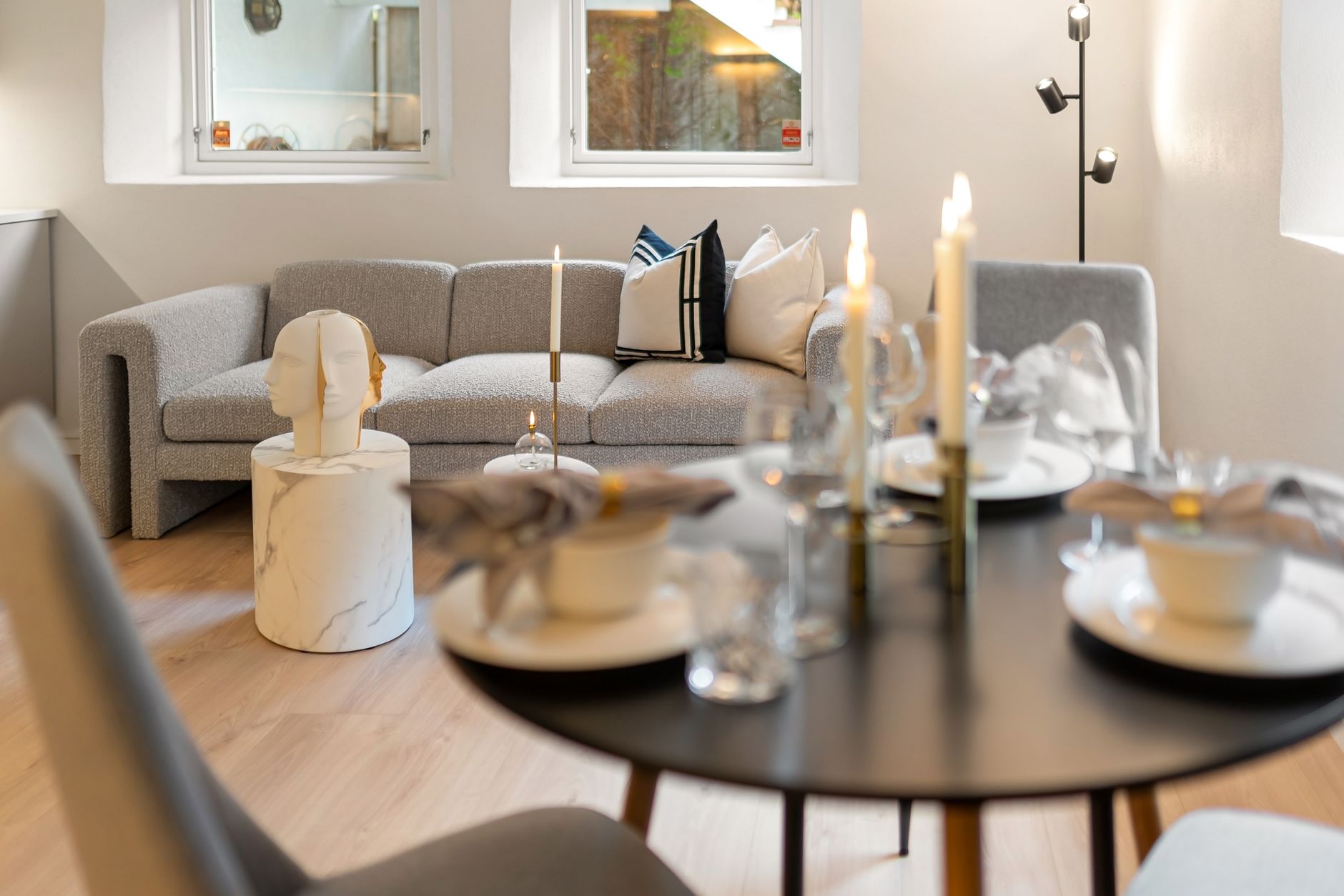
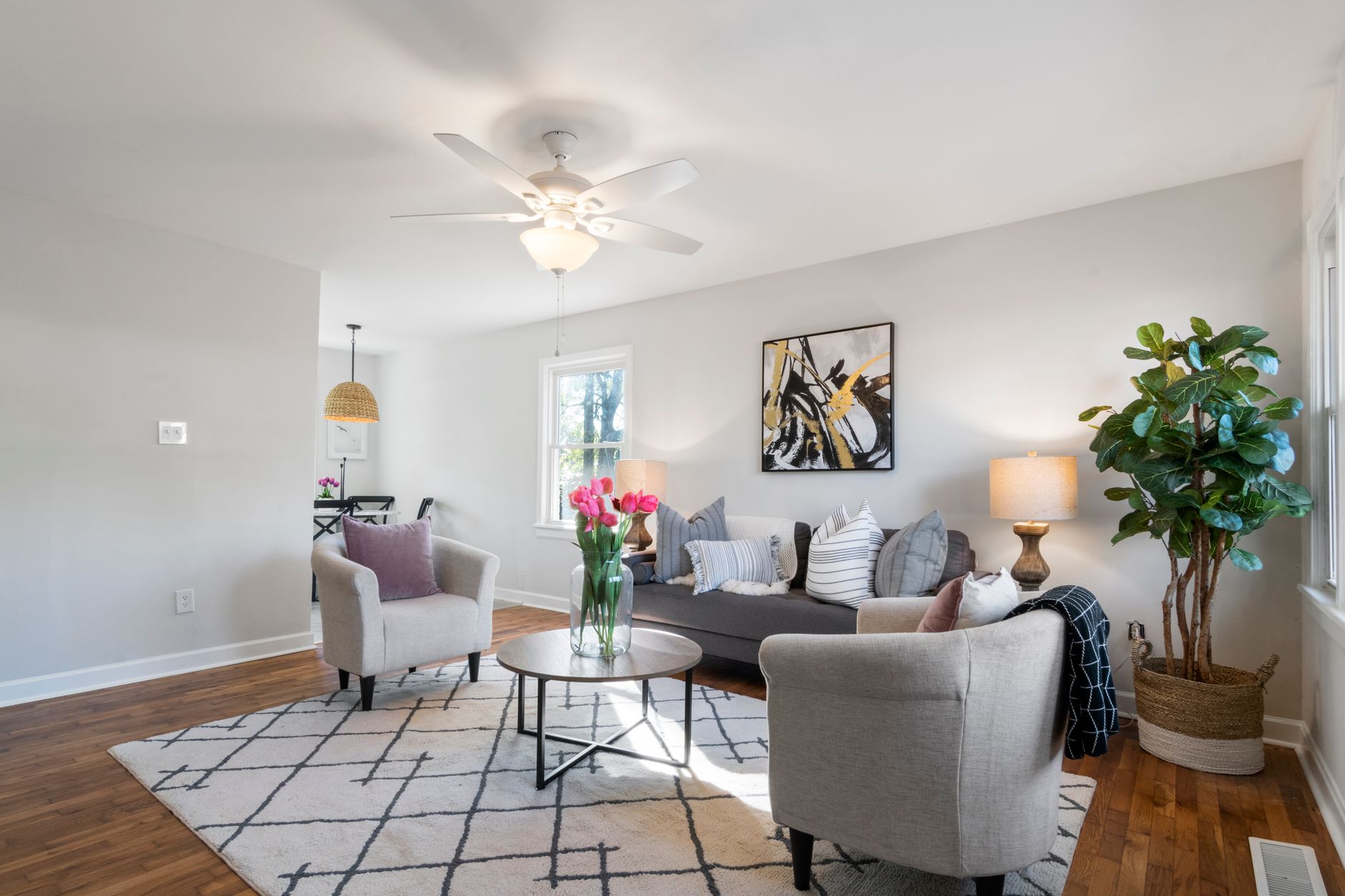
Empty homes in the Brew City often struggle to capture the imagination of modern buyers who browse via smartphones before ever visiting a property. To solve this, virtual furniture staging in Milwaukee provides a digital solution where AI-powered designers place photorealistic furniture and decor into empty room photos, allowing potential buyers to visualize the full potential of a space without the cost of physical rentals. This technology is no longer a luxury; it is a fundamental requirement for competing in the 2026 Wisconsin real estate market.
Why are Milwaukee real estate professionals adopting virtual staging?
In my experience working with real estate professionals in the Midwest, the struggle with "cold" empty spaces is a recurring theme. Milwaukee's market is diverse, ranging from historic East Side condos to sprawling suburban estates in Brookfield. An empty room often looks smaller than it actually is, and without a sense of scale, buyers frequently overestimate the difficulty of furnishing a space or underestimate its square footage. This psychological barrier leads to longer days-on-market and lower offer prices.
Industry data confirms that visual appeal is the primary driver of online engagement. According to a report by the National Association of Realtors, a significant majority of buyers are more likely to visit a home if the listing photos are high-quality and well-staged. In a city like Milwaukee, where seasonal weather can make home tours inconvenient during winter months, the digital first impression becomes the only impression that matters for weeks at a time.
Furthermore, the integration of computer vision and artificial intelligence has reduced the turnaround time from days to seconds. In the past, a photographer would spend hours in Photoshop manually masking furniture; now, we utilize advanced AI that understands spatial geometry and lighting. This shift is supported by broader trends in the sector; for instance, Gartner research indicates that AI-driven visual content is becoming the baseline for consumer-facing industries to maintain competitiveness in digital discovery.
That said, the adoption in Milwaukee isn't just about aesthetics—it is about ROI. When a property manager in the Third Ward can show a high-end loft with a virtual mid-century modern setup, they aren't just selling a room; they are selling a lifestyle. The pattern I see consistently is that listings with virtual staging receive significantly more clicks on the Multiple Listing Service (MLS) than those with empty, echoing rooms.
What are the key benefits of virtual furniture staging for Milwaukee listings?
📚
Definition
Virtual staging is the process of using computer-generated imagery (CGI) and AI to add furniture and decor to a photograph of an empty room, creating a realistic representation of a lived-in space.
Increased Emotional Connection and Buyer Engagement
Human psychology is wired for storytelling. When a buyer sees an empty bedroom in a Bay View home, they see four walls and a floor. When they see a professionally staged room with a plush king-sized bed, soft linens, and a reading chair by the window, they see a sanctuary. This emotional bridge is what drives a buyer to schedule a viewing. By utilizing virtual furniture staging in milwaukee, agents can tailor the "story" of the home to the specific demographic of the neighborhood—whether that is a minimalist professional look for downtown lofts or a cozy, family-centric vibe for West Allis residences.
Dramatic Reduction in Overhead Costs
Traditional staging is a logistical nightmare. It involves renting furniture, paying for professional movers, and paying a monthly lease on the items. For a mid-sized home, these costs can easily reach thousands of dollars. Virtual staging eliminates this friction. There is no furniture to move, no deposits to pay, and no risk of damage to the property.
Faster Turnaround and Market Readiness
In the 2026 market, speed is a competitive advantage. Waiting for a staging company to find a slot in their calendar can delay a listing by a week or more. With AI-driven tools, you can have a fully staged gallery ready in minutes. This allows agents to hit the market the moment the cleaning crew finishes, maximizing the initial "new listing' edge' on search portals.
Flexibility Across Design Styles
One of the biggest risks of physical staging is picking the "wrong" style. If you stage a home in a very specific industrial style, you might alienate a buyer who prefers traditional aesthetics. Virtual staging allows for multiple versions of the same room. You can create a "Modern Minimalist" version for one set of photos and a "Traditional Family" version for another, ensuring the property appeals to the widest possible audience.
| Feature | Traditional Physical Staging | Generic Low-End AI Staging | RealVisionAI Professional Approach |
|---|---|---|---|
| Cost | High ($$$$) | Low ($) | Affordable ($$) |
| Setup Time | Days/Weeks | Minutes | Seconds |
| Realism | Perfect (Physical) | Often "Floating" or Distorted | High-Fidelity Spatial Accuracy |
| Flexibility | Very Low | High | Ultra-High (Multiple Styles) |
| Logistics | Heavy Moving/Leasing | Digital Only | Digital Only |
💡
Key Takeaway
Virtual staging is the most cost-effective way to manipulate buyer psychology, turning a sterile environment into a desirable home without the logistical burden of physical furniture.
Real-world examples of virtual staging results in Milwaukee
To understand the impact, we have to look at the actual data from local listings. I have analyzed dozens of properties in the Milwaukee area, and the difference in engagement is stark.
Case Study 1: The Downtown Loft (Third Ward)
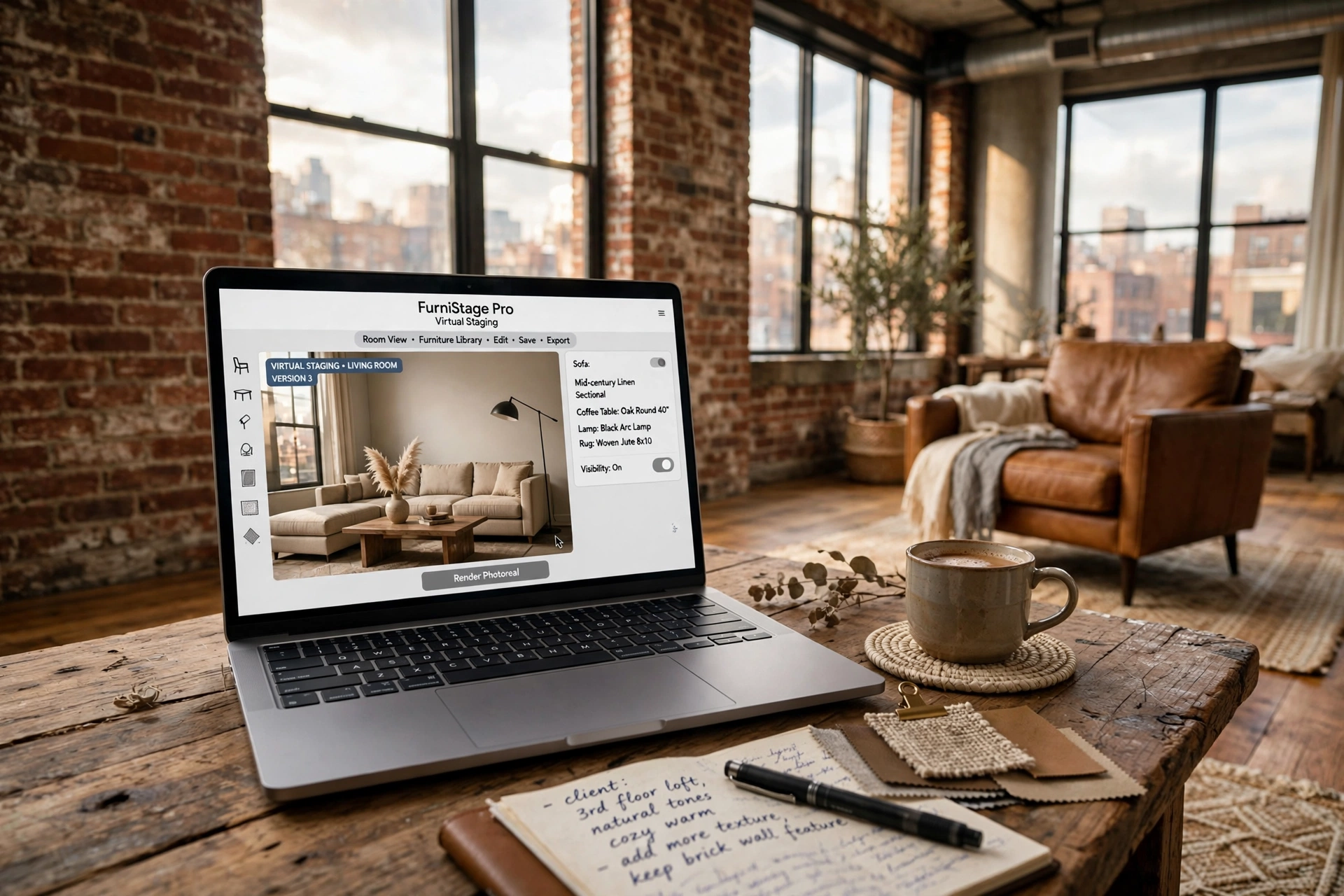
An agent had a 1,200 sq. ft. industrial loft with exposed brick and concrete floors. Despite the architecture, the space felt cold and cavernous in the original photos. The property sat on the market for 22 days with very few inquiries. We implemented virtual furniture staging, adding a large sectional sofa, a textured area rug, and strategic lighting accents.
- Result: The listing saw a 40% increase in "saves" on Zillow within 48 hours. The property sold in 6 days following the update, with the buyer specifically mentioning that the photos helped them understand how to utilize the open floor plan.
Case Study 2: Suburban Family Home (Wauwatosa)
A 4-bedroom home had been vacant for three months. The rooms were clean but lacked warmth. The owners were hesitant to spend $3,000 on physical staging. Using virtual furniture staging in milwaukee, we transformed the empty living room and primary bedroom into warm, inviting spaces using "Modern Farmhouse" aesthetics.
- Result: The property attracted three competing offers within the first weekend of the new photos being uploaded. The seller saved the full cost of physical rental and achieved a sale price 2% above the asking price.
How to get started with virtual furniture staging in Milwaukee?
Implementing this technology is straightforward if you follow a professional workflow. Many agents make the mistake of using low-resolution photos or poor-quality AI tools that result in "floating" furniture. To get the best results, follow these steps:
- Capture High-Quality Base Images: Start with professional real estate photography. Use a wide-angle lens but avoid extreme distortion. Ensure the room is well-lit; AI works best when it has a clear understanding of the natural light sources in the room.
- Analyze the Target Buyer: Before choosing a style, consider the neighborhood. In the East Side of Milwaukee, a "Bohemian' or "Mid-Century Modern" look usually performs better. In the suburbs, "Contemporary Traditional" is the gold standard.
- Choose Your Staging Partner: This is where quality varies. While there are many generic tools, professional-grade results require a system that understands scale and perspective. This is exactly why we developed RealVisionAI Blog - AI Real Estate Photography & Virtual Staging. Our platform is designed to deliver market-ready visuals in just 12 seconds, ensuring the furniture doesn't just look like a sticker on a photo, but actually occupies the 3D space of the room.
- Review and Refine: Check for "clipping" (where furniture overlaps walls) and ensure the lighting on the virtual objects matches the shadows in the original photo.
- Upload and Market: Add the staged photos to your MLS listing and social media. It is a best practice to include a small disclaimer in the listing description stating that some photos have been virtually staged to help buyers visualize the space.
Common objections to virtual staging and the data-backed truth
Despite the benefits, some agents and sellers still hesitate. Most of these objections are based on outdated information from the early days of CGI.
Objection 1: "It looks fake and will mislead the buyer."
Most people assume that virtual staging looks like a 2005 video game. However, the data shows the opposite. With modern computer vision and generative AI, the realism is nearly indistinguishable from a physical photo. When used correctly, it doesn't mislead; it provides a suggestion. As long as the dimensions of the furniture are realistic, it actually helps the buyer by providing a scale reference that an empty room lacks.
Objection 2: "It's too expensive to do for every listing."
This is a misconception. When compared to the cost of physical staging—which can range from $1,000 to $5,000 per month—virtual staging is a fraction of the cost. According to a study by the Harvard Business Review on the impact of AI in visual marketing, businesses that shift from manual to AI-assisted content creation see a massive reduction in cost-per-acquisition while maintaining or increasing conversion rates.
Objection 3: "Buyers will feel cheated when they see the empty room in person."
In practice, this is rarely the case. In my experience, buyers are appreciative of the effort to show the home's potential. The key is to use the staged photos as a "vision board." Once the buyer is inside the home, they are already primed to see the space as a home rather than a shell. The emotional hook created by the virtual staging carries over into the physical tour.
Frequently Asked Questions
Does virtual furniture staging in Milwaukee actually increase the sale price?
Yes, indirectly. While staging doesn't change the square footage of a home, it significantly impacts the "perceived value." When a buyer can visualize a high-end lifestyle in a space, they are less likely to negotiate aggressively on price. By creating an emotional connection and removing the mental friction of "how will my couch fit here?", you create a competitive environment. In a high-demand market like Milwaukee, more qualified leads and higher emotional engagement often lead to multiple-offer scenarios, which naturally drives the final sale price upward.
How long does it take to get the staged photos back?
Depending on the provider, it can take anywhere from a few hours to several days. However, with the advent of AI-powered studios like RealVisionAI Blog - AI Real Estate Photography & Virtual Staging, the process has been compressed into seconds. Our technology allows for nearly instant generation, meaning you can upload a photo and have a professionally staged room ready for your MLS listing in roughly 12 seconds. This is a fundamental shift for agents who need to move at the speed of the digital market.
Which furniture styles work best for the Milwaukee real estate market?
Success depends on the specific neighborhood. For the Third Ward and Downtown, a "Modern Industrial" or "Sleek Minimalist" style is highly effective. For family homes in areas like Wauwatosa or Brookfield, "Modern Farmhouse" or "Transitional' designs perform best. The goal is to mirror the aspirations of the likely buyer. We recommend providing 2-3 different style options for larger homes to cast the widest possible net of appeal across different buyer demographics.
Is there a legal requirement to disclose virtual staging in Wisconsin?
While there is no specific state law mandating a "Virtual Staging" watermark on every photo, ethics and transparency are paramount in real estate. The National Association of Realtors (NAR) emphasizes the importance of honesty in marketing. The best practice is to include a simple sentence in the listing's public remarks, such as "Some images have been virtually staged for visualization purposes." This maintains trust with the buyer and protects the agent's reputation while still reaping the benefits of the enhanced visuals.
Can virtual staging be used for rental properties, or is it only for sales?
It is incredibly effective for both. In the property management sector, vacancies are the biggest profit killer. A virtually staged rental apartment in Milwaukee can attract a tenant much faster than one with empty rooms. Renters, especially younger millennials and Gen Z, rely heavily on visual cues to decide if a place is "right' for them. By showing a staged home office or a cozy reading nook, you are directly answering the renter's most important question: "Can I live my life here?"
Final thoughts on virtual furniture staging in milwaukee
Success in the 2026 real estate market requires a blend of local expertise and cutting-edge technology. For anyone managing properties in the Brew City, relying on empty rooms is essentially leaving money on the table. Virtual furniture staging in milwaukee allows you to bridge the gap between a cold structure and a warm home, accelerating the sales process and maximizing the perceived value of every listing.
Whether you are a solo agent or a large property management firm, the goal remains the same: capture attention in the first three seconds of a scroll. By leveraging high-fidelity AI and strategic design, you turn a passive viewer into an active lead.
Stop letting your listings sit empty. Experience the speed and quality of the industry leader at RealVisionAI Blog - AI Real Estate Photography & Virtual Staging and get your properties market-ready in seconds.
Recommended Readings
To deepen your understanding of these topics, we recommend reading the following articles:
- Virtual Furniture Staging in Baltimore
- Virtual Furniture Staging in Memphis
- Where to Find Virtual Furniture Staging Services
- Why Virtual Furniture Staging Is Essential for Modern Listings
Free Real Estate AI Visual Playbook 2026
Discover how top realtors boost listing engagement by 62% and close deals faster using AI photo enhancement and virtual staging.