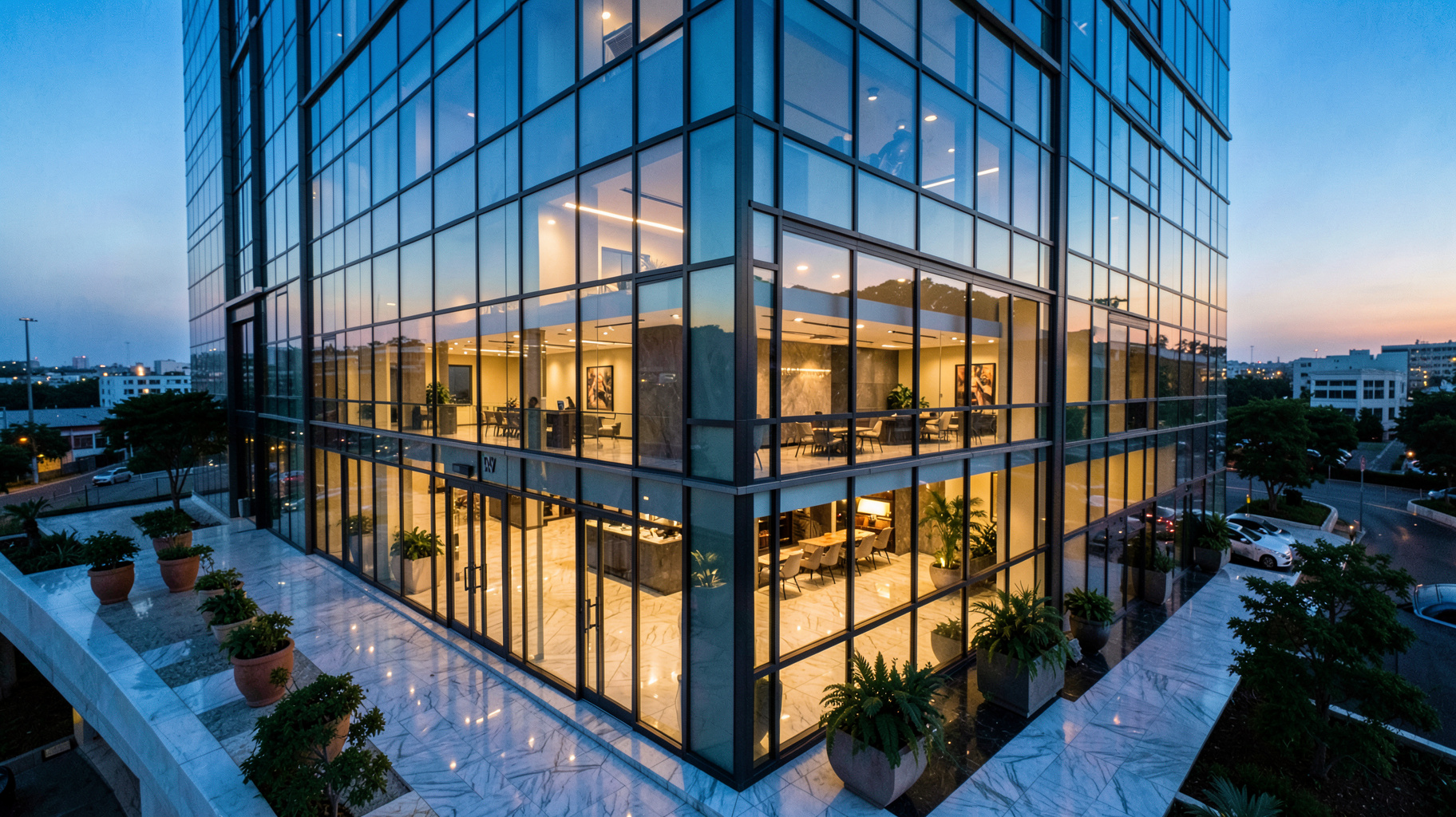


Which Type of Commercial Real Estate Photography Should You Choose?
Selecting the right visual strategy for a high-value asset is often the difference between a property sitting vacant for six months or securing a premium lease in three weeks. For most brokers, the decision isn't just about "getting photos," but about choosing the specific style of commercial real estate photography that aligns with the asset class, whether it is a Class A office tower, a sprawling industrial warehouse, or a boutique retail space. In my experience working with high-volume property managers, the biggest mistake is applying a "one-size-fits-all" residential approach to commercial assets, which fundamentally ignores the scale and utility that commercial buyers actually care about.
The "which" of this decision depends entirely on the goal: architectural photography for brand prestige, documentary style for industrial utility, or AI-enhanced visuals for rapid market entry. For a comprehensive overview of how these visuals fit into a larger strategy, explore our Real Estate Visual Marketing: The 2026 Guide to AI-Driven Sales.
Understanding the Core Categories of Commercial Imagery
Commercial imaging is not a single discipline; it is a spectrum of technical approaches designed to communicate different value propositions. While residential photography focuses on "emotion" and "home," commercial work focuses on "efficiency," "capacity," and "ROI."
📚
Definition
Commercial real estate photography is a specialized branch of architectural imaging that utilizes wide-angle lenses, HDR (High Dynamic Range) processing, and precise geometric correction to document the scale, layout, and functional capacity of non-residential properties.
The first major category is Architectural Photography. This is the "prestige" tier. It focuses on the artistry of the building—how the light hits the glass facade at golden hour and the symmetry of the lobby. This is essential for luxury developments where the building itself is a brand asset. When I've analyzed portfolios for trophy assets, the focus is rarely on the rooms and more on the "statement" the architecture makes.
The second category is Industrial and Warehouse Photography. Here, the "beauty" is in the utility. Potential tenants aren't looking for mood lighting; they are looking for ceiling clear heights, loading dock accessibility, and floor load capacities. The photography must be clinical, clear, and comprehensive. This is where many photographers fail by trying to make a warehouse look "cozy," when it actually needs to look "functional."
The third category is Retail and Hospitality Imaging. This is a hybrid approach. You need the wide-angle scale of a warehouse but the emotional pull of residential staging. The goal is to visualize foot traffic and consumer experience. Because these spaces often change rapidly, this is where Digital Staging Services: Scaling Real Estate Listings in 2026 becomes an indispensable tool for showing how a vacant shell can become a high-end boutique.
According to a report by the National Association of Realtors, high-quality visual content is the primary driver for initial lead generation in 82% of commercial transactions. This suggests that the "which" of your photography choice directly impacts your conversion rate at the top of the funnel.

Why the Right Choice Impacts Your Bottom Line
Choosing the wrong type of imagery creates a "visual mismatch" that triggers subconscious distrust in a sophisticated investor. If an industrial property is shot with overly filtered, "pretty" residential lenses, a seasoned logistics manager will perceive the listing as amateur or deceptive. Conversely, if a luxury penthouse office is shot with clinical, flat industrial lighting, the perceived value drops instantly.
The business impact of this mismatch is quantifiable. Data from McKinsey indicates that companies utilizing advanced digital twins and high-fidelity visual assets in their B2B sales processes see a significant increase in lead-to-close velocity. In the commercial sector, "velocity" is everything. A property that stays on the market too long doesn't just cost in missed rent; it suffers from "listing fatigue," where the market assumes there is a fundamental flaw with the asset.
Furthermore, the integration of AI into this workflow has shifted the ROI calculation. The mistake I made early on—and that I see constantly now—is spending thousands on a full-day shoot for a property that is still under renovation. In 2026, the smarter move is to capture "base" imagery and use AI Property Enhancement: Pricing and Value Guide strategies to virtually clean the space or add furniture.
Consider the cost of a vacant commercial space. For a 10,000 sq. ft. office at $30/sq. ft., every month of vacancy is a $25,000 loss. Investing an extra $2,000 in the correct type of photography to shave just two weeks off that vacancy period yields a massive positive return. This is why the distinction between "cheap photos" and "strategic imagery" is the most important financial decision a listing agent makes.
Practical Application: Implementing a Visual Strategy
Once you have decided which type of photography fits your asset, the execution must be systematic. You cannot simply "wing it" with a commercial shoot; the scale of these buildings requires a logistical plan.
- The Audit Phase: Walk the property and identify "Power Shots." For an office, this is the view from the executive suite or the communal break area. For industrial, it's the bay doors and the electrical panels.
- The Lighting Schedule: Commercial glass is a nightmare for reflections. Schedule your exterior shots for the "blue hour" (just after sunset) to get that glow from the interior lights while maintaining a deep blue sky.
- The AI Layer: This is where the modern workflow diverges from the traditional. Instead of waiting for a tenant to clear the trash or a landlord to paint the walls, you capture the "as-is" state and apply enhancements.
Using RealVisionAI Blog - AI Real Estate Photography & Virtual Staging allows you to bypass the physical limitations of a site. For example, if you have a retail space with outdated 1990s carpeting, you don't need to replace the floor before the shoot. You capture the space and use AI to swap the flooring to a modern polished concrete in 12 seconds. This allows the listing to go live immediately, rather than waiting for contractor timelines.
💡
Key Takeaway
The goal of commercial photography is to remove friction from the buyer's decision process. If they have to guess the ceiling height or imagine the layout, you are losing money.
If you are unsure when to move from basic photos to these advanced tools, check our guide on When to Use Real Estate Image Processing for Your Listings.

Comparing Your Options: A Decision Framework
To help you decide which path to take, we must compare the three primary ways commercial properties are documented today. The "best" option is rarely the most expensive one; it is the one that matches the asset's current state and target audience.
| Option | Pros | Cons | Best For |
|---|---|---|---|
| Traditional Architectural | Maximum prestige, high art, timeless. | Extremely expensive, slow turnaround. | Class A Trophy Assets, New Developments. |
| Standard Documentary | Fast, clear, focuses on utility. | Can look "cold" or uninviting, low emotion. | Industrial, Logistics, Medical Offices. |
| AI-Enhanced Hybrid | Rapid turnaround, flexible, removes flaws. | Requires a skilled AI operator for realism. | Vacant Retail, Renovations, Fast-Turn Listings. |
Now here's where it gets interesting: the hybrid approach is rapidly becoming the industry standard. In the past, you had to choose between "real" and "perfect." Now, you can start with "real" and use AI Property Enhancement Perto de Mim tools to reach "perfect" without the cost of a full staging crew.
When deciding, ask yourself: "Is the buyer buying the current state of the building, or the potential of the building?" If it's the current state, go documentary. If it's the potential, you must use AI-enhanced visuals. For those operating on a tight budget, exploring Is AI Property Enhancement Worth It? can provide the necessary cost-benefit analysis.
Common Questions and Misconceptions
Most guides get this wrong by suggesting that "more photos are better." In commercial real estate, this is a fallacy. A 100-photo gallery of a warehouse is exhausting and redundant. A curated 15-photo set that highlights the specific technical requirements (loading docks, HVAC, parking ratio) is far more effective.
Another common myth is that "AI photos are dishonest." This is a misunderstanding of the tool. Using AI to replace a grey, rainy sky with a bright blue one (sky replacement) or removing a stray trash can from a parking lot isn't deception; it's presenting the asset in its best possible light. This is no different from the "color correction" that every professional photographer has done for decades. The key is maintaining the structural integrity of the building.
Finally, many believe that drone photography is a "bonus." In 2026, for commercial assets, aerials are a requirement. An investor needs to see the proximity to highways, the neighboring tenants, and the overall site plan. Without a drone shot, you are essentially asking the buyer to do their own homework on Google Maps, which adds friction to the sale. If you're struggling to find these services, we recommend looking at Where to Find the Best AI Property Enhancement Tools to polish those aerials.
Frequently Asked Questions
Which type of photography is best for a vacant retail space?
For vacant retail, the AI-Enhanced Hybrid approach is superior. Because empty shells are visually uninspiring and often look "cold," you should use professional photography to capture the layout and then apply virtual staging. By showing a "modern cafe" or "clothing boutique" version of the space, you help the prospect visualize the revenue potential. This reduces the psychological barrier to entry and allows you to justify a higher price per square foot by selling a vision rather than a concrete box.
Do I need different photos for a listing vs. a marketing brochure?
Yes, absolutely. A listing on a Multiple Listing Service (MLS) needs to be informative and transparent—think documentary style. However, a marketing brochure is a sales tool designed to create desire. For the brochure, you want high-end architectural shots, "hero" images of the exterior at twilight, and AI-enhanced lifestyle visuals. While the listing proves the property exists and meets requirements, the brochure sells the prestige and the future of the investment.
How do I handle "ugly" commercial properties that need renovation?
The most efficient way to handle distressed assets is through a combination of "as-is" documentary photography and "post-renovation" AI visualization. Capture the current state so there is full transparency, but then create a "Vision Gallery." Use tools like those found at RealVisionAI Blog - AI Real Estate Photography & Virtual Staging to digitally declutter the space and suggest modern finishes. This prevents the "ugly" photos from scaring away investors who have the capital to renovate but lack the imagination to see past the current state.
Is HDR photography still the standard for commercial real estate?
HDR (High Dynamic Range) is still the foundation because commercial spaces often have extreme lighting contrasts—such as a dark interior with bright windows. However, the "over-processed" HDR look of the 2010s (which looked like a cartoon) is now obsolete. The 2026 standard is "Natural HDR," which balances exposures without losing the realistic feel of the light. This is why professional Real Estate Image Processing Perto de Mim is essential to ensure the images look high-end and not "digitally fried."
How often should I update the photography for a long-term commercial listing?
If a property hasn't moved in 90 days, you have a "stale" listing. The most effective way to refresh interest is to change the visual narrative. If you started with documentary shots, switch to AI-enhanced lifestyle visuals. Change the "hero" image to a different angle or a different time of day. According to industry benchmarks, refreshing the primary imagery of a listing can lead to a 20-30% increase in click-through rates from dormant leads who had previously dismissed the property.
Final Thoughts on Commercial Real Estate Photography
Choosing which style of commercial real estate photography to employ is not a creative decision—it is a strategic one. Whether you opt for the prestige of architectural imaging, the utility of documentary shots, or the agility of AI-enhanced visuals, the goal remains the same: reduce the buyer's perceived risk and accelerate the closing timeline.
In the current 2026 market, the winners are those who leverage technology to bridge the gap between how a property looks today and how it will look once the right tenant moves in. If you are ready to stop losing leads to mediocre imagery, it is time to implement a professional workflow.
For market-ready visuals delivered in seconds, visit RealVisionAI Blog - AI Real Estate Photography & Virtual Staging at realvisionaire.com and start optimizing your portfolio today. For more on enhancing your specific asset types, see our Types of AI Property Enhancement for Real Estate.
Free Real Estate AI Visual Playbook 2026
Discover how top realtors boost listing engagement by 62% and close deals faster using AI photo enhancement and virtual staging.