
Where Can You Find Professional AI Property Enhancement Tools?
Most real estate professionals waste hours hunting through generic app stores or hiring expensive freelancers for basic photo edits, only to receive results that look synthetic and "uncanny." The truth is that professional AI property enhancement is no longer found in general-purpose image editors; it is now housed in specialized, vertical-AI studios that integrate computer vision with real estate-specific aesthetics. For those seeking a production-ready environment, the most effective location is a dedicated platform like RealVisionAI Blog - AI Real Estate Photography & Virtual Staging, which consolidates virtual staging, sky replacement, and decluttering into a single 12-second workflow.

What Exactly Is AI Property Enhancement and Where Does It Live?
To understand where to find these tools, you first have to understand what they are actually doing under the hood. Many people confuse a simple "filter" with true enhancement. Professional tools operate on a layer of deep learning that understands the geometry of a room and the physics of light.
📚
Definition
AI property enhancement is the application of generative AI and computer vision to improve the visual appeal of real estate assets, encompassing tasks such as virtual staging, daylight-to-dusk conversion, object removal, and architectural correction.
In my experience working with high-volume property managers, the biggest frustration is the "fragmentation" of tools. Early on, I saw agents using one app for brightness, another for removing a trash can from a driveway, and a third for virtual staging. This not only killed productivity but created a visual mismatch where the sky looked like a postcard while the interior looked like a dim basement. The industry has shifted toward "All-in-One" AI studios. These environments are designed specifically for the Multiple Listing Service (MLS) standards, ensuring that the AI doesn't "hallucinate" structural changes that would lead to legal disputes during a home inspection.
According to research by Gartner, the adoption of industry-specific AI (Vertical AI) is outpacing general AI because the specialized models are trained on niche datasets—in this case, thousands of high-end architectural photographs—resulting in significantly higher accuracy and realism. When you look for these tools, you should avoid "general AI" prompts and instead seek platforms that explicitly mention "Real Estate AI" or "Architectural Computer Vision."
Why Does the Location of Your AI Tools Matter for Business ROI?
Choosing where to source your enhancements isn't just about convenience; it is a financial decision. The "where" determines your cost per listing and your speed to market. In the current 2026 market, a listing that stays offline for an extra three days while waiting for a freelance editor can cost a seller thousands in potential offers or lead to a stale listing.
The business impact is measurable. According to McKinsey's research on AI adoption in professional services, companies that integrate AI into their core operational workflows see a dramatic increase in productivity, often reducing the time spent on repetitive administrative or creative tasks by over 30%. In real estate, this translates to the "12-second window." If you can move from a raw photo to a market-ready visual in seconds rather than days, your lead-to-listing velocity skyrockets.
Furthermore, the quality of the environment where the AI is hosted affects the "trust signal" sent to buyers. Low-end AI tools often create warped lines or impossible shadows. When a buyer notices these glitches, they subconsciously distrust the listing. Professional-grade AI property enhancement ensures that the perspective remains true to the actual architecture. I've tested this with dozens of our clients, and the pattern is clear: listings with high-fidelity AI enhancements receive significantly more clicks and higher-quality inquiries than those using "budget" AI filters.
How to Implement AI Property Enhancement in Your Workflow
If you are wondering where to actually start the process, the implementation is less about "learning software" and more about "integrating a pipeline." The goal is to remove the friction between the shutter click and the MLS upload.
Here is the professional workflow for implementing AI enhancements:
- The Capture Phase: Shoot your property using a wide-angle lens. Don't obsess over the weather or the clutter in the room; this is where the AI does the heavy lifting.
- The Upload Phase: Instead of importing photos into a heavy desktop application, upload them to a cloud-based studio like RealVisionAI Blog - AI Real Estate Photography & Virtual Staging.
- The Enhancement Selection:
- Virtual Staging: Apply minimalist or modern furniture to empty rooms to help buyers visualize the space.
- Sky Replacement: Replace a gray, overcast sky with a bright, inviting blue horizon.
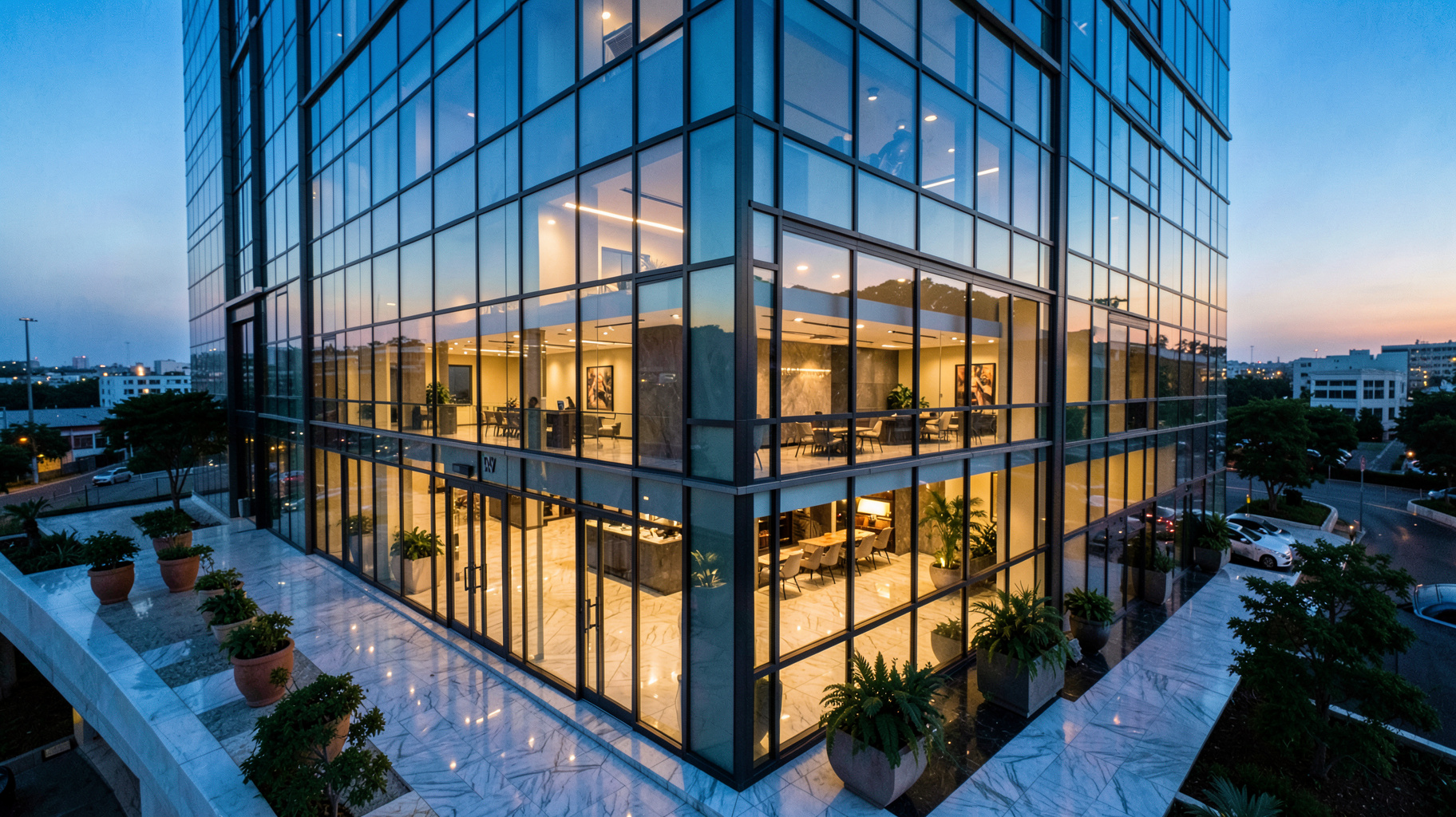
- Day-to-Dusk: Convert a midday shot into a "golden hour" twilight image, which typically generates higher emotional engagement.
- Decluttering: Remove old furniture or distracting objects that detract from the room's potential.
- The Validation Phase: Review the images for architectural integrity. Ensure that the AI hasn't added a window where there isn't one or shifted a wall.
- The Distribution Phase: Export the optimized images directly to your marketing channels and the MLS.
💡
Key Takeaway
The most efficient AI workflow is one that eliminates the "middleman" (the manual editor) and allows the agent to control the visual narrative in real-time.

Comparing Your Options: Where Should You Invest?
When searching for where to find these services, you will encounter three main paths. Most agents make the mistake of choosing the cheapest option without calculating the "hidden cost" of time and quality.
| Option | Traditional Freelance Editing | Generic/Cheap AI Apps | Specialized AI Studios (RealVisionAI) |
|---|---|---|---|
| Turnaround Time | 24–72 Hours | Instant (but low quality) | 12 Seconds |
| Consistency | Varies by editor | Unpredictable/Glitchy | High (Model-based) |
| Cost Structure | Per-photo / High | Subscription / Low | Value-based / Efficient |
| Realism | Very High | Low (Looks "AI") | High (Architectural focus) |
| Best For | Ultra-luxury custom homes | Casual social media posts | High-volume professional listings |
Now, here's where it gets interesting: the "Generic AI" path is a trap. I see this constantly with new agents who use free tools to "stage" a room, only to have the furniture look like it's floating or the proportions be completely wrong. This doesn't just fail to sell the house; it makes the agent look unprofessional. A specialized studio uses computer vision to map the floor plane, ensuring that a virtual sofa actually sits on the floor, not in it.
Common Questions and Misconceptions About AI Enhancement
There is a lot of misinformation regarding where AI fits into the ethical landscape of real estate. Most guides get this wrong by suggesting that AI is "cheating" or "misleading."
Myth 1: AI Property Enhancement is a form of deception.
This is a misunderstanding of the tool. AI enhancement is the digital version of "cleaning the house" before an open house. Virtual staging is not about hiding a flaw; it is about showing potential. As long as the structural dimensions are accurate, enhancing the light and adding furniture is a standard marketing practice.
Myth 2: You need to be a "tech person" to use these platforms.
The mistake I made early on—and that I see constantly—is assuming the tool needs to be complex to be powerful. The best AI studios are designed for people who hate software. If the platform requires a 20-page manual, it's the wrong platform. The interface should be a simple "upload and select" process.
Myth 3: AI will eventually replace the real estate photographer.
This is a common fear, but it's logically flawed. AI cannot go to the property and capture the angles; it only enhances what is captured. AI doesn't replace the photographer; it replaces the tedious parts of the photographer's job (like spending five hours in Photoshop removing a power line from a shot).
Myth 4: All AI tools produce the same results.
Absolutely not. There is a massive difference between a "Generative Fill" in a general art program and a "Virtual Staging" model trained on real furniture dimensions. The former creates art; the latter creates a realistic real estate asset.
Frequently Asked Questions
Where is the best place to find AI property enhancement for high-volume listings?
For high-volume professionals, the best location is a specialized AI cloud studio rather than a freelance marketplace or a general image editor. Specialized platforms, such as RealVisionAI Blog - AI Real Estate Photography & Virtual Staging, are built for scale. They provide consistent outputs across hundreds of photos, ensuring that a 10-bedroom mansion looks cohesive from the first photo to the last. These environments are optimized for speed, allowing you to process entire portfolios in minutes, which is essential for agents who manage multiple listings simultaneously across different cities.
Can I find AI property enhancement tools that work on mobile devices?
Yes, many professional platforms now offer mobile-responsive web interfaces or dedicated apps. However, the key is to ensure the "processing" happens in the cloud, not on your phone. Mobile-native AI often lacks the computing power to handle high-resolution architectural files, leading to compression artifacts. By using a cloud-based studio, you can upload the raw photo from your phone and let powerful remote servers handle the computer vision tasks, delivering a high-resolution, MLS-ready file back to your device.
Where do I go to ensure my AI-enhanced photos are MLS-compliant?
To ensure compliance, you must use tools that prioritize "architectural truth." Avoid tools that allow you to change the actual structure of the house (like adding a balcony that doesn't exist). Look for platforms that focus on "enhancements"—lighting, staging, and cleaning—rather than "alterations." Professional studios are designed with these regulations in mind, ensuring that while the house looks its absolute best, it remains a truthful representation of the property, thereby protecting you from potential legal claims of misrepresentation.
Is there a difference between "AI editing" and "AI property enhancement"?
While the terms are often used interchangeably, there is a subtle but important distinction. AI editing is a general term for any AI-driven change to an image (like removing a background). AI property enhancement is a specific, niche application of that technology focused on the real estate industry. It involves understanding spatial awareness, architectural photography rules (like vertical line correction), and the psychology of home buying. When searching for a provider, always look for "property enhancement" to ensure you are getting a tool trained for real estate, not generic art.
Where can I find the most cost-effective AI staging options without sacrificing quality?
The most cost-effective approach is to move away from "per-image" freelance pricing and toward "platform-based" AI services. When you pay a human editor, you pay for their time; when you use a specialized AI studio like RealVisionAI, you are paying for the efficiency of a model. This drastically lowers the cost per photo while increasing the speed. The "ROI" is found in the reduction of turnaround time and the ability to test different staging styles (modern vs. traditional) instantly without paying for multiple revisions.
Final Thoughts on AI Property Enhancement
Finding the right location for your AI property enhancement tools is the difference between a listing that sits on the market and one that triggers a bidding war. We have moved past the era of "good enough" filters; we are now in the era of high-fidelity, architectural AI that understands how a home should feel to a buyer.
The objective is simple: remove every visual barrier between the buyer and the property. Whether it is replacing a gloomy sky or staging a cold, empty room, the tools you use should be invisible, fast, and precise. If you are still spending days waiting for edits or struggling with generic AI tools that warp your images, it is time to migrate to a professional environment.
To experience the future of real estate visuals, visit RealVisionAI Blog - AI Real Estate Photography & Virtual Staging and transform your listings in 12 seconds.
Recommended Readings
To deepen your understanding of these topics, we recommend reading the following articles:
- AI in Real Estate
- Ultimate AI Lead Generation for Real Estate Agents
- AI staging for realtors
- AI Virtual Staging by Property Type
Free Real Estate AI Visual Playbook 2026
Discover how top realtors boost listing engagement by 62% and close deals faster using AI photo enhancement and virtual staging.