

Which Approach to Commercial Real Estate Photography Yields the Highest ROI?
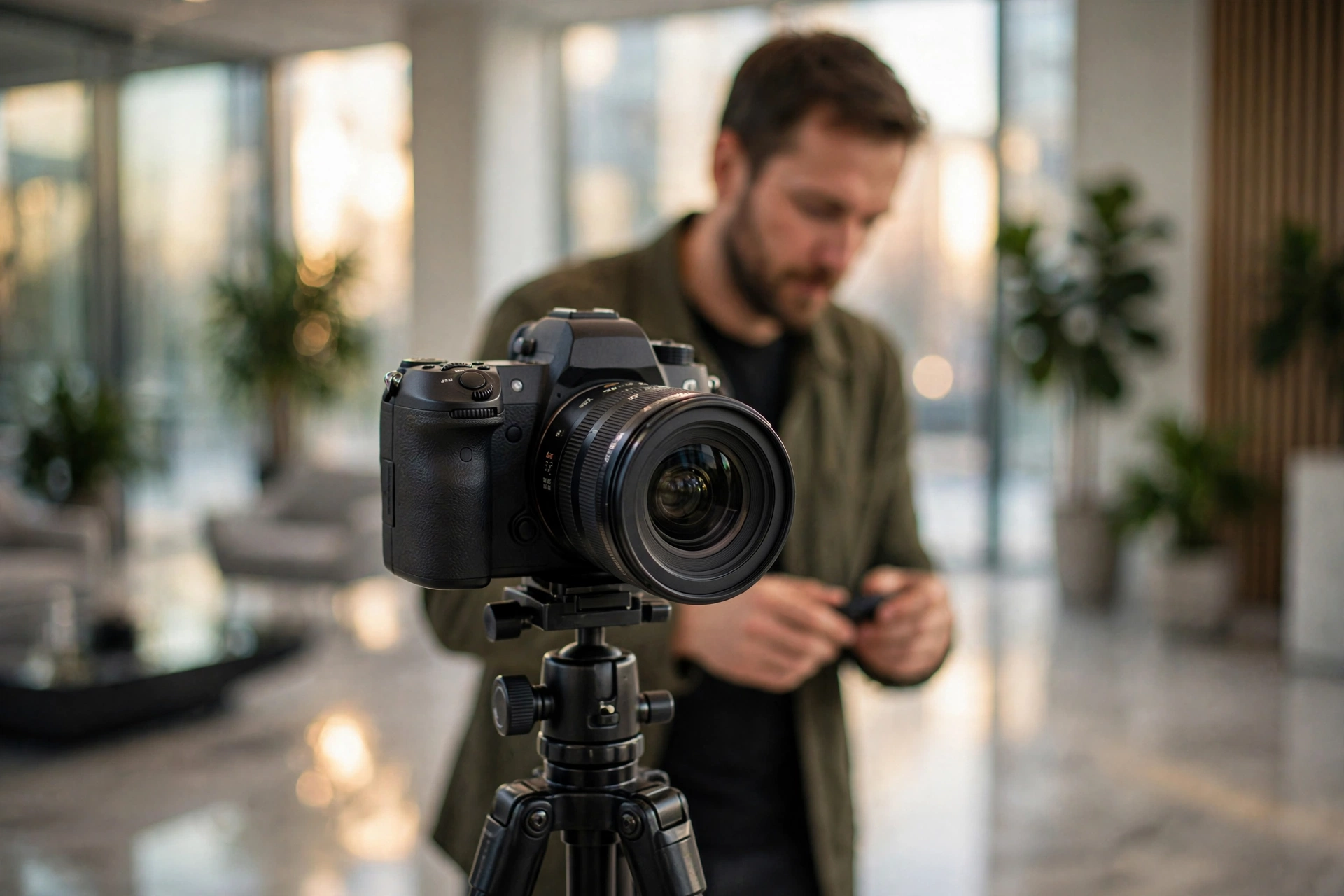
High-stakes commercial listings fail when the visual narrative doesn't match the asset's valuation. In my experience working with luxury commercial portfolios, the "best" approach isn't a single photographer or a specific camera, but a strategic blend of high-end capture and AI-driven post-production. For 2026, the most effective commercial real estate photography combines architectural precision with rapid AI enhancement to ensure properties look market-ready within hours, not weeks.
Whether you are listing a 50,000 sq. ft. warehouse or a boutique retail space, the choice depends on your primary goal: immediate speed, absolute architectural accuracy, or emotional storytelling. If you need a balance of all three, integrating Real Estate Visual Marketing: The 2026 Guide to AI-Driven Sales into your workflow is the only way to remain competitive in a digital-first market.

Understanding the Framework of Commercial Real Estate Photography
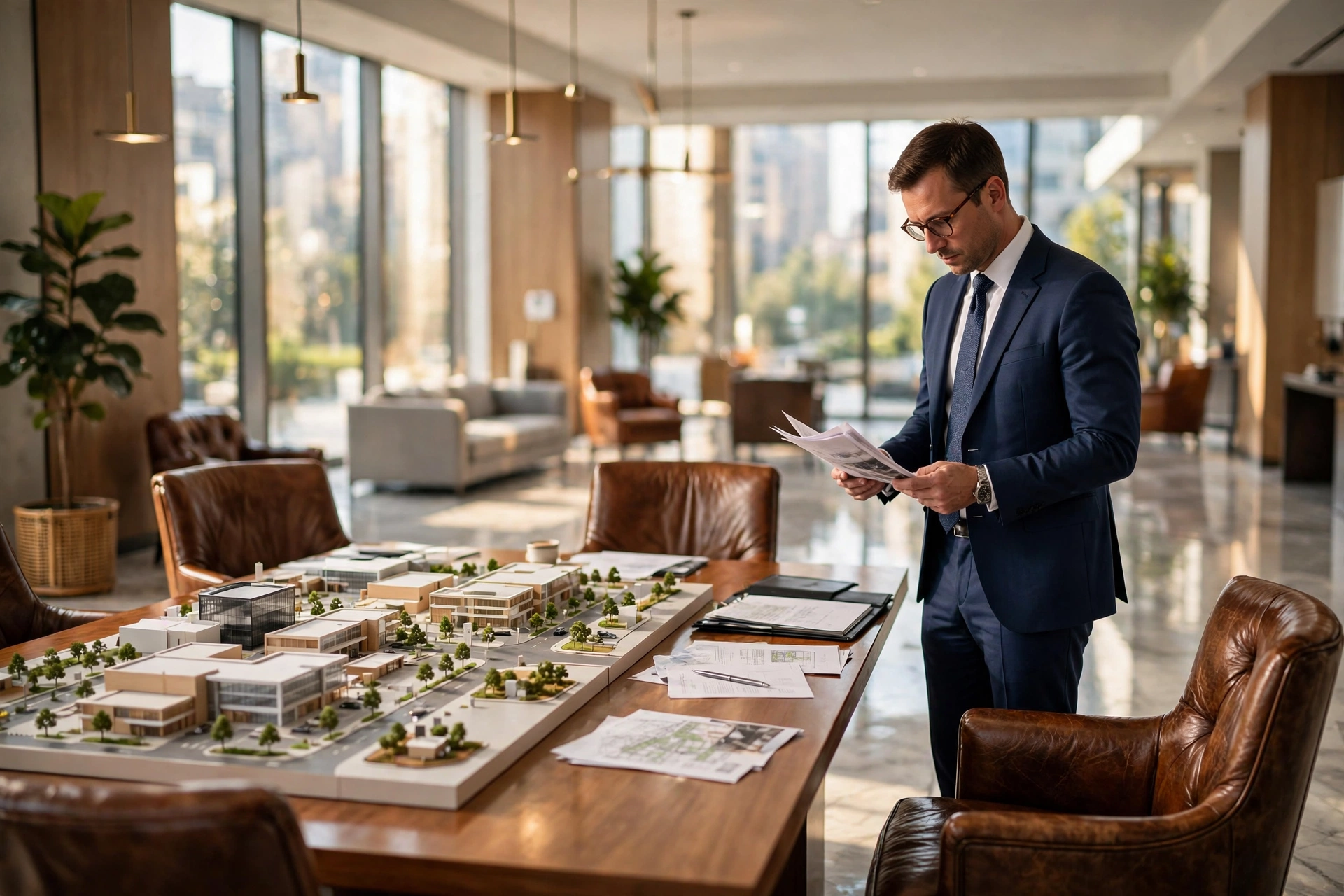
To decide which method is best, we must first align on what this discipline actually entails. Unlike residential shoots, commercial work requires a deep understanding of scale, lighting for vast industrial spaces, and the ability to convey "utility" and "prestige" simultaneously.
📚
Definition
Commercial real estate photography is the specialized practice of capturing images of income-producing properties—such as offices, retail centers, warehouses, and multi-family complexes—designed to attract investors and high-value tenants.
The technical requirements are significantly higher here. You aren't just selling a home; you are selling a business opportunity. This means the photography must highlight the efficiency of the layout, the quality of the infrastructure, and the potential for growth. After analyzing dozens of portfolios, I've noticed that the biggest failure in this niche is "residential thinking"—using wide-angle lenses that distort the walls of a boardroom or failing to capture the surrounding industrial ecosystem.
According to research by the National Association of Realtors, high-quality professional imagery is one of the top three factors influencing a lead's decision to schedule a physical tour of a commercial property. When the imagery is poor, the perceived value of the asset drops before a broker even speaks. This is why the shift toward computer vision and AI-driven enhancements has become the industry standard in 2026. By using Types of AI Property Enhancement for Real Estate, firms can now remove unsightly construction debris or outdated signage in seconds, rather than spending thousands on physical staging.
Why the Choice of Visual Strategy Directly Impacts Asset Valuation
The financial implications of your photography choice are not merely aesthetic; they are quantitative. In the commercial sector, a "days-on-market" (DOM) metric is closely tied to the final closing price. When a property lingers, buyers perceive a flaw in the asset, leading to aggressive low-ball offers.
Data from McKinsey's reports on AI-driven operational efficiency suggests that businesses integrating AI into their marketing workflows see a significant reduction in customer acquisition costs. In real estate, this translates to higher click-through rates (CTR) on platforms like CoStar or LoopNet. If your images are dim or distorted, the "bounce rate" on your listing increases, signaling to the algorithm that the property is less desirable.
The risk of using low-quality or "generic" photography is that it creates a gap between the property's actual value and its perceived value. For instance, a warehouse with a brand-new HVAC system and reinforced flooring looks the same as a dilapidated one if the lighting is poor and the angles are wrong. By utilizing Vantagens de Real Estate Image Processing, agents can emphasize these high-value technical details through precise contrast and clarity adjustments.
Furthermore, Gartner's research into digital consumer behavior indicates that "visual trust" is established within the first 0.05 seconds of page load. If the primary hero image of a commercial plaza doesn't scream "professionalism," the investor moves to the next listing. The consequence of not investing in high-tier visuals is not just a slower sale, but a potential loss of 5% to 15% in final valuation due to lack of emotional engagement and perceived prestige.
Practical Application: How to Implement a High-Conversion Visual Workflow
Choosing the best method requires a phased approach. You cannot simply hire a photographer and hope for the best; you need a pipeline that moves from capture to optimization to distribution.
Step 1: Technical Capture
Focus on "The Big Three": Exterior hero shots (using drones for scale), interior flow shots (showing the relationship between rooms), and detail shots (highlighting high-end finishes). In my experience, the mistake I see most often is ignoring the "context shot"—the image that shows how the building sits within the neighborhood.
Step 2: AI-Driven Optimization
Once the raw files are captured, they enter the processing phase. This is where RealVisionAI Blog - AI Real Estate Photography & Virtual Staging transforms the workflow. Instead of waiting days for a manual editor to fix a grey sky or remove a trash bin from the parking lot, AI tools can perform these tasks in 12 seconds.
Step 3: Virtual Staging for Vacant Spaces
Empty commercial spaces are notoriously difficult to sell because buyers struggle to visualize the utility. Using Digital Staging Services: Scaling Real Estate Listings in 2026, you can transform a cold concrete shell into a vibrant open-concept office or a high-end retail showroom.
Step 4: Distribution and A/B Testing
Upload the optimized images to the MLS and track which images get the most engagement. If the "Day-to-Dusk" twilight shot is performing 40% better than the midday shot, shift your primary thumbnail to the twilight version.
💡
Key Takeaway
The highest ROI is achieved not by the most expensive camera, but by the fastest path from "raw photo" to "emotionally compelling, market-ready visual."

Comparing Commercial Photography Options: Which is Right for You?
The "best" option depends entirely on the asset's price point and the urgency of the sale. A $2 million retail strip requires a different approach than a $50 million corporate headquarters.
| Option | Pros | Cons | Best For |
|---|---|---|---|
| Traditional High-End Agency | Extreme precision, artistic direction, a curated "feel." | Very expensive, slow turnaround (1-2 weeks), rigid schedules. | Trophy assets, Luxury Hotels, Corporate HQs. |
| Freelance Photographer + Manual Edit | Lower cost than agencies, more flexible, decent quality. | Inconsistent quality, slow editing, risk of "over-editing." | Mid-market offices, Small retail shops. |
| AI-Enhanced Hybrid Workflow | Rapid turnaround (seconds), consistent quality, highly scalable. | Requires initial high-quality raw capture to avoid "AI hallucinations." | High-volume portfolios, REITs, Fast-turnaround flips. |
Now, here's where it gets interesting: Most firms try to pick one and stick with it. However, the industry leaders in 2026 are using a hybrid model. They capture high-resolution raw data and then use AI Property Enhancement: Pricing and Value Guide to determine which assets deserve a full-scale virtual renovation and which only need a quick sky replacement.
If you are managing a large volume of properties, the hybrid AI approach is the only sustainable choice. The ability to instantly declutter a room or change a gloomy Tuesday afternoon into a golden-hour sunset is a competitive advantage that traditional agencies simply cannot match in terms of speed and cost.
Common Questions and Misconceptions about Commercial Visuals
Many brokers still cling to outdated beliefs about how commercial properties should be presented. Most guides get this wrong by suggesting that "accuracy" is the only goal. In reality, the goal is "aspirational accuracy."
Myth 1: "Commercial buyers only care about the floor plan and square footage."
This is fundamentally false. While data is important, the decision to visit a property is emotional. An investor needs to "feel" the potential of the space. If the photos are sterile and cold, the investor feels nothing. Using Key Benefits of AI Property Enhancement for Real Estate allows you to add warmth and life to a space without misleading the buyer.
Myth 2: "AI-enhanced photos are 'fake' and unethical."
There is a massive difference between misleading a buyer and enhancing a property's potential. Removing a temporary construction sign or brightening a dark hallway is no different from a professional editor using Photoshop in 2010. As long as the structural integrity of the building is accurately represented, AI is simply a tool for clarity.
Myth 3: "Drone shots are just a 'nice to have' bonus."
In 2026, drone photography is a requirement. Commercial buyers need to see the roof condition, the parking lot accessibility, and the proximity to main roads. Without an aerial perspective, you are leaving a critical piece of the puzzle missing, which often leads to more questions and slower closings.
Frequently Asked Questions
Which type of commercial real estate photography is best for industrial warehouses?
For industrial assets, the best approach is a combination of wide-angle interior shots and high-altitude drone photography. You must emphasize the "clear height" of the ceilings and the loading dock efficiency. I recommend using AI to brighten the often-dim interiors of warehouses, ensuring that the scale of the space is evident without the distracting shadows typical of industrial lighting. This ensures the property looks clean and operational, which is the primary driver for industrial tenants.
How does AI property enhancement differ from traditional photo editing?
Traditional editing is a manual, linear process where a human adjusts levels, curves, and masks for every single image, which can take hours per photo. AI enhancement uses computer vision to analyze the scene and apply complex changes—like changing a grey sky to a blue one or adding virtual furniture—in seconds. When you use What Is the Best AI Property Enhancement Tool?, you are leveraging a system that understands the geometry of a room, allowing for a level of consistency across a 50-photo gallery that is nearly impossible for a human to maintain manually.
Is it worth investing in virtual staging for commercial offices?
Absolutely. Empty offices often look smaller and colder than they are in reality. Virtual staging allows you to demonstrate the "highest and best use" of the space. For example, showing a vacant floor as a mix of collaborative pods and private executive offices helps a tenant visualize their daily operations. This reduces the cognitive load on the buyer and significantly increases the likelihood of an offer. It is far more cost-effective than renting physical furniture for a one-day shoot.
How often should I update the photography for a long-term commercial listing?
If a property has been on the market for more than 90 days, you must refresh the visuals. Market fatigue is real; if a buyer sees the same images for three months, they assume the property is "stale" or has hidden problems. I suggest changing the primary hero image or introducing a new set of "enhanced" visuals. Using When to Replace Your AI Property Enhancement Tools as a guide, you can pivot your visual strategy—perhaps moving from a daylight look to a high-impact twilight look—to reignite interest.
Which is more important: interior shots or exterior shots in commercial listings?
While the exterior is the "hook" that stops the scroll, the interior is what closes the deal. The exterior establishes the prestige and location, but the interior proves the utility. The ideal ratio is 30% exterior (including drones) and 70% interior. The interior shots must be meticulously processed to remove distractions; a single trash can in a luxury lobby can derail the entire perception of the asset. This is why post-processing is just as important as the initial capture.
Final Thoughts on Commercial Real Estate Photography
Determining which approach to commercial real estate photography is "best" depends on where you sit on the spectrum of volume versus prestige. For the elite, trophy-asset broker, a high-end agency remains a necessity. However, for the modern, scalable real estate professional, the hybrid AI-driven workflow is the undisputed winner. It provides the speed required for the 2026 market while maintaining the visual fidelity needed to attract institutional investors.
The gap between a property that sells in two weeks and one that sits for six months is often found in the quality of the pixels. By focusing on a strategic blend of high-res capture and the instant power of RealVisionAI Blog - AI Real Estate Photography & Virtual Staging, you can ensure your listings are not just seen, but desired. If you're ready to stop losing leads to superior visuals, it's time to upgrade your processing pipeline.
For those wondering where to begin their transition to AI-enhanced visuals, we recommend exploring AI Property Enhancement for Beginners to build a foundation of visual excellence.
Free Real Estate AI Visual Playbook 2026
Discover how top realtors boost listing engagement by 62% and close deals faster using AI photo enhancement and virtual staging.