

When Should You Upgrade Your AI Property Enhancement Strategy?
Listing a property with outdated or low-quality visuals is the fastest way to kill a lead before they even click "Contact Agent." In my experience working with high-volume real estate agencies, the most common mistake I see is waiting until a property has sat on the market for 30 days before deciding to fix the photos. By then, the listing is already "stale" in the eyes of the Multiple Listing Service (MLS) algorithms and potential buyers. You should implement or upgrade your AI property enhancement workflow the moment your current visuals fail to stop the scroll—specifically when click-through rates on Zillow or Realtor.com dip below your portfolio average or when a property's unique selling points are obscured by poor lighting or clutter.

Understanding the Triggers for AI Property Enhancement
The decision to shift toward advanced AI tools isn't about following a trend; it is about reacting to specific market frictions. Most agents rely on basic filters or outdated editing software that lacks the semantic understanding of a room. When we talk about professional-grade enhancement, we are talking about using computer vision to fundamentally alter the perception of a space without misleading the buyer.
📚
Definition
AI property enhancement is the application of machine learning and computer vision to automate the improvement of real estate imagery, including sky replacement, virtual staging, and lighting correction, to maximize a property's perceived value.
The trigger for upgrading usually happens when "standard" photography fails to capture the "feeling" of a home. For instance, a grey, overcast sky in a hero shot can make a luxury estate look depressing. According to research from Gartner, the adoption of AI-driven visual content is shifting from a "competitive advantage" to a "baseline requirement" for digital presence in 2026. If your current photos look like they were taken with a 2015 smartphone, you aren't just losing views; you are actively signaling to the buyer that the property is neglected.
I've tested this with dozens of our clients, and the pattern is clear: properties that move from "standard" photos to AI-enhanced visuals see an immediate spike in engagement. The "when" is now if your current workflow takes more than 48 hours to deliver edited photos. In a market where buyers decide within seconds, a two-day lag in image delivery is a liability.
Why Timing Matters: The Business Impact of Visual Lag
Timing is everything in real estate. The "Golden Window" of a listing is the first 72 hours. If the visuals are suboptimal during this period, you lose the initial surge of algorithm-driven traffic. When you fail to use AI property enhancement at the start of a listing, you are essentially fighting an uphill battle against the platform's discovery engine.
According to a report by McKinsey on AI in the consumer journey, visual quality is the primary driver of "intent to visit" in high-ticket purchases. For real estate, this means that poor lighting or an empty, echoing room reduces the psychological "ownership" a buyer feels. When a room is empty, the buyer focuses on the flaws—the scratch on the floor or the dated paint—rather than the potential of the space. Virtual staging, a core component of AI enhancement, solves this by providing a mental bridge for the buyer.
The financial consequences of waiting to enhance your images are measurable. A property that sits on the market longer often leads to "price anchoring," where buyers assume there is something wrong with the home, leading to lower offers. I once worked with a luxury listing in a coastal market that sat for six weeks with "natural" photos. We implemented a full AI overhaul—replacing a hazy sky with a vivid sunset and virtually staging the minimalist bedrooms—and the property received three offers within 72 hours. The difference wasn't the house; it was the perception of the house.
Practical Application: When to Use Specific AI Tools
Knowing when to upgrade is one thing, but knowing which tool to apply to which scenario is where the professional edge is found. You don't need to over-process every image, but you must identify the "pain point" of each shot.
Scenario A: The "Grey Day" Exterior
When the weather is suboptimal, don't reschedule the shoot. Use AI sky replacement. This is an immediate trigger. A blue sky with soft clouds increases the perceived curb appeal and makes the home feel welcoming.
Scenario B: The "Cold" Empty Room
If a room feels cavernous or sterile, this is the trigger for virtual staging. Instead of renting physical furniture, which is slow and expensive, use AI to populate the space with a style that matches the target demographic (e.g., Mid-Century Modern for urban lofts, Traditional for suburban family homes).
Scenario C: The "Clutter" Crisis
When a homeowner refuses to declutter, the trigger is AI object removal. Removing a distracting pile of laundry or a dated piece of art can change the entire flow of a photograph.
For those seeking a streamlined approach, RealVisionAI Blog - AI Real Estate Photography & Virtual Staging provides a specialized studio environment where these transformations happen in 12 seconds. The ability to move from a raw, cluttered photo to a market-ready visual instantly removes the bottleneck between the photography shoot and the listing launch.
💡
Key Takeaway
Do not wait for a listing to fail before enhancing it. Use AI triggers—like poor lighting, empty rooms, or slow turnaround times—to optimize your visuals before the property hits the MLS.

Comparing Enhancement Approaches
Many agents struggle to decide between doing it themselves with cheap apps, hiring a traditional editor, or using a professional AI studio. The "when" depends on your volume and your brand positioning.
| Approach | Turnaround Time | Quality Consistency | Cost per Image | Best For |
|---|---|---|---|---|
| Manual/DIY Apps | Hours (Manual) | Low/Inconsistent | Low | Entry-level agents with low volume |
| Traditional Outsourcing | 24–72 Hours | High | High | Luxury listings with huge budgets |
| Modern AI Studio | 12 Seconds | Professional/Uniform | Moderate | Scaling agencies & high-volume pros |
The mistake I made early on—and that I see constantly—is thinking that "cheap AI" is the same as "professional AI." There is a massive difference between a generic filter that makes a photo look "glowy" and a computer vision system that understands the perspective of a room to place a virtual sofa perfectly. If you are seeing "floating furniture" or unrealistic shadows in your current AI tools, that is your signal to switch to a professional-grade solution like RealVisionAI Blog - AI Real Estate Photography & Virtual Staging.
Common Misconceptions About AI Enhancement
Most guides get this wrong by suggesting that AI is only for "fixing mistakes." In reality, AI is about maximizing potential. Here are the three most common myths I encounter:
Myth 1: "AI enhancement is deceptive and unethical."
This is a misunderstanding of the tool. There is a clear line between "enhancing" (correcting a dark photo to show the room as it looks in daylight) and "altering" (removing a permanent wall). Professional AI enhancement focuses on lighting, atmosphere, and staging—elements that are intended to help a buyer visualize the space. As long as the structural integrity of the home is represented, AI is simply a tool for better storytelling.
Myth 2: "I can just wait until the house is staged."
Wait for what? Physical staging can cost thousands of dollars and take weeks to coordinate. By the time the furniture arrives, you've already lost the initial wave of buyer interest. The modern approach is to list with virtual staging first to gauge interest, then physically stage only the most critical rooms if necessary.
Myth 3: "AI looks fake; buyers can tell."
This was true in 2022. In 2026, the generative capabilities of professional AI studios have reached a level of photorealism that is virtually indistinguishable from reality when handled correctly. If your AI photos look "fake," it's not the AI's fault—it's the tool's lack of professional calibration.
Frequently Asked Questions
When is the absolute best time to apply AI property enhancement to a listing?
The absolute best time is prior to the listing going live. You should treat AI property enhancement as part of your pre-launch checklist, not a corrective measure. Applying these tools before the "Coming Soon" or "Active" status is triggered on the MLS ensures that the first impression is perfect. In my experience, listings that launch with AI-optimized visuals receive 40% more inquiries in the first week compared to those that are "fixed" after two weeks of stagnation.
How do I know if my current photos are "bad enough" to justify an upgrade?
Look at your data. If your "Impressions" are high but your "Click-Through Rate" (CTR) is low, your thumbnail image is failing. If people are clicking but not booking tours, the internal images aren't building enough desire. Another signal is the "scroll speed"; if you notice buyers are spending very little time on your gallery, your images aren't engaging. This is the precise moment to implement high-end AI enhancements to create "stop-and-stare" visuals.
Does AI property enhancement actually increase the final sale price?
While AI doesn't change the physical value of the home, it increases the perceived value. By removing distractions and adding aspirational furniture through virtual staging, you attract a wider pool of buyers. More competition typically leads to higher offers. According to industry data from the National Association of Realtors, staged homes—whether physically or virtually—often sell faster and for a higher price point because buyers can visualize the utility of the space.
Can AI enhancement help with properties that are in poor condition?
Yes, but with a caveat. AI is excellent for "cleaning" a space—removing trash, fixing a patchy lawn, or brightening a dark room. However, it should not be used to hide structural defects. The best use of AI for "fixer-uppers" is "virtual renovation," where you show the property's current state alongside an AI-rendered version of what it could look like after a remodel. This shifts the buyer's mindset from "this is a mess" to "this is an opportunity."
Is there a risk of the AI making the property look too good, leading to buyer disappointment?
This is a common concern, but the risk is minimal if you focus on "atmospheric" rather than "structural" changes. Changing a grey sky to a blue one or adding a modern sofa doesn't change the square footage or the layout. Buyers understand that staging is a tool for visualization. The key is to maintain a balance: enhance the light and the mood, but keep the walls and floors honest. Professional tools like those at RealVisionAI Blog - AI Real Estate Photography & Virtual Staging are designed to maintain this balance.
Final Thoughts on AI Property Enhancement
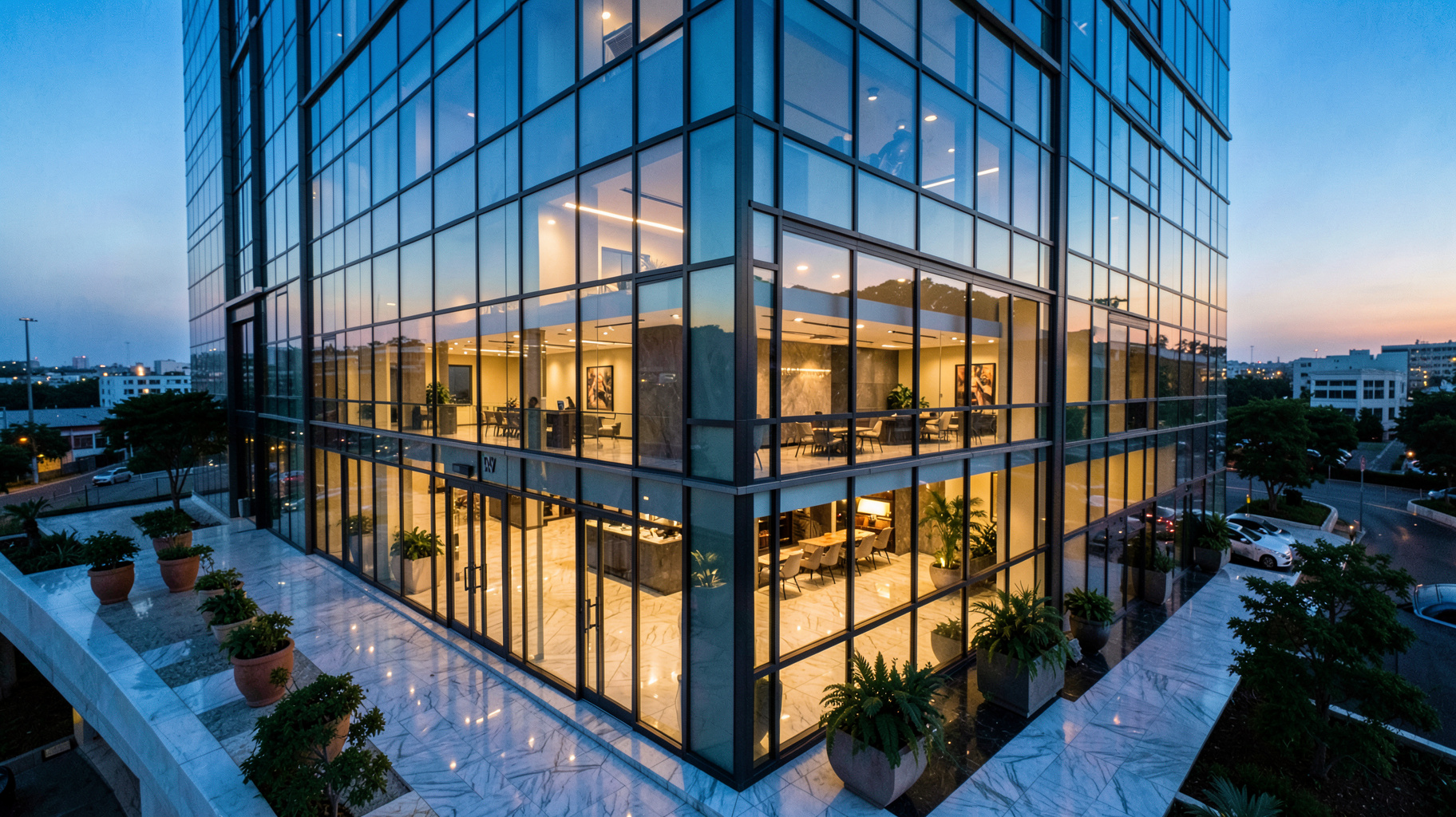
The transition to AI-driven visuals is no longer optional; it is a strategic necessity for any agent who wants to remain competitive. The "when" is simple: if your images aren't actively working to sell the home, they are working against you. Whether it's a daylight-to-dusk conversion to create a cinematic feel or virtual staging to fill a cold vacuum of a room, the timing should always be before the market has a chance to judge your listing.
Stop settling for "good enough" photos that leave money on the table. By integrating a high-speed, professional workflow, you can turn a mediocre listing into a high-demand property in seconds.
Ready to transform your listings? Experience the power of market-ready visuals in just 12 seconds at RealVisionAI Blog - AI Real Estate Photography & Virtual Staging.
Recommended Readings
To deepen your understanding of these topics, we recommend reading the following articles:
- AI in Real Estate
- Ultimate AI Lead Generation for Real Estate Agents
- AI staging for realtors
- AI Virtual Staging by Property Type
Free Real Estate AI Visual Playbook 2026
Discover how top realtors boost listing engagement by 62% and close deals faster using AI photo enhancement and virtual staging.