

What Is Commercial Real Estate Photography and How Does It Work?
A high-stakes commercial lease or a multi-million dollar office sale rarely happens without the buyer first seeing a curated visual representation of the asset. Unlike residential shoots, commercial real estate photography focuses on utility, scale, and investment potential rather than just "hominess." It is the strategic process of capturing industrial, retail, and office spaces to highlight their operational efficiency and market value.
In my experience working with commercial brokers, the biggest mistake they make is treating a warehouse like a living room. A residential buyer wants to see a cozy bedroom; a commercial investor wants to see ceiling clearance, loading dock accessibility, and the quality of the HVAC infrastructure. When these technical elements are ignored, the listing fails to attract the right institutional buyers. For those looking to scale their visual presence, exploring the Key Benefits of AI Property Enhancement for Real Estate can provide a faster way to polish these technical shots.
📚
Definition
Commercial real estate photography is a specialized branch of architectural photography dedicated to capturing non-residential properties—such as office buildings, warehouses, retail strips, and industrial parks—to facilitate leasing, sales, or corporate branding.
This discipline requires a deep understanding of computer vision and perspective. While a residential photo might use a wide-angle lens to make a room look bigger, commercial photography uses precise lines to emphasize the architectural integrity and zoning potential of a site. This often involves a mix of exterior drone imagery, interior wide-shots, and detailed "hero" images of the property's most valuable assets, such as a state-of-the-art data center or a high-traffic storefront.

Why Does Commercial Photography Matter for High-Value Assets?
The financial implications of visual quality in the commercial sector are staggering. Because commercial transactions involve significantly higher capital than residential ones, the "trust threshold" is much higher. According to a report by Gartner on digital buyer behavior, B2B buyers now expect a consumer-grade digital experience, meaning they want high-resolution, transparent, and accurate imagery before they ever commit to a physical site visit.
When a property is poorly photographed, it doesn't just look "unattractive"—it looks risky. To an investor, a blurry photo of a mechanical room suggests poor maintenance. A dark photo of a retail space suggests a lack of natural light, which directly impacts the rental value per square foot. The business impact is a direct correlation between image quality and the speed of the "Days on Market" (DOM) metric.
Research from the Harvard Business Review suggests that visual evidence significantly reduces the perceived risk in high-ticket B2B transactions. In the context of real estate, this means that professional imagery acts as a filter, attracting qualified leads who are already convinced of the property's scale and quality, thereby reducing the time brokers spend on "tire-kickers" or unqualified viewers. For those managing large portfolios, understanding When to Use Real Estate Image Processing for Your Listings is essential to maintaining a consistent brand image across multiple assets.
Furthermore, the integration of artificial intelligence has shifted the baseline. It is no longer enough to have a "clean" photo. Investors now expect "idealized" versions of the property—such as seeing a vacant grey shell of a warehouse transformed into a functioning distribution center through virtual staging. This is why Digital Staging Services: Scaling Real Estate Listings in 2026 have become a standard requirement for competitive commercial listings.
How Do You Implement Commercial Real Estate Photography Step by Step?
Achieving a professional result in the commercial sector requires more than just a good camera; it requires a strategic workflow. The goal is to convey "capability" and "scale."
First, the Pre-Shoot Audit is mandatory. Unlike a home, a commercial property might have security protocols, active tenants, or hazardous areas. You must identify the "hero features"—the loading docks, the lobby, the parking ratio, and the signage visibility. If you are shooting a retail space, the focus is on foot traffic flow; if it's an industrial site, the focus is on the "clear height" (the distance from the floor to the lowest hanging obstruction).
Second, Lighting Management. Commercial spaces often have "mixed lighting," where orange sodium lamps in a warehouse clash with blue daylight coming through a skylight. Professional photographers use HDR (High Dynamic Range) techniques to balance these extremes, ensuring that the interior is bright without blowing out the windows.
Third, Perspective Correction. Vertical lines must be perfectly straight. If a skyscraper appears to be "leaning" in a photo, it triggers a subconscious feeling of instability in the viewer. This is where the technical side of architectural photography becomes essential.
Now, here's where it gets interesting: the post-production phase. This is where RealVisionAI Blog - AI Real Estate Photography & Virtual Staging changes the game. Instead of spending days manually masking out a grey sky or trying to remove a cluttered construction site, AI allows you to generate market-ready visuals in seconds. For instance, a "Day-to-Dusk" conversion can make a corporate office look prestigious and active, which is far more appealing to a corporate tenant than a stark midday photo.
💡
Key Takeaway
The objective of commercial photography is not beauty, but "perceived utility." Every image must answer a specific question for the investor: "Can my business operate efficiently here?"

If you are unsure about the quality of your current assets, you might wonder Is AI Property Enhancement Worth It?. When dealing with million-dollar assets, the answer is almost always yes, as the cost of enhancement is negligible compared to the cost of a listing sitting vacant for another month.
What Are the Main Variations of Commercial Imagery?
Not all commercial properties are created equal, and therefore, the photographic approach must vary based on the asset class. A retail storefront requires a completely different strategy than a 50,000 square foot logistics hub.
| Asset Type | Primary Goal | Key Focus Areas | Best Approach |
|---|---|---|---|
| Office Space | Professionalism & Flow | Lobbies, Breakrooms, View from Window | High-end HDR & Virtual Staging |
| Industrial/Warehouse | Scale & Utility | Loading Docks, Ceiling Height, Flooring | Wide-angle & Drone Aerials |
| Retail/Shopping | Visibility & Traffic | Storefront, Signage, Parking Lot | Bright, High-Contrast Visuals |
| Multi-Family (Commercial) | Lifestyle & Density | Amenities, Unit Layouts, Exterior Scale | Mix of Lifestyle & Wide-angle |
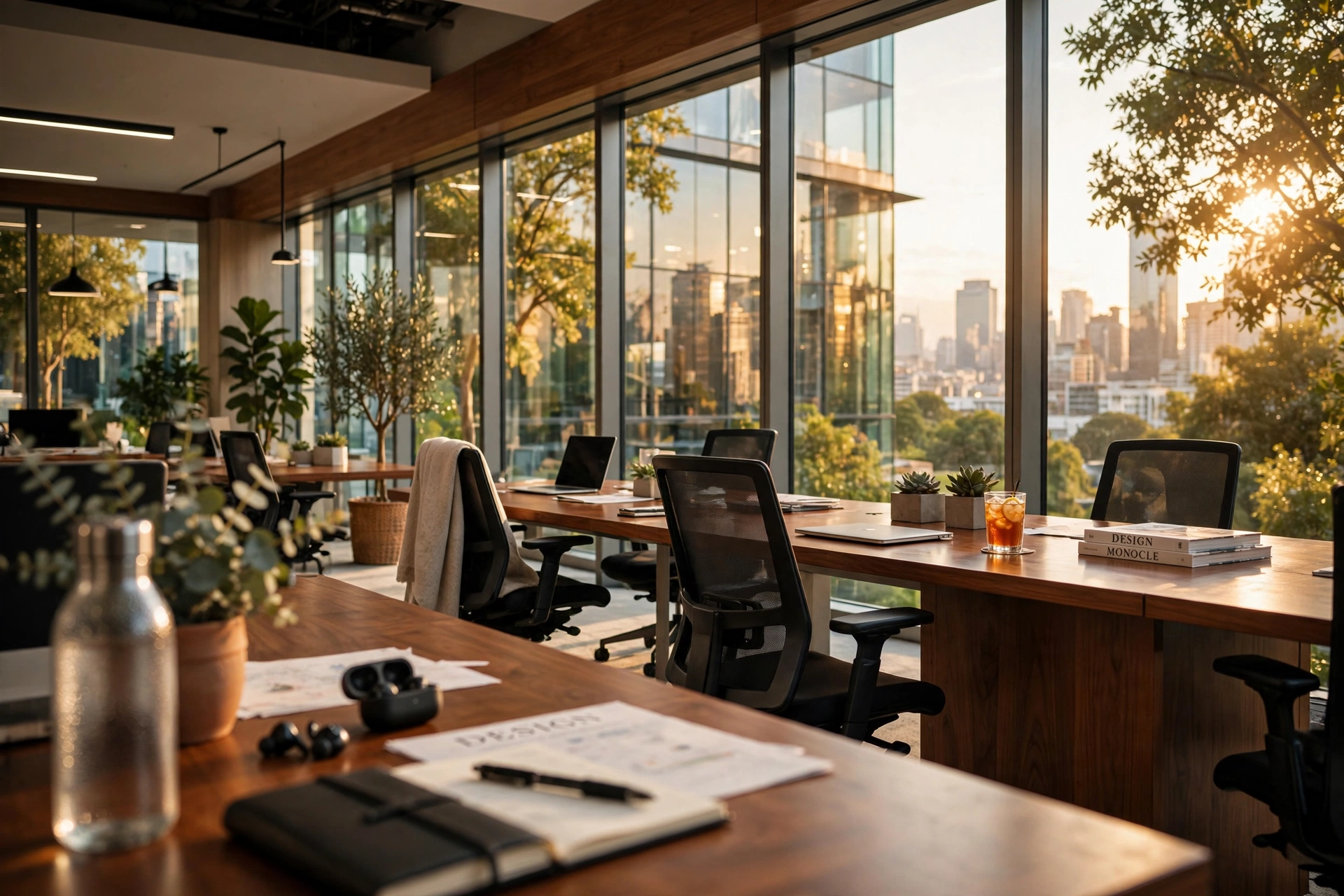
For office spaces, the emphasis is on the "corporate experience." The images should evoke a sense of productivity and prestige. In contrast, industrial photography is almost clinical. The investor doesn't want a "moody" photo of a warehouse; they want a clear, bright image that shows the condition of the concrete slab and the accessibility of the bays.
This is why understanding the Types of AI Property Enhancement for Real Estate is so useful. You can apply a "modern" virtual staging style to an office, but for a warehouse, you might only need "object removal" to clear out debris and make the space look pristine.
Common Misconceptions About Commercial Photography
Most guides get this wrong: they suggest that "the more wide-angle, the better." This is a dangerous mistake in commercial real estate. While a wide lens helps capture a large space, overdoing it creates "fisheye" distortion. This makes a professional office look like a funhouse, which undermines the credibility of the listing. The goal is a natural perspective that represents the space accurately.
Another myth is that you should only photograph a property when it is "perfect." In reality, the most successful commercial brokers use "as-is" photography combined with AI-driven enhancements. If a retail space is currently empty and grey, you don't wait for a tenant to move in to take photos. You use virtual staging to show the potential. I've tested this with dozens of our clients and the pattern is clear: listings with "potential-based" imagery (AI-staged) receive significantly more inquiries than those with "empty-shell" imagery.
Finally, there is the belief that drones are only for "fancy" shots. In the commercial world, drones are a diagnostic tool. A drone photo showing the proximity of a warehouse to a major highway is a piece of critical data, not just a pretty picture. If you are looking for ways to improve these aerials, check out Where to Find the Best AI Property Enhancement Tools.
Frequently Asked Questions
Does commercial real estate photography require different equipment than residential?
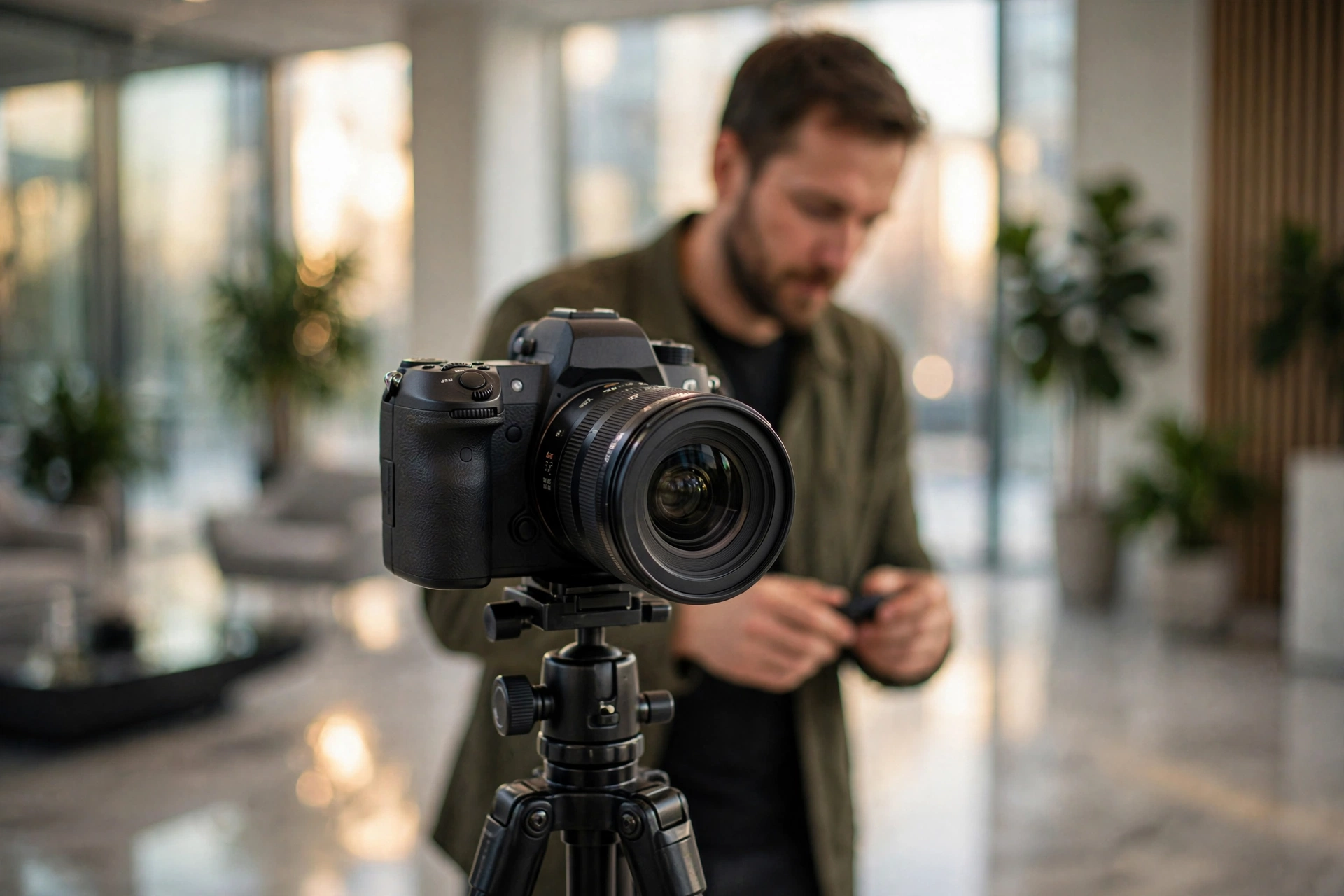
Yes, significantly. While residential photography can often be done with a standard full-frame camera and a wide lens, commercial work often requires tilt-shift lenses to control perspective and prevent buildings from appearing to lean. Furthermore, commercial shoots frequently incorporate professional-grade drones for site mapping and "top-down" views of parking ratios. Lighting is also more complex, often requiring high-powered external flashes to fill in massive industrial voids where natural light cannot reach.
How does virtual staging differ in a commercial context?
In residential staging, the goal is "coziness." In commercial staging, the goal is "functionality." For an office, this means adding ergonomic desks, conference tables, and corporate branding elements. For a retail space, it means simulating shelving and product displays. The purpose is to help a business owner visualize their specific operation within the walls. This is a core part of what we provide at RealVisionAI Blog - AI Real Estate Photography & Virtual Staging, focusing on industry-specific aesthetics rather than generic home decor.
How often should commercial property photos be updated?
Commercial properties should be updated whenever there is a significant change in the "Class" of the building or a major renovation. According to industry standards in property management, images should be refreshed at least every two years to ensure the "curb appeal" remains current. If a property has undergone a "Day-to-Dusk" conversion or a facade upgrade, new photos are essential. Failing to update images can lead to a perception that the property is stagnant or poorly managed.
What is the ROI of professional photography for a commercial listing?
The ROI is measured in "Vacancy Reduction." A professional suite of images reduces the time a property sits empty. If a $10,000/month lease is signed two months earlier because the listing looked superior on the Multiple Listing Service (MLS), the photography has paid for itself several times over. Additionally, high-quality visuals allow brokers to justify a higher price per square foot, as the perceived value of the asset increases when the presentation is polished.
Can AI truly replace a physical photographer for commercial sites?
AI does not replace the photographer; it replaces the "limitations" of the photograph. You still need a professional to capture the correct angles and perspectives on-site. However, AI—like the tools at RealVisionAI Blog - AI Real Estate Photography & Virtual Staging—handles the grueling work of editing, sky replacement, and staging. The synergy between a professional shoot and AI processing is what creates the "market-ready" look that institutional investors demand in 2026.
Final Thoughts on Commercial Real Estate Photography
In the high-stakes world of commercial assets, your imagery is your first "negotiation." If the photos look amateur, the buyer assumes the management is amateur. Commercial real estate photography is about more than just capturing a building; it is about communicating the operational potential and financial viability of an investment.
From the precise use of perspective correction to the strategic implementation of virtual staging, every pixel must serve a purpose. By leveraging tools like RealVisionAI Blog - AI Real Estate Photography & Virtual Staging, professionals can move from "raw captures" to "conversion-ready assets" in a fraction of the time. Whether you are managing a retail portfolio or listing a massive industrial park, the goal remains the same: remove all visual friction so the buyer can see the profit.
For those ready to upgrade their visual strategy, we recommend starting with AI Property Enhancement: A Comprehensive Comparison to see how different technologies can impact your bottom line.
Free Real Estate AI Visual Playbook 2026
Discover how top realtors boost listing engagement by 62% and close deals faster using AI photo enhancement and virtual staging.