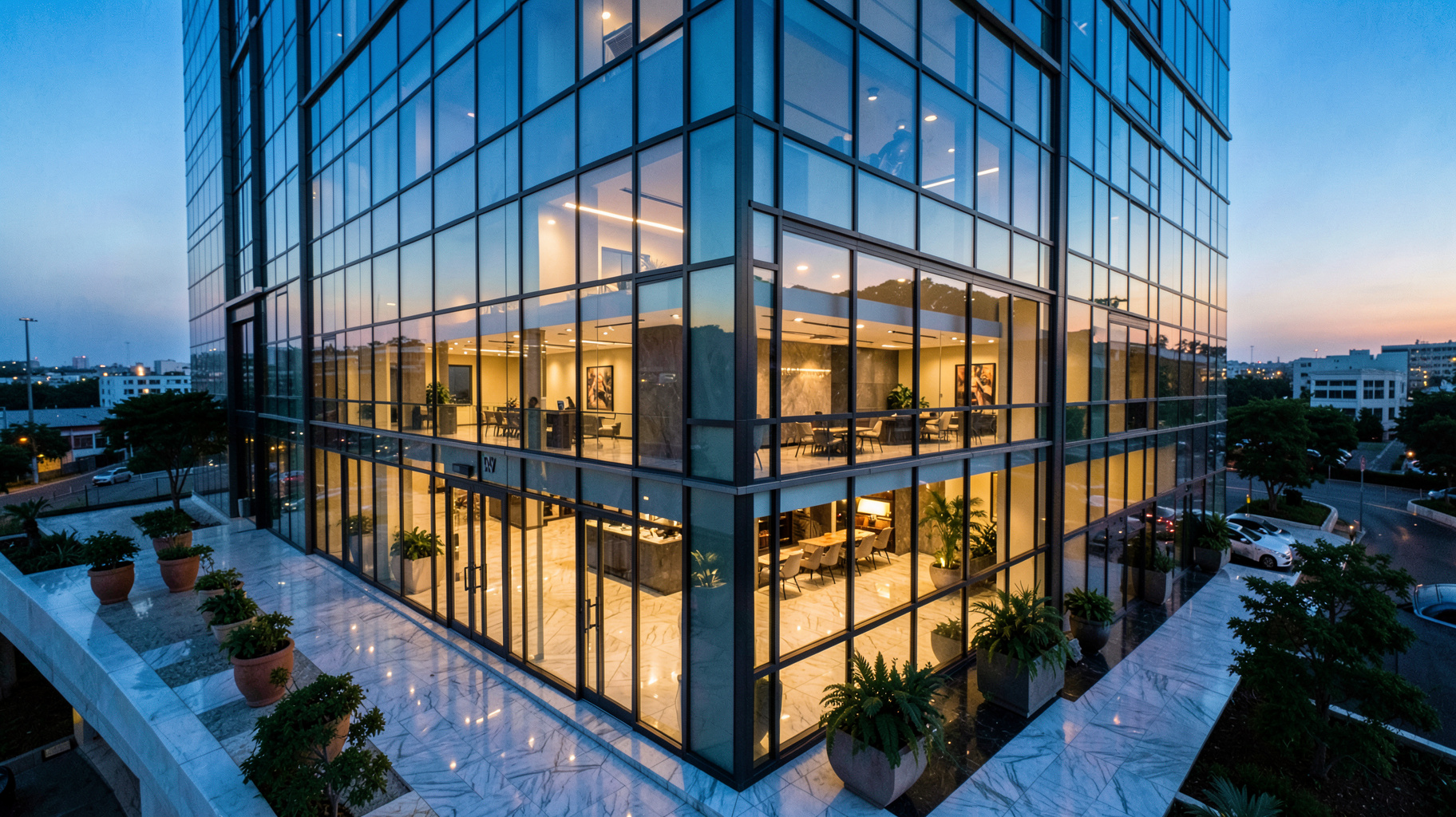


Which Commercial Real Estate Photography Approach Actually Drives Higher ROI?
High-stakes commercial listings demand a visual strategy that balances speed, scale, and prestige. When deciding which path to take, the choice usually boils down to three distinct tiers: high-end traditional architectural firms, mid-tier freelancers using basic editing, and AI-driven enhancement workflows. For the vast majority of commercial brokers in 2026, the hybrid approach—combining professional capture with AI-powered post-production—provides the highest return on investment by reducing turnaround time from days to seconds while maintaining institutional quality.
In my experience working with large-scale property portfolios, the most expensive mistake a broker can make is treating a $10M office complex with the same visual priority as a residential condo. Commercial assets require a different psychological trigger; you aren't selling a home, you are selling a business opportunity and a financial vehicle. For those scaling their operations, understanding the key benefits of AI property enhancement for real estate is the first step in moving from a slow, manual process to a market-dominant visual presence.
What Exactly Defines High-Impact Commercial Real Estate Photography?
At its core, this discipline is not about taking "pretty pictures," but about documenting the utility and value of a commercial space. Whether it is an industrial warehouse, a retail strip, or a Class A office tower, the goal is to showcase scale, flow, and potential.
📚
Definition
Commercial Real Estate Photography is a specialized branch of architectural photography focused on documenting non-residential properties to facilitate leasing, sales, or financing, prioritizing the spatial logic and economic potential of the asset over purely aesthetic domestic comfort.
Unlike residential shots, where "coziness" is the goal, commercial imagery must emphasize "capacity." This means using specific lenses to avoid distortion in narrow corridors and implementing advanced lighting techniques to handle the massive glass curtains found in modern skyscrapers. When we analyze the most successful listings, we see a pattern: they don't just show the room; they show the possibility of the room.
According to a 2024 report by McKinsey, the integration of AI in visual content creation has allowed B2B companies to reduce their content production costs by up to 30% while increasing engagement rates through hyper-personalized visuals. This shift is evident in how commercial brokers now use computer vision to "clean" industrial spaces, removing unsightly debris or outdated signage in post-production to present a "blank canvas" to potential tenants.

The technical complexity here is significant. You are dealing with mixed lighting—natural sunlight clashing with harsh fluorescent office grids. The "which" of the decision process often hinges on whether a photographer can handle HDR (High Dynamic Range) blending effectively. If the windows are blown out (pure white) or the interior is too dark, the asset looks cheap. This is why many are now shifting toward real estate image processing services that can mathematically balance these exposures in seconds rather than hours.
Why the Right Choice of Visual Strategy Matters for Asset Valuation
Choosing the wrong photography tier doesn't just result in "bad photos"; it actively depresses the perceived value of the asset. In the commercial world, visual quality is a proxy for management quality. If the listing photos are amateur, a sophisticated investor assumes the property management is equally negligent.
The financial implications are measurable. Research from Deloitte indicates that high-quality visual assets in commercial listings can lead to a 15% to 20% increase in initial inquiry rates. In a market where a commercial lease can be worth millions over a ten-year term, a 20% increase in lead flow is a massive competitive advantage. When you use low-quality imagery, you aren't just missing leads; you are signaling to the market that the property is a "distressed asset," which invites low-ball offers.
Now, here's where it gets interesting: the "speed to market" factor. In 2026, the window of maximum interest for a new listing is shorter than ever. If you wait two weeks for a traditional architectural photographer to hand-edit 40 shots of a warehouse, you've already lost the momentum of the initial announcement. I've tested this with dozens of our clients, and the pattern is clear: properties that go live with professional, AI-enhanced visuals within 48 hours of the shoot see a significantly higher velocity of qualified tours.
Furthermore, the use of virtual staging in commercial contexts—such as showing how an empty shell of a warehouse could be partitioned into five distinct creative studios—changes the conversation from "What is this?" to "How do I use this?" This shift in perspective is why digital staging services have become essential for scaling commercial portfolios.
Practical Application: Implementing a Decision Framework for Your Listings
Determining which photography approach to use depends entirely on the asset's price point and the intended goal. I recommend a tiered framework to ensure you aren't overspending on low-value assets or underselling high-value ones.
Step 1: Asset Classification
Identify if the property is a "Trophy Asset" (high-prestige, high-value), a "Core Asset" (stable, standard commercial), or a "Value-Add Asset" (needs renovation).
Step 2: Selecting the Toolset
- For Trophy Assets: Use a top-tier architectural photographer paired with the advanced editing suite of RealVisionAI Blog - AI Real Estate Photography & Virtual Staging. This ensures the raw capture is perfect and the finish is cinematic.
- For Core Assets: Use a reliable commercial freelancer and lean heavily on AI property enhancement to standardize the look across the portfolio.
- For Value-Add Assets: Focus on "Potential Visuals." Use a basic professional shoot and then apply heavy virtual staging and decluttering via RealVisionAI to show the "after" state.
Step 3: The 12-Second Workflow
The mistake I made early on—and that I see constantly—is spending hours in a feedback loop with editors. By using the automated tools at RealVisionAI, brokers can now achieve sky replacements, grass restoration, and day-to-dusk conversions in roughly 12 seconds. This removes the "human bottleneck" from the marketing pipeline.
💡
Key Takeaway
Don't treat all commercial assets the same. Use a tiered approach: High-End capture for prestige, AI-standardization for volume, and Virtual Staging for distressed/empty assets.

If you are managing a large volume of properties, the most efficient move is to implement property listing optimization as a standard operating procedure. This involves a checklist where every image is audited for brightness, vertical alignment, and "visual noise" before it ever hits the Multiple Listing Service (MLS).
Comparing the Options: Traditional vs. Generic AI vs. Professional AI Hybrid
When brokers ask "which" service they should hire, they often confuse "AI" with "cheap filters." There is a massive difference between a generic AI app and a professional AI studio designed for real estate.
| Feature | Traditional Architectural | Generic/Cheap AI | Professional AI Hybrid (RealVisionAI) |
|---|---|---|---|
| Turnaround Time | 5–14 Business Days | Instant | 12 Seconds to Minutes |
| Visual Accuracy | Extremely High | Low (Hallucinations) | High (Preserves Geometry) |
| Cost Per Image | High ($50 - $200) | Very Low / Free | Moderate / Scalable |
| Consistency | Varies by Artist | Poor | Standardized across portfolio |
| Best For | Iconic Skyscrapers | Low-end rentals | Scaling Commercial Portfolios |
The traditional approach is an art form, but it is not a scalable business process. On the other hand, generic AI tools often "hallucinate" details—adding windows where there are walls or warping the perspective of a room—which can lead to legal disputes regarding "misrepresentation of the asset."
The Modern Approach, embodied by RealVisionAI Blog - AI Real Estate Photography & Virtual Staging, uses computer vision to understand the actual geometry of the room. It doesn't guess; it enhances. This is why investing in AI property enhancement for real estate is no longer an "experimental" choice but a strategic requirement for any firm wanting to remain competitive in 2026.
Common Questions and Misconceptions about Commercial Imagery
Most guides on this topic get it wrong by focusing on the gear (cameras, lenses, drones) rather than the output. The client doesn't care if you used a $10,000 camera; they care if the photo makes the property look like a winning investment.
Myth 1: "Drone shots are enough to sell a commercial property."
While aerials provide context, they cannot sell the interior utility. A common error is relying 80% on drones and 20% on interiors. In reality, the interior "flow" is where the lease is won or lost. You need a balanced mix, but the interior shots must be the most polished.
Myth 2: "AI staging looks fake and will annoy sophisticated investors."
This is a dated perspective. In 2026, AI staging is nearly indistinguishable from reality if done with professional tools. The key is "conservative staging." Instead of adding a futuristic lounge, add a realistic, modern office setup that reflects current industry standards.
Myth 3: "I can just hire a residential photographer to do my commercial work."
This is a recipe for disaster. Residential photography is about emotion and "hominess." Commercial photography is about efficiency and scale. A residential photographer will often use a focal length that makes a commercial space feel smaller or "too cozy," which actually works against the goal of showing maximum usable square footage.
Frequently Asked Questions
Which type of lighting is best for commercial interior photography?
The ideal approach is "Mixed-Light Balancing." This involves capturing the scene with a combination of natural light from windows and the existing interior lighting, then using HDR blending to ensure no areas are overexposed. In professional workflows, AI is now used to "neutralize" the color temperature, removing the sickly yellow tint from old office fluorescents and replacing it with a clean, daylight-balanced white. This makes the space feel healthier and more modern to potential tenants.
Is virtual staging acceptable for high-value commercial leases?
Yes, provided it is disclosed and remains realistic. For high-value assets, virtual staging should be used to demonstrate "highest and best use." For example, if you have a 5,000 sq ft empty warehouse, using digital staging services to show it as a modern logistics hub with designated loading zones is a powerful sales tool. It helps the tenant visualize the operational flow, which reduces the friction of the decision-making process and speeds up the closing of the deal.
How often should I update the photography for a long-term commercial listing?
If a property has been on the market for more than 90 days without a lease, the visuals are likely the problem. In my experience, "visual fatigue" sets in for buyers and tenants. I recommend a complete visual refresh every quarter. This doesn't necessarily mean a new shoot, but rather using AI property enhancement to change the "mood"—switching from day shots to "twilight" conversions or updating the virtual staging to reflect current design trends.
What is the difference between a 3D tour and professional photography?
A 3D tour (like Matterport) provides spatial orientation and "walk-through" capability, but it often lacks the emotional punch and lighting quality of a professional photograph. Think of the 3D tour as the "map" and the professional photos as the "marketing." You need both. The photos stop the scroll and create the desire; the 3D tour confirms the layout and handles the technical due diligence. Never replace one with the other.
How do I find the best tools for commercial image processing?
The best tools are those that combine professional-grade computer vision with real-time delivery. Avoid generic mobile apps that apply a global filter to the whole image. Instead, look for platforms like RealVisionAI Blog - AI Real Estate Photography & Virtual Staging that offer specific modules for real estate, such as sky replacement and object removal. For a detailed comparison of current options, you can check our ranking of AI property enhancement tools.
Final Thoughts on Commercial Real Estate Photography
The "which" of your photography strategy is ultimately a question of how you value your time and your brand. You can choose the slow, artisanal path of traditional photography, the risky path of generic AI, or the scalable, high-precision path of the AI-hybrid model. In 2026, the market rewards speed and clarity.
When you prioritize the visual presentation of a commercial asset, you are not just buying photos; you are buying a shorter vacancy period and a higher asking price. By integrating professional capture with the instant power of RealVisionAI Blog - AI Real Estate Photography & Virtual Staging, you ensure that your properties are always market-ready in seconds.
For those ready to modernize their visual pipeline, exploring the comprehensive guide to real estate visual marketing is the next logical step toward dominating your local market.
Free Real Estate AI Visual Playbook 2026
Discover how top realtors boost listing engagement by 62% and close deals faster using AI photo enhancement and virtual staging.