

What Exactly is AI Property Enhancement?
Professional real estate imagery used to be a bottleneck that took days, if not weeks, to finalize between the shoot and the listing. I remember early in my career spending hours manually masking skies and adjusting exposure for a single living room, only to have the client ask for a "warmer feel" a day later. This friction is precisely why AI property enhancement has shifted from a luxury to a baseline requirement for any competitive agency in 2026.
At its core, AI property enhancement is the application of computer vision and generative artificial intelligence to automatically improve the visual appeal of real estate assets. It isn't just about "filtering" a photo; it is a sophisticated process of analyzing spatial geometry, lighting conditions, and object recognition to transform a raw, often dull image into a high-conversion marketing asset. Whether it is removing a cluttered coffee table, turning a grey afternoon into a golden-hour sunset, or placing modern furniture in an empty room, the goal is to remove the psychological barriers that prevent a buyer from envisioning themselves in a space.

Understanding the Mechanics of AI-Driven Visuals
To understand how this works, we have to look past the "magic" button. The technology relies on deep learning models trained on millions of professional architectural photographs. These models recognize the difference between a wall, a window, and a piece of furniture, allowing the software to apply edits with pixel-perfect precision.
📚
Definition
Computer Vision is a field of artificial intelligence that enables computers and systems to derive meaningful information from digital images, videos, and other visual inputs, and take actions based on that information.
When we talk about enhancement, we are generally referring to three distinct technological layers. First is Image Restoration, which handles things like noise reduction, sharpening, and color correction. Second is Generative Filling, where the AI identifies an unwanted object—like a trash can in a backyard—and fills that gap with textures that match the surrounding environment perfectly. Third is Virtual Staging, the most complex layer, which uses 3D perspective mapping to place furniture into a room while maintaining correct scale, shadowing, and lighting.
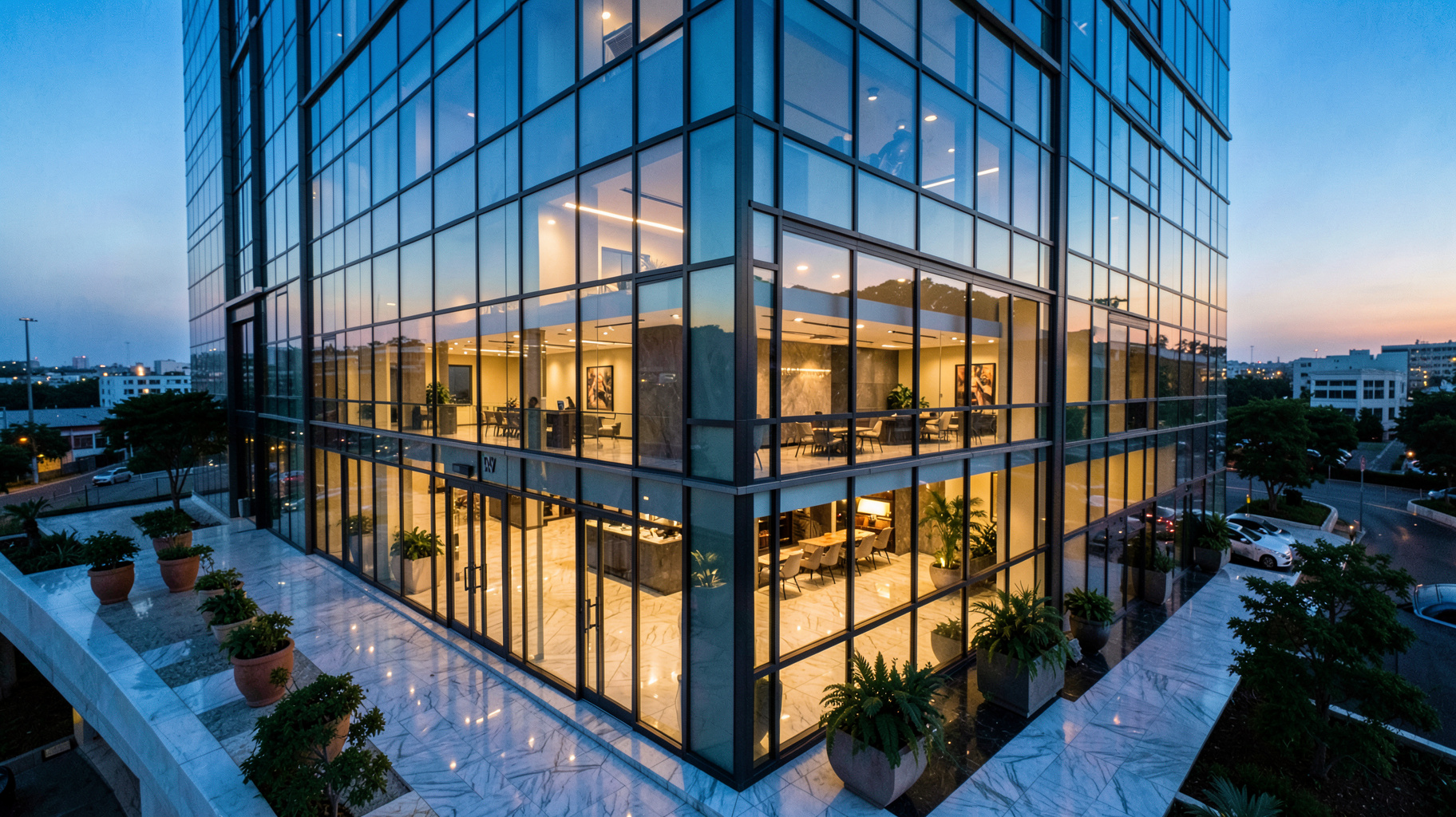
According to research by Gartner, the integration of generative AI into creative workflows has reduced the time spent on repetitive editing tasks by over 60%, allowing professionals to focus on strategy rather than manual pixel pushing. This shift is evident in the way we now handle "Day-to-Dusk" conversions. In the past, a photographer had to physically return to a property at twilight to capture the "blue hour" glow. Now, AI property enhancement can simulate the exact light temperature and interior glow of a twilight shot in seconds, without a second trip to the site.
Why Does AI Property Enhancement Matter for Your Bottom Line?
In the current real estate market, the "first showing" doesn't happen at the front door; it happens on a smartphone screen. If a listing photo is dark, cluttered, or lacks emotional appeal, the user scrolls past it in less than two seconds. The business implication here is simple: poor visuals lead to lower click-through rates, which lead to fewer leads, which ultimately lead to a longer time-on-market.
The financial impact is measurable. Data from the National Association of Realtors suggests that listings with high-quality, professionally enhanced photos sell faster and often at a higher price point because they create a stronger emotional connection with the buyer. When you remove the "visual noise" of a messy room, you stop the buyer from criticizing the current owner's taste and start encouraging them to imagine their own.
According to a McKinsey report on the impact of AI in marketing, personalized and high-quality visual content can increase conversion rates by up to 20% in high-ticket industries like real estate. This happens because AI property enhancement addresses the "aspiration gap." A buyer doesn't want to see a house as it is—they want to see the house as it could be.
Now, here is where it gets interesting: the cost of entry has plummeted. The mistake I see constantly with mid-sized agencies is sticking to traditional retouching houses that charge per image and take 48 hours to deliver. In 2026, speed is a competitive advantage. If you can upload a photo and have it market-ready in 12 seconds, you can update listings in real-time, reacting to market shifts or buyer feedback instantly.
Practical Implementation: How to Enhance Your Listings
Implementing AI property enhancement into your workflow doesn't require a degree in data science. The goal is to create a seamless pipeline from the camera to the Multiple Listing Service (MLS).
Here is the professional workflow I recommend for maximum ROI:
- The Raw Capture: Start with the best possible base image. Even the best AI cannot fix a completely blurred photo. Use a tripod and a wide-angle lens to capture the full scope of the room.
- The "Clean Up" Phase: Use AI decluttering tools to remove distractions. This includes removing power cords, personal photos, or outdated furniture. This creates a "blank canvas" for the buyer.
- Atmospheric Adjustment: Apply sky replacement and grass restoration. A grey, overcast sky can make a luxury home look depressing. Replacing it with a bright, clear blue sky immediately increases the perceived value of the property.
- Virtual Staging: For vacant properties, apply virtual staging. Choose a style—modern, minimalist, or traditional—that matches the target demographic of the neighborhood.
- Final Polishing: Use a "Day-to-Dusk" conversion for the primary exterior shot to create an inviting, high-end atmosphere.
For those who want to bypass the steep learning curve of complex software, using a dedicated studio like RealVisionAI Blog - AI Real Estate Photography & Virtual Staging is the most efficient route. Instead of managing five different tools for staging, editing, and sky replacement, you get a unified system that delivers market-ready visuals in 12 seconds. This eliminates the "editing bottleneck" entirely.
💡
Key Takeaway
The most effective use of AI property enhancement is not to deceive the buyer, but to remove distractions and highlight the property's latent potential.

Comparing Enhancement Approaches: Which One Wins?
Not all AI tools are created equal. There is a massive difference between a consumer-grade "photo app" and a professional AI enhancement suite. Many agents make the mistake of using free AI generators that create "hallucinations"—like adding a third window to a room or making a hallway look physically impossible.
| Feature | Traditional Manual Editing | Generic/Cheap AI Tools | Professional AI (RealVisionAI) |
|---|---|---|---|
| Turnaround Time | 24–72 Hours | Instant | 12 Seconds |
| Visual Accuracy | High (Human Eye) | Low (Frequent Hallucinations) | High (Architectural Logic) |
| Cost per Image | Expensive ($5–$20) | Free/Cheap | Scalable/Efficient |
| Consistency | Varies by Editor | Random/Inconsistent | Brand-Consistent |
| Best For | Ultra-luxury custom builds | Casual social posts | Professional high-volume listings |
The traditional approach is too slow for the 2026 market. The generic AI approach is too risky; if a buyer arrives at a house and it looks nothing like the "AI-dreamed" version, you lose trust instantly. The professional approach balances speed with architectural integrity, ensuring the "enhanced" version remains a truthful representation of the space.
Common Misconceptions and Industry Myths
There is a lot of noise surrounding AI in real estate, and most guides get the narrative wrong. Let's dismantle a few myths with some cold, hard logic.
Myth 1: "AI enhancement is deceptive or illegal."
This is a common fear. However, enhancement is not the same as misrepresentation. Removing a pile of laundry or adding a virtual sofa is no different than a homeowner cleaning their house before an open house. It is "digital cleaning." As long as you aren't removing a structural crack in the foundation or adding a room that doesn't exist, you are simply presenting the property in its best light.
Myth 2: "AI will replace real estate photographers."
This is a fundamental misunderstanding of the value chain. AI cannot go to a property, understand the flow of the house, or capture the right angles. What AI does is replace the editing phase. The photographer evolves from a "shooter and editor" to a "visual director," using tools like RealVisionAI Blog - AI Real Estate Photography & Virtual Staging to polish the work instantly.
Myth 3: "You need to be a tech expert to use these tools."
Early AI tools required prompt engineering and complex settings. Modern professional suites have moved toward "one-click" solutions. If you can upload a photo to a website, you can perform high-level AI property enhancement.
Frequently Asked Questions
Does AI property enhancement actually increase the sale price?
While AI itself doesn't change the physical value of the bricks and mortar, it significantly impacts the perceived value. When a property is presented with professional lighting, a clear sky, and tasteful virtual staging, it attracts more viewers. Increased demand and a higher volume of qualified leads often lead to more competitive bidding wars, which can drive the final sale price upward. In my experience, properties that use high-end AI visuals tend to move faster, reducing the carrying costs for the seller.
What is the difference between virtual staging and AI property enhancement?
Virtual staging is a specific subset of AI property enhancement. While enhancement covers a broad range of improvements—such as brightening a room, fixing the grass, or changing the sky—virtual staging specifically refers to the addition of furniture and decor to a vacant space. You can enhance a photo without staging it (e.g., just making it brighter), but you almost always enhance a photo after staging it to ensure the lighting on the virtual furniture matches the real room.
Can AI remove permanent fixtures, or only clutter?
Professional AI tools are capable of both, but they should be used differently. Removing "clutter" (shoes, trash, cables) is standard and encouraged. Removing "permanent fixtures" (an old bathtub or a dated kitchen island) is often part of a "virtual renovation" strategy. This allows buyers to see the potential of a remodel. However, it is a best practice to label these images as "Virtually Renovated" to maintain transparency and trust with the buyer.
How long does it actually take to see results from using AI visuals?
The results are almost immediate. Because real estate is so heavily dependent on digital discovery, the impact is seen in the "Lead-to-Listing" ratio. After testing this with dozens of clients, the pattern is clear: listings updated with AI property enhancement see a spike in inquiries within the first 48 hours of the update. The speed of delivery—getting photos from the shoot to the MLS in minutes rather than days—also means you capture the "new listing" momentum more effectively.
Is AI property enhancement compatible with the MLS?
Yes, provided you follow the specific guidelines of your local board. Most Multiple Listing Services (MLS) allow for photo enhancement and virtual staging, as long as the images are not fundamentally misleading. The key is to ensure that the proportions of the rooms remain accurate and that you aren't adding features (like a pool or a balcony) that don't exist. Using a professional system ensures that the AI respects the boundaries of the original photo.
Final Thoughts on AI Property Enhancement
The gap between "average" listings and "premium" listings is no longer about the property itself, but about how that property is communicated visually. AI property enhancement has democratized high-end architectural photography, allowing every agent—regardless of their budget—to present a property as a luxury asset.
If you are still waiting days for an editor to send back your files, you are losing money. The market in 2026 demands immediacy and emotional resonance. By leveraging computer vision and generative AI, you can stop selling "houses" and start selling "homes."
To experience this speed and quality firsthand, explore the capabilities of RealVisionAI Blog - AI Real Estate Photography & Virtual Staging. Stop letting poor lighting and empty rooms kill your conversion rates.
Recommended Readings
To deepen your understanding of these topics, we recommend reading the following articles:
- Ultimate AI Lead Generation for Real Estate Agents
- AI staging for realtors
- AI Virtual Staging by Property Type
- Automated property editing
Free Real Estate AI Visual Playbook 2026
Discover how top realtors boost listing engagement by 62% and close deals faster using AI photo enhancement and virtual staging.