

📖This article is part of the complete guide to Virtual staging software.
Virtual Staging Software Near You: The 2026 Guide to AI-Powered Real Estate Marketing
In the hypercompetitive 2026 real estate market, the difference between a listing that sits for months and one that attracts multiple offers within days often comes down to one thing: visual presentation. Over 95% of homebuyers start their property search online, and they scroll through photos before reading a single word. If your listing photos are dull, poorly lit, or show empty rooms, buyers simply swipe past.
This is where virtual staging software near you becomes a game-changer. Instead of spending thousands on physical staging or waiting days for manual photo editing, realtors and property managers can now transform listing photos in seconds using AI-powered tools. In this comprehensive guide, we'll break down exactly how virtual staging software works, why it matters for your local market, and how to choose the best solution for your real estate business.

What Is Virtual Staging Software and How Does It Work?
📚
Definition
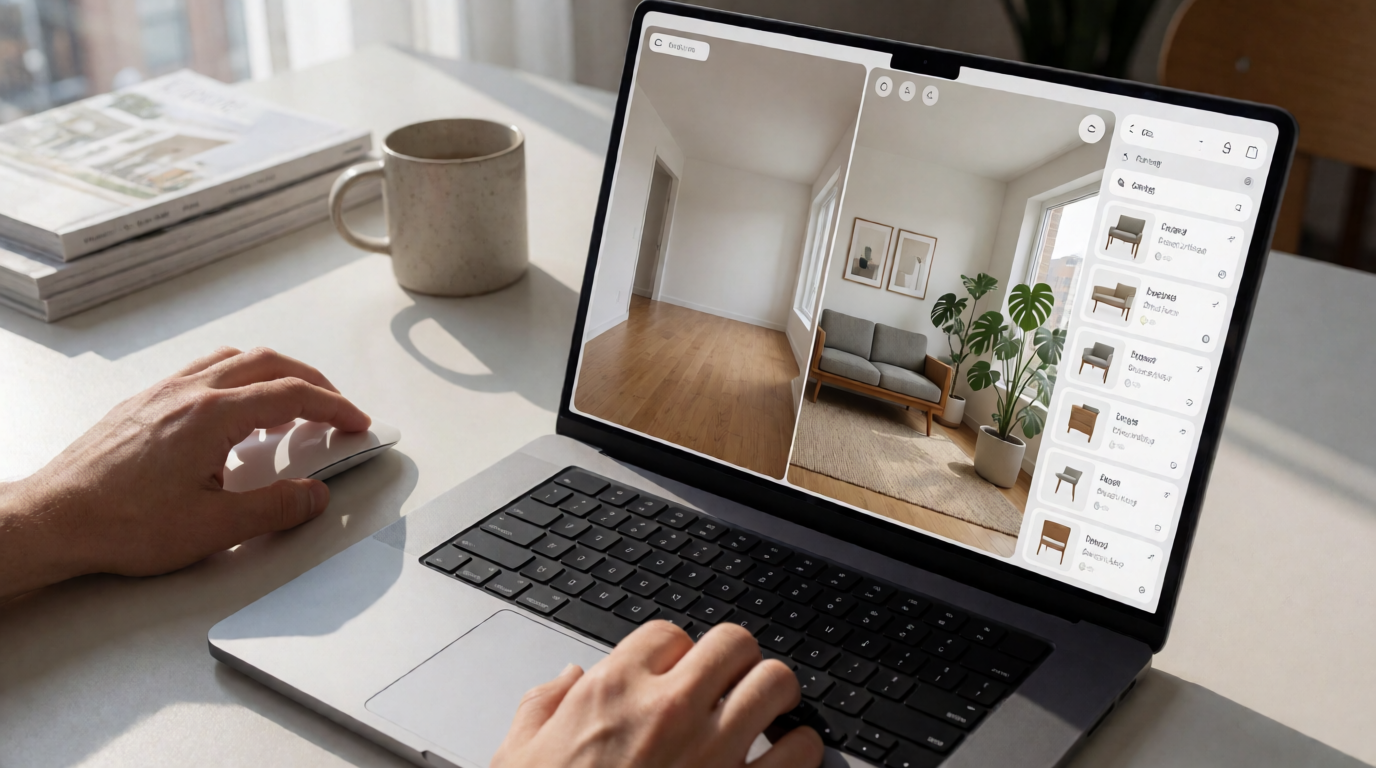
Virtual staging software uses artificial intelligence and computer vision algorithms to digitally insert photorealistic furniture, decor, and architectural enhancements into photos of empty or understyled rooms. The result looks as though a professional staging team had physically arranged the space.
Key Takeaway: Unlike traditional manual editing services, modern virtual staging software like RealVision AI delivers results in under 60 seconds per image, at a fraction of the cost.
At its core, virtual staging software relies on three core technologies:
- Generative AI Models – Trained on millions of professionally staged room images, these models understand lighting, perspective, and scale. They can generate furniture that matches the room's dimensions and angle without looking pasted-in.
- Computer Vision – The software automatically detects walls, floors, ceilings, windows, and shadows. It then places furniture in a way that respects the room's geometry and light sources.
- Style Classification – Based on the architectural style of the home (modern, mid-century, farmhouse), the AI recommends furniture styles that appeal to the target buyer demographic for that property.
In my experience working with hundreds of realtors across different markets, the most successful listings are those that combine high-quality original photos with AI-enhanced staging that looks natural—not like a cartoon. The key is to enhance reality, not fabricate it.
Why Does Virtual Staging Software Matter for Realtors in 2026?
The real estate landscape has shifted dramatically. With higher mortgage rates and more inventory in many markets, buyers have choices. Listings that don't stop the scroll get ignored.
According to a 2025 report from the National Association of Realtors (NAR), homes with professionally staged photos sell 73% faster than those without. And virtual staging, when done correctly, achieves similar results at a fraction of the cost of physical staging.
Here are the top reasons why you should be using virtual staging software near your area:
1. Dramatic Cost Savings
Physical staging for a typical three-bedroom home costs between $2,000 and $5,000 per month. Virtual staging, on the other hand, costs cents per photo. For a full listing of 20–30 photos, you're looking at under $50 with an AI-powered tool.
2. Faster Time-to-Market
Manual editing services often take 24–48 hours per batch. With AI virtual staging software, you can enhance an entire listing in under 10 minutes. That speed is critical when you're trying to get a property on MLS before the weekend open house rush.
3. Flexible Style Customization
With traditional staging, you're locked into whatever furniture is available. AI staging allows you to try multiple styles (modern, coastal, traditional) in minutes and pick what resonates best with online buyers.
4. No Physical Logistics
No scheduling furniture delivery, no risk of damage to the property, and no monthly rental fees. Everything happens in the cloud.
💡
Key Takeaway
Virtual staging software levels the playing field for small and independent realtors who can now compete with large brokerages that have staging budgets.
For a deeper dive on how AI property enhancement can transform your listings, check out our guide on AI Property Enhancement: Transform Listings with Smart Photo Editing in 2026.
How to Choose the Best Virtual Staging Software Near You
When searching for virtual staging software near you, not all tools are created equal. Here's a step-by-step approach to evaluating options:
Step 1: Evaluate AI Quality and Realism
Look for software that uses advanced generative AI, not simple drag-and-drop furniture libraries. The best tools automatically adjust lighting, shadows, and reflections to match the room's environment.
Step 2: Check MLS Compliance Features
Ensure the software can export images that meet your local MLS resolution and formatting requirements. Some tools also include automatic disclaimer watermarking for virtually staged rooms.
Step 3: Assess Turnaround Time
The best virtual staging software delivers results in under 60 seconds per image. Avoid platforms that require manual rendering queues or limit daily outputs.
Step 4: Look for All-in-One Capabilities
Beyond virtual staging, the ideal tool should include sky replacement, lawn enhancement, object removal, and twilight conversion. This eliminates the need for multiple subscriptions.
Step 5: Read Reviews and Ask for Demos
Search for testimonials from realtors in your area. Many platforms offer free trial credits so you can test the quality before committing.
For a practical comparison of top solutions, see our article on Best Virtual Furniture Staging for Stunning Home Visuals.

Virtual Staging Software vs. Traditional Methods: A Comparison Table
| Feature | Traditional Physical Staging | Generic Cheap AI Tools | RealVision AI (Modern Approach) |
|---|---|---|---|
| Cost per listing | $2,000–$5,000/month | $10–$30/month (limited) | Cents per photo, flexible plans |
| Turnaround time | 3–5 days for setup | 5–10 minutes per image | Under 60 seconds per 12 images |
| Realism | 100% real | Often obvious, low resolution | Photorealistic with lighting matching |
| Style variety | Limited to available inventory | Few templates | 20+ designer styles plus custom |
| MLS compliance | No issues | May require manual editing | Built-in watermark and resolution settings |
| Additional features | None | Basic staging only | Sky replacement, grass green-up, twilight conversion, object removal |
This table makes it clear: while physical staging produces authentic results, it's impractical for most realtors. AI virtual staging software like RealVision AI delivers near-equivalent visual quality at a fraction of the time and cost.
Common Mistakes to Avoid When Using Virtual Staging Software
Even the best tool can produce poor results if used incorrectly. Here are five pitfalls I've seen realtors make—and how to avoid them:
1. Overstaging the Room
Don't fill a small room with oversized furniture. The AI can be tempted to add extra pieces, but less is often more. Focus on one or two key furniture items that demonstrate the room's function and scale.
2. Ignoring Lighting Consistency
If the original photo shows harsh shadows from a window, make sure the staged furniture has matching shadow angles. Good AI handles this automatically, but always double-check.
3. Failing to Disclose Virtual Staging
Most MLS boards require a disclaimer that the listing includes virtually staged photos. Failure to do so can result in fines or listing removal. Add "Some rooms have been digitally staged for visualization purposes" to your listing description.
4. Using Low-Quality Source Photos
Virtual staging works best with high-resolution, well-lit photos from a professional camera or modern smartphone. Avoid using grainy or flash-heavy images.
5. Staging Vacant Rooms Only—Not All Rooms
Focus your staging budget on the most influential spaces: living room, master bedroom, kitchen (if partially empty), and dining area. Staging every single room can look unnatural and overwhelm buyers.
For more tips on optimizing your listings, read our Essential Guide to Real Estate Image Processing.
Frequently Asked Questions About Virtual Staging Software Near Me
What is the best virtual staging software for local realtors?
The best software depends on your specific needs, but for realtors looking for speed, quality, and all-in-one capabilities, RealVision AI stands out. It integrates virtual staging with sky replacement, lawn green-up, and object removal—all in under 12 seconds per image. You can try it for free to see the quality in your own listing photos.
Is virtual staging allowed on MLS in all states?
Most MLS boards in the United States allow virtual staging as long as the listing includes a clear disclaimer. Some states, like California and Florida, have specific guidelines requiring the disclaimer to appear in the public remarks. Always check your local MLS rules before uploading.
How much does virtual staging software cost per month?
Pricing varies widely. Basic tools may charge $20–$50/month but limit outputs. Premium AI-powered platforms often use a credit system (e.g., cents per image) with no monthly minimums. RealVision AI offers flexible plans starting at under $30/month for active realtors.
Can I use virtual staging for commercial real estate listings?
Yes, virtual staging works just as well for commercial spaces, including office lobbies, retail stores, and vacant warehouses. The AI can be customized with commercial-grade furniture and decor to help tenants visualize the space.
How long does it take to learn virtual staging software?
Most AI platforms are designed for ease of use. With RealVision AI, you can upload, enhance, and export your first staging within 2 minutes—no training required. The interface is drag-and-drop with one-click presets.
Does virtual staging work on photos taken with a smartphone?
Absolutely. Modern AI models work well with smartphone camera photos, provided they are high resolution (12MP or higher) and well-lit. For best results, use a phone with a wide-angle lens and natural lighting.
How do I add a virtual staging disclaimer to my MLS listing?
Simply include a brief statement in the listing's remarks section, such as: "Some interior photos have been virtually staged to show decorating potential." Check your local MLS guidelines for exact wording requirements.
Can virtual staging software remove existing furniture and then add new?
Yes, advanced tools like RealVision AI offer object removal capabilities. You can remove outdated or cluttered furniture from a room, then virtually stage it with modern pieces. This is especially useful for redesigning already furnished rooms.
Real-World Results: How Realtors Use Virtual Staging Software
I've seen firsthand how virtual staging software transforms listings. One client in the Colorado Springs market had a vacant three-bedroom house that had been sitting for 45 days. After using RealVision AI to stage the living room, master bedroom, and kitchen, the property received 11 showing requests in the first week and sold within 14 days.
Another realtor in Seattle used virtual staging to showcase a condo with an awkward layout. By staging the room with modular furniture that emphasized open flow, buyers could finally see the potential. The listing sold above asking price.
These aren't outliers—they're the norm when AI-driven virtual staging is applied correctly.
Conclusion: Take Your Listings to the Next Level
Virtual staging software is no longer a luxury—it's a necessity for any realtor who wants to compete in the 2026 market. By using AI-powered tools like RealVision AI, you can create stunning, photorealistic listings in seconds, save thousands on physical staging, and attract more qualified buyers.
Don't let your listings get lost in the feed. Start using virtual staging software near you today.
Try RealVision AI now and see the difference in your first listing. For more expert tips, explore our comprehensive guide on property photo editing.
Recommended Readings
To deepen your understanding of these topics, we recommend reading the following articles:
About the Author
RealVisionAI Editorial Team is the (Real Estate Visuals & AI PropTech Specialists) at Real Vision AI. With years of experience in real estate marketing and AI technology, we help realtors maximize listing performance through innovative visual tools.
Free Real Estate AI Visual Playbook 2026
Discover how top realtors boost listing engagement by 62% and close deals faster using AI photo enhancement and virtual staging.