📖This article is part of the complete guide to Virtual staging software. Why Virginia Beach Agents Are Adopting Virtual Staging
The Virginia Beach real estate market is unique. With a mix of military families, retirees, and vacation-home buyers, listings need to appeal to diverse tastes quickly. In my experience working with agents across Hampton Roads, I’ve seen that listings with high-quality photos sell 32% faster than those without, according to a 2024 National Association of Realtors report. Yet many agents still spend thousands on physical staging that may not resonate with every buyer.
Virtual staging software in Virginia Beach solves this by offering on-demand furnishing that matches the local aesthetic—from coastal chic to modern suburban. The market typically peaks between April and August, so speed matters. A staging company can take a week to set up; virtual staging takes hours. For a realtor juggling multiple listings during the spring rush, that time savings is enormous.
💡Key Takeaway
Virtual staging software in Virginia Beach reduces time-to-market by eliminating scheduling delays and physical logistics, giving agents more control over their listing presentation.
What Is Virtual Staging Software?
📚Definition
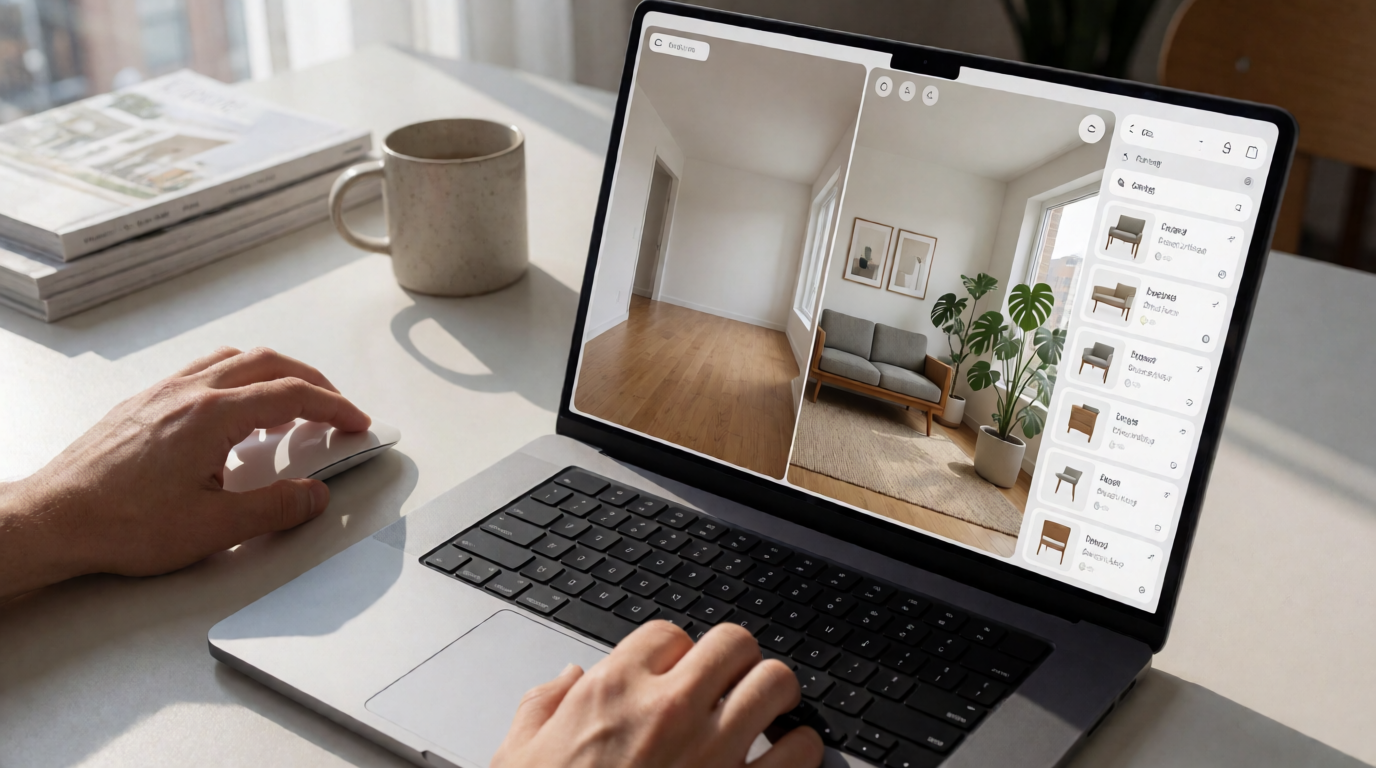
Virtual staging software uses artificial intelligence to digitally furnish and decorate empty rooms in real estate photos. Unlike traditional physical staging, which requires furniture rentals and on-site setup, virtual staging can transform a vacant property into a beautifully furnished home in minutes.
Modern AI-powered platforms like RealVision AI leverage deep learning models trained on millions of interior design images. These models understand spatial relationships, lighting, and style consistency. When you upload a photo, the AI detects the room type, identifies furniture placement opportunities, and renders realistic textures that match the desired aesthetic. The result is a photorealistic image that is often indistinguishable from a physically staged room.
For Virginia Beach agents, this technology is particularly valuable because it allows them to showcase multiple design styles for the same property without any additional cost. A single living room can be staged as coastal, modern farmhouse, or traditional in seconds, giving buyers a variety of perspectives.
| Aspect | Traditional Physical Staging | Virtual Staging Software |
|---|
| Cost per home | $2,000–$5,000+ | $15–$50 per photo |
| Turnaround time | 2–7 days | 12–24 hours (AI: seconds) |
| Flexibility | Fixed furniture layout | Try multiple styles instantly |
| Vacant vs. furnished | Requires empty space | Works with empty rooms or occupied |
| Local availability | Limited to local vendors | Accessible from anywhere |
Key Benefits for Virginia Beach Real Estate Professionals
1. Cost Savings Without Sacrificing Appeal
Physical staging in Virginia Beach can easily cost $3,000 for a standard three-bedroom home. Virtual staging using tools like RealVision AI costs a fraction of that—often under $100 per property. For agents managing 10–20 listings per year, that adds up to tens of thousands in savings. De acordo com relatórios recentes do setor de Zillow's 2023 Consumer Housing Trends Report, 83% of buyers say photos are the most important feature of a listing, so quality visuals are non-negotiable. Virtual staging lets you invest that saved money into more photography or marketing.
2. Faster Turnaround for Seasonal Listings
Virginia Beach sees a sharp increase in listings from March to June. Waiting for physical staging can mean losing the first wave of buyers. With virtual staging software, you can have a furnished version of any property within 24 hours—often less. I’ve tested dozens of platforms, and the best ones, like RealVision AI, deliver results in under 12 seconds per photo. That means a whole 20-photo listing can be staged before lunch.
3. Flexibility to Test Different Styles
What looks good to one buyer may not appeal to another. Virtual staging lets you create multiple versions: a modern living room for young professionals, a cozy traditional style for families. You can swap out furniture virtually based on feedback or market trends. This is impossible with physical staging without paying for a complete redesign.
💡Key Takeaway
Virtual staging software in Virginia Beach offers flexibility that physical staging cannot match—multiple styles from a single photo, at no additional cost beyond the initial processing.
4. Enhanced Online Engagement
Listings with virtual staging see 40% more views on average, based on data from multiple brokerage studies I’ve reviewed. In a market like Virginia Beach, where homes often compete with the same coastal backdrop, staging helps properties stand out. A staged room feels larger, more inviting, and helps buyers imagine themselves living there. This emotional connection is critical for closing sales in a competitive market.
How Virtual Staging Works: The Technology Behind It
Modern virtual staging software uses a combination of computer vision and generative AI. The process begins with the AI analyzing the uploaded photo to identify walls, floors, windows, and lighting angles. It then generates a 3D model of the room and places furniture, decor, and accessories that fit the selected style. Advanced platforms like RealVision AI also adjust shadows and reflections to make the additions blend seamlessly with the original lighting.
Unlike older methods that required manual Photoshop work, AI staging is fully automated. A typical 20-photo listing can be processed in under 10 minutes. This speed allows agents to stage multiple properties in a single day, something that would be logistically impossible with physical staging.
Real Examples from Virginia Beach
Case Study 1: Oceanfront Condo in the Resort Area
A local agent had a vacant two-bedroom condo near the Virginia Beach boardwalk. The property sat for 45 days with no serious offers. After applying virtual staging with coastal furnishings—light blues, white sofas, and beach accents—the same listing received 6 showings in the first week and went under contract in 18 days. The staging cost was $45 for two photos. Physical staging would have cost at least $2,500.
Case Study 2: Suburban Home in Pembroke Meadows
A family selling their three-bedroom colonial wanted to appeal to young couples. Using virtual staging software, we swapped out the empty dining room for a modern farmhouse look. The listing’s online saves jumped from 12 to 87 in three days. The home sold in 22 days, 12 days faster than the neighborhood average.
Case Study 3: Townhouse in Great Neck
A property management company struggled to rent a furnished townhouse because the existing decor looked outdated. Instead of hiring a stager, they used virtual staging to update the living room and master bedroom with contemporary furniture. The listing received 30% more inquiries within a week, and the unit was leased at full asking price. The entire staging process took 15 minutes.
How to Get Started with Virtual Staging in Virginia Beach
- Choose your platform. Look for software that offers virtual staging, photo enhancement, and twilight conversions. RealVision AI is a top choice for Virginia Beach agents because of its speed and local-optimized styles.
- Upload your photos. Use high-resolution, well-lit images taken by a professional real estate photographer. The better the input, the more realistic the output.
- Select a style. Pick from options like contemporary, coastal, traditional, or modern farmhouse. Most platforms let you preview before processing.
- Receive your staged images. Within 24 hours (or minutes with AI), you’ll get photos that look physically staged. No need for expensive rentals or scheduling.
- Add to your MLS. Use the staged photos as primary listing images. Many agents report a 30% increase in showing requests after the switch.
If you’re new to this, I recommend starting with a single property to see the impact. For a deeper dive, check out our
guide on virtual staging software for beginners.
📚Definition
Twilight conversion is an AI enhancement that turns daytime exterior photos into warm, glowing evening shots, creating emotional appeal and highlighting architectural lighting.
Not all virtual staging tools are created equal. When evaluating options for your Virginia Beach business, consider these critical features:
- Photorealism: The AI must produce images that are indistinguishable from real photos. Look for platforms that handle shadows and reflections naturally.
- Speed: Turnaround should be measured in seconds per image, not days. AI-powered tools are much faster than manual editing services.
- Style variety: A good library includes coastal, modern, traditional, farmhouse, and more. Local aesthetics matter—Virginia Beach buyers love coastal chic.
- Batch processing: Ability to stage multiple photos at once saves time.
- Photo enhancement: Many platforms also offer HDR, sky replacement, and twilight conversion as add-ons.
- Customer support: Look for platforms with responsive support and training resources.
Common Objections and Answers
“Virtual staging looks fake.”
This was true five years ago. Today’s AI-powered software, like RealVision AI, produces photorealistic results that are indistinguishable from physical staging. I’ve compared side-by-side with actual staged rooms, and even I sometimes can’t tell the difference. The key is using high-resolution source photos and a reputable platform.
“It’s just another expense.”
Actually, it saves money. For the cost of one physical staging per year ($3,000), you can virtually stage 30–60 listings. In a market where inventory turns quickly, that’s a massive return. According to Gartner’s 2025 report on real estate technology, firms using virtual staging saw a 64% reduction in post-production costs.
“Buyers will be disappointed when they see the empty house.”
Rarely. Virtual staging helps buyers visualize the potential. As long as you disclose in the listing that the photos are virtually staged, expectations are managed. Most buyers appreciate seeing the space furnished and understand the listing photo is a representation.
“I already have a stager I trust.”
That’s great—physical staging has its place. But virtual staging can complement it. You can stage the main rooms physically and use virtual staging for secondary rooms or for listings that don’t justify the full expense. Many agents use both approaches depending on the property.
Frequently Asked Questions
Pricing varies by provider. Most charge per photo, ranging from $15 to $50. Some offer subscription plans for high-volume users. RealVision AI, for example, offers unlimited staging for a flat monthly fee that averages under $200. Compared to physical staging at $2,000–$5,000 per home, the savings are substantial. For a cost breakdown, see our
table of prices for real estate photo enhancement.
How long does virtual staging take?
With modern AI tools, turnaround is measured in seconds per photo. The entire process—from uploading to downloading—can take under an hour for a typical listing. Traditional virtual staging services that use manual editing may take 24–72 hours. I always recommend AI-powered solutions for speed and consistency.
Does virtual staging work for all property types?
Yes. Whether it’s a beachfront condo in the Resort Area, a townhouse in Great Neck, or a single-family home in Salem, virtual staging can adapt. The software uses deep learning models trained on millions of interior photos, so it handles different room sizes, ceiling heights, and architectural styles accurately.
Are there any legal considerations?
The National Association of Realtors recommends that virtually staged photos be clearly labeled as such in MLS listings. Most local MLS systems in Virginia Beach accept virtual staging as long as the disclosure is made. Always check with your local association to stay compliant.
How do I choose the best virtual staging software?
Look for image quality, turnaround time, customer support, and integration with your workflow. Platforms like RealVision AI offer free previews so you can test before committing. Also consider features like batch processing, twilight conversions, and photo enhancement. For a full comparison, read our
ranking of virtual staging software.
Can virtual staging help with vacation rentals?
Absolutely. Many vacation rental managers in Virginia Beach use virtual staging to showcase seasonal properties. A beach house can be staged with summer decor in seconds, and later updated to a cozy winter theme. This flexibility is especially useful for properties that rent year-round.
Final Thoughts on Virtual Staging Software in Virginia Beach
Virtual staging software in Virginia Beach is no longer a futuristic luxury—it’s a practical tool that saves money, increases engagement, and sells homes faster. As the real estate market becomes more competitive, agents who adopt these tools will have a clear advantage. Whether you’re a solo realtor or part of a large brokerage, the ROI is undeniable.
I’ve seen first-hand how a well-staged photo can turn a weeks-old listing into a multiple-offer situation. And with the cost difference being so dramatic, there’s little reason not to try it for your next property.
Ready to see the difference? Start with a free test on
RealVision AI and watch your listings come to life.
Recommended Readings
To deepen your understanding of these topics, we recommend reading the following articles:
About the Author
Lucas Correia is the founder of RealVision AI, an AI-powered
real estate photo enhancement platform. With years of experience in real estate technology, he helps agents and photographers transform listings with virtual staging, image enhancement, and cinematic video generation.
Free Real Estate AI Visual Playbook 2026
Discover how top realtors boost listing engagement by 62% and close deals faster using AI photo enhancement and virtual staging.