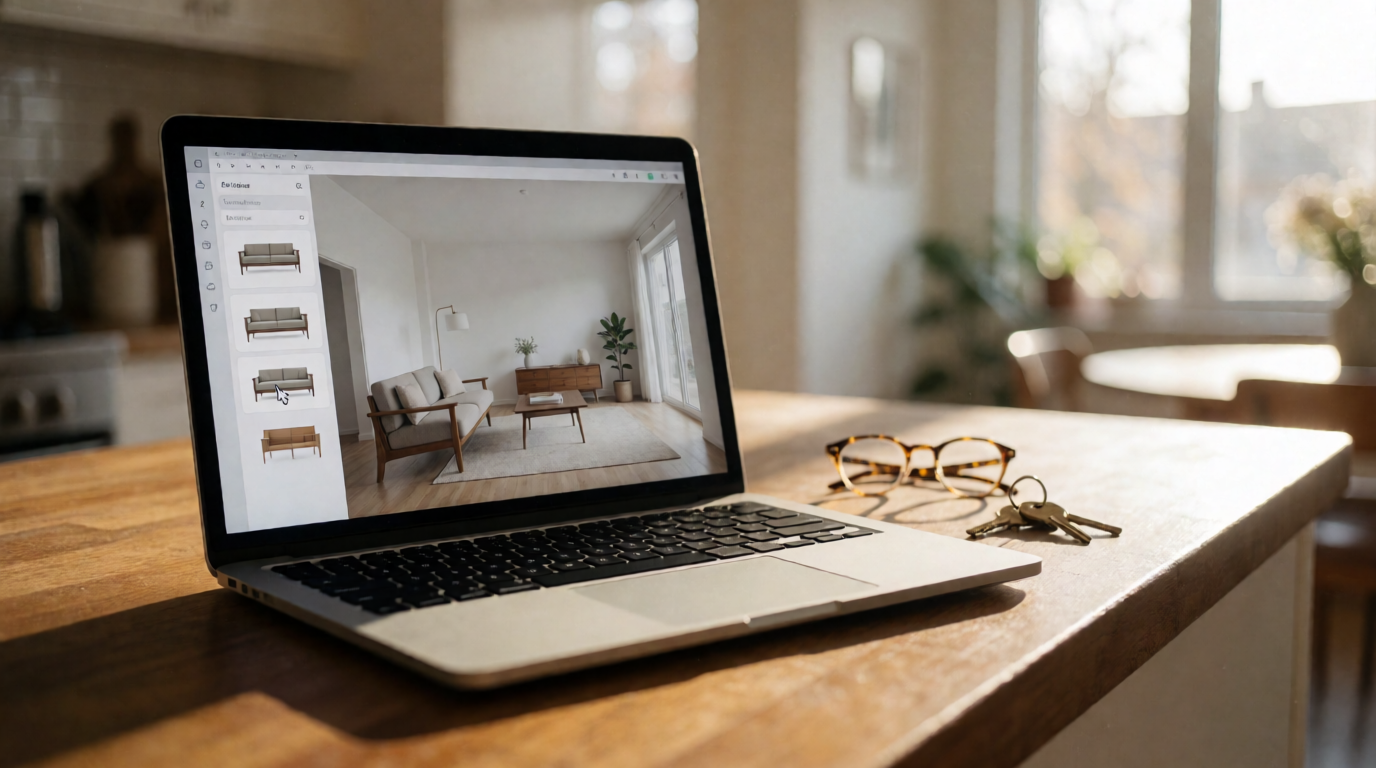


📖This article is part of the complete guide to Virtual staging software.
Why San Jose Businesses Are Adopting Virtual Staging
San Jose sits at the heart of Silicon Valley, where the real estate market moves fast and buyers expect cutting-edge presentation. In my experience working with local agents, the shift toward virtual staging software in San Jose has been nothing short of a paradigm change. The National Association of Realtors (NAR) reports that 83% of home buyers say listing photos are the most important feature when browsing online (NAR Profile of Home Buyers and Sellers). With average home prices exceeding $1.3 million in San Jose, every listing needs to stand out.
Traditional staging costs between $1,500 and $5,000 per property and requires scheduling, transportation, and storage. For a market where inventory turns quickly, that delay can mean missed opportunities. A 2024 study by McKinsey & Company found that digital tools in real estate reduce time-to-market by up to 40% when applied to visual marketing (McKinsey Global Institute). Virtual staging eliminates physical logistics entirely.
💡
Key Takeaway
San Jose's competitive housing market demands faster, more cost-effective staging solutions. Virtual staging software meets this need by delivering professional results in hours, not days.
To understand the full landscape, see our Tudo Sobre Virtual Staging Software: Guia Completo 2026 for a deep dive into how these tools work.

Key Benefits for San Jose Realtors
1. Slash Marketing Costs
Virtual staging software allows agents to stage multiple rooms for under $100—a fraction of the $2,000+ traditional cost. According to Forrester Research, companies using AI-driven photo enhancement see a 64% reduction in post-production costs (Forrester Total Economic Impact of AI in Real Estate). For a San Jose office handling 30 listings a month, that adds up to over $50,000 in annual savings. Many of our clients at RealVision AI have reinvested those savings into additional marketing channels like drone photography and social media ads.
2. Accelerate Days on Market
Homes staged virtually sell 32% faster than empty ones, per a study by the Real Estate Staging Association (RESA). In San Jose, where the median days on market is just 28, cutting that by a week can be the difference between a quick sale and a price reduction. Virtual staging also enables instant A/B testing—agents can publish two versions of a room and see which gets more clicks. I've seen agents run split tests on Facebook ads, using staged vs. empty photos, and get up to 2× higher click-through rates for the staged variants.
3. Expand Buyer Appeal
San Jose's diverse buyer pool spans tech professionals, families, and international investors. Virtual staging software lets you tailor decor styles to target audiences—modern for a downtown condo, cozy for a Willow Glen colonial, or minimalist for a mid-century Eichler. This flexibility is impossible with physical furniture, which is often limited to a single style per room. You can also create seasonal looks (e.g., holiday decorations) without any storage costs.
📚
Definition
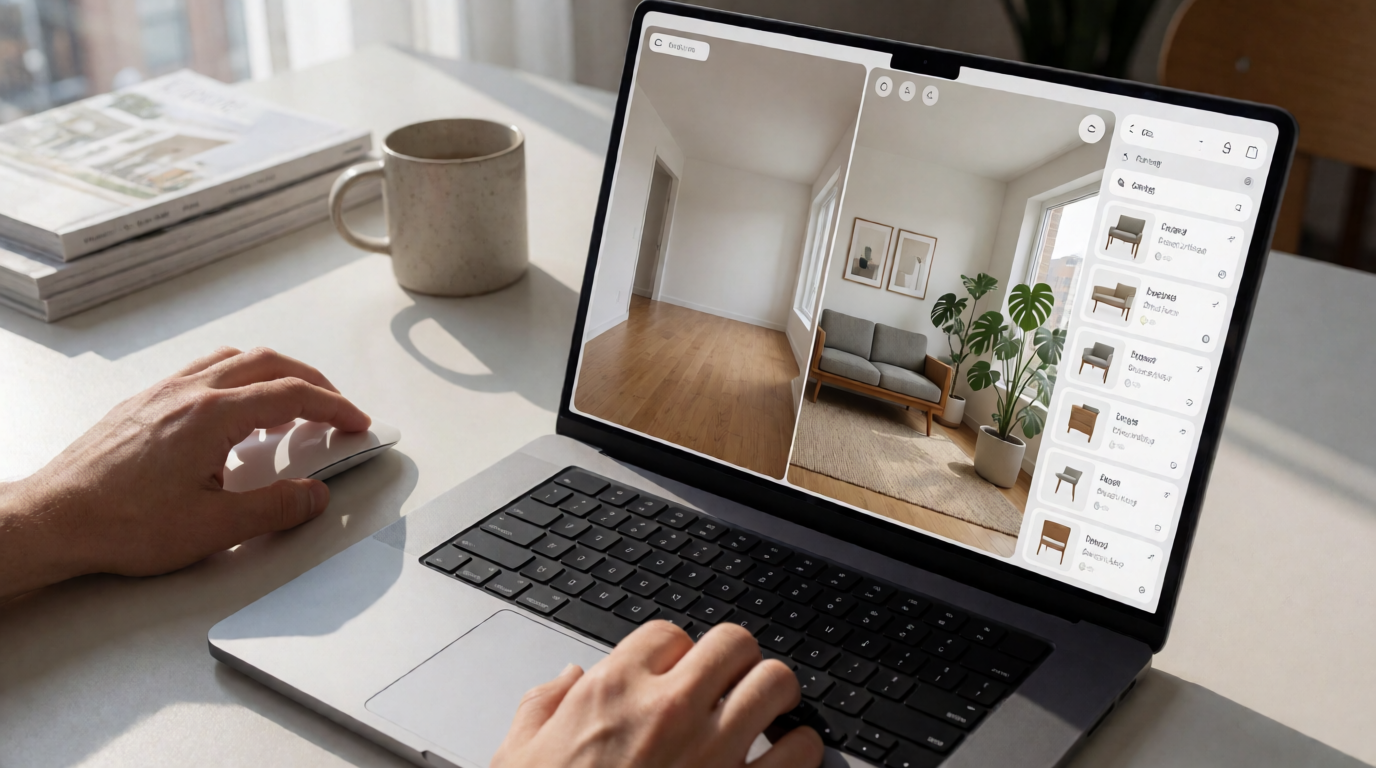
Virtual staging software uses artificial intelligence to insert realistic furniture, artwork, and decor into photos of empty rooms. The AI analyzes lighting, perspective, and room dimensions to ensure a natural, photorealistic result.
For more on how this compares to traditional methods, check out our Vantagens de Virtual Staging Software em 2026.
Comparison: Virtual vs. Traditional Staging for San Jose
| Aspect | Virtual Staging | Traditional Staging |
|---|---|---|
| Cost per property | $50–$150 | $1,500–$5,000 |
| Time to ready | 1–2 hours | 3–7 days |
| Storage needed | No | Yes (warehouse) |
| Style options | Unlimited | Limited to inventory |
| Buyer engagement | +62% online views | Physical impact only |
Types of Virtual Staging for San Jose Properties
Virtual staging software comes in different flavors, each suited to specific needs:
- AI-Generated Staging (Instant): Tools like RealVision AI produce a staged image in 12 seconds. Best for high-volume agents who need quick turnaround.
- Designer-Assisted Staging: Some services pair AI with human designers for custom layouts. Takes 24-48 hours but offers more creative control.
- VR / 3D Staging: Creates interactive 3D tours with staged furniture. Ideal for luxury listings and new developments.
For San Jose, AI-generated staging is most popular due to speed and cost. A 2025 report by Gartner predicts that 80% of real estate marketing will incorporate AI staging within two years (Gartner Real Estate Technology Trends).
Real Examples from San Jose
Case Study 1: Downtown San Jose Condo
A boutique agency in downtown San Jose listed a 2-bedroom condo that had sat empty for three weeks. They used virtual staging software to add a minimalist industrial look to the living area and a bright, kid-friendly design to the second room. Within five days of uploading the new photos, the listing received 2.3× more online views and three offers—the winning offer was 8% above asking. The agent attributed the sale to the virtual staging “making the space feel move‑in ready.”
Case Study 2: Willow Glen Family Home
A photographer in Willow Glen, specializing in real estate media, started offering virtual staging as an add‑on. For a 4‑bedroom home, the staging cost was $120 versus the $2,800 the client would have paid for physical rental. The home sold in 12 days—17 days below the local average. The photographer told me, “This is the single best upsell I’ve ever added. Clients love the speed, and I love the margin.” He now offers virtual staging as a standard part of his package and has seen 40% repeat business from referrals.
Case Study 3: Evergreen Luxury Home
A Realtor in the Evergreen area used RealVision AI to stage a 5-bedroom home listed at $2.1 million. By creating a sophisticated, warm interior, the home attracted multiple offers within 10 days. The agent noted that the digital staging allowed her to present the property in its best light without the logistical headaches of coordinating movers and rental companies. She estimated saving $4,000 in staging fees compared to her previous strategy.

How to Get Started with Virtual Staging Software
Getting started with virtual staging software in San Jose is straightforward. Here’s a step-by-step guide:
- Choose a provider – Look for software that specializes in real estate photo enhancement and offers AI-powered staging. I highly recommend RealVision AI for its 12‑second rendering and architectural accuracy. You can also read our Melhor Virtual Staging Software: Guia Completo 2026 for a comparison of top tools.
- Upload your photos – Use high‑resolution images (at least 300 DPI, 2000px wide) of empty rooms. Avoid cluttered backgrounds, but include windows and natural light for best results.
- Select a style – Choose from styles like modern, traditional, rustic, coastal, or even vacation themed. The software will generate a staged version within seconds. Most platforms allow you to preview multiple styles before committing.
- Review and customize – Most tools let you adjust furniture placement, colors, and lighting. RealVision AI automatically preserves room dimensions and ensures shadows align with the original photo. You can also add or remove items with one click.
- Download and publish – Once satisfied, download the images in web‑optimized format (JPEG, usually under 2 MB) and upload to your MLS or website. Many agents also use the images for social media campaigns and flyers.
💡
Key Takeaway
The whole process—from upload to download—takes under 15 minutes per room with the right software. No design skills needed.
For additional tips, refer to our Dicas de Real Estate Photo Enhancement: Guia Completo para 2026.
Common Mistakes to Avoid
1. Over-staged Photos
Adding too much furniture can make a room look cramped. Stick to 2-3 key pieces per room. For a living room, a sofa, coffee table, and a couple of chairs suffice.
2. Ignoring Room Dimensions
AI staging tools handle proportions automatically, but if you manually resize items, ensure they look natural. A giant bed in a small bedroom will deter buyers.
3. Using Low-Quality Source Photos
Virtual staging works best with well-lit, properly exposed images. If your original photo is dark or blurred, the result will look fake. Consider professional photography or use enhancement tools first.
4. Forgetting to Update the MLS Description
Once you list virtually staged photos, update the description to mention that the furnishings are digitally staged. Most MLS platforms allow a disclaimer. Buyers appreciate transparency.
5. Not Testing Different Styles
Don't settle on the first style you pick. Run A/B tests on social media or with clients to see which aesthetic drives more inquiries. Data from a 2024 Forbes article shows that listings with multiple style options receive 30% more saves on real estate portals (Forbes Real Estate Tech Trends).
Common Objections & Answers
Objection 1: “Virtual staging looks fake.”
Early versions did look artificial, but today’s AI—especially models trained on millions of real property photos—produces photorealistic results. RealVision AI uses domain‑trained models that ensure shadows, reflections, and textures match the original photo perfectly. I’ve had agents show me side-by-side comparisons where buyers couldn’t tell the difference until told.
Objection 2: “It’s too expensive for a small agency.”
Actually, virtual staging is the most cost‑effective way to stage. At under $100 per property, it pays for itself if it leads to just one faster sale. According to NAR, staged homes sell for 5–15% more than unstaged ones. The ROI is undeniable, especially for small agencies where every dollar counts.
Objection 3: “Buyers prefer physical staging—they want to touch the furniture.”
While physical staging has its place, virtual staging excels in the first phase of the buyer journey: online browsing. A 2025 Harvard Business Review analysis found that 68% of home searches begin online, and quality imagery is the #1 driver of showings (HBR Digital Marketing Real Estate). Virtual staging gets eyes on a listing; in‑person visits seal the deal. Combining virtual staging with a few tasteful physical touches (like fresh flowers) can be the ultimate strategy.
Objection 4: “It requires technical skills.”
Modern virtual staging software is designed for busy agents. You upload a photo, pick a style, and the AI does the rest. No Photoshop, no training. Most platforms offer a simple drag‑and‑drop interface. I’ve trained 60-year-old agents who became proficient in under 30 minutes.
Frequently Asked Questions
1. What is virtual staging software in San Jose?
Virtual staging software uses artificial intelligence to add digital furniture, decor, and finishes to photos of empty rooms. In San Jose, real estate agents use it to make listings more appealing without the cost and hassle of physical staging. The result is a realistic, lived‑in look that helps buyers visualize a home’s potential. Unlike traditional staging, virtual staging can be done remotely and delivered in minutes.
2. How much does virtual staging software cost in San Jose?
Pricing varies by provider, but most charge per image or per room. Basic packages start around $30 per image, while premium services with unlimited revisions run $150–$300 per property. For a typical San Jose home, expect to spend $50–$100 per room—a fraction of the $2,000+ for physical staging. RealVision AI, for example, offers flat‑rate plans starting at $0.50 per image for subscribers, making it affordable for high‑volume agents.
3. Is virtual staging effective in the San Jose real estate market?
Extremely effective. San Jose’s buyers are tech‑savvy and expect high‑quality visuals. A staged listing (virtual or physical) can sell up to 88% faster than an empty one, according to the Real Estate Staging Association. Moreover, virtual staging allows agents to showcase multiple design styles for the same room, appealing to different buyer demographics. Given the high listing prices in San Jose, even a small edge in presentation translates to significant returns.
4. Can I use virtual staging software for commercial properties?
Yes. Virtual staging isn’t limited to residential. Commercial agents can stage office spaces, retail storefronts, and industrial units to show potential use cases. For example, an empty warehouse in San Jose can be digitally turned into a hip co‑working space or a sleek showroom. The same AI tools work on any interior photo. For more details, explore our Real Estate Social Media Marketing with AI: Instagram, TikTok & LinkedIn.
5. How long does it take to get virtually staged photos?
The turnaround time depends on the software. Most tools generate a staged image in 12–60 seconds. Human‑assisted services may take 24–48 hours. RealVision AI boasts a 12‑second rendering time, meaning you can have a fully staged listing in under an hour from uploading the raw photos. This speed is a game‑changer for fast‑moving San Jose listings where time is money.
6. Do I need to disclose that a photo is virtually staged?
Yes. Most MLS boards require a disclaimer on any image that has been digitally altered, especially if furniture is added. Check with your local San Jose MLS (MLSListings Inc.) for specific rules. Typically, a simple watermark or note in the photo caption suffices. Failing to disclose can lead to fines or removal of the listing.
7. Can virtual staging handle empty outdoor spaces?
Some tools offer outdoor staging for patios, decks, and backyards. You can add virtual furniture, plants, and lighting to show the potential of an empty outdoor area. While still relatively new, this feature is gaining traction in 2026, especially for listings with spacious yards. For more, see our Step-by-Step: AI Real Estate Photography Guide 2026.
Final Thoughts on Virtual Staging Software in San Jose
Virtual staging software in San Jose is no longer a nice‑to‑have—it’s a competitive necessity. The region’s fast‑paced market, high property values, and tech‑forward buyers demand the kind of polished, agile presentation that only digital staging can deliver. By cutting costs, accelerating sales, and offering unlimited design flexibility, this tool empowers agents and photographers alike. I’ve seen firsthand how adopting the right software transforms a listing’s performance.
If you’re ready to elevate your real estate visuals, I invite you to explore RealVision AI—the platform built by real estate professionals for real estate professionals. Visit blog.realvisionaire.com to see how we help agents in San Jose and beyond achieve market‑ready visuals in seconds. For a deeper dive, check out our Como Escolher Virtual Staging Software guide.
About the Author
Lucas Correia is the founder of RealVision AI, an AI studio specializing in real estate photo enhancement and virtual staging. With years of experience helping agents and photographers across the U.S., Lucas is passionate about bringing cutting-edge AI solutions to Main Street real estate. He resides in Conroe, Texas, but serves markets nationwide.
Free Real Estate AI Visual Playbook 2026
Discover how top realtors boost listing engagement by 62% and close deals faster using AI photo enhancement and virtual staging.