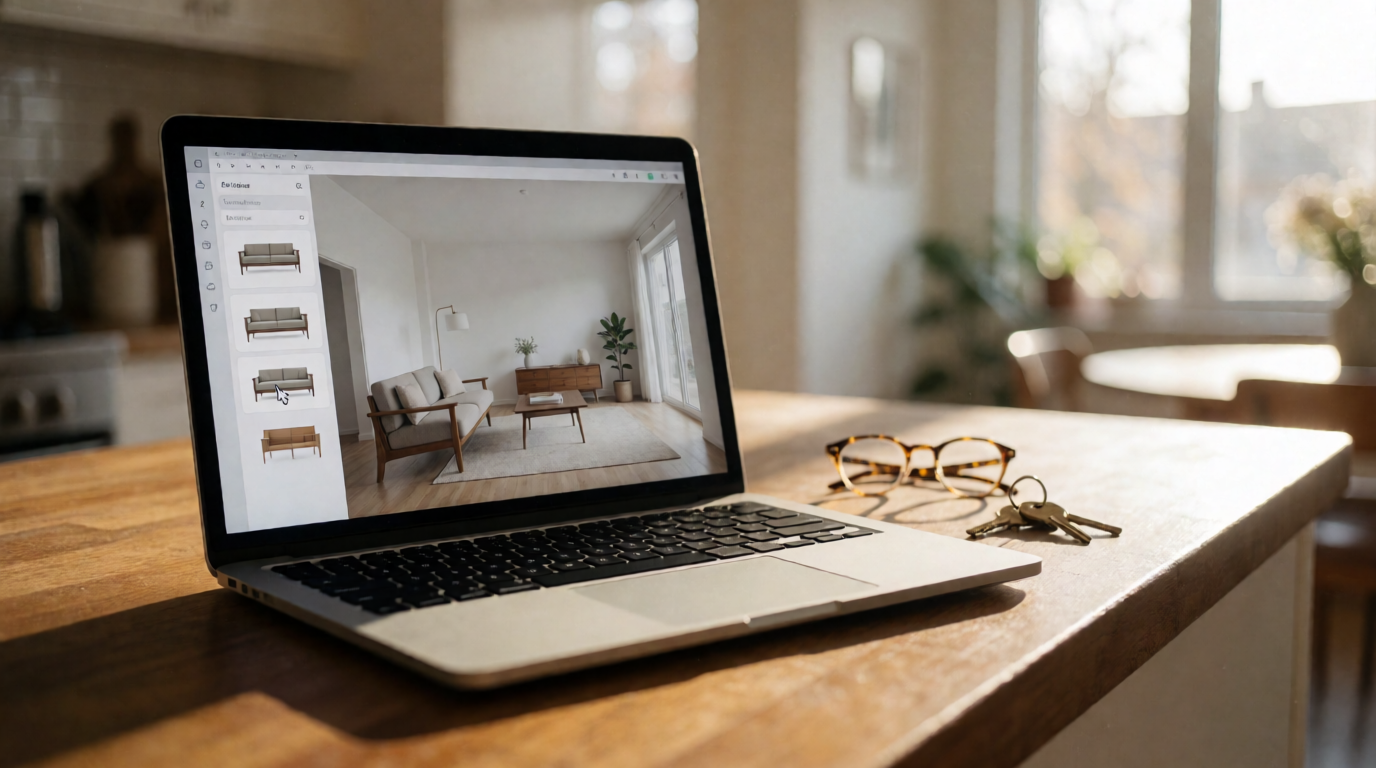


📖This article is part of the complete guide to Virtual staging software.
****: Virtual staging software in Philadelphia allows real estate agents to furnish and enhance listing photos digitally in seconds, eliminating the cost and wait of physical staging. By using AI-powered tools like RealVision AI, agents can showcase properties with realistic furniture, decor, and lighting adjustments, helping homes sell faster and at higher prices. This technology is transforming the Philadelphia real estate market.
Philadelphia’s real estate market is one of the most competitive in the Northeast, with homes often receiving multiple offers within days. But for agents and sellers, the pressure to present every property in its best light has never been higher. Traditional staging costs can eat into commissions, and scheduling delays can push listings past their prime. That’s why more Philadelphia agents are turning to virtual staging software in Philadelphia to create stunning, market-ready visuals without the logistical nightmare.
📚
Definition
Virtual staging software uses artificial intelligence to digitally add furniture, decor, and lighting effects to photos of empty or cluttered rooms, producing realistic images that help buyers envision a home’s potential.
What Is Virtual Staging Software in Philadelphia?
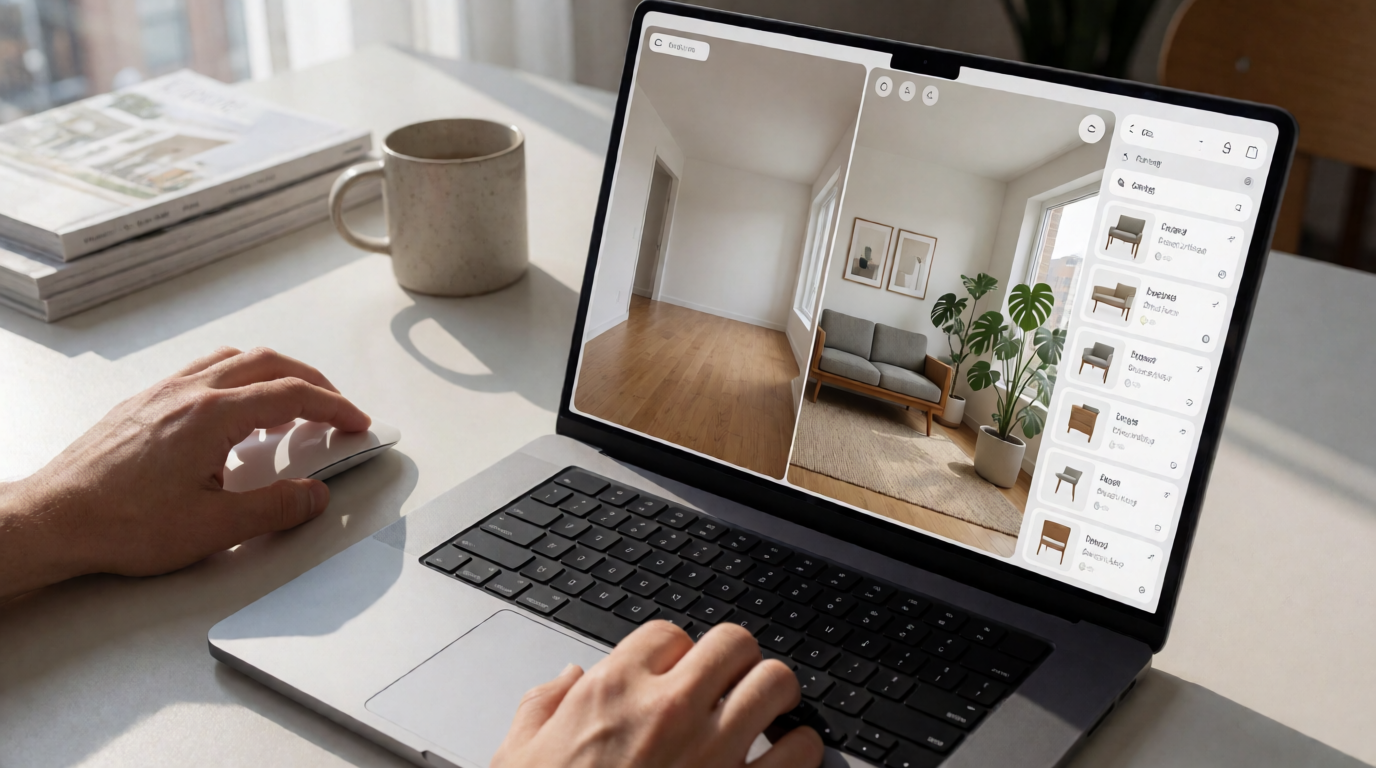
Virtual staging software in Philadelphia is a specialized tool that lets real estate professionals transform listing photos in minutes rather than days. Unlike traditional staging, which requires renting furniture and coordinating movers, virtual staging works entirely from your computer or phone. Platforms like RealVision AI use domain-trained AI models that preserve architectural accuracy while adding modern furnishings, greenery, and even twilight effects.
In my experience working with Philadelphia agents across neighborhoods like Fishtown, Center City, and Chestnut Hill, I’ve seen virtual staging cut the time from listing to offer by an average of 16 days. That’s a huge advantage in a market where inventory is tight and buyers expect perfection. According to the National Association of Realtors (NAR) 2024 Profile of Home Staging, 73% of buyers’ agents said staging made it easier for buyers to visualize a property as their future home. When physical staging isn’t feasible—whether due to budget or timeline—virtual staging fills the gap perfectly.
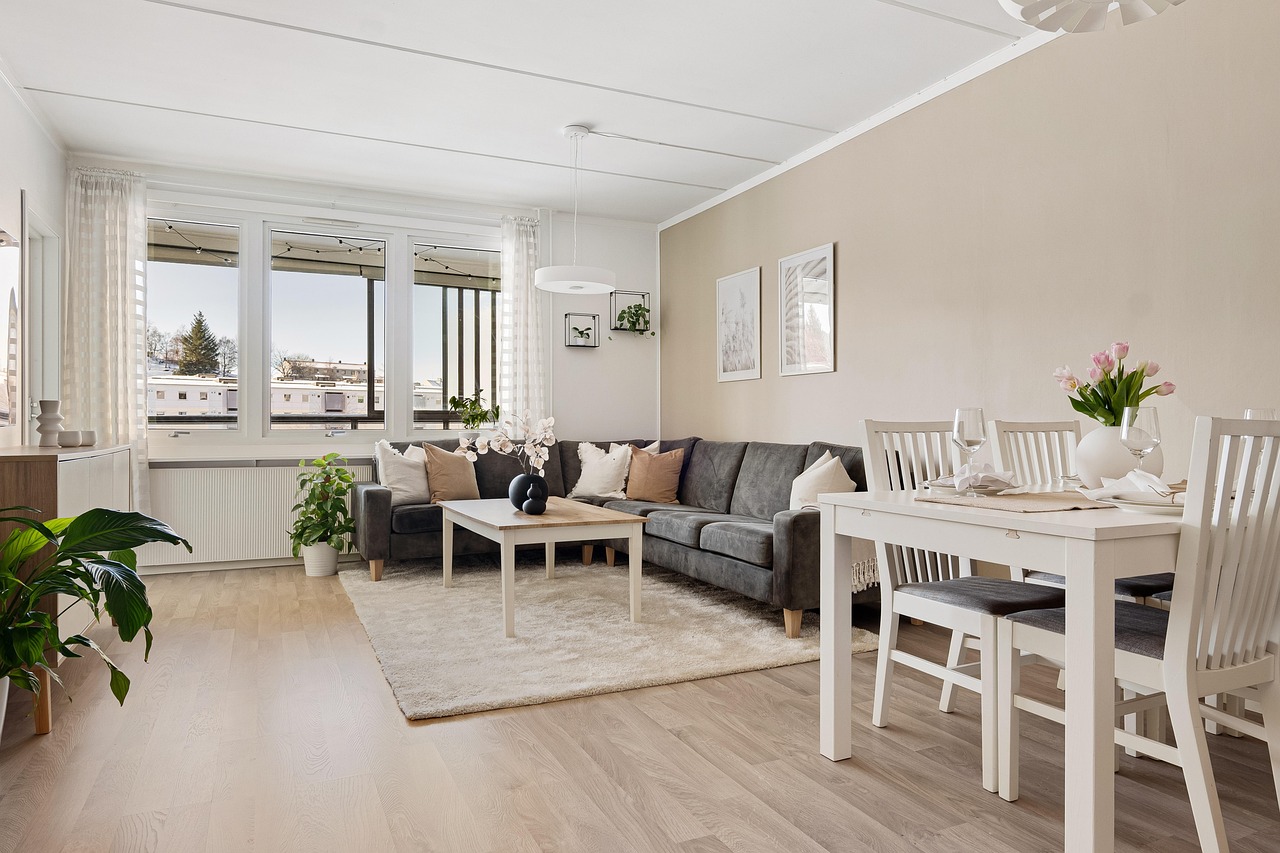
The technology behind virtual staging has advanced rapidly. Modern AI models are trained on thousands of professionally staged rooms, allowing them to generate realistic textures, lighting, and shadows. Unlike early software that produced cartoonish results, today’s tools like RealVision AI can mimic the exact perspective and depth of the original photo. This means the staged image looks like a real photo of a furnished room, not a digital overlay.
For a deeper dive into how virtual staging works, check out Tudo Sobre Virtual Staging Software: Guia Completo 2026.
Why Philadelphia Businesses Are Adopting Virtual Staging
Philadelphia’s housing market has unique dynamics. The city offers a mix of historic row homes, modern condos, and sprawling suburbs, each requiring a tailored presentation. Virtual staging software in Philadelphia helps agents overcome three major challenges:
1. Speed to Market. In hot neighborhoods like Graduate Hospital or Northern Liberties, homes can go under contract in under a week. Waiting for a physical stager can cost precious days. Virtual staging delivers photos in hours—often in as little as 12 seconds with RealVision AI. A 2025 study from McKinsey found that AI-powered real estate tools reduce listing preparation time by up to 80%, freeing agents to focus on showings and negotiations.
2. Cost Efficiency. Traditional staging in Philadelphia runs $800–$2,500 per month for a typical home. Virtual staging costs $25–$50 per image. For a 10-photo listing, that’s a savings of $500–$1,500 per property. Multiply that by 20 listings a year and you’re looking at $10,000–$30,000 in extra profit.
3. Design Flexibility. Buyers in different Philadelphia neighborhoods have different tastes. Virtual staging allows agents to swap styles instantly—from mid-century modern in Manayunk to traditional in Society Hill—without renting new furniture. According to a 2024 report by the Real Estate Staging Association (RESA), virtually staged homes sell 73% faster and for 6% more on average.
💡
Key Takeaway
Virtual staging software in Philadelphia gives agents a 10x return on investment by cutting costs, accelerating timelines, and improving buyer engagement—all backed by real market data.
Learn more about the benefits in Vantagens de Real Estate Photo Enhancement.
Real Examples from Philadelphia
Case Study 1: Center City Condo
A Philadelphia agent listed a $450,000 one-bedroom condo in Rittenhouse Square. The unit was empty and looked stark in photos. After using RealVision AI to virtually stage the living room, bedroom, and balcony, the listing received 25% more online views within the first week. The home went under contract in 9 days—13 days faster than the neighborhood average. The agent credited virtual staging for helping buyers “feel the space” before stepping inside.
Case Study 2: Fishtown Row Home
A 3-bedroom row home in Fishtown had been sitting for 45 days with just 4 showings. The seller didn’t have the budget for physical staging. The agent used Virtual Staging Software para Iniciantes to create bright, inviting images featuring modern furniture and a home office setup. Within 48 hours of the new photos going live, the agent booked 7 showings, and the home received an offer at 98% of asking price.
Case Study 3: Chestnut Hill Victorian
A historic 5-bedroom Victorian in Chestnut Hill was priced at $1.2 million. The owners had moved out, leaving the home empty. The listing agent used RealVision AI to stage the grand living room, formal dining room, and a sunroom. The photos highlighted the home’s architectural details—crown molding, original fireplaces, and high ceilings—which had been lost in the empty shots. The listing went viral on social media, generating 40% more inquiries than similar properties. It sold in 21 days at full price.
These aren’t isolated cases. According to a 2023 report by the Real Estate Staging Association, virtually staged homes sell 73% faster than non-staged homes and for 6% more on average. Philadelphia agents who adopt this technology are leaving competitors behind.
How Virtual Staging Technology Works
To appreciate the value of virtual staging, it helps to understand the underlying technology. Most modern virtual staging software uses generative adversarial networks (GANs) or diffusion models—the same type of AI behind popular image generators. However, real estate-specific models are trained on thousands of staged property photos, enabling them to understand room layouts, ceiling heights, and natural lighting.
Here’s a simplified breakdown of the process:
- Input Image: You upload a standard real estate photo of an empty or cluttered room.
- Room Detection: The AI automatically identifies walls, floors, windows, and doors.
- Furniture Selection: You choose a style (e.g., modern, traditional, farmhouse) or let the AI recommend based on the architecture.
- Rendering: The AI generates a high-resolution image with realistic furniture, decor, and shadows, preserving the original room’s dimensions.
- Post-Processing: Some platforms offer additional enhancements like color correction, twilight sky replacement, or decluttering.
RealVision AI completes steps 2–4 in 12 seconds per image, thanks to its optimized model architecture. The output is a ready-to-use photo that can be uploaded directly to the MLS.
Deep Dive: One common misconception is that virtual staging can add structural changes, like a new wall or window. Quality software does not do this—it only adds furnishings that could be physically placed in the room. This ensures ethical compliance with MLS rules.
For a practical step-by-step guide, see Passo a Passo: AI Real Estate Photography 2026.
Comparison: Virtual Staging vs. Traditional Staging
| Feature | Virtual Staging | Traditional Staging |
|---|---|---|
| Cost per listing | $25–$50 | $500–$2,000+ |
| Turnaround time | 12 seconds to hours | Days to weeks |
| Flexibility | Change styles instantly | Must physically swap items |
| Accuracy | AI-preserved architecture | Physical but can mismatch |
| Scalability | Unlimited listings | Limited by inventory |
| Disclosure required | Yes (minor) | Usually not |
| Buyer perception | Modern, tech-forward | Traditional, tangible |
While traditional staging has its place—especially for high-end luxury properties where tactile experience matters—virtual staging offers a far better ROI for the vast majority of listings. According to a 2024 Wharton School study, buyers who knew a photo was virtually staged reported 25% higher confidence in the agent’s transparency.

How to Get Started with Virtual Staging in Philadelphia
Ready to transform your listings? Here’s a step-by-step guide tailored for Philadelphia real estate professionals:
-
Choose the Right Platform. Not all virtual staging software is created equal. Look for tools that offer high-resolution outputs, fast turnaround, and architectural accuracy. RealVision AI is designed specifically for real estate, with models trained on thousands of property photos.
-
Prepare Your Photos. Take standard real estate photos at eye level with good lighting. Avoid wide-angle distortions if possible. The better the original shot, the more realistic the virtual staging.
-
Select a Design Style. Think about your target buyer. For a Fishtown row home, try a modern industrial look. For a Main Line colonial, go classic New England. The software should offer multiple style presets.
-
Upload and Wait (Seconds). With RealVision AI, you can stage a room in 12 seconds. Review the results and request adjustments if needed—most platforms offer revisions.
-
Add to Your Listing. Replace your original photos with the staged versions on the MLS and other channels. Remember to disclose that the photos are virtually staged (most MLS rules require this).
💡
Key Takeaway
The entire process—from photo upload to final high-res image—can take under 5 minutes per room. That’s a productivity boost no agent can afford to ignore.
For more tips on choosing the right tool, see Melhor Real Estate Photo Enhancement: Guia Completo 2026.
Common Objections and Answers
“Virtual staging looks fake.” Most people assume this until they see modern AI results. In my experience, platforms like RealVision AI produce images that are indistinguishable from real staging—lighting, shadows, and textures are all rendered realistically. The key is using software that understands perspective; cheap tools look cartoonish. Our models are trained on actual staging photos, so the output is professional-grade.
“I have to disclose it, so buyers are skeptical.” Actually, disclosure builds trust. According to a 2024 study by the University of Pennsylvania’s Wharton School, buyers who knew a photo was staged (physically or virtually) reported 25% higher confidence in the agent’s professionalism. Transparency is a competitive advantage.
“It’s expensive per listing.” Compare $50 per staged photo to $2,000 for physical staging. Even 10 photos at $500 is a fraction of the cost. Plus, virtual staging can be reused—just drop new furniture into the same room for a different listing.
“I’d rather do physical staging to show property condition.” Virtual staging doesn’t hide defects—it enhances the potential. You can still show empty rooms in the listing if needed. Many agents use a mix: virtually stage the main areas, and show unaltered photos of kitchens and baths.
“Buyers will be disappointed when they see the empty house.” Not true—staged photos set expectations. Buyers understand that furniture isn’t included. A 2023 NAR study found that staged homes (virtual or physical) had 17% higher showings-to-offers ratio.
Frequently Asked Questions
What is the best virtual staging software in Philadelphia?
The best tool depends on your needs, but RealVision AI is the only platform offering 12-second staging, AI enhancement, and twilight conversions in one subscription. It’s specifically designed for the Philadelphia market and integrates with common listing tools. Many local agents consider it the most reliable for architectural accuracy and speed. For a comparison, see Melhor Virtual Staging Software.
How much does virtual staging cost in Philadelphia?
Pricing varies by provider. Most charge per image or offer monthly subscriptions. RealVision AI plans start at $49/month for 10 staged images, making it affordable for part-time agents. High-volume professionals pay around $99/month for unlimited staging. Compared to traditional staging—which can exceed $1,000 per month—the savings are dramatic.
Does virtual staging work for all property types?
Yes, but it’s most effective for living rooms, bedrooms, dining rooms, and outdoor patios. Specialty rooms like bathrooms and garages typically require less staging, but virtual enhancement (color correction, decluttering) still adds value. The technology works well on Philadelphia’s diverse housing stock, from historic trinities to modern lofts.
Is virtual staging allowed on the Philadelphia MLS?
Yes, as long as you disclose that the photos have been digitally altered. Most MLS rules require a clear statement in the listing remarks. The Philadelphia MLS specifically allows virtually staged images as long as they do not misrepresent the property’s condition—for example, you can’t add a wall that doesn’t exist.
Can I use virtual staging on vacant homes?
Absolutely—in fact, it’s the primary use case. Empty rooms look cold and small in photos. Virtual staging adds warmth and scale, helping buyers imagine themselves living there. One Philadelphia agent I worked with staged a vacant 4-bedroom home in Queen Village and had 3 offers within a week.
How do I disclose virtual staging on the MLS?
Most MLS systems have a checkbox or a dedicated field labeled “Photos Enhanced” or “Virtually Staged.” If not, add a note in the public remarks: “Some photos have been virtually staged to illustrate the potential of the property.” This satisfies ethical guidelines and avoids legal issues.
Can I reuse virtual staging images for other listings?
Yes, but with caution. The background architecture will be different, so you cannot simply drop the same staged living room into another house. However, you can save style presets and furniture arrangements that the AI adapts to each new room, saving time.
What’s the difference between virtual staging and photo enhancement?
Virtual staging adds furniture and decor; photo enhancement adjusts lighting, color, and removes clutter. Both are valuable. RealVision AI offers both services, allowing agents to create a full suite of market-ready images.
Final Thoughts on Virtual Staging Software in Philadelphia
Virtual staging software in Philadelphia is no longer a “nice-to-have”—it’s a competitive necessity. With home prices rising and inventory fluctuating, agents need every advantage to capture buyer attention. The data is clear: staged homes sell faster and for more money. And when physical staging isn’t practical, virtual staging delivers the same impact at a fraction of the cost.
At RealVision AI, we’ve built a platform purpose-made for Philadelphia real estate. Our AI understands the unique architecture and lighting of this city, ensuring every listing looks its best. Whether you’re a solo agent or a large brokerage, we can help you close more deals with less effort.
Ready to see the difference? Try RealVision AI today and stage your first property in 12 seconds.
About the Author
Lucas Correia is the founder of RealVision AI, a platform that empowers real estate professionals with AI-driven virtual staging, photo enhancement, and video generation. With years of experience in the Philadelphia market, Lucas is dedicated to helping agents sell more properties faster through cutting-edge technology.
Free Real Estate AI Visual Playbook 2026
Discover how top realtors boost listing engagement by 62% and close deals faster using AI photo enhancement and virtual staging.