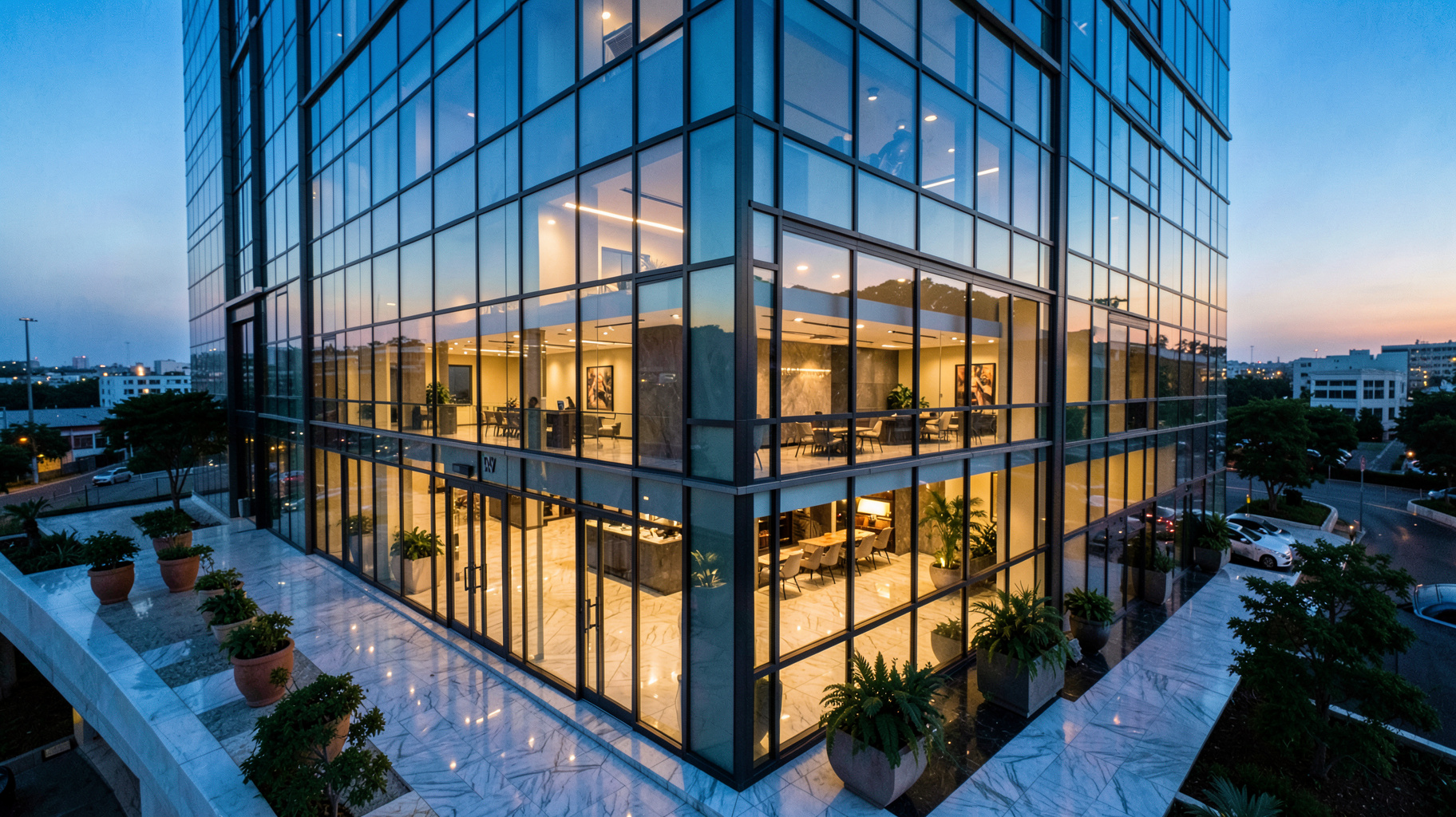


Why High-End Visuals Drive Commercial Lease Rates
High-vacancy rates in commercial sectors often stem from a failure to communicate a property's potential, not a lack of demand. In the high-stakes world of B2B leasing, commercial real estate photography is the primary filter that determines whether a decision-maker schedules a walkthrough or moves to the next listing. Properties featuring professional, high-dynamic-range imagery see significantly higher engagement rates because commercial tenants are not just buying space; they are buying a vision of operational efficiency and brand prestige.
The core reason for investing in professional visuals is simple: psychological anchoring. When a prospective tenant sees a wide-angle, perfectly lit office suite or a clean, expansive warehouse, they anchor their perceived value of the property to that professional standard. Subpar photos suggest a lack of care in property management, which translates to perceived risk for the tenant. For those scaling their portfolio, understanding the Key Benefits of AI Property Enhancement for Real Estate can be the difference between a 6-month vacancy and a signed lease in 30 days.
The Mechanics of Commercial Real Estate Photography
To understand why this specific discipline differs from residential shoots, we must first define the scope. Residential photography focuses on "emotion" and "homeyness." Commercial work, however, focuses on "utility," "scale," and "possibility."
📚
Definition
Commercial real estate photography is the specialized process of capturing industrial, retail, and office spaces using architectural techniques that emphasize spatial volume, structural integrity, and the functional flow of a professional environment.
The complexity here lies in the lighting and the "emptiness" of the space. A vacant 10,000-square-foot warehouse is a lighting nightmare. Without professional intervention, these spaces look cold, cavernous, and depressing. Professionals use techniques like bracketed exposures and AI-driven light balancing to ensure that the interior is bright while the view through the windows remains clear and inviting.
In my experience working with industrial REITs, the biggest mistake I see is the reliance on "walk-through" photos taken on a smartphone. These images often suffer from extreme distortion and poor color temperature, making a modern Grade-A office look like a dim basement. When we analyze listing performance, the correlation between high-quality imagery and the number of qualified leads is nearly linear.
According to a report by the National Association of Realtors, high-quality professional photos are the most important factor for buyers and tenants searching online, surpassing even the price point in the initial discovery phase. This is because the visual serves as the "first interview" for the property. If the photography fails, the property never gets to the "interview" stage. For a more detailed look at how to optimize these visuals, you might explore our guide on Real Estate Visual Marketing: The 2026 Guide to AI-Driven Sales.

Why Visual Quality Directly Impacts Your Bottom Line
The financial implications of poor imagery are not just about "looking bad"; they are about the cost of vacancy. In commercial real estate, every day a unit sits empty is a direct loss of Net Operating Income (NOI). When you use subpar visuals, you aren't just losing a few leads; you are extending your vacancy period by weeks or months.
Data from McKinsey's research on the digital transformation of real estate suggests that AI-enhanced visual experiences can increase lead conversion rates by up to 40% by reducing the "uncertainty gap" for the user. When a tenant can clearly see the layout and the condition of the HVAC or flooring through high-resolution imagery, the perceived risk of the transaction drops.
Consider the consequence of not acting. A property listing with poor lighting and cluttered angles creates a "negative halo effect." The viewer subconsciously assumes that if the owner didn't invest in the marketing, they probably didn't invest in the property's maintenance. This leads to two outcomes: either no one calls, or the only people who call are those looking to negotiate the rent down by 20-30% because they perceive the asset as distressed.
Furthermore, in the competitive world of Multiple Listing Services (MLS), your property is competing in a "scroll-fest." Decision-makers—CEOs, facility managers, and brokers—scan dozens of properties per minute. If your lead image doesn't stop the scroll, your property effectively does not exist. This is why many are now asking Is AI Property Enhancement Worth It?, as the ROI is realized almost immediately upon the first qualified lead.
Practical Application: Transitioning from "Basic" to "Bespoke"
Achieving a "market-ready" look doesn't always require a week-long shoot with a crew of ten. The modern workflow integrates traditional photography with advanced post-processing.
- The Strategic Capture: Focus on the "hero" shots. For commercial spaces, this means the exterior facade, the main lobby, and the primary functional area (the warehouse floor or the open-plan office). Use a tripod and wide-angle lenses to maximize the sense of space without creating "fish-eye" distortion.
- Virtual Staging for Purpose: An empty office is a blank canvas, but human brains struggle to visualize scale. By using virtual staging, you can show a tenant exactly how a 20-person team would fit into the layout.
- AI-Driven Enhancement: This is where the magic happens. Tools like RealVisionAI Blog - AI Real Estate Photography & Virtual Staging allow you to take a flat, grey-sky exterior and turn it into a "golden hour" masterpiece in seconds.
- Day-to-Dusk Conversion: For commercial buildings, a twilight shot is the ultimate prestige signal. It suggests a 24/7 operational hub and looks significantly more expensive.
💡
Key Takeaway
The goal of commercial imagery is to eliminate "cognitive friction." The less the tenant has to "imagine" how the space works, the faster they will sign the lease.
When utilizing RealVisionAI Blog - AI Real Estate Photography & Virtual Staging, you can implement these changes in roughly 12 seconds per image. This allows property managers to update listings in real-time as renovations occur, rather than waiting for a photographer to return for a re-shoot. This agility is a competitive advantage in fast-moving markets. To understand when to make these shifts, check out our analysis on When to Use Real Estate Image Processing for Your Listings.

Comparing Visual Strategies for Commercial Assets
Not all photography approaches are created equal. Depending on your budget and the class of your asset (Class A, B, or C), you need a different strategy.
| Strategy | Pros | Cons | Best For |
|---|---|---|---|
| Manual/Smartphone | Zero cost, instant upload. | High vacancy risk, looks unprofessional, low trust. | Low-end industrial/Quick flips. |
| Traditional Agency | Extremely high quality, artistic. | Very expensive, slow turnaround (days/weeks). | Ultra-luxury Class A trophies. |
| AI-Enhanced Hybrid | Professional look, 12-second delivery, scalable. | Requires initial high-quality base shots. | Mid-to-High tier portfolios, REITs. |
The "AI-Enhanced Hybrid" approach is the current gold standard for 2026. It combines the structural accuracy of a professional lens with the speed and polish of artificial intelligence. This approach allows for "on-the-fly" changes—such as removing a piece of old machinery from a warehouse shot or changing a grey sky to a vibrant blue—without the cost of a full re-shoot. If you are unsure which path to take, you can refer to our AI Property Enhancement: A Comprehensive Comparison to see the data behind these choices.
Common Questions & Misconceptions
Most guides on real estate photography get this wrong: they treat commercial and residential properties as the same thing. They aren't.
Myth 1: "Wide-angle lenses make the space look bigger, so that's all I need."
Correction: Over-using wide angles in commercial spaces leads to "stretching," which makes a room look unnatural and untrustworthy. The goal is accuracy of scale, not a magic trick. I've seen listings where the lobby looks like a football field, but the actual space is a closet. This leads to immediate distrust from the tenant the moment they arrive on-site.
Myth 2: "AI photos look fake and will mislead the tenant."
Correction: There is a massive difference between manipulating a space and enhancing it. Removing a distracting trash can or correcting the color temperature of a fluorescent light is not misleading; it's removing "visual noise." When used correctly via RealVisionAI Blog - AI Real Estate Photography & Virtual Staging, AI creates a cleaner version of reality that helps the tenant focus on the architecture.
Myth 3: "Commercial tenants don't care about photos; they care about the price per square foot."
Correction: While the math is the final decision, the photos are the gatekeeper. A tenant will not even look at the price per square foot if the photos make the building look derelict. High-end visuals justify a higher price point. If the property looks like a premium asset, the tenant expects a premium price.
For those starting from scratch, our guide on AI Property Enhancement for Beginners provides a roadmap for avoiding these pitfalls.
Frequently Asked Questions
How does commercial real estate photography actually increase the rental price?
Professional imagery creates a "prestige effect." When a property is presented with high-end lighting, cinematic angles, and a polished look, it signals that the property is a "Class A" asset. This allows landlords to position the property in a higher bracket of the market. According to industry data from the Urban Land Institute, properties with high-quality visual storytelling can command a premium in lease rates because they attract a higher caliber of tenant who is willing to pay for a brand-aligned environment. Essentially, you are no longer selling "four walls and a roof," but a professional image for the tenant's own business.
What is the difference between virtual staging and traditional staging in a commercial context?
Traditional staging involves renting furniture and physically placing it in a massive office or retail space, which is prohibitively expensive and logistically difficult. Virtual staging, powered by tools like RealVisionAI Blog - AI Real Estate Photography & Virtual Staging, uses computer vision to digitally place professional furniture into the space. This is far more effective for commercial real estate because it allows you to show multiple "use cases" for the same room. For example, you can show one version of a space as a coworking hub and another as a corporate law office, all from a single photo. This expands your target audience without additional cost.
How often should commercial property photos be updated?
In my experience, photos should be updated at every major change in the property's lifecycle. This includes after a renovation, at the start of a new leasing season, or when the surrounding neighborhood undergoes significant development. Because lighting changes throughout the year, a photo taken in the dead of winter can make a property look cold and uninviting in the summer. Utilizing AI tools allows you to "seasonally adjust" your photos—changing a grey winter sky to a bright spring blue—without needing to send a crew back to the site. This keeps the listing fresh and prevents "listing fatigue" among brokers.
Can AI really replace the need for a professional photographer in commercial real estate?
AI does not replace the photographer; it replaces the tedious, expensive parts of the post-production process. You still need a human to ensure the composition is correct and the structural elements are captured accurately. However, the "dark room" phase of photography—where an editor spends hours manually masking windows and adjusting shadows—is now handled in seconds. This hybrid model is the most efficient way to manage large portfolios. If you're managing 50+ properties, the traditional agency model is too slow. The AI-enhanced workflow is the only way to maintain a consistent brand across a diverse set of assets.
What are the most important "hero shots" for a commercial listing?
For most commercial assets, you need three specific types of images. First, the "Commanding Exterior," which shows the building's scale and accessibility. Second, the "Flow Shot," which is a wide-angle view of the primary workspace showing how a person moves through the environment. Third, the "Detail Shot," which highlights premium finishes like marble lobbies, high-end HVAC systems, or smart-building tech. When these three are combined and polished via Digital Staging Services: Scaling Real Estate Listings in 2026, they create a complete narrative that convinces a tenant the space is the right fit for their operational needs.
Final Thoughts on Commercial Real Estate Photography
Investing in commercial real estate photography is not an aesthetic choice; it is a financial strategy. In a market where the first impression happens on a mobile screen in less than three seconds, the quality of your visuals determines your vacancy rate and your eventual lease price. By removing visual noise and emphasizing the utility and prestige of a space, you bridge the gap between a vacant building and a thriving commercial hub.
The most successful property managers in 2026 are those who move away from slow, expensive traditional workflows and embrace the speed of AI. Whether it is through day-to-dusk conversions or precision virtual staging, the goal is to present the property in its absolute best light.
To stop losing leads to the competition, it is time to upgrade your visual assets. Experience the power of "Market-Ready Listing Visuals in 12 Seconds" at RealVisionAI Blog - AI Real Estate Photography & Virtual Staging. If you're wondering about the cost of this transition, our AI Property Enhancement Pricing Guide provides a full breakdown of how to budget for these improvements.
Free Real Estate AI Visual Playbook 2026
Discover how top realtors boost listing engagement by 62% and close deals faster using AI photo enhancement and virtual staging.