

Why High-End Commercial Real Estate Photography is Non-Negotiable for High-Value Assets
A low-resolution photo of a commercial warehouse or a poorly lit office space doesn't just look "unprofessional"—it actively repels institutional investors and high-net-worth tenants. In the commercial sector, where a single lease can be worth millions over a decade, the visual representation of a property is the primary filter for decision-making. Investing in professional commercial real estate photography is a strategic move because it reduces the "days-on-market" (DOM) metric and increases the perceived valuation of the asset by aligning the visual quality with the financial scale of the investment.
For those managing a portfolio of assets, the cost of a professional shoot is a negligible fraction of the total capitalization rate. If a property lingers on the market for an extra three months due to subpar imagery, the loss in rental income far outweighs any expenditure on visual marketing. This is why the most successful brokerage firms treat high-fidelity imagery as an operational necessity rather than a marketing luxury.

Defining the Standard of Commercial Real Estate Photography
To understand why this investment is essential, we must first distinguish it from residential photography. While residential shoots focus on "homeliness" and emotional appeal, commercial imaging is about scale, utility, and prestige.
📚
Definition
Commercial real estate photography is a specialized branch of architectural photography focused on documenting the physical attributes, spatial layout, and functional capacity of business properties, including office buildings, industrial warehouses, retail spaces, and mixed-use developments.
In my experience working with large-scale property managers, the most common mistake I see is treating a 50,000-square-foot industrial site like a three-bedroom house. Commercial assets require a different technical approach, such as high-dynamic-range (HDR) processing to handle the massive light contrast between industrial interiors and bright exterior loading docks.
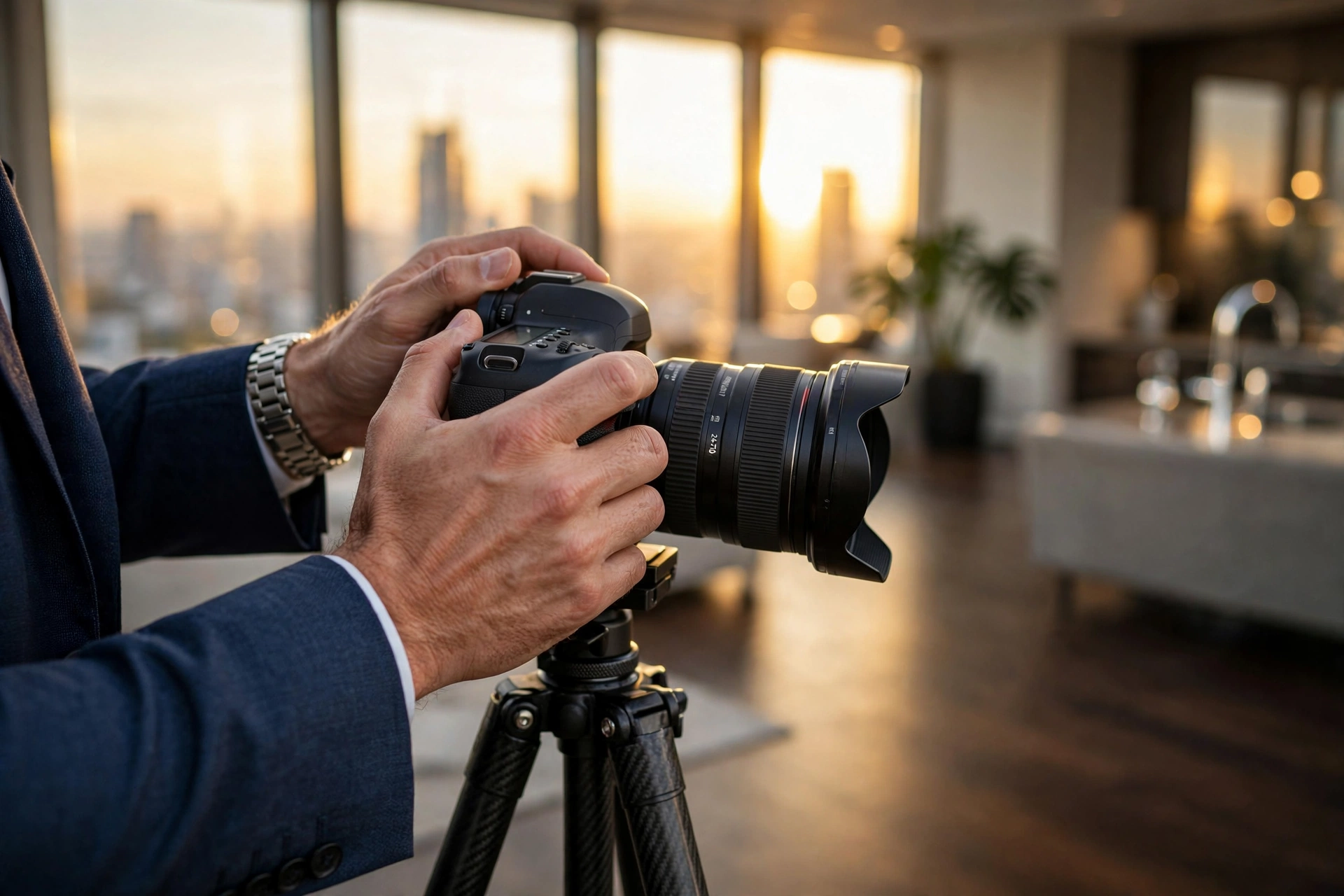
The complexity of these spaces means that standard equipment often fails. Professional shoots involve tilt-shift lenses to prevent vertical distortion—where buildings appear to "lean" backward—and advanced lighting setups to eliminate shadows in cavernous warehouses. According to a report by the National Association of Realtors, high-quality professional imagery is the second most important feature buyers look for in a listing, surpassed only by the price. When the "product" is a commercial asset, the precision of that imagery determines the level of trust a buyer places in the seller's management of the property.
To scale this process without spending weeks in post-production, many firms are now integrating Real Estate Image Processing to ensure that consistency is maintained across an entire portfolio.
The Business Impact: Why Quality Imagery Directly Affects ROI
The financial justification for professional commercial imaging is rooted in psychology and data. In the commercial world, "perceived value" is a tangible metric. When a listing features crisp, wide-angle, and color-corrected imagery, the buyer subconsciously associates that quality with the quality of the building's maintenance and the professionalism of the management.
According to McKinsey's research on digital transformation in real estate, visual data is the primary driver of early-stage lead qualification. When a prospect sees a high-quality image, they are 40% more likely to move from "browsing" to "requesting a viewing." This efficiency in the sales funnel reduces the cost of customer acquisition (CAC) for the broker.
Moreover, the consequences of neglecting visual quality are severe. A property with poor photos often suffers from "listing fatigue," where the asset remains on the Multiple Listing Service (MLS) for so long that it becomes stigmatized as a "problem property." Potential tenants begin to ask why the space hasn't been leased, assuming there are hidden structural issues or legal disputes.
Research from the Harvard Business Review on consumer behavior indicates that visual heuristics—the mental shortcuts people use to judge quality—operate almost instantaneously. In commercial real estate, if the photo is grainy, the brain registers "low-quality asset." By utilizing AI Property Enhancement, owners can rectify these visual shortcomings, turning a drab, gray industrial space into a bright, inviting hub of productivity.
The data is clear: professional visuals lead to higher bid prices. In competitive bidding environments, the visual prestige of a property can justify a premium on the price per square foot, as it attracts a wider pool of international investors who rely exclusively on digital dossiers before flying in for a site visit.
Practical Application: How to Optimize Your Commercial Visuals
Getting the most out of your photography budget requires a systematic approach. You cannot simply hire a photographer and hope for the best; you need a visual strategy that highlights the asset's highest and best use (HBU).
First, conduct a "Visual Audit." Identify the key selling points of the property. For an office building, this might be the natural light in the atrium or the state-of-the-art conference rooms. For a warehouse, it's the ceiling height and the number of loading bays. Once these are identified, a shot list must be created to ensure no critical functional area is missed.
Second, implement a "Clean Slate" policy. Commercial spaces are often cluttered with old signage, outdated furniture, or construction debris. While physical cleaning is ideal, the modern approach involves using digital staging services to remove clutter and visualize the space as it would look fully leased.
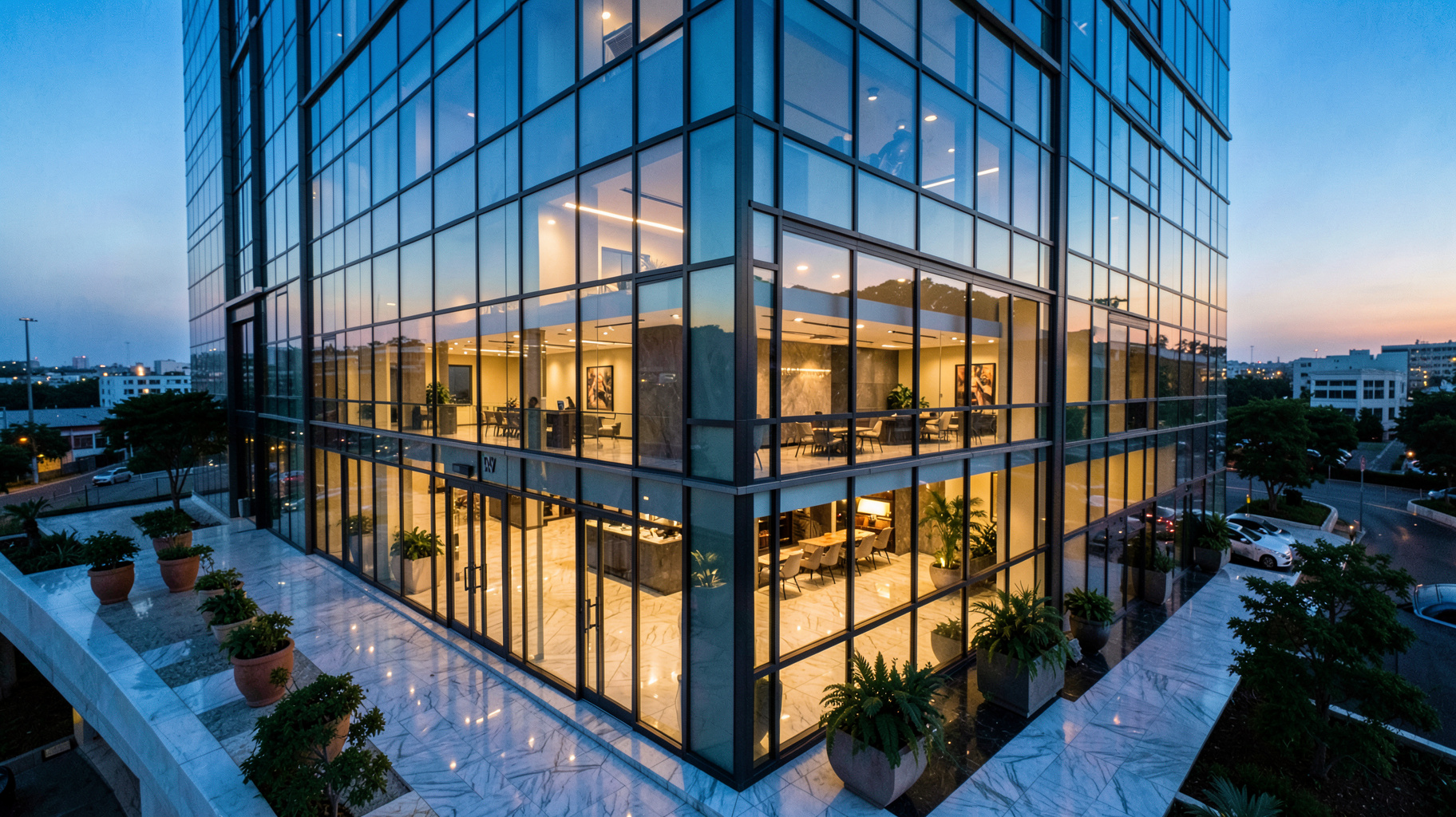
Third, utilize a hybrid workflow. While a professional photographer captures the raw data, the final polish often happens in the cloud. This is where RealVisionAI Blog - AI Real Estate Photography & Virtual Staging becomes a critical asset. Instead of waiting days for manual edits, the platform allows for instant AI sky replacement and daylight-to-dusk conversions, ensuring that a property looks stunning regardless of the weather on the day of the shoot.
💡
Key Takeaway
The goal of commercial photography is not just to show what the property is, but to show what the property could be for the tenant, using tools like virtual staging and AI enhancement to remove distractions.
If you are unsure of when to transition from basic photos to a high-end strategy, consider our guide on when to use real estate image processing for your listings to identify the exact trigger points based on asset value.
Comparing Visual Strategies for Commercial Assets
Not every property requires the same level of investment. A small retail strip mall has different needs than a Grade-A skyscraper. To help you decide, we have compared the three most common approaches to commercial imagery.
| Approach | Pros | Cons | Best For |
|---|---|---|---|
| Manual/DIY (Smartphone) | Zero cost, instant upload. | High distortion, poor lighting, looks unprofessional. | Low-value internal records or quick updates. |
| Generic AI Upscaling | Low cost, faster than manual. | Risk of hallucinations, lacks architectural precision. | Filling gaps in a large portfolio of mediocre photos. |
| Pro Photo + AI Enhancement | Highest perceived value, accurate, rapid turnaround. | Requires initial investment in a pro shoot. | High-value listings, new developments, luxury retail. |
The "Pro Photo + AI Enhancement" route is the industry gold standard for 2026. It combines the structural accuracy of a professional photographer with the speed and "wow factor" of tools provided by RealVisionAI Blog - AI Real Estate Photography & Virtual Staging. By merging these two, you eliminate the bottleneck of long editing cycles while maintaining the integrity of the architectural lines.
For those analyzing the financial commitment, our AI property enhancement pricing and value guide provides a detailed breakdown of how these costs translate into increased equity.
Common Questions and Misconceptions
Many commercial brokers still cling to outdated beliefs about photography. Let's dismantle the most common myths.
Myth 1: "The tenant only cares about the square footage and the price."
Most guides get this wrong by focusing solely on the numbers. While price and size are the primary filters, the emotional commitment to a space happens visually. A tenant doesn't just buy square footage; they buy a place where their employees will be productive. If the photos feel cold or oppressive, the tenant will subconsciously associate their future business success with that oppressive feeling.
Myth 2: "Drones are just a gimmick for fancy videos."
In commercial real estate, drone photography is a functional requirement. An investor needs to see the roof condition, the proximity to major highways, and the surrounding zoning context. A ground-level photo cannot communicate the logistical advantages of a site. In my experience, adding a high-resolution aerial map to a listing increases the quality of leads by filtering out those who don't understand the property's location.
Myth 3: "AI photos are deceptive and unethical."
There is a significant difference between "deceptive" editing (like removing a permanent structural pillar) and "enhancement" (like replacing a gray sky with a blue one or virtually staging an empty room). The latter is a standard industry practice. According to industry standards from the Real Estate Institute, providing a vision of the space's potential is a valid marketing strategy, provided it does not misrepresent the legal boundaries or structural integrity of the asset.
If you're starting from scratch, we recommend checking out our AI property enhancement for beginners to learn the ethics and techniques of modern imaging.
Frequently Asked Questions
Is professional commercial real estate photography really worth the cost for small warehouses?
Yes, it is absolutely worth it because small industrial assets often compete in high-volume markets. When a prospective tenant is scrolling through twenty different warehouse options, the one with the brightest, cleanest, and most professional photos will always receive the first call. Even for a smaller asset, the cost of professional photography is minimal compared to the risk of a property sitting vacant for an extra month. Using AI property enhancement tools can allow you to achieve a premium look without needing a full-scale production for every single unit.
How does professional photography affect the valuation of a commercial property?
Professional photography increases the "perceived value" of the asset, which can lead to higher offers during the bidding process. When a property is presented as a "Class A" asset through its visuals, buyers are more likely to accept a higher price per square foot. This is because the visual quality suggests a level of management and care that reduces the buyer's perceived risk. In the commercial sector, reducing risk is the fastest way to increase valuation.
What is the difference between virtual staging and physical staging in commercial spaces?
Physical staging in a 10,000-square-foot office is prohibitively expensive and logistically impossible. Virtual staging uses computer vision to place realistic, high-end furniture and equipment into a photo of an empty space. This allows a potential tenant to visualize how their specific business model—whether it's a tech startup or a law firm—would fit into the layout. It is a far more scalable solution and is a core feature of the RealVisionAI Blog - AI Real Estate Photography & Virtual Staging ecosystem.
How often should I update the photography for a commercial listing?
You should update your imagery whenever there is a significant change in the property's condition or when the listing has been active for more than 90 days without a lease. "Stale" photos are a red flag to investors. Refreshing the visuals—perhaps by changing the season in the photos using AI sky replacement or updating the staging to reflect current office trends—signals to the market that the property is still available and the owner is active.
Can AI fully replace the need for a professional photographer in commercial real estate?
Currently, AI is a powerful enhancer, not a replacement. You still need a professional to capture the correct perspectives, handle the complex lighting of industrial spaces, and ensure that the structural proportions are accurate. However, the "post-production" phase, which used to take days of manual labor, is now handled in seconds by AI. The ideal workflow is: Professional Capture $\rightarrow$ AI Enhancement $\rightarrow$ Market Launch. For a deeper dive, see our ranking of the best AI property enhancement tools for 2026.
Final Thoughts on Commercial Real Estate Photography
The decision of whether professional commercial real estate photography is "worth it" is a question of risk management. The risk of overspending on a photoshoot is negligible; the risk of underselling a multi-million dollar asset due to poor visual presentation is catastrophic. In 2026, the market is more digital than ever, and your images are the only thing standing between a prospective investor and the "back" button on their browser.
By combining high-end architectural capture with the speed of Real Estate Visual Marketing, you position your assets as premium options in a crowded marketplace. Don't let a gray sky or a cluttered room be the reason you lose a high-value lease.
To transform your listings into high-conversion assets, visit RealVisionAI Blog - AI Real Estate Photography & Virtual Staging and experience market-ready visuals in 12 seconds.
Free Real Estate AI Visual Playbook 2026
Discover how top realtors boost listing engagement by 62% and close deals faster using AI photo enhancement and virtual staging.