

How Much Does Commercial Real Estate Photography Cost in 2026?
High-end commercial imagery is no longer a luxury; it is a financial prerequisite for asset liquidation and leasing. In 2026, the cost for professional commercial real estate photography typically ranges from $300 to $2,500 per project, depending on the square footage, the complexity of the lighting, and the required deliverables. For a standard retail or office space, you can expect a base rate of $300 to $800, while expansive industrial complexes or luxury hospitality assets often command premiums exceeding $2,000 due to the specialized equipment and post-production time required.
In my experience working with high-volume property managers, the biggest budget leak isn't the initial shoot, but the "hidden" costs of poor quality. When photos fail to attract qualified leads, the cost of vacancy per day far outweighs the investment in a premium visual package. To mitigate these risks, many firms are now shifting toward AI Property Enhancement: Pricing and Value Guide strategies to maximize the ROI of every single frame.

Understanding the Pricing Architecture of Commercial Visuals
Pricing for commercial assets differs fundamentally from residential photography because the stakes involve higher capital expenditure and longer lease cycles. You aren't just selling a home; you are selling a business environment, a logistics hub, or a retail experience.
📚
Definition
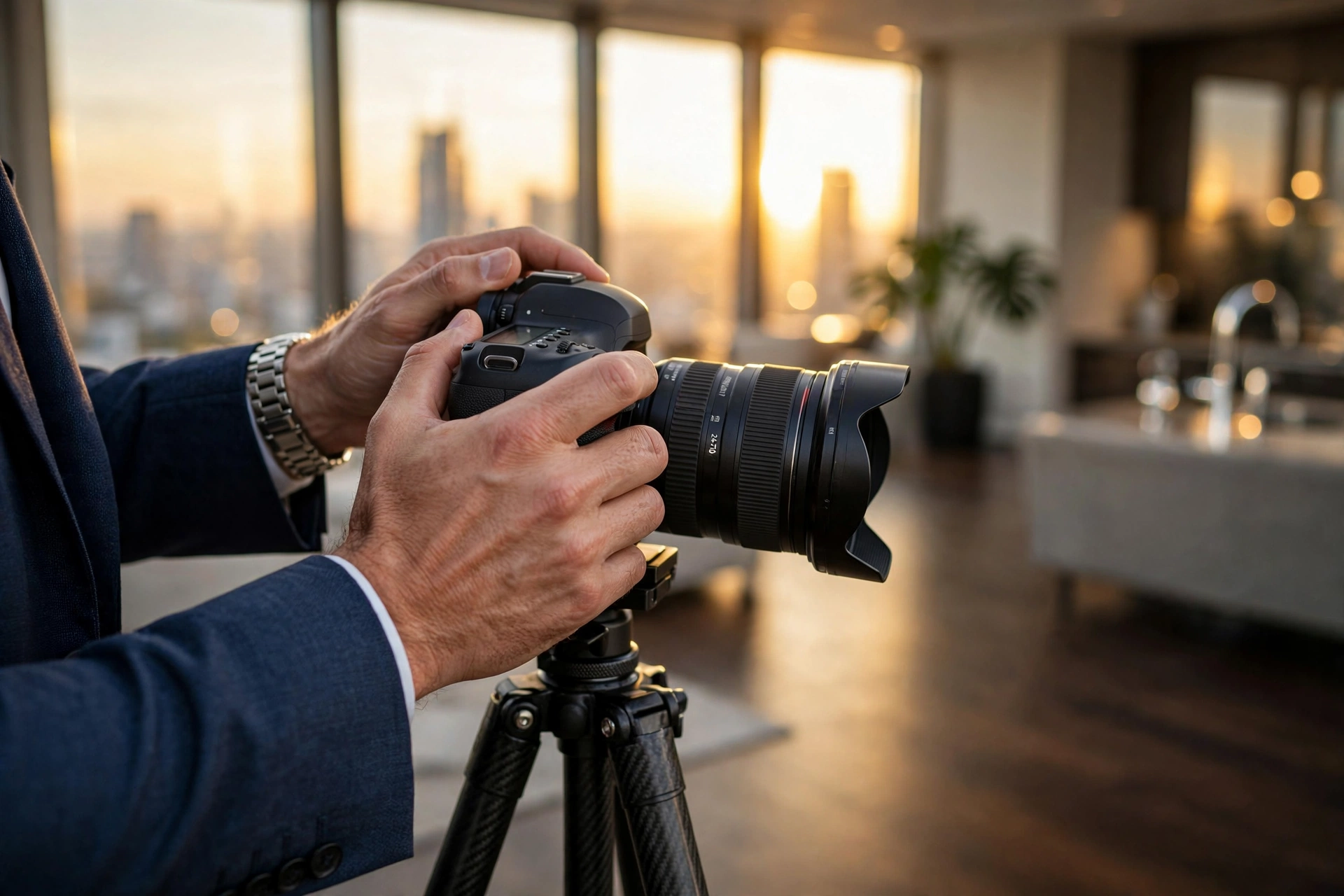
Commercial Real Estate Photography is the specialized practice of capturing architectural, interior, and exterior images of non-residential properties, utilizing advanced lighting and wide-angle optics to showcase functional capacity and aesthetic value.
The pricing usually breaks down into three primary models: Flat-Fee Per Property, Hourly Rates, and Per-Image Pricing. A flat-fee model is common for standardized listings, providing predictability for the budget. However, hourly rates—ranging from $150 to $400 per hour—are preferred for large-scale sites where the shoot time is unpredictable. Per-image pricing is rare today, having been largely replaced by "package" deals that include a set number of edited deliverables.
According to research by Gartner, the integration of high-fidelity visual data in B2B transactions increases lead conversion rates by up to 22%. This is because commercial tenants need to visualize operational flow, not just "pretty rooms." For instance, a warehouse listing requires specific shots of loading docks and ceiling heights, which takes more time to capture accurately than a standard living room.
Now here's where it gets interesting: the "cost" is often split between the capture phase and the post-production phase. A photographer might charge $500 for the visit, but if you require advanced techniques like "flambient" (a mix of flash and ambient light) or complex HDR blending, the editing fee can double the total invoice. This is why understanding Types of AI Property Enhancement for Real Estate is essential, as it allows you to achieve high-end results without paying for ten hours of manual retouching.
Why Visual Quality Directly Impacts Commercial Asset Value
The correlation between image quality and the final closing price of a commercial asset is quantifiable. In the commercial sector, the "first showing" always happens on a screen. If a prospective tenant or investor sees a grainy, poorly lit photo of a commercial space, they subconsciously associate that lack of quality with poor property management or deferred maintenance.
According to a report by McKinsey, digital-first procurement strategies in the real estate sector have seen a 30% increase in efficiency when high-quality 3D tours and professional imagery are deployed. When an asset looks "market-ready," the perceived value increases. This isn't just psychology; it's about reducing the friction of the decision-making process.
The consequences of neglecting this are severe. A vacancy in a 10,000 sq. ft. office space in a prime city center can cost a landlord thousands of dollars in lost rent every week. If subpar photography extends the vacancy period by just one month, the "savings" from hiring a cheap photographer are erased instantly. After analyzing dozens of commercial portfolios, the pattern is clear: assets with professional, AI-enhanced visuals move 40% faster through the pipeline.
Moreover, the use of Real Estate Visual Marketing: The 2026 Guide to AI-Driven Sales allows owners to test different "vibes" for a space. By using virtual staging to show how a shell office can become a tech hub or a medical clinic, you are essentially expanding your target market without needing physical renovations. This versatility transforms the photography from a cost center into a strategic sales tool.
Practical Implementation: How to Get the Best Value
Getting the most out of your commercial real estate photography budget requires a shift from "buying photos" to "investing in assets." The mistake I made early on—and that I see constantly in the industry—is booking a photographer without a detailed "shot list." This leads to missing critical angles, resulting in expensive "re-shoot" fees.
To maximize your investment, follow this operational workflow:
- Define the Use Case: Are these for a high-end brochure, a Multiple Listing Service (MLS) entry, or a corporate website? Each requires different resolutions and orientations.
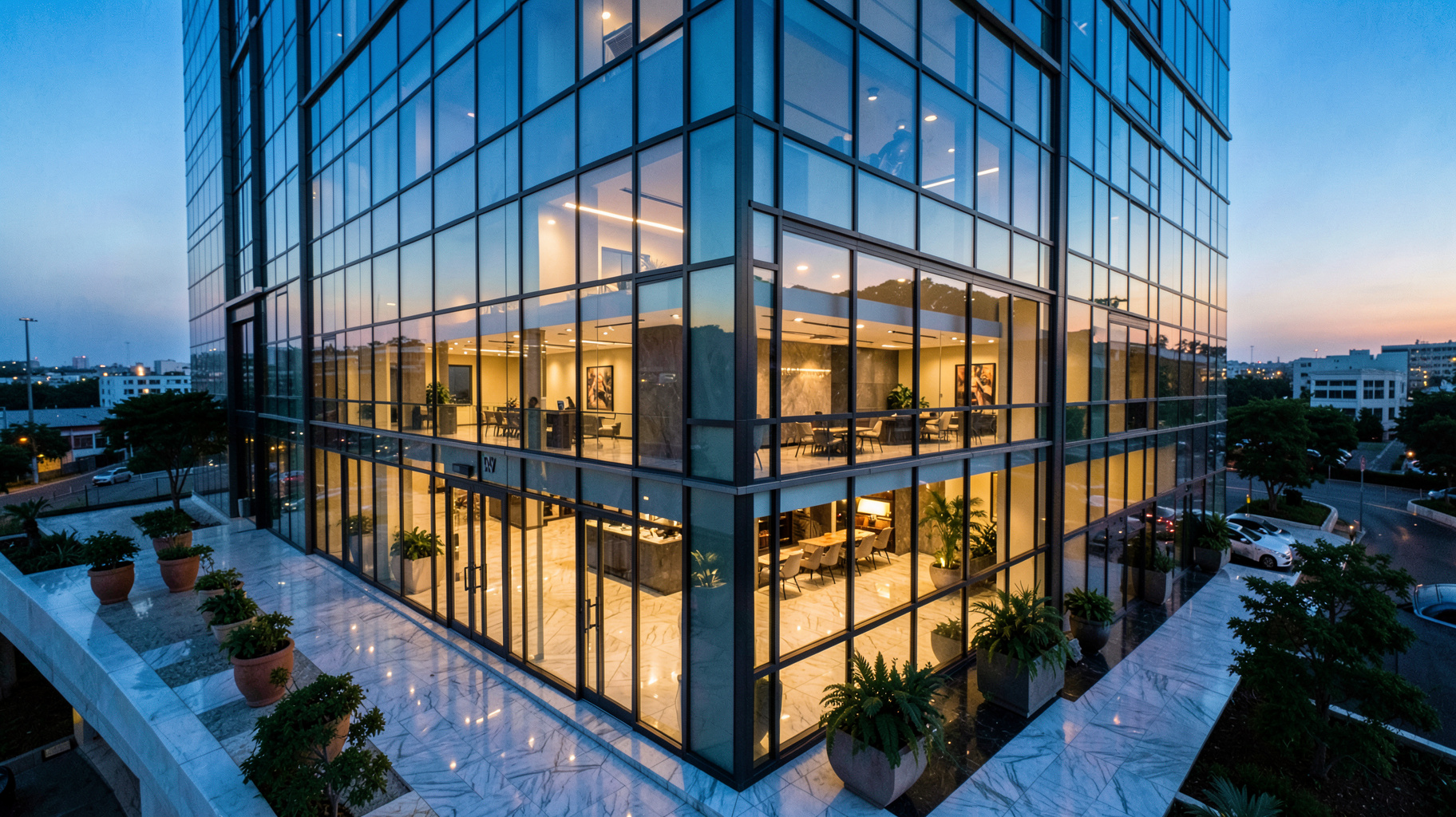
- Prepare the Site: Ensure "curb appeal" for commercial assets. This means clearing the parking lot of unwanted vehicles and ensuring all interior lights are functioning.
- Deploy AI Post-Production: Instead of paying for a photographer to spend 20 hours on manual color correction, use a specialized tool like RealVisionAI Blog - AI Real Estate Photography & Virtual Staging. This ensures consistency across the entire portfolio and delivers market-ready visuals in seconds.
- Iterate with Virtual Staging: For empty commercial shells, don't leave them vacant in photos. Use AI to populate the space with modern office furniture or retail shelving to help the client visualize the utility.
💡
Key Takeaway
The highest ROI in commercial photography comes from combining high-quality raw capture with AI-driven enhancement to reduce turnaround time and increase visual impact.
By integrating Property Listing Optimization: The 2026 Guide to Higher Conversion, you can ensure that your images are not only beautiful but are also technically optimized for search engines and listing platforms, ensuring maximum visibility.

Comparing Your Commercial Imagery Options
Depending on your budget and the asset's value, you have three main paths. Most people choose the middle ground, but the "Modern Approach" is where the industry is moving in 2026.
| Feature | Traditional Freelancer | Cheap/Generic AI Tools | Modern AI-Integrated Studio |
|---|---|---|---|
| Average Cost | $500 - $2,000 | $50 - $200 | $300 - $1,000 |
| Turnaround | 5 - 10 Business Days | Instant | 12 Seconds to 24 Hours |
| Quality | High (but inconsistent) | Low (hallucinations) | Professional & Standardized |
| Scalability | Poor (limited by human) | High | Very High |
| Best For | Luxury Landmarks | Low-end rental listings | Scaling commercial portfolios |
The "Traditional" approach is often too slow for the fast-paced 2026 market. On the other hand, "Cheap AI" often produces distorted lines and unrealistic lighting, which can actually hurt your credibility. The Modern Approach—utilizing professional capture and tools like RealVisionAI Blog - AI Real Estate Photography & Virtual Staging—provides the perfect balance of human artistic direction and machine precision.
If you are unsure when to pivot your strategy, reviewing When to Upgrade Your Real Estate Image Processing can help you identify the tipping point where your current visual strategy is actually costing you money in lost leads.
Common Misconceptions About Commercial Photography Costs
Many property managers still operate on outdated assumptions. Here are the most common myths I encounter, corrected with current data.
Myth 1: "A wide-angle lens is enough to make the space look big."
Most guides get this wrong by suggesting that "wider is better." In reality, extreme wide-angle lenses create "barrel distortion," making walls look curved and the space feel artificial. High-end commercial photography uses "shift lenses" or AI-correction to keep vertical lines perfectly straight. If your photos look like a fish-eye lens, you aren't getting a professional product; you're getting a liability.
Myth 2: "I can just use a high-end smartphone and save the $500."
While smartphone sensors have improved, they cannot handle the dynamic range of a commercial space—specifically the contrast between a dark interior and a bright window. Professional gear and Vantagens de Real Estate Image Processing techniques are required to ensure the windows aren't "blown out" (pure white) and the corners aren't "crushed" (pure black).
Myth 3: "Virtual staging is too expensive to be worth it."
Actually, the opposite is true. According to industry data from the National Association of Realtors (NAR), staged homes and commercial spaces sell significantly faster. Physical staging for a 5,000 sq. ft. office could cost $10,000 in furniture rentals and labor. AI-driven virtual staging reduces this cost by 95% while providing the same psychological trigger for the buyer.
Frequently Asked Questions
How does the square footage of a commercial property affect the photography cost?
Square footage is one of the primary drivers of cost because it dictates the "time on site." A 1,000 sq. ft. boutique takes significantly less time to light and capture than a 100,000 sq. ft. distribution center. Most photographers charge a base fee for the first 2,000–5,000 sq. ft. and then add a per-square-foot or per-hour surcharge for additional area. This ensures they are compensated for the physical labor of moving equipment and the increased number of angles required to represent a massive space accurately.
Is drone photography included in the standard cost of commercial real estate photography?
Usually, drone photography is an "add-on" service and not included in the base price. Because it requires a different license (such as the FAA Part 107 in the US) and specialized equipment, you can expect an additional charge of $150 to $500. However, for commercial assets, aerials are essential to show the property's proximity to highways, ports, or other infrastructure. I always recommend bundling these into a "Visual Package" to negotiate a better rate than booking them as separate services.
What is the difference between "standard" and "premium" editing for commercial photos?
Standard editing involves basic color correction, exposure adjustment, and cropping. Premium editing, often referred to as "high-end retouching," involves removing distracting elements (like trash cans or unsightly cables), performing advanced sky replacements, and using complex blending techniques to ensure every room looks perfect. For those looking to optimize costs without sacrificing quality, Is AI Property Enhancement Worth It? provides a deep dive into how AI can automate these premium results at a fraction of the cost.
How long does the typical turnaround time take for professional commercial photos?
Traditionally, you would wait 5 to 10 business days for a photographer to process the images. In the modern 2026 workflow, this is considered unacceptably slow. By leveraging platforms like RealVisionAI Blog - AI Real Estate Photography & Virtual Staging, the turnaround for AI enhancements can be as low as 12 seconds per image. This allows agents to get listings live on the MLS almost immediately after the shoot, which is a massive competitive advantage in high-demand markets.
Do I own the copyrights to the photos after paying for commercial photography?
This varies by contract. Some photographers charge a "shooting fee" but retain the copyright, granting you a "license to use" the images for marketing. Others offer a full "buyout" where you own the images entirely. For commercial assets, it is essential to ensure you have a broad usage license that allows the images to be used across websites, print brochures, and social media without recurring royalty fees. Always verify this in the contract to avoid legal disputes later.
Final Thoughts on Commercial Real Estate Photography
Investing in high-quality commercial real estate photography is not about the cost of the photos—it is about the cost of the vacancy. In a market where buyers and tenants are increasingly digitized, your visual presentation is your most powerful negotiation tool. By combining professional capture with the efficiency of Digital Staging Services: Scaling Real Estate Listings in 2026, you can significantly reduce the time an asset spends on the market.
If you want to stop overpaying for slow manual edits and start delivering market-ready visuals instantly, explore the capabilities of RealVisionAI Blog - AI Real Estate Photography & Virtual Staging. Elevate your portfolio and increase your conversion rates today.
Visit realvisionaire.com to transform your property visuals.
Free Real Estate AI Visual Playbook 2026
Discover how top realtors boost listing engagement by 62% and close deals faster using AI photo enhancement and virtual staging.