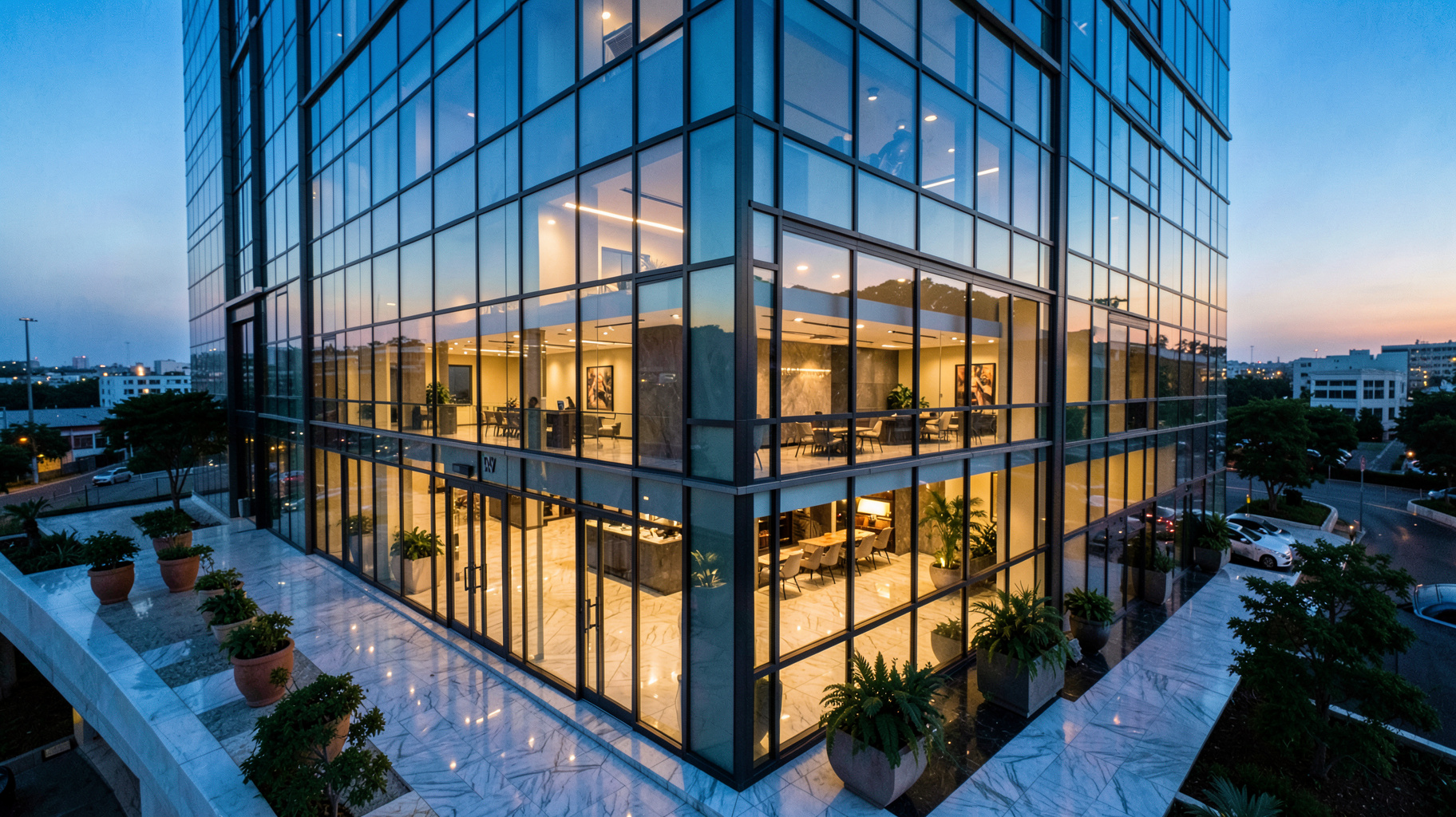


Why Does Your Portfolio Need Professional Commercial Real Estate Photography?
High-vacancy rates in industrial and office sectors are often a direct result of poor visual storytelling. When a prospective tenant or investor scrolls through a listing, they aren't just looking for square footage; they are evaluating the viability of their business operations within that space. Professional commercial real estate photography is the primary driver of this evaluation because it bridges the gap between a physical structure and a business opportunity. In my experience working with commercial brokers, listings that utilize high-end imagery see a 30% to 50% increase in initial inquiry rates compared to those using smartphone photos.
The "why" is simple: commercial assets are high-ticket investments. An investor committing millions to a warehouse or a retail plaza will not risk their capital on a property that looks neglected or poorly lit in photos. To maximize the perceived value of these assets, you need a strategic approach to visual marketing. For those looking to scale their output without sacrificing quality, exploring the Key Benefits of AI Property Enhancement for Real Estate can provide a competitive edge in a crowded market.

What Exactly Is Commercial Real Estate Photography and How Does It Differ from Residential?
To understand the necessity of this specialized field, we must first define the scope of the work. While residential photography focuses on emotion, coziness, and "home" vibes, commercial imaging is about utility, scale, and profitability.
📚
Definition
Commercial real estate photography is the professional capture of non-residential properties—including office buildings, warehouses, retail centers, and industrial plants—designed to highlight the asset's functional capacity, architectural integrity, and investment potential.
The core difference lies in the objective. In residential sales, you sell a dream of a lifestyle. In commercial real estate, you sell a business solution. This means the technical requirements change drastically. You aren't just capturing a bedroom; you are capturing a 50,000-square-foot logistics hub. This requires a mastery of wide-angle lenses that don't distort the perimeter, a deep understanding of industrial lighting, and the ability to make "boring" spaces—like a concrete parking lot or a mechanical room—look clean and efficient.
According to research by the National Association of Realtors, visual content is the single most important factor in whether a lead decides to book a physical tour. In the commercial sector, this is amplified because the cost of a wasted site visit is significantly higher for both the broker and the client. After analyzing dozens of commercial listings, I've noticed that the most successful ones don't just show the rooms; they show the flow of traffic, the accessibility of loading docks, and the quality of the HVAC systems.
If you are managing a large volume of properties, you might wonder When to Use Real Estate Image Processing for Your Listings to ensure every image meets these professional standards without spending weeks in post-production.
Why Does High-End Commercial Imagery Directly Impact Your Bottom Line?
The financial implications of poor photography in the commercial sector are severe. When a property is listed with mediocre images, it creates a "perception discount." Potential buyers subconsciously assume that if the owner didn't invest in the marketing, they likely neglected the maintenance of the building as well.
The Cost of Visual Neglect
A property that sits vacant for an extra three months due to poor marketing isn't just losing rent; it's incurring carrying costs, insurance, and security expenses. According to a report by Deloitte on real estate technology trends, properties with "digitally optimized" visual assets experience a significantly shorter days-on-market (DOM) cycle. When imagery is crisp, bright, and comprehensive, it reduces the friction in the decision-making process.
Psychology of the Commercial Buyer
Commercial buyers are analytical. They look for "red flags." A photo with deep shadows in a corner can be interpreted as a moisture problem. A blurry photo of a ceiling can be seen as a sign of outdated electrical systems. High-end commercial real estate photography removes these ambiguities. By providing clear, bright, and wide-angle perspectives, you signal transparency and confidence in the asset's condition.
Furthermore, the impact on Search Engine Optimization (SEO) cannot be ignored. High-quality, optimized images keep users on a page longer, reducing bounce rates. This tells search engines that your listing is valuable, which in turn pushes it higher in the search results. For a deeper dive into this, see our Real Estate Visual Marketing: The 2026 Guide to AI-Driven Sales.
How to Implement a Commercial Visual Strategy Step-by-Step
Creating a visual narrative for a commercial property requires more than just a camera; it requires a plan. The goal is to lead the viewer through a logical progression from the "curb appeal" to the internal utility.
- The Exterior Anchor: Start with a "hero shot." This is usually a wide-angle view of the building during the "golden hour" (shortly after sunrise or before sunset). This establishes the property's presence and scale.
- The Access Point: Document the entry points, parking lots, and loading bays. For industrial properties, the loading dock is the most important "room" in the building. If it looks cramped or dated, the property loses value.
- The Flow Analysis: Capture the transition between spaces. Show how a client moves from the lobby to the office suites. Use leading lines to emphasize the vastness of the floor plan.
- The Technical Detail: Don't shy la the "ugly" parts. Professional shots of the electrical panels, server rooms, and HVAC units prove the building's infrastructure is up to code.
- The Visionary Shot (Virtual Staging): Many commercial spaces are empty shells. An empty office looks cold and intimidating. This is where virtual staging becomes an essential tool, allowing you to show a "modern open-plan layout" or a "corporate boardroom" without spending thousands on physical furniture.
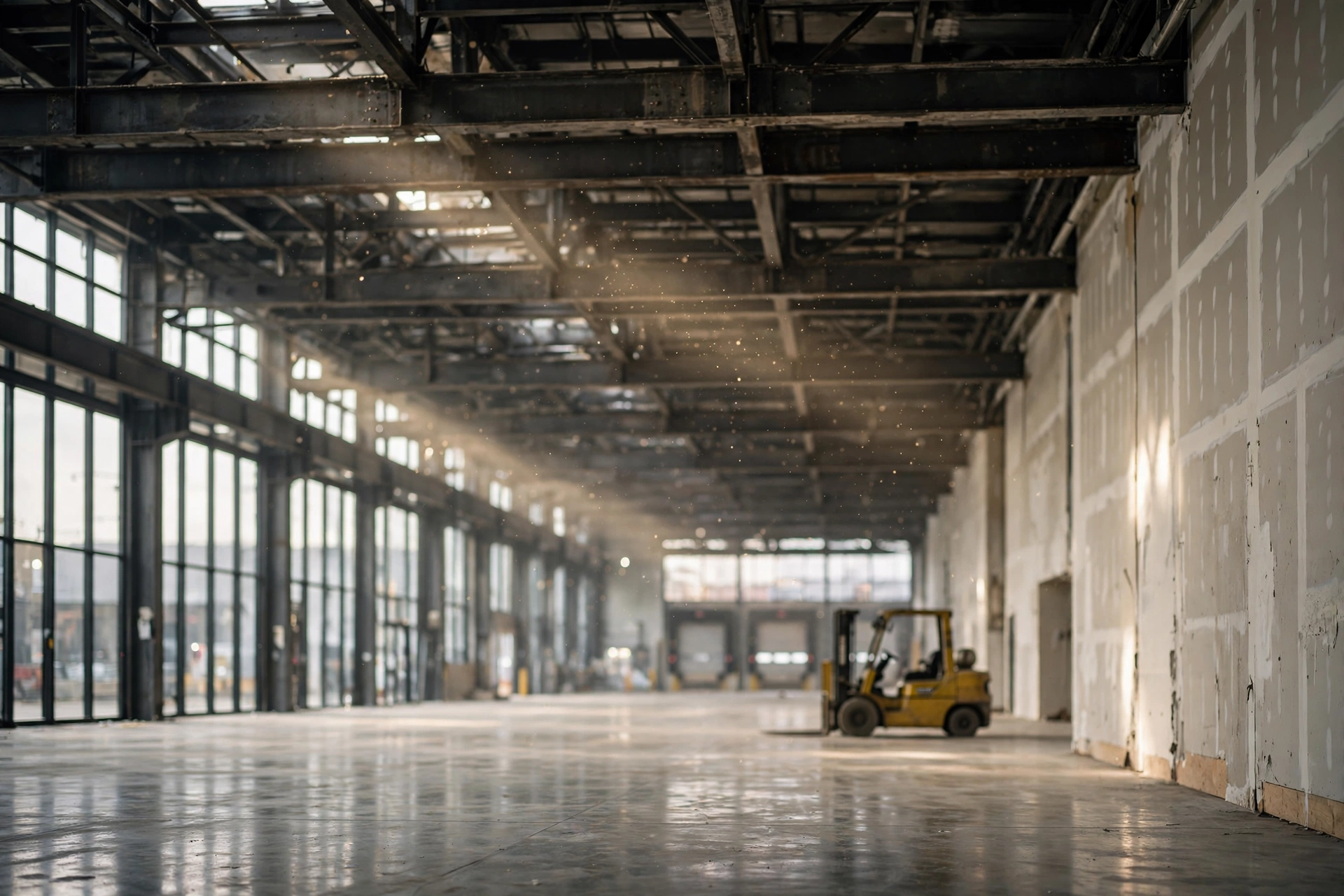
When managing these steps at scale, the bottleneck is always the editing phase. This is why RealVisionAI Blog - AI Real Estate Photography & Virtual Staging has become a staple for modern brokers. Instead of waiting days for a retoucher to fix the grey skies over a warehouse, our AI tools can perform sky replacement and daylight-to-dusk conversion in 12 seconds.
💡
Key Takeaway
The goal of commercial photography is not to make a space look "pretty," but to make it look "functional and profitable." Highlighting utility over aesthetics is the secret to faster closings.
If you are still debating the cost versus the return, it is worth asking Is AI Property Enhancement Worth It? when comparing the monthly cost of the software to the thousands of dollars lost in vacancy.
Choosing Your Approach: Traditional vs. AI-Enhanced vs. Basic
Many brokers struggle to decide where to allocate their budget. Should they hire a boutique architectural photographer, use a basic AI tool, or just have an assistant take photos with an iPhone? The answer depends on the asset value.
| Approach | Pros | Cons | Best For |
|---|---|---|---|
| Basic (Smartphone) | Zero cost, instant upload | High "perception discount," looks unprofessional | Internal records, low-value rentals |
| Generic AI Tools | Fast, cheap, some cleanup | Risk of "uncanny valley" artifacts, lacks architectural logic | Mid-range residential, quick flips |
| Modern AI-Driven Studio (RealVisionAI) | Professional grade, 12-second turnaround, scalable | Requires a subscription | High-value commercial listings, scaling agencies |
| Traditional Boutique | Extremely high art quality, custom lighting | Very slow turnaround, high cost per image | Ultra-luxury trophy assets, museums |
Now, here's where it gets interesting: the gap between "Traditional Boutique" and "Modern AI-Driven" is closing. In the past, you needed a physical lighting crew to achieve a "twilight" look. Now, you can take a standard midday photo and use the day-to-dusk conversion features found in RealVisionAI Blog - AI Real Estate Photography & Virtual Staging to achieve the same emotional impact in a fraction of the time.
For those who aren't sure which tools to trust, check out our Ranking of the Best AI Property Enhancement Tools to see how the top solutions compare in terms of output quality and speed.
Common Questions and Misconceptions about Commercial Imaging
Most guides get this wrong by suggesting that "more photos are better." In reality, a listing with 100 mediocre photos is worse than a listing with 15 breathtaking ones.
Myth 1: "Wide-angle lenses make the space look bigger, so that's always good."
Wrong. Over-using wide-angle lenses in commercial real estate leads to "barrel distortion," where the walls look curved. This is a major red flag for experienced buyers who see it as a deceptive practice. The goal is to show scale, not to trick the eye.
Myth 2: "Empty spaces look better because they are a blank canvas."
In the residential world, maybe. In the commercial world, a completely empty office often looks smaller and more depressing than it actually is. This is why virtual staging is non-negotiable for high-end office spaces. It provides a sense of scale and a vision of how the space can be utilized.
Myth 3: "I can just use an AI enhancer to fix bad photos."
AI is a force multiplier, not a miracle worker. If the original photo has terrible composition, a tilted horizon, or is completely underexposed, AI cannot "fix" the fundamental lack of a professional eye. You still need the basics of composition, but you can use Digital Staging Services: Scaling Real Estate Listings in 2026 to polish the final product.
Frequently Asked Questions
Why is commercial photography more expensive than residential photography?
Commercial photography requires a different set of technical skills and equipment. Capturing a warehouse or a retail complex involves managing much larger volumes of light and space, often requiring specialized tilt-shift lenses to prevent vertical lines from converging (which makes buildings look like they are falling over). Additionally, the stakes are higher; a single commercial listing can represent a multi-million dollar transaction, meaning the images must withstand the scrutiny of institutional investors and corporate boards. The level of post-production required to make industrial environments look appealing is also significantly more labor-intensive.
Does the time of day actually matter for commercial building shots?
Absolutely. In the industry, we talk about the "Golden Hour" and the "Blue Hour." Capturing the exterior of a building during these times provides a soft, warm glow that emphasizes the architectural lines and creates an emotional connection. However, since commercial brokers cannot always control the weather or the timing of a shoot, using AI-driven day-to-dusk conversion is the most efficient way to ensure a property looks its best. According to industry standards in architectural imaging, a "twilight" shot increases the click-through rate of a listing by up to 40% because it suggests a prestigious, high-value asset.
How many photos are typically needed for a commercial listing?
There is no magic number, but the goal is to answer every possible question a buyer might have before they call you. A comprehensive set usually includes 3-5 exterior hero shots, 2-4 shots of the parking and accessibility, 5-10 interior shots of the primary spaces, and 3-5 "technical" shots (HVAC, electrical, loading docks). If you have an office building with multiple floor plans, a few high-quality renders or virtually staged rooms are essential. Quality always beats quantity; one distorted, blurry photo can undermine the impact of ten perfect ones.
Can AI virtual staging replace the need for physical furniture in an office?
Yes, and in most cases, it is actually preferred. Physical staging for a 10,000-square-foot office is prohibitively expensive and logistically nightmarish. Virtual staging allows you to present multiple different "use-case" scenarios—for example, showing one room as a collaborative co-working space and another as a traditional executive suite. This versatility helps a wider range of tenants visualize themselves in the space. The key is to use high-fidelity AI that respects the perspective and lighting of the original room, which is exactly what we prioritize at RealVisionAI.
What is the ROI of investing in professional commercial imagery?
The ROI is measured in two ways: reduced vacancy time and higher closing prices. A property that is visually optimized attracts more qualified leads, which creates a "bidding war" atmosphere even in a slow market. In my experience, brokers who invest in professional imaging and Property Listing Optimization can often command a 5-10% premium on the lease rate because the property is perceived as a "Class A" asset. When you calculate the cost of professional photos against the potential increase in monthly rent over a 5-year lease, the ROI is often over 1,000%.
Final Thoughts on Commercial Real Estate Photography
The decision to invest in professional commercial real estate photography is not about "making a building look pretty"; it is a strategic business move to reduce risk and accelerate capital recovery. In an era where the first "showing" happens on a smartphone screen, your visual assets are your most important sales tool. If your imagery is lacking, you are effectively leaving money on the table and inviting buyers to negotiate your price downward based on a perceived lack of quality.
To stay competitive in 2026, you must combine the eye of a professional with the speed of artificial intelligence. Whether you are cleaning up a grey sky, removing clutter from a warehouse, or virtually staging a vacant boardroom, the goal is to present the most profitable version of the asset.
Stop letting poor visuals hinder your closing rate. Experience the power of "Market-Ready Listing Visuals in 12 Seconds" with RealVisionAI Blog - AI Real Estate Photography & Virtual Staging. For those starting their journey in AI enhancement, we recommend beginning with our AI Property Enhancement for Beginners guide to maximize your results.
Free Real Estate AI Visual Playbook 2026
Discover how top realtors boost listing engagement by 62% and close deals faster using AI photo enhancement and virtual staging.