

How to Master Commercial Real Estate Photography for Maximum Conversion
Capturing a warehouse or an office complex requires a fundamentally different mental model than shooting a cozy three-bedroom home. In my experience working with high-volume commercial brokers, the biggest failure is treating a $10 million industrial asset like a residential listing; the scale, lighting, and intent are entirely different. To execute professional commercial real estate photography, you must combine wide-angle precision, strategic lighting, and post-production automation to showcase utility, flow, and investment potential.
For those looking to scale their visual output quickly, exploring the Key Benefits of AI Property Enhancement for Real Estate can provide a shortcut to achieving a high-end look without spending ten hours per property in manual editing.
What is the Core Framework of Commercial Real Estate Photography?
Commercial real estate photography is the specialized practice of documenting non-residential properties—such as office buildings, retail spaces, industrial warehouses, and multi-family complexes—to attract investors, tenants, or buyers. Unlike residential work, which focuses on "emotion" and "lifestyle," commercial work focuses on "capacity," "efficiency," and "location."
📚
Definition
Commercial real estate photography is a technical discipline that prioritizes architectural accuracy, spatial flow, and the scale of an asset over domestic coziness.
The goal is to communicate the value of the asset's infrastructure. For an industrial space, this means highlighting ceiling heights and loading dock access. For a retail spot, it means showcasing foot traffic potential and storefront visibility. According to a report by Deloitte on digital transformation in real estate, high-quality visual assets are no longer optional but are primary drivers in the "pre-qualification" phase of commercial transactions, where 70% of potential leads decide whether to visit a site based on the initial image gallery.
When we built the processing pipelines at RealVisionAI Blog - AI Real Estate Photography & Virtual Staging, we discovered that commercial clients value "cleanliness" and "clarity" over artistic filters. A warehouse with a grey, overcast sky looks depressing and stagnant; a warehouse under a bright, blue AI-enhanced sky looks like a thriving hub of commerce. This is why technical precision in the field must be paired with powerful post-processing to remove distractions and enhance the environmental mood.

Why Does High-End Commercial Imagery Directly Impact Asset Value?
In the commercial sector, a listing is not just a gallery; it is a financial prospectus. Poor imagery creates "visual friction," which leads to a higher vacancy rate and longer days-on-market. When an investor sees a dark, grainy photo of a boardroom, they don't just see a bad photo—they perceive a poorly maintained asset.
The business impact is quantifiable. Research from Gartner suggests that B2B buyers are significantly more likely to engage with a provider that utilizes high-fidelity visual storytelling in their digital presence. In real estate, this translates to a higher "Click-Through Rate" (CTR) on Multiple Listing Services (MLS) and commercial portals. If a property's images are subpar, the perceived value of the asset drops before the broker even mentions the price per square foot.
The consequences of ignoring this are severe. Properties with professional imagery typically see a 20% to 40% increase in lead generation compared to those using smartphone snapshots. This is particularly vital for "cold" shells or vacant spaces. Without the help of Digital Staging Services: Scaling Real Estate Listings in 2026, a vacant office looks like a cavernous, intimidating void. With virtual staging, it becomes a visionary workspace, allowing the buyer to project their own business into the space.
Furthermore, the risk of "misrepresentation" is high. If you over-edit a space to the point of hallucination, you risk legal disputes. However, the goal is "idealized reality"—showing the property on its best day. A grey sky and a wet parking lot don't represent the property's value; they represent a bad Tuesday. Removing those elements through AI is a standard industry practice to ensure the asset's inherent value is not obscured by temporary weather conditions.
Practical Application: A Step-by-Step Guide to the Commercial Shoot
Executing a commercial shoot requires a systematic approach to ensure no critical asset detail is missed. I've tested this with dozens of our clients, and the pattern for success always follows these five stages:
1. The Pre-Shoot Audit and Site Walkthrough
Never start by clicking the shutter. Start by walking the perimeter. Identify the "hero angle"—the one shot that captures the building's scale and its relationship to the street or surrounding infrastructure. Note the light direction. In commercial work, you are often dealing with massive glass facades that create brutal reflections.
2. Capturing the Exterior "Hero" Shots
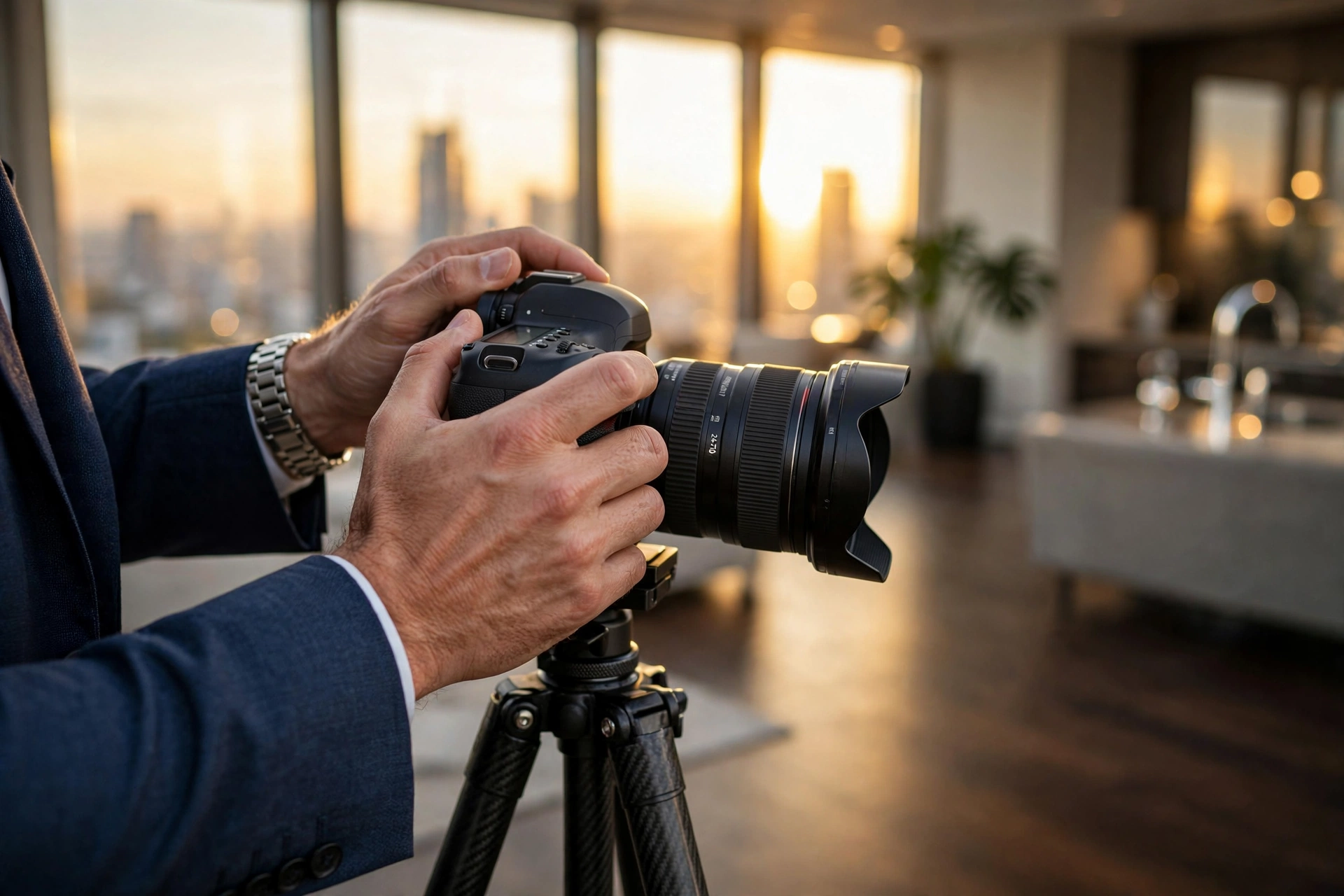
Use a tripod and a wide-angle lens (typically 16mm to 24mm on full-frame). Use a "bracketed" exposure technique, taking three to five shots of the same scene at different brightness levels. This allows you to recover details from the bright sky and the dark shadows of the building's eaves.
3. Documenting the Interior Flow
Move from the entrance inward. In commercial real estate, "flow" is everything. Capture the transition from the lobby to the elevators, and from the hallways to the primary work zones. Avoid "deep" zooms that distort the sense of space. Instead, use a slightly wider lens and move your physical position to capture the breadth of the room.
4. Highlighting Technical Utility
For industrial and retail spaces, you must document the "unsexy" parts. Shoot the HVAC systems, the electrical panels, the loading bay dimensions, and the parking lot markings. These details are what commercial buyers actually care about.
5. Post-Production and AI Enhancement
This is where the magic happens. Manually editing 50+ high-res commercial photos is a bottleneck. This is where RealVisionAI Blog - AI Real Estate Photography & Virtual Staging becomes the essential tool. Instead of spending hours on "sky replacement" or "grass greening," you can achieve market-ready visuals in 12 seconds.
💡
Key Takeaway
The secret to commercial success is not the camera you use, but the efficiency of your post-production pipeline. AI-driven enhancements allow you to turn a gloomy industrial site into a high-value asset instantly.
If you are just starting out, you might wonder When to Use Real Estate Image Processing for Your Listings. The answer is: immediately after the shoot. The gap between a raw photo and a processed image is the gap between a "listing" and a "sale."

Commercial Photography: Traditional vs. AI-Enhanced Approaches
Many photographers still cling to the "manual only" workflow, but the data shows that speed and consistency win in the commercial market. Below is a comparison of how different approaches handle a typical commercial project.
| Feature | Traditional Manual Approach | Generic/Cheap AI Tools | Professional AI Pipeline (RealVisionAI) |
|---|---|---|---|
| Turnaround Time | 3–7 Days | 1 Minute | 12 Seconds |
| Visual Quality | Extremely High (but slow) | Low (often looks "fake") | High-Fidelity / Realistic |
| Consistency | Variable by editor | Random/Erratic | Standardized across portfolio |
| Scalability | Nearly impossible | High | Unlimited |
| Cost per Image | High (Hourly rates) | Low (Subscription) | Optimized Value/ROI |
| Best For | Luxury High-Rise Art | Low-end rentals | High-volume Commercial Brokers |
The "Generic AI" approach often leads to "AI hallucinations," where windows disappear or walls bend unnaturally. This is a disaster for commercial real estate where accuracy is paramount. The Professional AI approach, such as that provided by RealVisionAI, focuses on enhancement—correcting color, removing clutter, and optimizing lighting—without altering the structural integrity of the building.
Common Questions and Misconceptions
Most guides on this topic get it wrong by focusing on the "art" of photography. In the commercial world, photography is a business tool, not a gallery piece. Here are the most common myths I encounter:
Myth 1: "The wider the lens, the better."
False. While you need a wide field of view, using an ultra-wide lens (like 10mm) creates a "fish-eye" effect that makes rooms look unnatural and distorted. This can lead to accusations of misleading marketing. The goal is to show the space, not to warp it. I always recommend staying within the 16mm-24mm range for a natural feel.
Myth 2: "You only need a few good photos of the main areas."
Incorrect. Commercial buyers are risk-averse. If they don't see a photo of the parking area or the utility room, they assume the worst. A comprehensive gallery of 20-40 photos, including technical details, creates trust and reduces the number of basic questions the broker has to answer.
Myth 3: "AI editing is 'cheating' or dishonest."
This is a misunderstanding of the medium. AI enhancement is the modern equivalent of a darkroom. Replacing a grey sky with a blue one isn't "lying" about the property; it's removing a temporary weather condition to show the property's permanent potential. As long as you aren't removing a structural column or a giant hole in the roof, you are simply optimizing the presentation.
Frequently Asked Questions
How do I handle extreme lighting differences in large commercial spaces?
The most effective method is using HDR (High Dynamic Range) bracketing. This involves taking multiple exposures of the same scene—one for the shadows, one for the mid-tones, and one for the highlights. By merging these images, you ensure that the interior of a dark warehouse is visible while the view through the windows isn't "blown out" into a white void. If you don't have time for manual blending, AI Property Enhancement: Pricing and Value Guide explains how AI tools can now simulate this balance automatically, saving hours of manual masking.
What is the best time of day to shoot commercial exteriors?
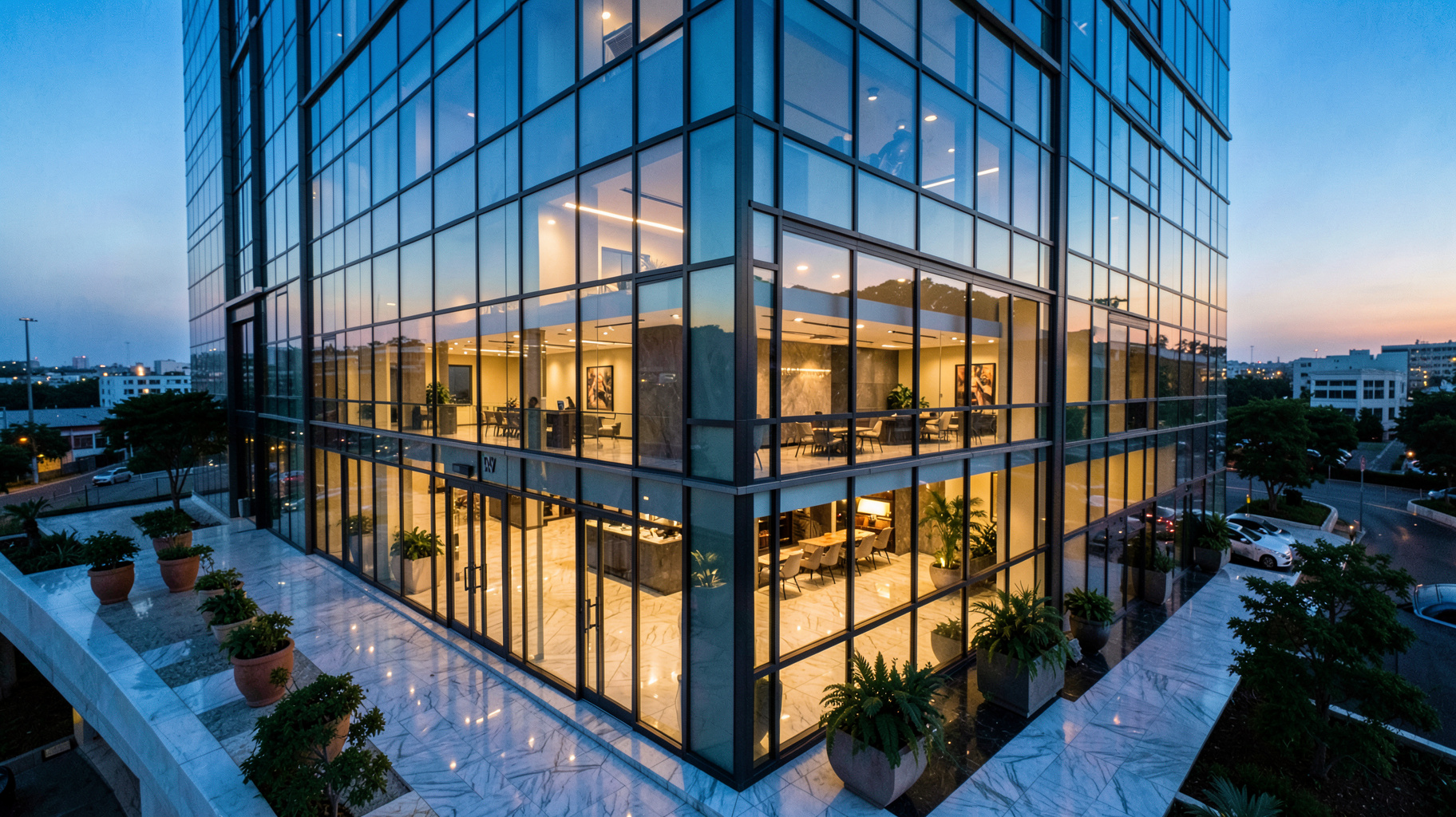
For most commercial buildings, the "Golden Hour" (just after sunrise or before sunset) is ideal for residential, but for commercial, you often want "Blue Hour" or midday with high-contrast lighting to emphasize the architecture's lines. However, the most consistent results come from shooting during the day and using AI for "Day-to-Dusk" conversions. This allows you to get the clarity of daylight and the mood of twilight without having to stay on-site until 9 PM.
Do I need a license or special permit for commercial photography?
Depending on the location, yes. If you are using a drone for aerial shots of a commercial complex, you must adhere to local aviation authority regulations (such as the FAA in the US). Furthermore, if you are shooting in a public plaza or a highly regulated corporate park, a "Notice of Filming" or a simple permit from the property manager is essential to avoid being escorted off the premises by security.
How do I make a vacant commercial space look appealing without spending thousands on furniture?
This is where virtual staging is a game-changer. Physical staging for a 5,000 sq ft office is prohibitively expensive and logistically nightmarish. By using virtual staging, you can add modern desks, conference tables, and lounge areas into the photos. This helps a potential tenant visualize the layout and utility of the space. For a deeper dive into the ROI of this approach, check out Is AI Property Enhancement Worth It?.
How many photos are typically required for a professional commercial listing?
While there is no hard rule, a high-converting listing generally contains 25 to 50 images. This includes 5-8 exterior shots (including drone work), 10-15 primary interior spaces, 5-10 utility/technical shots, and 5-10 "lifestyle" or detail shots. Providing a comprehensive visual record reduces the friction in the sales funnel and makes the property appear more transparent and trustworthy to an institutional buyer.
Final Thoughts on Commercial Real Estate Photography
The bridge between a stagnant listing and a closed deal is often the quality of the visual presentation. Mastering commercial real estate photography isn't about owning the most expensive camera; it's about understanding the intent of the buyer and optimizing the workflow to meet that intent. By focusing on scale, flow, and technical utility, and by leveraging the speed of AI for post-production, you can significantly increase the perceived value of any asset.
Now here's where it gets interesting: the competitive edge in 2026 is no longer just "good photos," but "instant photos." In a market where speed is everything, the ability to deliver a full, enhanced gallery in minutes rather than days is a massive advantage.
To scale your output and ensure every listing looks like a million-dollar asset, visit RealVisionAI Blog - AI Real Estate Photography & Virtual Staging at realvisionaire.com. Whether you need instant sky replacement, virtual staging, or decluttering, our AI studio is designed to make your properties market-ready in 12 seconds. For more on optimizing your visual strategy, read our guide on Property Listing Optimization: The 2026 Guide to Higher Conversion.
Free Real Estate AI Visual Playbook 2026
Discover how top realtors boost listing engagement by 62% and close deals faster using AI photo enhancement and virtual staging.