

What is Commercial Real Estate Photography and How Does It Drive Asset Value?
High-stakes property deals aren't won on spreadsheets alone; they are won through visual perception. Commercial real estate photography is the specialized practice of capturing industrial, retail, and office spaces to highlight their functional utility, architectural scale, and investment potential. Unlike residential shoots, which focus on "hominess" and emotion, commercial imagery must convey efficiency, capacity, and professional prestige to attract high-net-worth investors and corporate tenants.
In my experience working with large-scale property managers, the difference between a "good" photo and a "strategic" photo can be the difference between a property sitting vacant for six months or being leased in three weeks. The goal is not just to show a room, but to communicate the economic viability of a space. To achieve this, professionals often integrate Real Estate Visual Marketing: The 2026 Guide to AI-Driven Sales to ensure the lighting and composition align with the buyer's psychological expectations of luxury and productivity.

The Core Concepts of Commercial Real Estate Photography
To understand this discipline, we must first separate it from standard architectural photography. While both care about lines and light, commercial imagery is explicitly tied to the Multiple Listing Service (MLS) and the speed of capital turnover. It is a tool for asset liquidation and valuation.
📚
Definition
Commercial real estate photography is the professional capture of non-residential properties—including warehouses, shopping centers, medical offices, and skyscrapers—designed to maximize the perceived market value and operational utility of the asset.
The process involves mastering "wide-angle" storytelling without distorting the space. If a warehouse looks too small, the tenant loses interest; if it looks unnaturally warped, the trust is broken. This requires a deep understanding of computer vision and perspective correction. Most high-end firms now utilize a hybrid workflow, combining traditional HDR (High Dynamic Range) photography with AI-driven enhancements.
According to a report by Deloitte on the evolution of PropTech, the integration of high-fidelity visual data into the sales funnel has significantly reduced the "time-to-lease" for commercial assets. When a prospect can visually verify the condition of a loading dock or the ceiling height of a mezzanine through high-resolution imagery, the friction in the decision-making process vanishes. This is why understanding the Types of AI Property Enhancement for Real Estate is now as important as knowing how to use a tripod.
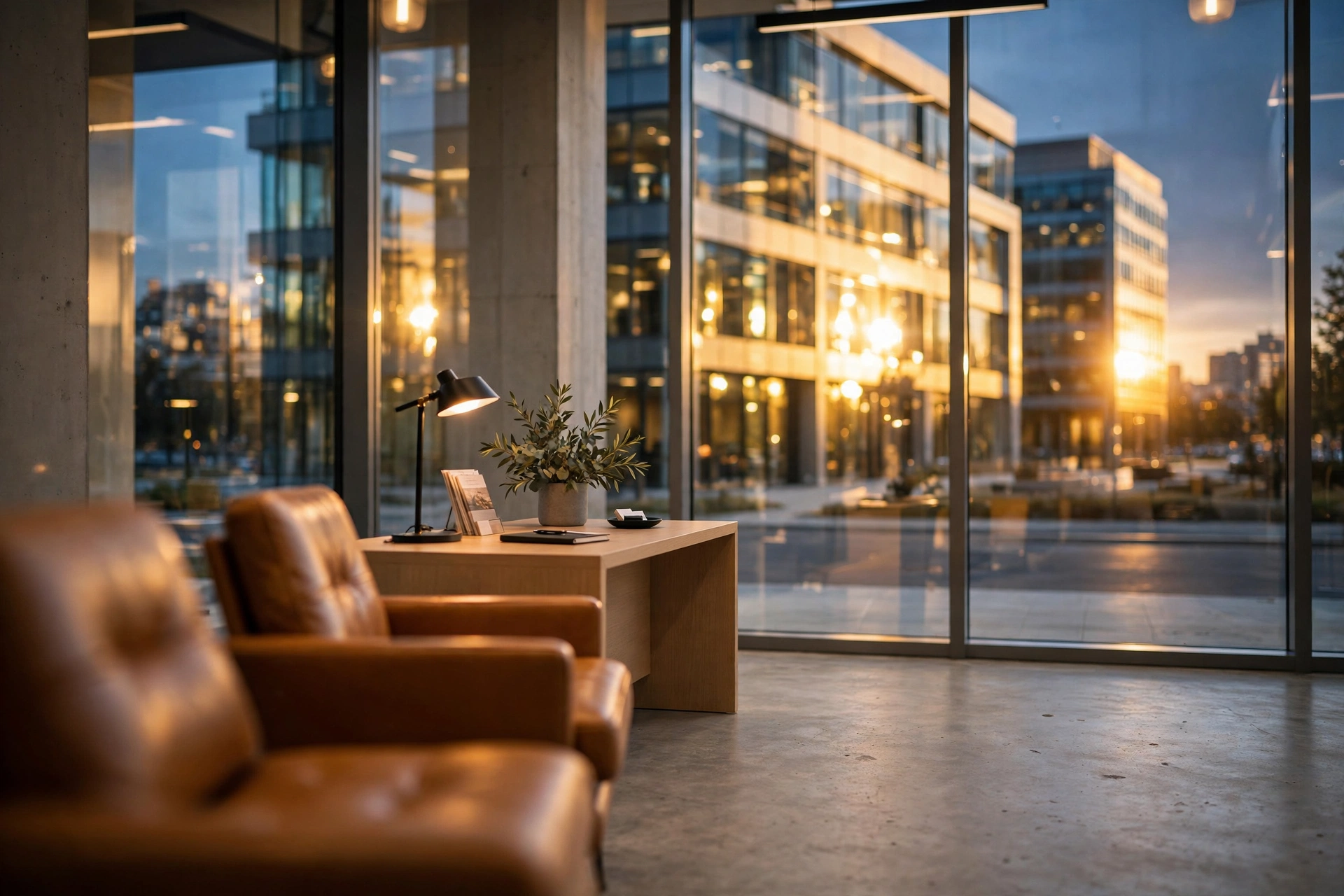
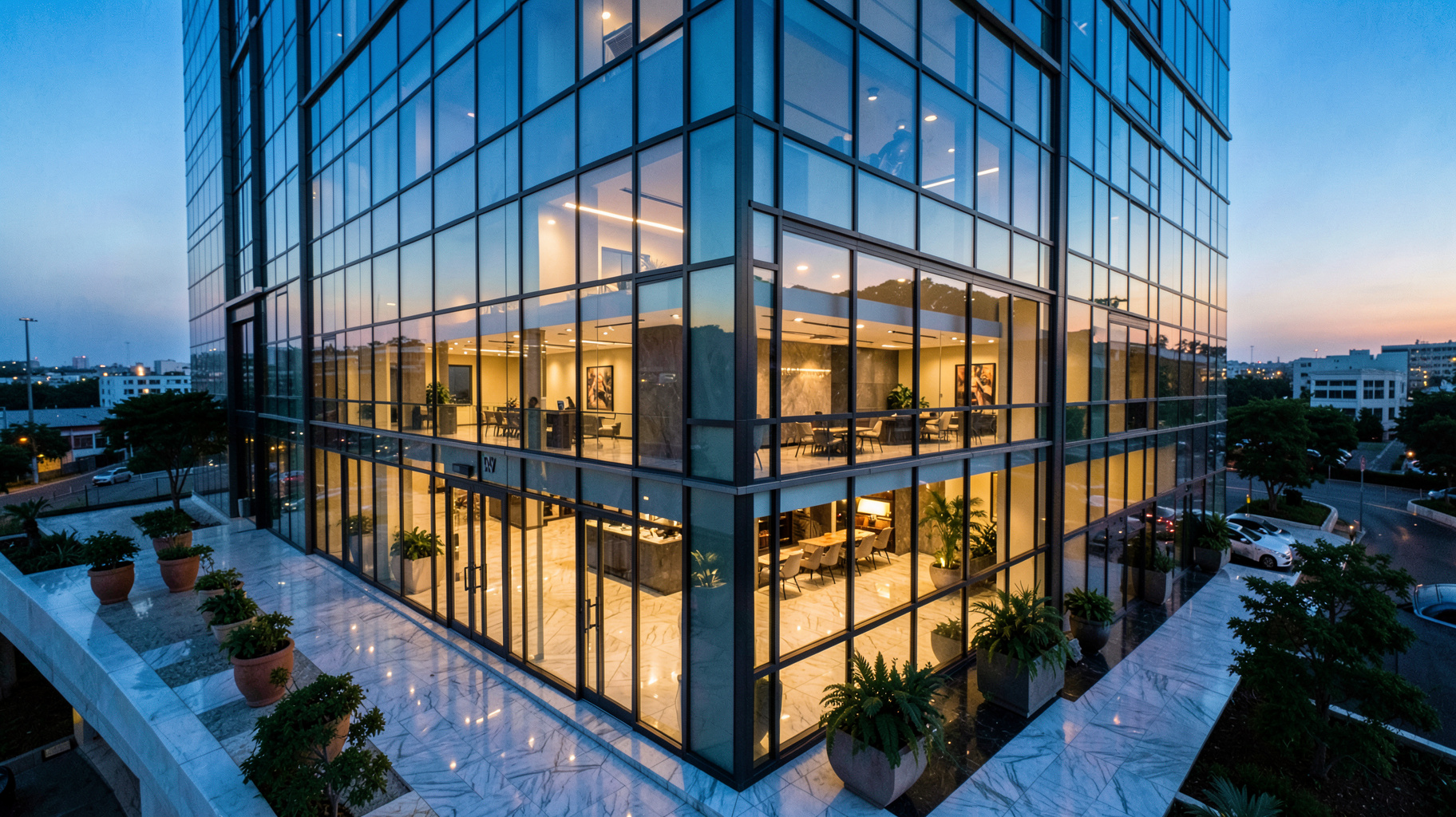
Now here's where it gets interesting: the "commercial" aspect refers to the intent. A photo of a luxury hotel is commercial photography because the goal is to sell a brand and a revenue stream, not just a building. This requires a strategic approach to lighting—using "blue hour" or "golden hour" to create an aura of exclusivity and success.
Why Commercial Visuals Directly Impact Your Bottom Line
In the commercial sector, vacancy is the greatest enemy of ROI. Every day a 10,000-square-foot office remains empty, the owner loses thousands in potential lease payments. High-quality imagery acts as a 24/7 sales agent, filtering out uninterested parties and attracting "qualified" leads who have already mentally moved into the space.
The business impact is quantifiable. Research from the Harvard Business Review suggests that visual storytelling in B2B contexts increases trust and perceived authority by over 30%. In real estate, this translates to a higher "asking price" threshold. When an asset is presented with cinematic lighting and perfect vertical lines, the market perceives it as "Class A" real estate, even if the physical structure is "Class B."
If you ignore the quality of your visuals, you are essentially leaving money on the table. Poorly lit, amateur photos suggest a lack of maintenance and a lack of professionalism from the property manager. This creates a "negative halo effect," where a potential tenant assumes the HVAC system is outdated or the management is unresponsive simply because the photos are blurry or dark.
For those managing a portfolio, the scale of the problem becomes evident. When you have 50 properties, inconsistent imagery degrades your brand equity. This is why many firms are now Investing in AI Property Enhancement for Real Estate to standardize the look across all listings, ensuring that a warehouse in Texas looks just as prestigious as a retail hub in New York.
💡
Key Takeaway
Commercial photography is not an aesthetic choice; it is a financial strategy to reduce vacancy rates and increase the capitalization rate (Cap Rate) of a property.
Practical Application: How to Execute a High-Conversion Shoot
Executing a commercial shoot requires a different mental framework than residential work. You are not selling a dream; you are selling a business opportunity.
Step 1: The Asset Audit
Before the camera comes out, identify the "money shots." For a warehouse, it's the loading docks and ceiling height. For a retail space, it's the foot traffic flow and signage visibility. For an office, it's the natural light and open-concept collaboration zones.
Step 2: Lighting and Timing
Avoid midday sun, which creates harsh shadows and "blown-out" windows. The most effective commercial shoots happen during the "Blue Hour" (just after sunset), where the interior lights glow warmly against a deep blue sky. If you miss this window, you can utilize the AI Property Enhancement Perto de Mim services to digitally convert day-to-dusk images.
Step 3: Composition and Scale
Use a tripod and a wide-angle lens (typically 16mm to 24mm on a full-frame sensor). The goal is to show the relationship between different areas of the property. This is where "Virtual Staging" becomes a powerhouse. An empty 5,000-square-foot office can feel cold and intimidating. By adding AI-generated workstations and modern furniture, you help the tenant visualize their operational flow.
Step 4: Post-Processing and AI Integration
The raw photo is only 50% of the result. Professional editing involves removing distracting elements—like trash bins, unsightly cables, or old signage. This is where RealVisionAI Blog - AI Real Estate Photography & Virtual Staging transforms the workflow. Instead of spending hours in Photoshop, the AI handles sky replacement and object removal in seconds, allowing the agent to push the listing live while the lead is still hot.

Comparing Traditional, Cheap AI, and Professional AI Workflows
Many property managers struggle to choose between a traditional photographer and an AI-driven approach. The reality is that the "middle ground" of cheap, unguided AI often produces "uncanny valley" results that look fake and repel investors.
| Feature | Traditional Photography | Generic/Cheap AI | RealVisionAI Workflow |
|---|---|---|---|
| Turnaround Time | 3–7 Days | Minutes | 12 Seconds |
| Visual Accuracy | High (but static) | Low (Hallucinations) | High (Pro-grade AI) |
| Cost per Asset | Very High | Very Low | Optimized/Scalable |
| Flexibility | Requires Reshoot | Unpredictable | Instant Iteration |
| Best For | Iconic Landmarks | Low-end listings | High-growth Portfolios |
As the table illustrates, the modern approach doesn't replace the camera; it augments the result. When we built the processing engine at RealVisionAI Blog - AI Real Estate Photography & Virtual Staging, we discovered that the biggest pain point for users wasn't the "taking" of the photo, but the "waiting" for the edit. By slashing that time to 12 seconds, we allow real estate professionals to iterate their visual strategy in real-time.
If you are unsure whether to upgrade your current process, it is helpful to ask: Is AI Property Enhancement Worth It?. For those managing high-turnover commercial assets, the answer is almost always yes, as the cost of a single vacant month far outweighs the cost of a year's worth of AI tools.
Common Questions & Misconceptions
Most guides on this topic treat commercial photography as "residential photography but bigger." This is a fundamental mistake. Here are the most common myths I encounter in the field.
Myth 1: "Wide-angle lenses are always the best choice."
Wrong. While wide angles show the space, over-using them creates a "fish-eye" effect that makes rooms look unnaturally cavernous and distorted. This looks amateur and can actually mislead a tenant, leading to disappointment during the physical walkthrough. The secret is using a medium-wide lens and taking more photos from different angles to build a cohesive narrative.
Myth 2: "Empty spaces are better because they are a 'blank canvas'."
In reality, an empty commercial space is a psychological void. It is difficult for the human brain to comprehend the scale of a vacant 2,000-square-foot shell. This is why Digital Staging Services: Scaling Real Estate Listings in 2026 are essential. Adding conceptual furniture tells the buyer, "This is how your headquarters will look," removing the mental effort required to imagine the space.
Myth 3: "AI images are 'dishonest' or 'fake'."
There is a massive difference between deceiving a client and optimizing a presentation. Removing a stray piece of trash or brightening a gray sky is not dishonesty; it is professional curation. As long as the structural integrity of the building is represented accurately, AI enhancements are simply the modern version of the "darkroom" edits photographers used for decades.
Frequently Asked Questions
How does commercial real estate photography differ from residential photography?
Residential photography focuses on the "feeling" of a home—emphasizing warmth, intimacy, and lifestyle. Commercial real estate photography is clinical and strategic. It focuses on "utility" and "capacity." For example, in a residential shoot, you might focus on a cozy reading nook; in a commercial shoot, you focus on the ceiling height and the number of electrical outlets. The goal is to prove that the space can support a business operation and generate a return on investment.
Which equipment is essential for professional commercial shoots?
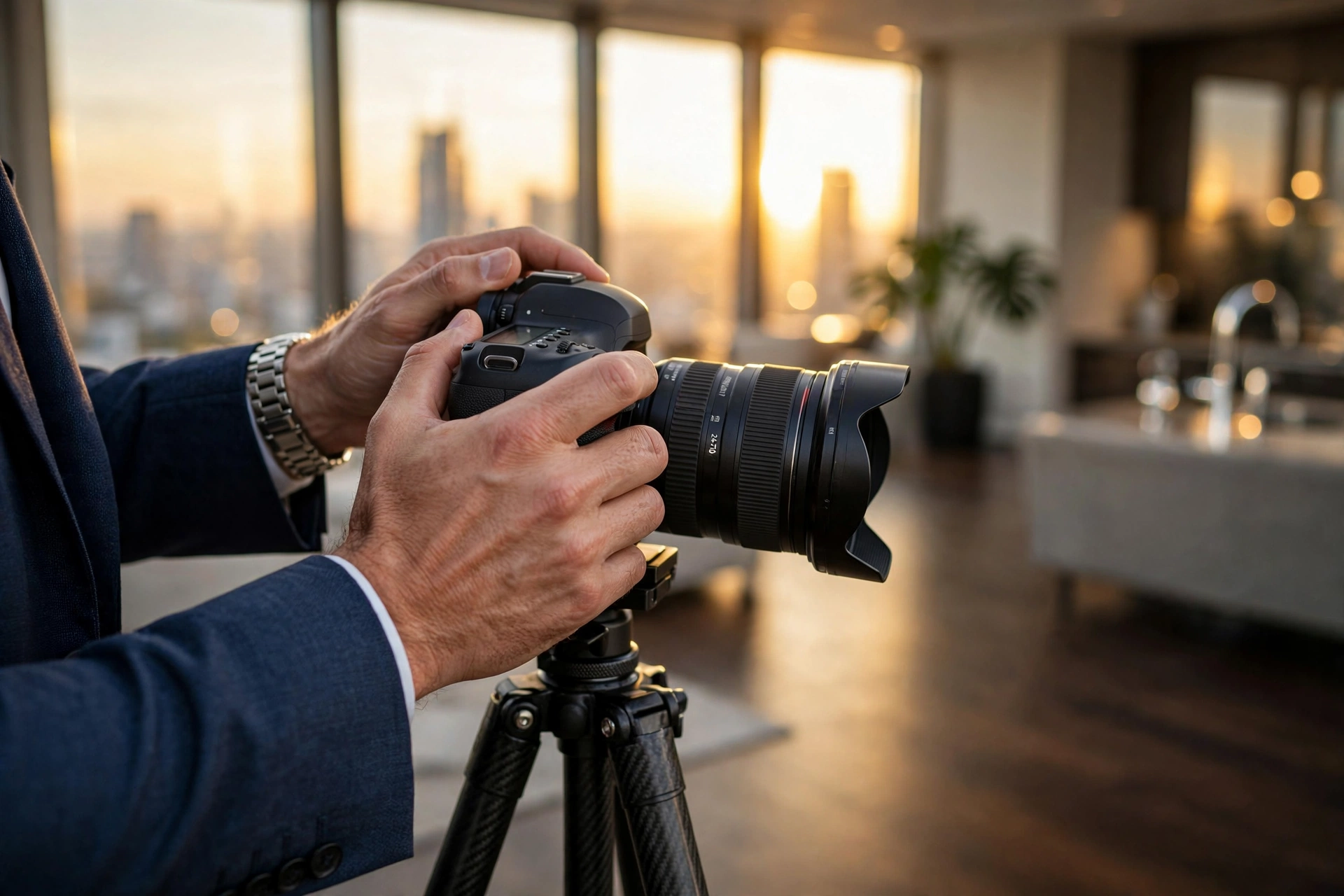
Beyond a high-resolution DSLR or mirrorless camera, a sturdy tripod is non-negotiable for long exposures and HDR brackets. A wide-angle lens (16-35mm) is standard, but a tilt-shift lens is the gold standard for commercial work because it allows the photographer to keep vertical lines perfectly straight, preventing the "leaning building" effect. Additionally, a remote shutter release is essential to avoid camera shake during the high-precision shots required for industrial spaces.
How long does the editing process usually take for commercial assets?
In a traditional workflow, editing can take anywhere from 48 hours to a full week, especially if the photographer is manually masking windows and adjusting exposures. However, using the technology at RealVisionAI Blog - AI Real Estate Photography & Virtual Staging, this process is compressed into 12 seconds. By automating the most tedious parts of image editing—like sky replacement and decluttering—professionals can move from the field to the listing in a matter of minutes.
What is the role of drones in commercial real estate photography?
Drones are no longer optional; they are a requirement for commercial assets. An aerial shot provides the "context of location," showing the property's proximity to highways, ports, or other commercial hubs. It allows an investor to see the total acreage and the surrounding infrastructure, which is a critical part of the valuation. Integrating these shots with Property Listing Optimization: The 2026 Guide to Higher Conversion ensures that the asset's geographic advantage is immediately apparent.
How do I choose between a full-service agency and AI-powered tools?
The choice depends on your volume and budget. A full-service agency is ideal for a one-time, "trophy" property where you need a director to manage the entire scene. However, for those managing a portfolio of 10+ properties, the cost and time of an agency become prohibitive. AI-powered tools offer a scalable solution that maintains a consistent professional standard across all assets without the overhead of a full crew for every single listing.
Final Thoughts on Commercial Real Estate Photography
Ultimately, commercial real estate photography is about the psychology of value. When you present a property with precision, clarity, and professional polish, you aren't just showing a building—you are signaling that the asset is well-managed and a safe bet for capital.
Whether you are using a tilt-shift lens for a skyscraper or employing Real Estate Image Processing Perto de Mim to polish your portfolio, the objective remains the same: maximize the perceived utility of the space. In an era where the first "showing" happens on a smartphone screen, your visual assets are your most powerful negotiation tool.
Stop letting your properties sit vacant due to mediocre imagery. Experience the power of instant, pro-grade visuals with RealVisionAI Blog - AI Real Estate Photography & Virtual Staging. Visit realvisionaire.com to transform your listings in 12 seconds.
Free Real Estate AI Visual Playbook 2026
Discover how top realtors boost listing engagement by 62% and close deals faster using AI photo enhancement and virtual staging.