

How to Master Commercial Real Estate Photography for High-Value Listings
Capturing a warehouse, a retail complex, or a high-rise office requires a fundamentally different approach than residential shoots. To succeed in commercial real estate photography, you must prioritize structural scale and functional flow over cozy aesthetics. The most effective way to achieve this is by combining wide-angle architectural perspectives with a rigorous post-processing workflow that corrects vertical distortion and balances disparate light sources.
In my experience working with high-volume commercial portfolios, the biggest failure point isn't the camera gear, but the lack of a strategic "shot list" that proves the property's utility to a business owner. If you simply take "pretty pictures," you miss the operational details that a commercial tenant actually cares about, such as loading dock accessibility or HVAC zoning. To scale these results, many professionals are now integrating Real Estate Visual Marketing: The 2026 Guide to AI-Driven Sales to ensure their images convert views into site visits.
What Is the Core Framework of Commercial Imaging?
Commercial imaging is the art of documenting a property's economic potential. Unlike residential photography, where the goal is to evoke emotion and "homey" feelings, commercial work is about demonstrating efficiency, scale, and location. It requires a technical mastery of linear perspective to ensure that the massive vertical lines of a corporate building do not appear to "lean" backward.
📚
Definition
Linear Perspective in architectural photography is the technique of ensuring that all vertical lines remain perfectly parallel to the edge of the frame, preventing the "keystoning" effect where buildings appear to tilt.
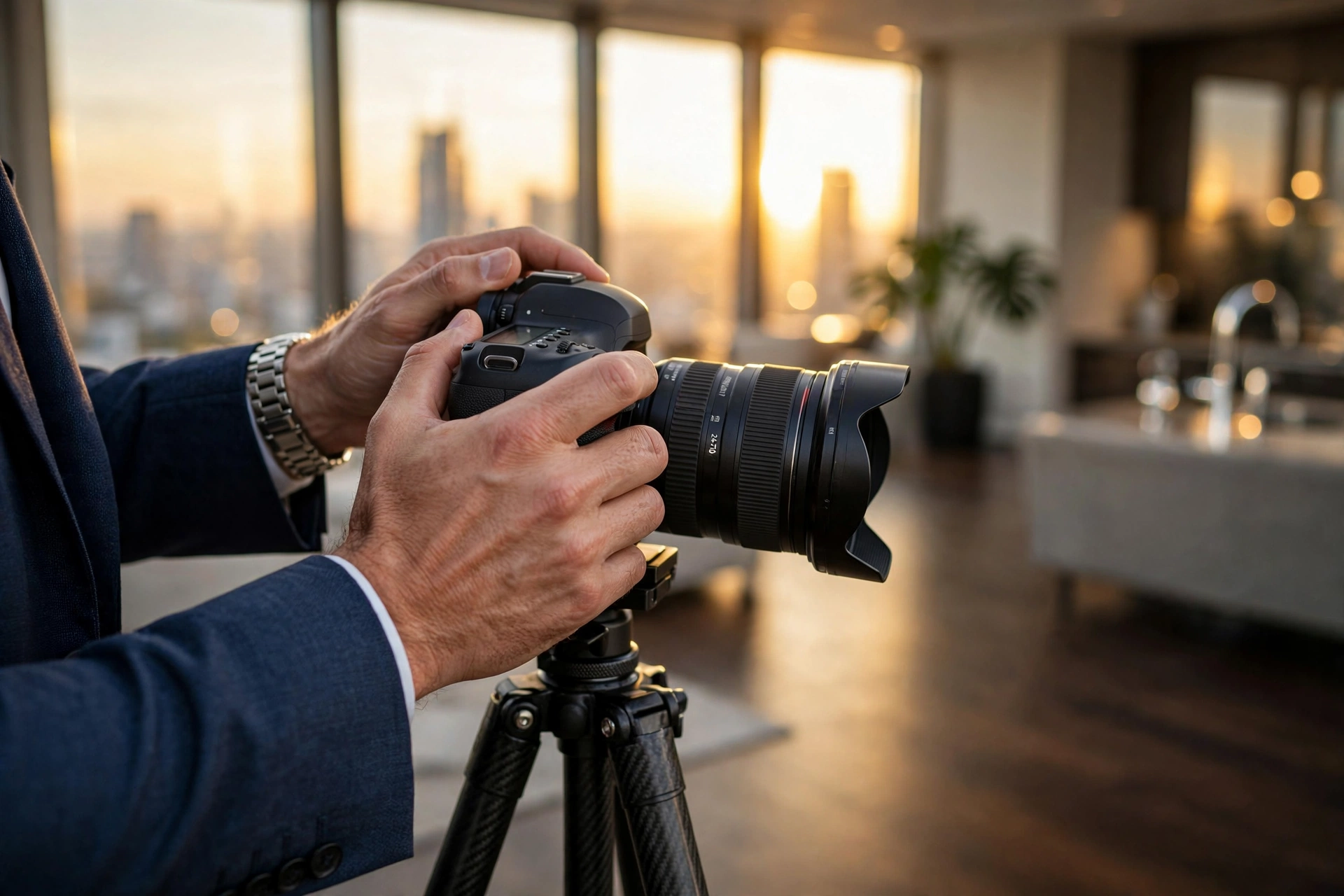
To execute this, photographers typically use tilt-shift lenses or high-resolution sensors that allow for significant cropping and correction in post-production. The focus is on "hero shots" (the exterior that defines the brand) and "utility shots" (the interior spaces that prove functionality). According to a report by the National Association of Realtors, high-quality professional imagery is no longer an optional luxury but a baseline requirement, as the majority of commercial buyers now filter their search based on visual quality before ever contacting an agent.
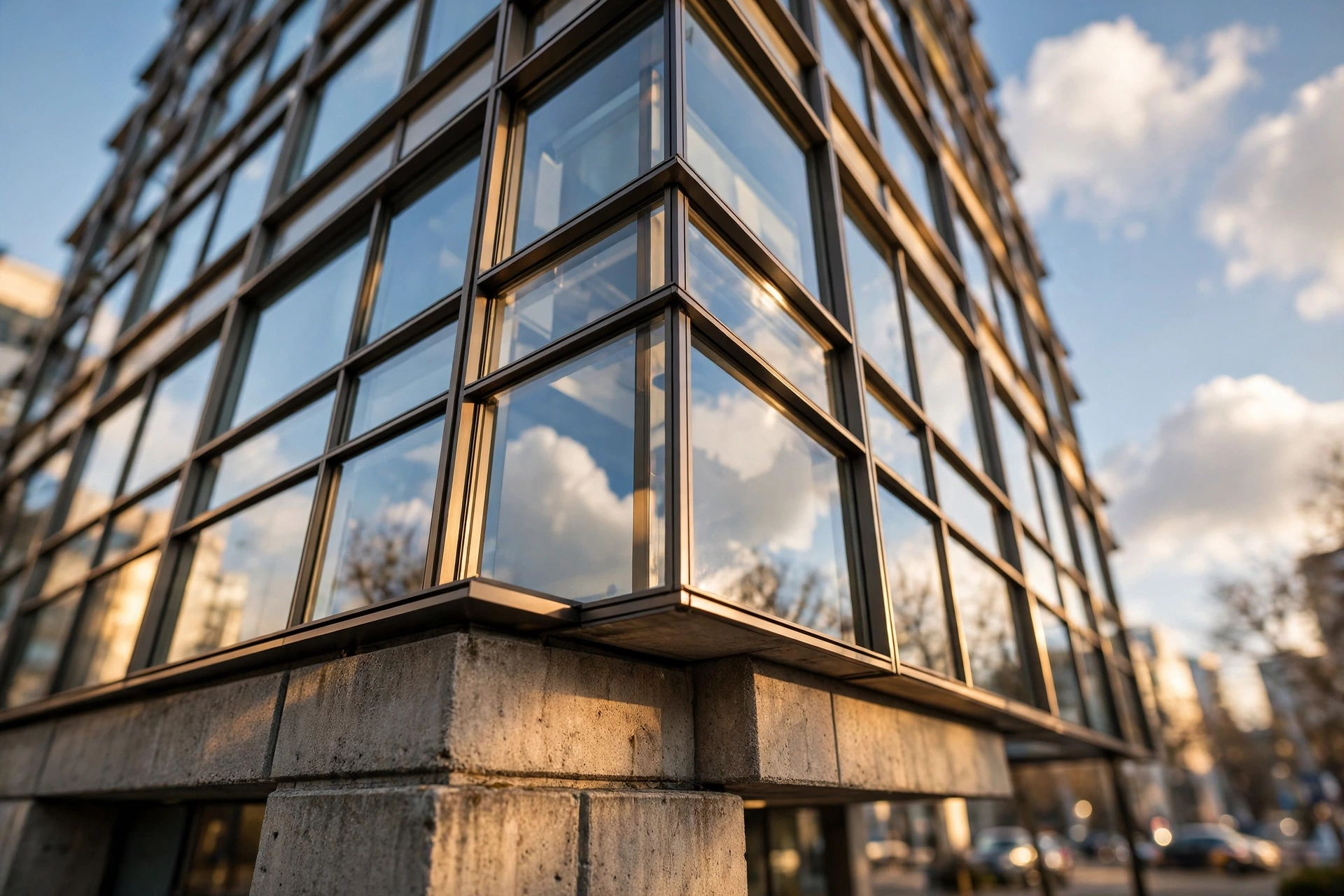
When we developed the processing standards at RealVisionAI Blog - AI Real Estate Photography & Virtual Staging, we discovered that commercial clients value "cleanliness" over "warmth." This means prioritizing neutral color temperatures and high-contrast clarity to highlight the actual materials—concrete, steel, and glass—rather than using the soft, golden-hour filters common in residential work. If you are just starting, I recommend studying AI Property Enhancement for Beginners to understand how digital tools can fix the structural anomalies common in large-scale commercial spaces.
Why Does Precision in Commercial Photography Directly Impact ROI?
The financial stakes in the commercial sector are exponentially higher than in residential sales. A single poorly lit photo of a warehouse interior can make a 50,000-square-foot space feel cramped or dilapidated, potentially costing a landlord thousands in monthly rental income due to increased vacancy time.
Data from Gartner indicates that the integration of high-fidelity visual assets in B2B sales cycles can reduce the time-to-close by up to 20% by pre-qualifying leads through digital transparency. When a potential tenant can clearly see the ceiling height, the floor load capacity (implied by the slab quality), and the natural light distribution, they move through the funnel faster.
The risk of ignoring these standards is high. A property listed with amateur photos is often perceived as being "managed poorly," which leads buyers to negotiate more aggressively on the price. Conversely, an investment-grade presentation suggests a well-maintained asset. This is why understanding Key Benefits of AI Property Enhancement for Real Estate is essential; it allows a photographer to take a raw, gray-sky image of a commercial park and transform it into a vibrant, inviting corporate campus in seconds.
Furthermore, the impact on search visibility cannot be overstated. Listings with a minimum of 20 high-resolution, professionally edited images receive significantly more engagement on the Multiple Listing Service (MLS) than those with five or ten. This increased traffic creates a competitive bidding environment, which is the primary driver for maximizing the final sale price of commercial assets.
Step-by-Step Implementation: How to Execute a Commercial Shoot
The mistake I made early on—and that I see constantly—is arriving at a commercial site and "winging it." Commercial properties are too large for random exploration. You need a surgical approach.
Step 1: The Pre-Shoot Audit and Shot List
Before touching the camera, walk the property. Identify the "Money Shot" (the most impressive angle of the exterior) and the "Utility Shots" (loading bays, electrical panels, parking ratios). Create a checklist based on the property's specific use case. For a retail space, focus on storefront visibility and foot traffic flow. For an industrial site, focus on clear spans and dock heights.
Step 2: Mastering the Exterior "Hero" Shot
Use a tripod and a wide-angle lens, but avoid "ultra-wide" lenses that distort the edges too aggressively. Position yourself at a corner to create depth. If the sky is overcast, don't stress about the weather. This is where RealVisionAI Blog - AI Real Estate Photography & Virtual Staging becomes a powerhouse. Instead of waiting three days for a sunny window, you can use AI sky replacement to create a professional, blue-sky environment that makes the property look its best.
Step 3: Interior Lighting and Verticality
Commercial interiors often have "mixed lighting"—warm overhead fluorescents combined with cool natural light from large windows. Use HDR (High Dynamic Range) bracketing to capture both the bright windows and the dark corners of a warehouse. Ensure your camera is perfectly level. If you cannot get the angle right, you will need Real Estate Image Processing Perto de Mim to correct the vertical lines during the editing phase.
Step 4: High-Speed Post-Production
The commercial market moves fast. A listing that takes two weeks to get photos is a listing that loses momentum. Use a streamlined workflow:
- Correction: Fix white balance and vertical perspective.
- Enhancement: Use AI to remove distracting objects (like trash bins or old signage).
- Staging: If the office is empty, use Digital Staging Services: Scaling Real Estate Listings in 2026 to show how a modern workspace would actually look.

💡
Key Takeaway
Commercial photography is not about "beauty"; it is about "proof of utility." Every image must answer a specific question a business owner has about the property's functionality.
Comparing Production Methods: Traditional vs. AI-Enhanced
Choosing the right workflow depends on your volume and your budget. Many photographers still cling to manual "hand-brushing" of images, which is unsustainable in 2026.
| Feature | Traditional Manual Editing | Generic/Cheap AI Tools | Professional AI Workflow (RealVisionAI) |
|---|---|---|---|
| Turnaround Time | 3-5 Days | 1 Hour | 12 Seconds |
| Perspective Accuracy | High (Manual) | Low (Distorted) | High (Automated Precision) |
| Visual Consistency | Varies by Editor | Often "Plastic" Look | Photorealistic & Brand-Consistent |
| Scalability | Very Low | High | Very High |
| Best For | Single High-End Museums | Low-Budget Flips | Commercial Portfolios & Agencies |
As the table shows, the traditional approach is too slow for the modern market, while cheap AI tools often create "hallucinations" (adding windows where none exist), which can lead to legal disputes regarding property misrepresentation. A professional-grade AI system ensures the architecture remains accurate while the aesthetics are optimized. For those wondering Is AI Property Enhancement Worth It?, the answer lies in the ability to handle 100 properties a month with the quality of a boutique studio.
Common Misconceptions in Commercial Photography
Most guides get this wrong by treating commercial shoots like "big residential shoots." They are not.
Myth 1: "The wider the lens, the better."
Wrong. Using an ultra-wide lens (e.g., 10mm) on a commercial space often creates "fisheye" distortion that makes a room look smaller or unnaturally curved. This misleads the client and looks amateur. Use a 16-35mm range and rely on proper positioning and Passo a Passo: AI Property Enhancement to create the sense of space without lying to the viewer.
Myth 2: "You need the most expensive camera body to compete."
Incorrect. The sensor matters, but the process matters more. A photographer with a mid-range mirrorless camera and a professional post-processing workflow from RealVisionAI will beat a photographer with a $10,000 camera who doesn't know how to fix a color cast.
Myth 3: "Empty spaces are easier to photograph."
In reality, empty commercial spaces are "cold" and often look depressing. They lack scale. This is why virtual staging is no longer optional. By adding a conceptual office layout, you give the viewer a mental anchor to understand the room's size. If you aren't sure when to pivot, check our guide on When to Upgrade Your Real Estate Image Processing.
Frequently Asked Questions
How do I handle the extreme lighting differences in a commercial warehouse?
The most effective method is "Exposure Bracketing," where you take 3 to 5 photos of the same scene at different exposure levels (underexposed, neutral, and overexposed). You then merge these into a single HDR image. This ensures that the bright light coming through the loading dock doors doesn't "blow out" into a white blob, while the deep corners of the warehouse remain visible. In 2026, AI-driven shadow recovery tools have made this process even faster, allowing photographers to balance these extremes without spending hours in manual masking.
What is the best time of day for commercial exterior shots?
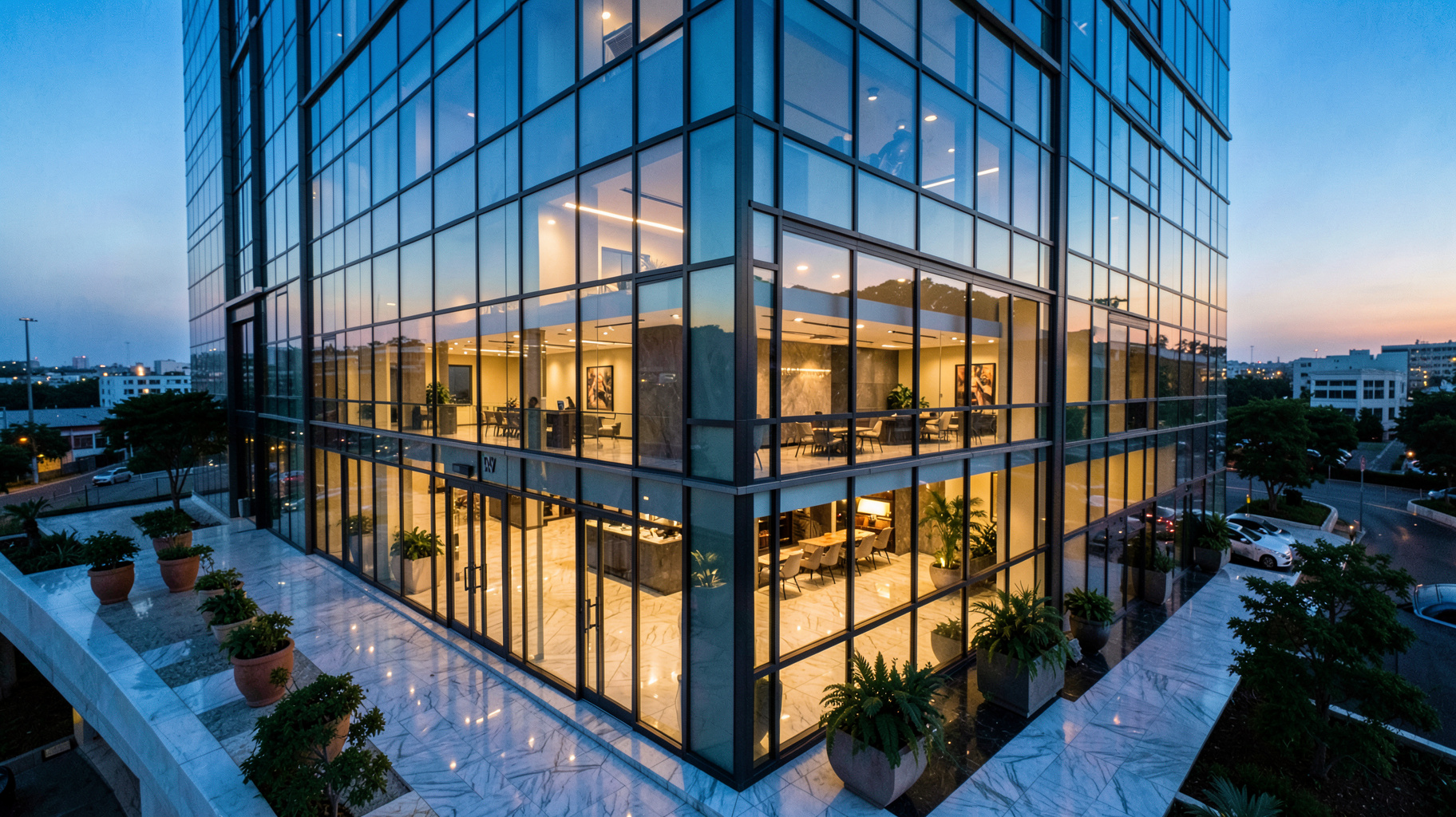
For most corporate buildings, "Blue Hour" (the window just after sunset) is superior to "Golden Hour." Blue hour allows the building's interior and exterior architectural lighting to glow against a deep blue sky, creating a high-contrast, luxury feel. However, if you are on a tight deadline and can only shoot at noon, you can use AI-driven "Day-to-Dusk" conversion. This gives you the aesthetic of a twilight shoot without the need to return to the property after business hours, which is a massive time-saver for property managers.
Should I use a drone for every commercial listing?
While not mandatory for every shoot, drones are essential for properties with significant land, large parking lots, or strategic locations near highways. A drone shot provides "contextual value," showing the buyer exactly where the property sits in relation to the surrounding infrastructure. According to industry benchmarks, listings with aerial views see a 15-30% increase in click-through rates. Ensure your drone shots include a "top-down" map view and a "hero" orbiting shot of the main entrance to maximize the impact.
How do I stop the walls from looking like they are leaning in my photos?
This is caused by "vertical convergence." To fix this, you must keep your camera sensor perfectly parallel to the wall you are photographing. If you are tilting the camera up to capture the top of a tall building, the lines will converge. The professional solution is to use a tilt-shift lens or to shoot slightly wider than necessary and then use a "Perspective Crop" tool in post-production. For those without technical software, using Onde Encontrar Real Estate Image Processing services can automate this correction in seconds.
What is the ideal number of photos for a commercial listing?
For a standard office or retail space, 15 to 25 photos are usually sufficient. However, for large industrial complexes, you may need 40+ images to cover all the functional areas. The goal is to cover the "journey" of the user: Exterior $\rightarrow$ Entry $\rightarrow$ Main Floor $\rightarrow$ Utility Areas $\rightarrow$ Parking $\rightarrow$ Surrounding Area. Overloading a listing with 100 nearly identical photos actually decreases conversion because it creates "decision fatigue" for the buyer. Focus on quality and distinct angles over sheer quantity.
Final Thoughts on Commercial Real Estate Photography
Succeeding in commercial real estate photography requires a shift in mindset from "art" to "asset documentation." By prioritizing vertical accuracy, functional utility, and high-speed delivery, you position yourself as a partner in the sale rather than just a vendor.
The most successful photographers in 2026 are those who blend traditional architectural skills with the efficiency of artificial intelligence. Whether you are correcting a gray sky or virtually staging an empty warehouse, the goal is to present the property's highest and best use. If you want to eliminate the bottleneck of manual editing and deliver market-ready visuals in seconds, explore the tools at RealVisionAI Blog - AI Real Estate Photography & Virtual Staging.
For more on optimizing your visual strategy, see our AI Property Enhancement Pricing Guide to understand how to price these high-value services for your clients.
Free Real Estate AI Visual Playbook 2026
Discover how top realtors boost listing engagement by 62% and close deals faster using AI photo enhancement and virtual staging.