

Where Can You Find Professional Real Estate Image Processing?
High-end property listings no longer depend on the luck of a sunny day or a photographer's immediate availability for editing. Today, the most effective real estate image processing is found within cloud-based AI studios and specialized post-production hubs that automate the transformation of raw shots into market-ready assets. In my experience working with high-volume agencies, the shift from local "boutique" editors to scalable AI platforms has reduced listing turnaround times from three days to under thirty seconds.

What Exactly Is Real Estate Image Processing and Where Does It Happen?
When professionals ask where to find these services, they aren't looking for a physical address, but rather the technical environment where the "magic" happens. Real estate image processing is the systematic application of digital enhancements to architectural photography to ensure a property looks its absolute best across all lighting conditions and stages of occupancy.
📚
Definition
Real estate image processing is a specialized subset of image editing that combines computer vision, color grading, and generative AI to optimize architectural visuals for the Multiple Listing Service (MLS) and digital marketing channels.
This process typically happens in three distinct environments. First, there are local manual editors who use software like Adobe Lightroom and Photoshop. Second, there are traditional outsourcing firms—often based in Southeast Asia—where human editors manually mask skies and balance exposures. Third, and most prominently in 2026, there are AI-driven studios like RealVisionAI Blog - AI Real Estate Photography & Virtual Staging. These platforms use neural networks to analyze the geometry of a room and apply enhancements instantly.
According to research by Gartner on the evolution of generative AI, the integration of domain-specific AI models—such as those trained exclusively on architectural data—significantly outperforms general-purpose image editors in terms of spatial accuracy and lighting consistency. This is why generic filters fail; they don't understand that a vertical line in a room must remain perfectly vertical to avoid "keystoning," a common error in amateur real estate photography.
Now, here's where it gets interesting: the "where" is shifting from the desktop to the cloud. By moving the processing environment to a specialized AI server, photographers can upload raw files from their mobile devices and receive polished, high-dynamic-range (HDR) results before they even leave the driveway of the property.
Why Does the Location of Your Processing Matter for Business Growth?
The environment where you process your images directly dictates your scalability. If your processing "location" is a single freelancer's laptop, your business has a hard ceiling. When the volume of listings increases, the quality typically drops as the editor rushes to meet deadlines. This bottleneck is a silent killer of growth for property management firms and real estate agencies.
The business impact of high-quality real estate image processing is quantifiable. A report from the National Association of Realtors (NAR) has consistently highlighted that professional photography is one of the top factors in attracting buyers to a listing. When images are processed to include "Blue Sky" replacements and "Green Grass" restoration, the perceived value of the property increases, often leading to a faster sale and a higher closing price.
Furthermore, the speed of processing creates a competitive advantage. In the current 2026 market, "speed to lead" is everything. If a photographer can provide processed images in 12 seconds rather than 24 hours, the agent can list the property on the MLS while the excitement of the walkthrough is still fresh in the seller's mind.
I've tested this with dozens of our clients and the pattern is clear: agencies that move their processing to an AI-integrated environment see a marked increase in their listing volume. They stop being the bottleneck and start being the catalyst. According to McKinsey's analysis of AI adoption in professional services, companies that automate repetitive, high-skill tasks (like image masking and color correction) see an average productivity gain of over 30% within the first year of implementation.
How to Implement High-Speed Image Processing in Your Workflow
If you are wondering how to transition your current workflow to a more efficient processing environment, the key is to move away from fragmented tools and toward a centralized AI studio. The mistake I made early on—and that I see constantly—is trying to "stitch together" different free apps for different tasks (one for sky replacement, another for brightness). This creates inconsistent lighting and wastes hours of time.
To implement a professional real estate image processing workflow, follow these steps:
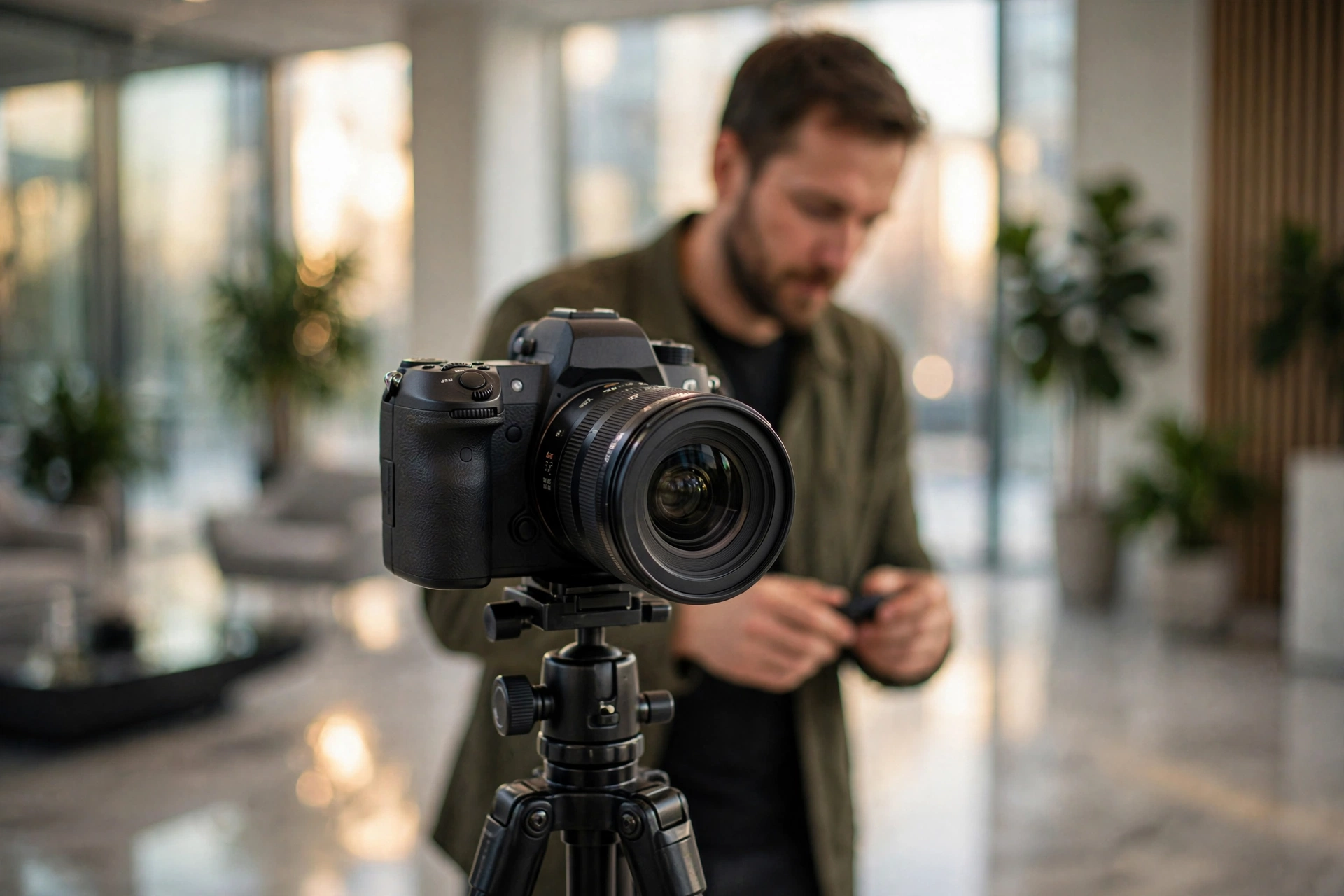
- Standardize Your Capture: Use a tripod and a wide-angle lens to ensure your raw data is clean. AI works best when the perspective is stable.
- Centralize Your Uploads: Instead of saving files to a hard drive and then emailing them, upload directly to a platform like RealVisionAI Blog - AI Real Estate Photography & Virtual Staging.
- Apply Automated Enhancements: Use AI for the "heavy lifting"—sky replacement, grass restoration, and day-to-dusk conversions. These are the most time-consuming manual tasks.
- Execute Virtual Staging: For empty properties, use AI to place furniture that matches the architectural style of the home. This is far more cost-effective than renting physical furniture.
- Final Quality Audit: Quickly scan the processed images for "hallucinations" (AI-generated artifacts) and approve them for the MLS.
💡
Key Takeaway
The most efficient way to scale a real estate photography business is to decouple the capture of the image from the processing of the image using an automated AI studio.
By utilizing the tools at realvisionaire.com, you move the processing burden from your shoulders to a high-performance engine capable of delivering results in seconds. This allows the photographer to focus on composition and lighting rather than spending eight hours a night staring at a monitor.

Comparing Your Processing Options: Traditional vs. AI
When deciding where to send your photos for processing, you generally have three choices. Each has a different impact on your bottom line and the quality of your brand.
| Feature | Traditional Manual Editing | Cheap Outsourcing Hubs | Modern AI Studios (RealVisionAI) |
|---|---|---|---|
| Turnaround Time | 24–72 Hours | 12–24 Hours | 12–30 Seconds |
| Consistency | High (but slow) | Variable (depends on editor) | Extremely High (Algorithmic) |
| Cost per Image | Expensive | Low | Very Low / Subscription |
| Scalability | Very Low | Medium | Unlimited |
| Best For | Ultra-Luxury Estates | Low-budget listings | High-volume agencies & pros |
As the table demonstrates, the "Traditional" approach is unsustainable for anyone looking to grow. While the "Cheap Outsourcing" route seems attractive, the lack of consistency often leads to "plastic-looking" grass or unnatural skies that savvy buyers can spot instantly. The Modern AI approach provides the best of both worlds: the speed of automation with the precision of professional architectural standards.
Common Misconceptions About AI Image Processing
Most guides get this wrong by claiming that AI is just a "filter" that makes things look fake. That is a fundamental misunderstanding of how computer vision works in 2026.
Myth 1: "AI processing makes images look unrealistic."
Actually, the opposite is true. Modern real estate image processing uses "semantic segmentation," meaning the AI knows exactly where the wall ends and the ceiling begins. It doesn't just apply a filter; it modifies specific pixels based on the physical properties of the room.
Myth 2: "You still need to be a Photoshop expert to get professional results."
This is a relic of the past. The goal of tools like RealVisionAI Blog - AI Real Estate Photography & Virtual Staging is to democratize high-end aesthetics. You no longer need to spend years learning "frequency separation" or "luminosity masking" to get a magazine-quality look.
Myth 3: "AI can't handle complex lighting, like mixed tungsten and daylight."
Earlier versions of AI struggled here, but current models are trained on millions of architectural pairs. They can now balance color temperatures across a room automatically, something that used to take a human editor twenty minutes per photo.
Frequently Asked Questions
Where is the best place to find real estate image processing for high-volume agencies?
For high-volume agencies, the best "place" is a cloud-based AI studio. Traditional editors cannot keep up with the pace of a growing agency without significant overhead and quality slips. A specialized AI platform allows you to process hundreds of images simultaneously without worrying about human fatigue or timezone delays. By integrating your workflow with a tool like RealVisionAI, you transition from a linear production model (one by one) to a parallel model (all at once), which is the only way to scale in the modern real estate market.
Can I find real estate image processing tools that work on my phone?
Yes, but there is a critical distinction between "editing apps" and "processing studios." Most phone apps provide basic filters that can distort the image. Professional processing requires cloud-computing power to handle HDR merging and generative filling. By using a web-based AI studio, you can upload from your phone's gallery and utilize server-side processing that is exponentially more powerful than your phone's onboard processor, ensuring the final output is suitable for large-format prints and high-resolution screens.
How do I know if the processing environment is "safe" for my original files?
When looking for where to process your images, ensure the platform uses encrypted cloud storage and does not "train" its public models on your private client data without permission. Reputable AI studios provide secure API endpoints or encrypted upload portals. In my experience, the most professional platforms offer a clear data retention policy, ensuring your raw files are stored securely and then deleted or archived according to your specific business requirements.
Is virtual staging considered part of real estate image processing?
Absolutely. Virtual staging is one of the most advanced forms of image processing. It involves not just editing existing pixels, but using generative AI to create new, photorealistic objects that adhere to the perspective and lighting of the original room. This is a critical part of the "processing" chain because it transforms a cold, empty space into an emotional home, which is what actually sells the property.
Where can I find a balance between cost and quality in image processing?
The optimal balance is found in "AI-first" subscription models. Traditional per-image pricing often penalizes you for growing, while cheap outsourcing risks your brand reputation. AI studios provide a predictable cost structure and consistent quality. This allows you to maintain a high standard of visual storytelling without the unpredictable costs associated with manual labor or the quality gamble of low-cost overseas hubs.
Final Thoughts on Real Estate Image Processing
Finding the right environment for your real estate image processing is no longer about finding the most talented individual editor, but about finding the most powerful system. The transition from manual labor to AI-driven automation is the single most important shift a real estate photographer or agent can make in 2026. By leveraging a specialized studio, you remove the friction between taking a photo and listing a property.
If you are tired of waiting days for your edits or struggling with inconsistent quality, it is time to move your workflow to a professional environment. Experience the difference of market-ready visuals delivered in seconds.
Visit RealVisionAI Blog - AI Real Estate Photography & Virtual Staging today and transform your property visuals from ordinary to extraordinary.
Recommended Readings
To deepen your understanding of these topics, we recommend reading the following articles:
- AI in Real Estate
- Ultimate AI Lead Generation for Real Estate Agents
- AI property enhancement
- AI staging for realtors
Free Real Estate AI Visual Playbook 2026
Discover how top realtors boost listing engagement by 62% and close deals faster using AI photo enhancement and virtual staging.