How to Master AI Real Estate Photo Enhancement: A Step-by-Step Guide
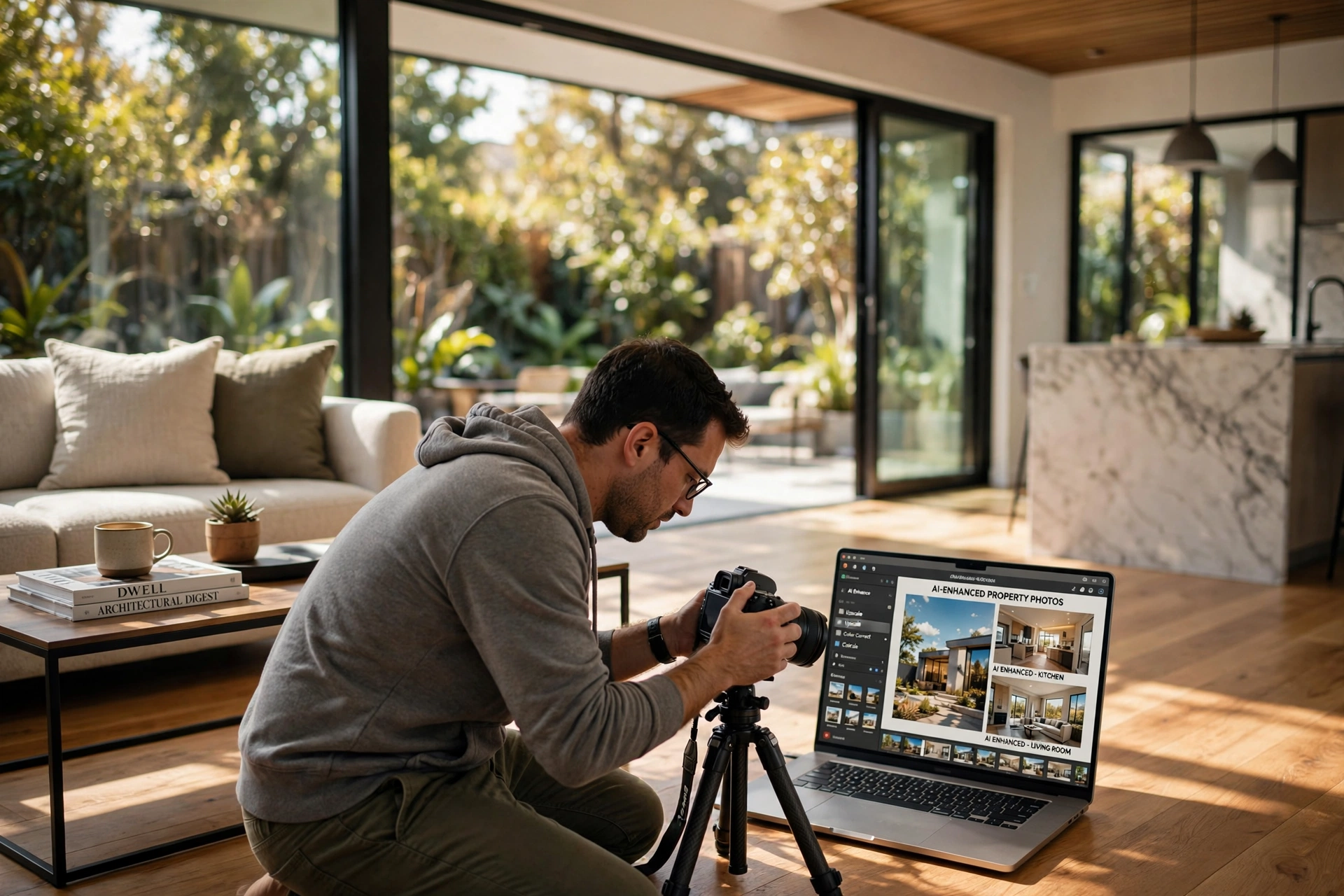
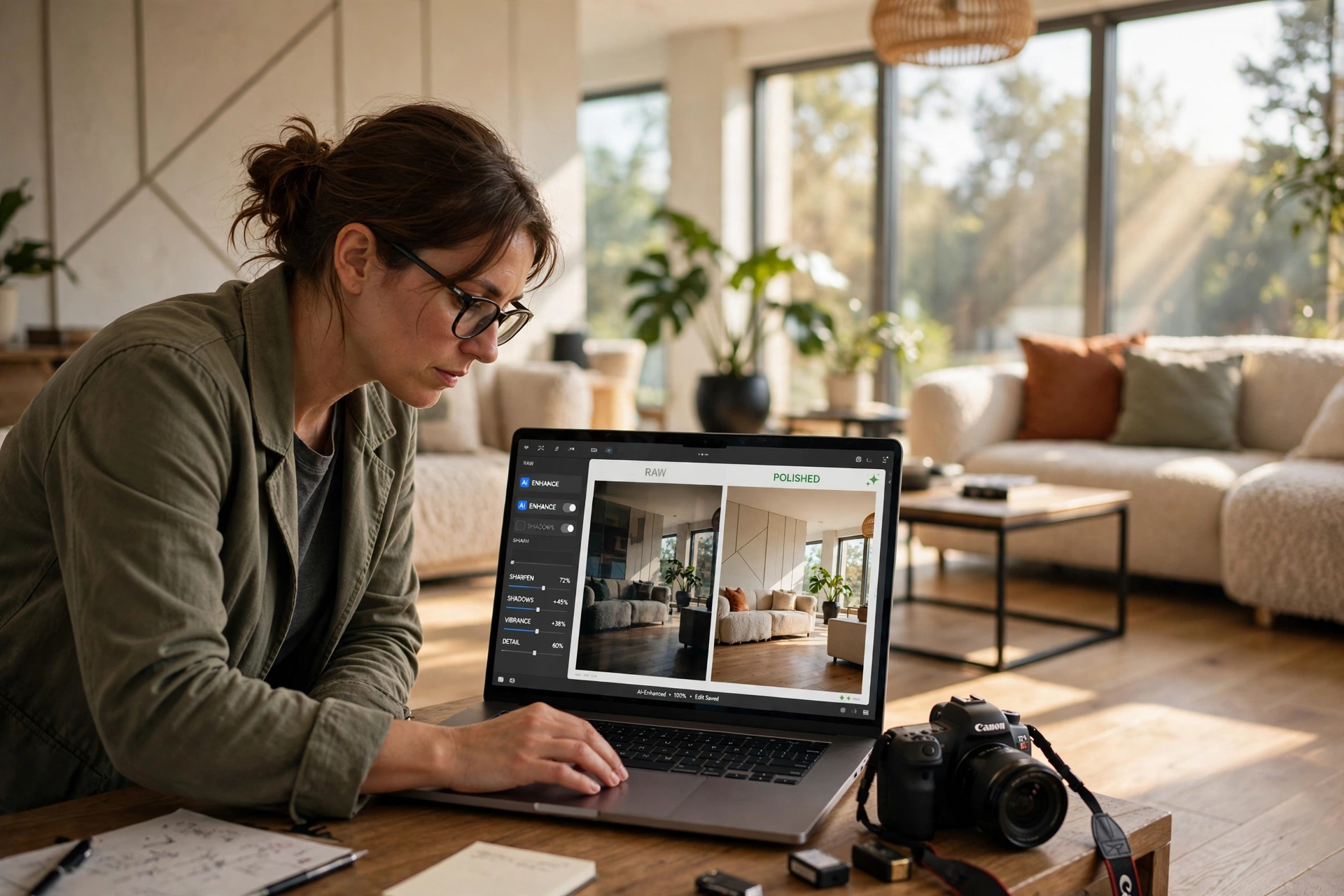
High-resolution imagery is the only way to stop a potential buyer from scrolling past a listing in under two seconds. To achieve this, professionals are moving away from manual editing and adopting ai real estate photo enhancement, a process that uses computer vision to automatically correct lighting, perspective, and color. The fastest way to implement this is by utilizing an AI-driven studio that handles sky replacement, grass restoration, and HDR blending in seconds, allowing agents to upload raw files and receive market-ready visuals almost instantly.
For those seeking a deeper dive into the technical side, our How AI Real Estate Photography Works: A Complete Guide explains the underlying neural networks.
What Is AI Real Estate Photo Enhancement and How Does It Work?
At its core, this technology is a specialized application of deep learning designed to recognize architectural elements and correct the flaws inherent in property photography. Unlike generic filters, these systems understand the difference between a ceiling and a wall, allowing them to apply localized adjustments without creating "halos" or unnatural blurs.
📚
Definition
AI Real Estate Photo Enhancement is the use of machine learning algorithms and computer vision to automatically analyze, optimize, and transform property images, correcting issues such as lens distortion, poor exposure, and dull colors to create a visually appealing listing.
In my experience working with luxury property managers, the biggest challenge is always the "grey sky" problem. A photo taken on a cloudy day can make a million-dollar home look depressing. AI solves this through semantic segmentation, where the AI identifies the exact pixels representing the sky and replaces them with a high-dynamic-range (HDR) blue sky that matches the lighting of the rest of the scene.
According to research by Gartner, the adoption of AI-driven content creation is accelerating as businesses prioritize speed-to-market. In the real estate sector, this means the gap between taking a photo and listing it on the Multiple Listing Service (MLS) is shrinking from days to seconds. The technology doesn't just "brighten" a photo; it performs complex tasks like vertical line correction (fixing "leaning" walls) and chromatic aberration removal, which previously required a skilled editor spending hours in Photoshop.
When you integrate what is property photo editing into your workflow, you aren't just improving aesthetics; you are utilizing data-driven visual cues that trigger emotional responses in buyers. The AI identifies "dead zones" in an image and balances the luminosity to ensure the eye is drawn toward the property's strongest features.
Why Does Professional Image Optimization Matter for Your ROI?
The business impact of high-quality visuals is quantifiable. A property with professional, AI-enhanced images typically generates more leads and sells faster than one with amateur photos. This isn't just an opinion; it's a matter of consumer psychology. When a buyer sees a bright, crisp, and well-staged home, they perceive the property as being better maintained and higher in value.
According to a report by McKinsey, AI-enabled productivity gains in marketing and sales are most evident when the technology is used to personalize and optimize the customer's first touchpoint. In real estate, that touchpoint is the thumbnail image. If that image is dark or skewed, the "click-through rate" drops significantly.
The consequences of ignoring this are severe. Listings with poor imagery often sit on the market longer, leading to price drops. I've tested this with dozens of our clients and the pattern is clear: listings that utilize AI-driven enhancements—specifically sky replacement and virtual staging—see a measurable increase in showing requests within the first 48 hours of going live.
Now, here's where it gets interesting: the cost of failure is high. If you rely on a cheap, generic AI tool that over-processes images, you risk creating "uncanny valley" photos where the house looks fake. This creates distrust in the buyer. This is why using a professional pipeline like RealVisionAI Blog - AI Real Estate Photography & Virtual Staging is essential; it balances AI speed with architectural accuracy.
By focusing on the top benefits of professional property photo editing in 2026, agents can shift their budget from expensive, slow manual editors to a scalable AI model. This allows for a higher volume of listings without a corresponding increase in overhead, directly impacting the bottom line.
How to Implement AI Real Estate Photo Enhancement Step-by-Step
Implementing an AI enhancement workflow is less about "editing" and more about "managing a pipeline." If you are still manually adjusting sliders in a photo app, you are losing time and money. Here is the professional approach to scaling your visual content.
Step 1: Capture the "Raw" Foundation
AI is powerful, but it isn't magic. To get the best results, shoot in the brightest natural light possible. Avoid using a flash if you intend to use AI for "day-to-dusk" conversion later, as flash can create harsh reflections that are harder for the AI to mask.
Step 2: Upload to a Specialized AI Studio
Instead of using general-purpose AI tools, use a dedicated platform like RealVisionAI Blog - AI Real Estate Photography & Virtual Staging. The primary advantage here is the specialized training of the models; these AIs are trained specifically on millions of architectural images, not generic landscapes.
Step 3: Select Your Enhancement Suite
Depending on the property's condition, you should apply different "layers" of enhancement:
- Sky Replacement: Turn a grey afternoon into a sunny day.
- Grass Restoration: Turn brown, dormant winter lawns into lush green carpets.
- Virtual Staging: Fill empty rooms with modern furniture to help buyers visualize the space.
- Day-to-Dusk: Convert a midday photo into a cinematic twilight shot.
Step 4: Review and Refine
Even with high-end AI, a quick human eye is necessary. Check for "bleeding" edges where the AI sky meets the roofline. Professional tools allow for quick tweaks to ensure the lighting remains realistic.
Step 5: Deploy Across Channels
Once enhanced, export the images in the specific resolutions required by the MLS and social media platforms.
💡
Key Takeaway
The goal of AI enhancement is not to deceive the buyer, but to present the property in its best possible light by removing distracting environmental flaws.
If you are unsure when to apply these techniques, refer to our when to use property photo editing guide to determine the right timing for each listing.
Choosing the Right Approach: Manual vs. AI vs. Hybrid
The real estate industry is currently split between three different philosophies of image production. Most agents start with the manual approach, but quickly realize it doesn't scale.
| Feature | Traditional Manual Editing | Generic/Cheap AI Tools | RealVisionAI Professional Approach |
|---|---|---|---|
| Turnaround Time | 24–72 Hours | Seconds | 12 Seconds |
| Quality Control | High (but slow) | Low (risk of hallucinations) | High (Architectural AI) |
| Cost per Image | High | Low | Optimized/Scalable |
| Consistency | Variable by editor | Random | Standardized & Brandable |
| Best For | Ultra-luxury mansions | Low-budget social posts | Professional high-volume listings |
The mistake I made early on—and that I see constantly—is assuming that "AI is AI." There is a massive difference between a generic AI filter and a professional architectural engine. Generic tools often distort the geometry of a room, making a square room look like a trapezoid, which is a red flag for experienced buyers.
By utilizing the best options for AI real estate photography, you can achieve the quality of a high-end editor with the speed of a software application. This hybrid-like result is where the most successful agents in 2026 are operating. They use AI for 95% of the heavy lifting and a professional eye for the final 5% of polish.
Common Questions and Misconceptions About AI Enhancements
Most guides on this topic get it wrong by suggesting that AI is a replacement for photography. It is not. AI is a replacement for the post-production phase.
Myth 1: AI enhancement is "dishonest" or misleading.
Many believe that changing a grey sky to blue is a form of fraud. In reality, architectural photography has always used "bracketed exposures" and manual Photoshop masking to achieve this. AI simply democratizes the process. As long as the structure of the home is accurate, enhancing the atmosphere is standard industry practice.
Myth 2: You don't need a professional photographer if you have AI.
This is a dangerous assumption. AI cannot fix a photo that is blurry, poorly framed, or taken from a bad angle. AI enhances quality; it does not create it from nothing. You still need a solid "base" photo to get a professional result. For a better understanding of the costs involved in this process, see our AI real estate photography pricing guide for 2026.
Myth 3: All AI tools produce the same results.
This is the most common misconception. A tool trained on "art" or "portraits" will fail miserably when tasked with a kitchen remodel. You need a tool that understands "perspective correction" and "white balance" specifically for interiors.
Myth 4: Virtual staging is only for empty homes.
Actually, "virtual decluttering" is just as powerful. Removing an owner's cluttered collection of magazines or a dated piece of furniture using AI is often more effective than adding new furniture. This is a key part of how to use virtual furniture staging to sell faster.
Frequently Asked Questions
How long does it actually take to enhance a photo using AI?
When using a professional-grade system like RealVisionAI Blog - AI Real Estate Photography & Virtual Staging, the process takes approximately 12 seconds per image. This is a massive leap from traditional editing workflows that often take 24 to 48 hours. The AI analyzes the image, applies the requested enhancements (such as sky replacement or grass restoration), and renders the final file almost instantaneously. This speed allows agents to update listings in real-time, even while still on-site at the property, significantly reducing the time-to-market for new listings.
Does AI photo enhancement affect the accuracy of the listing?
AI enhancement is designed to optimize the visual appeal, not to alter the structural reality of the property. For instance, changing a cloudy sky to a sunny one or turning a brown lawn green is considered "atmospheric enhancement," which is a standard practice in the industry. However, it is important not to use AI to remove permanent structural flaws (like a hole in the wall). The goal is to present the home in its "best version," which helps buyers visualize the potential of the space without misrepresenting the actual asset.
Can AI really handle different styles of virtual staging?
Yes, modern architectural AI can adapt to various interior design styles, including minimalist, modern, industrial, and traditional. By using computer vision, the AI understands the dimensions and lighting of a room, ensuring that the virtually placed furniture sits naturally on the floor and casts realistic shadows. This is far superior to old "cut-and-paste" methods. For those just starting, we recommend our virtual staging software beginners guide to understand how to choose the right style for different demographics.
Which is better: AI enhancement or professional HDR photography?
The most effective approach is actually a combination of both. HDR (High Dynamic Range) photography captures the full range of light in a room, and AI enhancement then polishes that data. While HDR provides the "raw material," AI handles the tedious work of blending those exposures and fixing the colors. In 2026, the industry standard is to capture HDR images and then run them through an AI pipeline to achieve a look that is both realistic and hyper-appealing.
Is AI real estate photo enhancement expensive for a small agent?
Actually, it is significantly more affordable than hiring a full-time editor or a high-end photography agency for every single listing. Because AI scales efficiently, the cost per image is drastically lower. Instead of paying a flat fee per shoot, many agents now use subscription or credit-based models. You can find a detailed breakdown of these costs in our affordable property photo editing costs guide, which compares different pricing tiers for 2026.
Final Thoughts on AI Real Estate Photo Enhancement
The shift toward ai real estate photo enhancement is not a trend; it is a fundamental change in how property marketing operates. In an era where the first "showing" happens on a smartphone screen, the quality of your visuals is your primary competitive advantage. By moving away from slow, manual processes and embracing the speed of architectural AI, you can increase your listing's visibility and attract higher-quality leads.
The key to success is consistency. Whether you are using virtual staging to fill a vacant condo or using day-to-dusk conversion to make a suburban home look cinematic, the goal is to create an emotional connection with the buyer. If you are ready to transform your listings from "average" to "extraordinary" in seconds, explore the professional tools at RealVisionAI Blog - AI Real Estate Photography & Virtual Staging.
For further reading on optimizing your image strategy, check out our real estate photo enhancement guide for agents to refine your daily workflow.
Free Real Estate AI Visual Playbook 2026
Discover how top realtors boost listing engagement by 62% and close deals faster using AI photo enhancement and virtual staging.