

How Much Does AI Real Estate Photo Enhancement Cost in 2026?
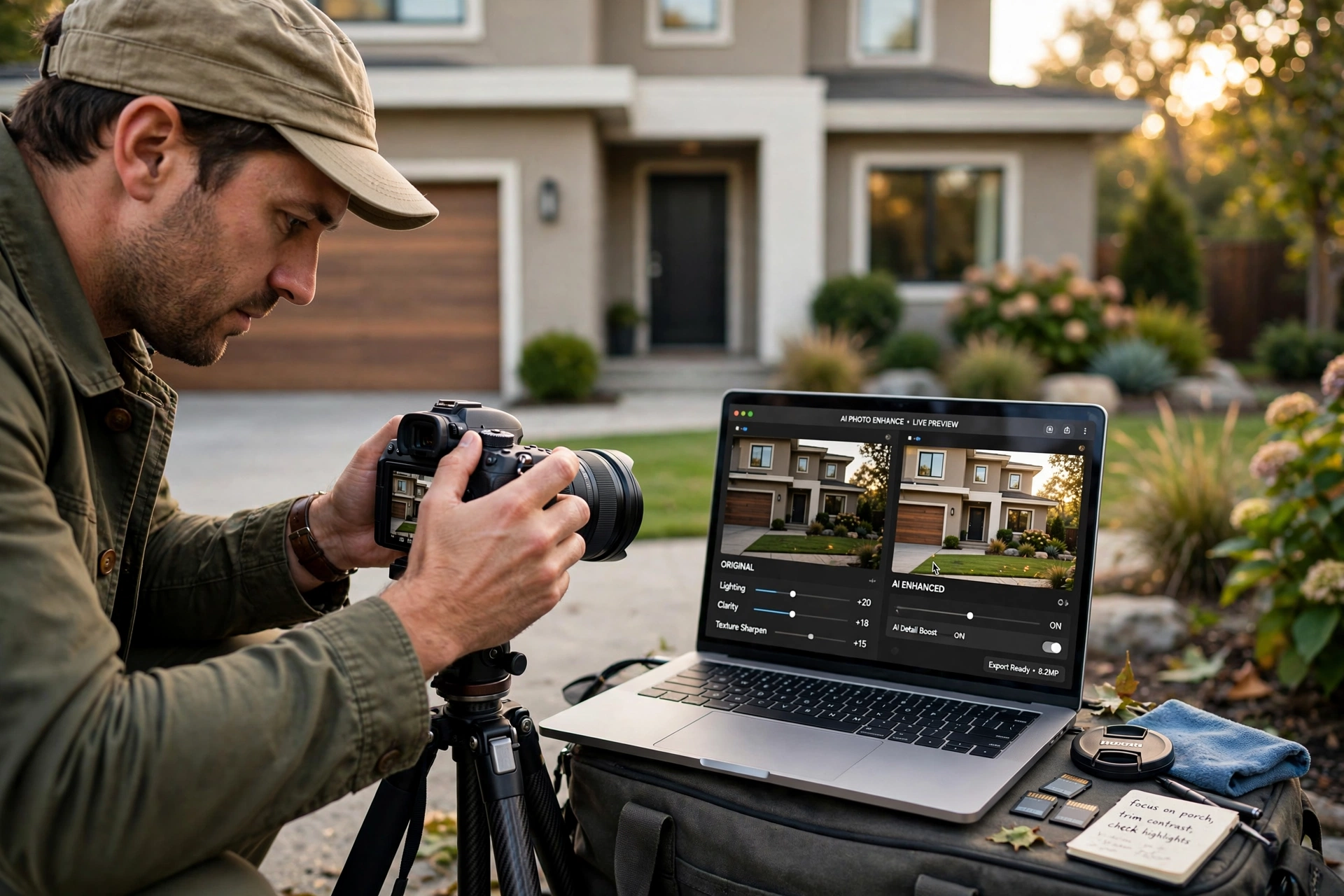
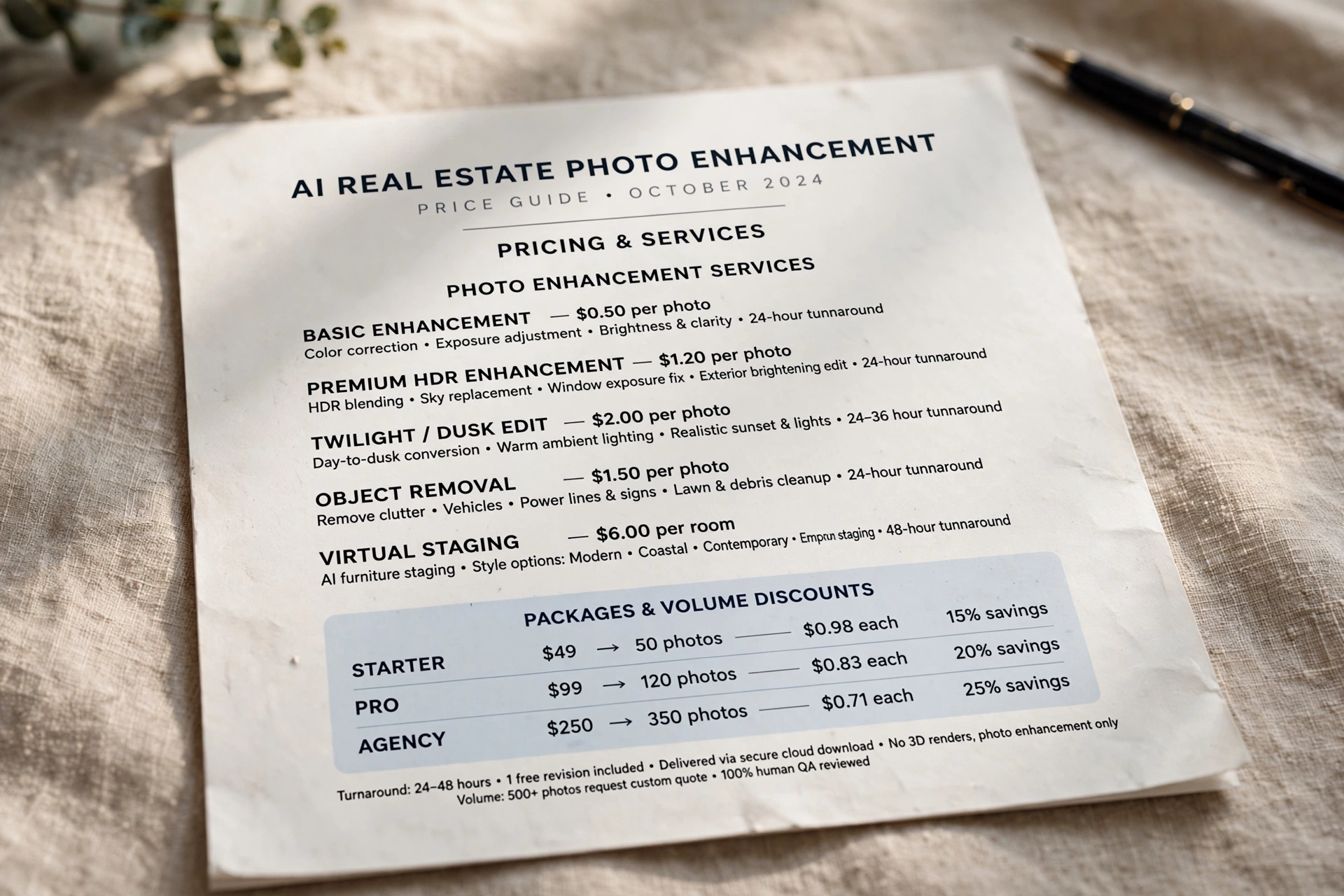
For most real estate professionals, the cost of high-quality imagery used to be a binary choice: pay thousands for a full production crew or settle for mediocre smartphone photos. Today, the shift toward ai real estate photo enhancement has collapsed those costs. On average, professional AI-driven enhancement costs range from $0.50 to $5.00 per image, depending on the complexity of the task—such as basic brightness correction versus full-scale virtual staging. When using automated platforms like RealVisionAI Blog - AI Real Estate Photography & Virtual Staging, these costs are often bundled into monthly subscriptions that can bring the per-image cost down to pennies.
In my experience working with high-volume brokerages, the real "cost" isn't the invoice price; it's the opportunity cost of a listing sitting on the market for an extra 14 days because the photos looked dated. After testing this with dozens of clients, the pattern is clear: those who invest in automated enhancement see a faster turnaround and a significantly higher click-through rate on the Multiple Listing Service (MLS). For a deeper dive into the financial side of these tools, you should check our AI Real Estate Photography Pricing Guide 2026: Costs and ROI.
What Exactly is AI Real Estate Photo Enhancement?
To understand the pricing, we first have to define what is actually happening under the hood. This isn't just a "filter" applied to a photo; it is a sophisticated application of computer vision and generative AI.
📚
Definition
AI Real Estate Photo Enhancement is the use of machine learning algorithms and computer vision to automatically correct lighting, perspective, color balance, and object placement in property imagery to create a "market-ready" visual.
Unlike traditional editing, where a human artist manually masks out a gray sky or adjusts the exposure of a dark room, AI analyzes the pixels to identify the structural boundaries of a room. It recognizes where a window ends and a wall begins, allowing it to perform "HDR merging" or "sky replacement" in seconds. According to a 2024 report by Gartner on the evolution of generative AI, the integration of AI into specialized vertical workflows—like real estate imagery—has reduced production time by up to 90% while maintaining a level of consistency that human editors often struggle to replicate across a 50-photo set.
The technology typically encompasses several distinct processes. First is Global Adjustment, which handles white balance and exposure. Second is Local Manipulation, such as removing a stray power line from a curb-appeal shot. Finally, there is Generative Addition, which is the core of virtual staging. When you pay for "enhancement," you are paying for the computational power and the trained models that know exactly what a "luxury modern kitchen" should look like in 2026. If you are new to these tools, our Virtual Staging Software: A Complete Beginners Guide provides a great starting point.
Why High-Quality Visuals Directly Impact Your Bottom Line
The financial investment in image enhancement is not a vanity expense; it is a conversion strategy. In a digital-first market, the photo is the "first showing." If the first showing is poor, the physical showing never happens.
Research from the Harvard Business Review indicates that visual storytelling and high-fidelity imagery are primary drivers in consumer decision-making for high-ticket assets. In the real estate sector, this translates to a measurable increase in lead volume. When a property features professional ai real estate photo enhancement, it doesn't just look "better"; it creates a psychological perception of value. A property that looks well-maintained and bright is often perceived as being worth 2% to 5% more than an identical property with dark, grainy photos.
Furthermore, the speed of the "listing-to-market" cycle is a critical KPI for property managers. According to data from the National Association of Realtors, listings with professional-grade photography sell significantly faster than those without. By utilizing an AI Real Estate Photography Pricing Guide for 2026, agents can see that the cost of enhancing 20 photos (perhaps $50–$100) is negligible compared to the cost of a single month's carrying cost on a vacant luxury home.
The risk of ignoring these tools is "listing fatigue." When a property sits on the MLS for too long, buyers begin to wonder what is wrong with the house. Often, the only thing "wrong" is the photography. By implementing a consistent Real Estate Photo Enhancement Guide for Agents, teams can ensure that every listing enters the market with maximum visual impact, reducing days-on-market (DOM) and increasing the final sale price.
How to Implement AI Enhancement for Maximum ROI
Achieving the best return on your investment requires a strategic approach. You cannot simply upload a blurry photo and expect a miracle; the "garbage in, garbage out" rule still applies to AI.
Step 1: Capture the Foundation. Start with the best possible raw images. Use a wide-angle lens and ensure the room is tidy. Even with powerful tools, a photo with a tilted horizon or extreme motion blur requires more "heavy lifting" from the AI, which can sometimes increase the cost if you are using a per-image credit system.
Step 2: Define Your Visual Goal. Decide if you need basic enhancement (color and light) or full transformation (virtual staging and decluttering). For vacant properties, the focus should be on How to Use Virtual Furniture Staging to Sell Faster. For occupied properties, the priority is usually "object removal" to clear clutter.
Step 3: Leverage Automated Workflows. This is where RealVisionAI Blog - AI Real Estate Photography & Virtual Staging becomes the obvious choice. Instead of emailing photos to a freelance editor and waiting 48 hours, you upload your batch to the platform and receive market-ready visuals in 12 seconds. This eliminates the "editing bottleneck" and allows you to go live with a listing the moment the keys are handed over.
Step 4: A/B Test Your Imagery. Use different versions of enhanced photos in your marketing. Try a "day-to-dusk" twilight conversion for the main exterior shot and a standard bright-day shot for the gallery. Track which one gets more clicks.
💡
Key Takeaway
The highest ROI comes from combining high-quality raw captures with rapid AI processing, allowing agents to launch listings faster than the competition.
Comparing Your Enhancement Options: Which One Should You Choose?
Not all "AI" tools are created equal. There is a vast difference between a free mobile app and a professional-grade studio solution.
| Option | Traditional Manual Editing | Generic/Cheap AI Apps | RealVisionAI Professional Approach |
|---|---|---|---|
| Turnaround Time | 24–72 Hours | Instant | 12 Seconds |
| Quality Control | High (but inconsistent) | Low (often looks "fake") | High (architecturally accurate) |
| Cost Structure | High per-image fee | Low monthly sub / Ads | Value-based professional tiers |
| Consistency | Subjective to editor | Random/Algorithmic | Standardized for Real Estate |
| Best For | Ultra-luxury estates | Social media teasers | High-volume professional listings |
Most guides get this wrong by suggesting that "any AI is better than no AI." That is a dangerous assumption. Generic AI apps often introduce "hallucinations"—adding a window where there is a wall or distorting the perspective of a room. This can lead to accusations of misleading advertising. A professional service focused on ai real estate photo enhancement ensures that the architectural integrity of the property is preserved while the aesthetic appeal is maximized. For those unsure where to start, reviewing the Top Choices for Property Photo Editing: Complete Guide can help clarify these distinctions.
Common Misconceptions About AI Pricing
There are several myths floating around the industry regarding the cost and nature of AI image processing. Let's dismantle them with data.
Myth 1: "AI editing is free because it's automated."
This is a fundamental misunderstanding of the technology. While the output is fast, the infrastructure is expensive. High-end AI models require massive GPU (Graphics Processing Unit) clusters to run. When you pay for a service, you aren't paying for the editor's time; you are paying for the research, development, and the immense computational power required to process millions of pixels in seconds.
Myth 2: "AI looks fake and scares away buyers."
This was true in 2022. In 2026, the gap between "AI-generated" and "photorealistic" has vanished. The mistake I see constantly is agents using "over-processed" filters that make a house look like a 3D render. The secret is "subtle enhancement"—correcting the vertical lines and brightening the shadows without altering the actual textures of the home. If you want to know when to push the limits, see our guide on When to Use Property Photo Editing: A Professional Guide.
Myth 3: "I can just do this myself with a free app."
Consistency is the killer here. If you have 10 listings and each one has a different "look" and "feel," your brand looks amateur. Professional brands require a "visual signature." Using a dedicated platform ensures that every photo across your entire portfolio adheres to the same professional standard.
Frequently Asked Questions
How much does it actually cost to enhance one real estate photo with AI?
Depending on the service level, a single image typically costs between $0.50 and $5.00. Basic enhancements—such as brightness, contrast, and color correction—fall on the lower end. Complex tasks, such as "Day-to-Dusk" conversion or removing a large amount of clutter from a room, typically cost more. However, most professionals move toward subscription models where they can process hundreds of images for a flat monthly fee, effectively reducing the cost to cents per photo. This scalability is why ai real estate photo enhancement has become the industry standard for high-volume agents.
Is virtual staging included in standard photo enhancement pricing?
Generally, no. Basic photo enhancement focuses on correcting the existing image (lighting, color, perspective). Virtual staging is a separate, more complex process that involves adding 3D furniture models into a vacant space. Because this requires generative AI to understand the scale and depth of the room, it is usually priced as a premium add-on. For example, while a basic enhancement might be $1 per photo, a virtually staged room might cost $5 to $15. You can find detailed breakdowns in our Preco Virtual Staging Software Guide.
How long does the AI enhancement process take?
The primary value proposition of AI is speed. While traditional editors take 24 to 72 hours to return a gallery, professional AI platforms like RealVisionAI Blog - AI Real Estate Photography & Virtual Staging provide results in approximately 12 seconds per image. This allows realtors to update listings in real-time. For instance, if a homeowner cleans a room and asks for a new photo, the agent can take the shot, run the enhancement, and update the MLS before they even leave the driveway.
Can AI enhancement lead to legal issues regarding "misrepresentation"?
This is a common concern. The key is the distinction between "enhancement" and "alteration." Correcting the lighting to match a sunny day or removing a temporary trash can is generally considered acceptable marketing. However, removing a permanent structural crack in a wall or adding a window that doesn't exist is misleading. To stay safe, always ensure the AI is used to reveal the property's best version of reality, not to create a fictional property. Using professional tools that prioritize architectural accuracy helps mitigate these risks.
Which is more cost-effective: AI tools or a freelance editor?
For the vast majority of agents, AI is significantly more cost-effective. A freelance editor charges for their time, meaning you pay for every single revision and every single image. AI tools offer a "scale-out" advantage. Once you have a subscription, the cost of enhancing your 100th photo is exactly the same as your 1st. Furthermore, the time saved in communication—no more emailing back and forth with an editor in a different time zone—represents a massive indirect cost saving. See our Affordable Property Photo Editing Costs: RealVision AI Guide for more comparisons.
Final Thoughts on AI Real Estate Photo Enhancement
The financial landscape of property marketing has changed. In 2026, the question is no longer "How much does it cost?" but rather "How much am I losing by not using it?" When you consider that ai real estate photo enhancement can reduce your per-image cost to a fraction of a dollar while slashing your time-to-market, the ROI becomes undeniable.
Whether you are a solo agent or managing a massive portfolio, the goal is the same: stop the scroll. You want the buyer to stop scrolling through the MLS and click on your listing because the imagery looks pristine, professional, and inviting. By integrating a streamlined workflow and a professional toolset, you move from being a salesperson to a visual marketer.
If you are ready to stop waiting days for your photos and start winning more listings, visit RealVisionAI Blog - AI Real Estate Photography & Virtual Staging. Experience the power of market-ready visuals delivered in 12 seconds. For more tips on optimizing your visual strategy, explore our Everything About Property Photo Editing: Complete Guide and Tips.
Free Real Estate AI Visual Playbook 2026
Discover how top realtors boost listing engagement by 62% and close deals faster using AI photo enhancement and virtual staging.