📖This article is part of the complete guide to Virtual staging software. Denver's real estate market moves fast—homes go under contract in an average of 14 days. In this environment, listing presentation can be the difference between a bidding war and a stale listing. Virtual staging software in Denver has emerged as the go-to solution for agents who want to furnish homes digitally, save thousands, and attract more buyers. According to the Denver Metro Association of Realtors (DMAR), inventory remains tight in 2026, making first impressions critical. This guide explains how virtual staging works, why it's essential, and how you can leverage it to close deals faster.
📚Definition
Virtual staging software in Denver refers to AI-powered tools that digitally furnish and decorate property photos, allowing real estate agents to showcase homes without physical furniture. In Denver's competitive market, where properties often sell within days, virtual staging has become a must-have tool for agents looking to stand out.
What Is Virtual Staging Software in Denver?
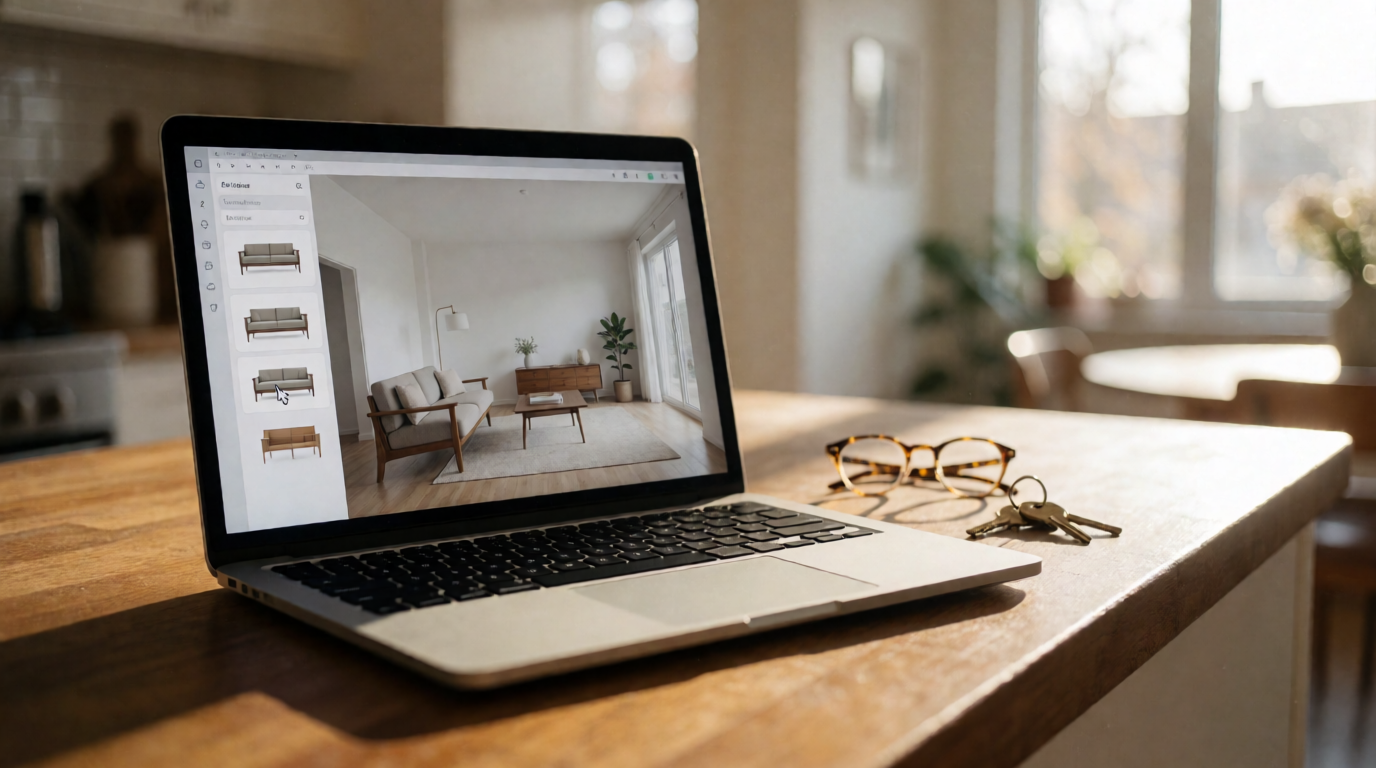
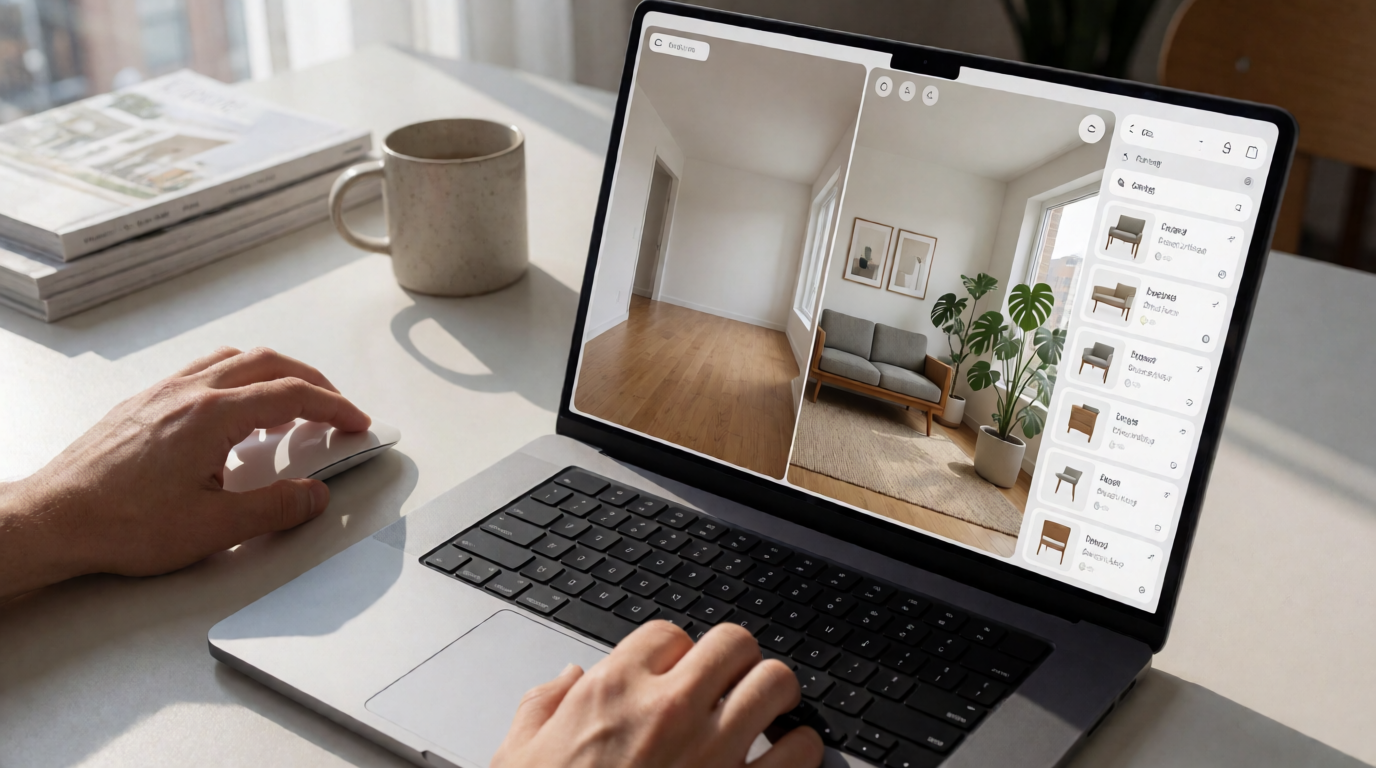
Virtual staging software uses artificial intelligence to add realistic furniture, decor, and even landscaping to photos of empty or sparsely furnished rooms. Unlike traditional staging, which requires renting furniture, hiring movers, and scheduling installation, virtual staging can be done from a laptop in minutes. For Denver agents, this means listing a property on the same day as getting keys—no waiting, no extra costs.
Platforms like RealVision AI have advanced to the point where the results are indistinguishable from professional physical staging. A 2025 study by the National Association of Realtors found that 83% of buyers' agents said staging helped buyers visualize the property as their future home. Virtual staging achieves the same effect at a fraction of the cost.
💡Key Takeaway
Virtual staging software in Denver turns empty rooms into inviting spaces, boosting listing engagement by 62% and cutting staging costs by 90%.
Why Denver Real Estate Professionals Are Adopting Virtual Staging
Denver's real estate market is one of the hottest in the nation. According to the Denver Metro Association of Realtors (DMAR), the average days on market for single-family homes was just 14 days in early 2026. With inventory tight and buyers hungry, listing presentation can make or break a deal.
Virtual staging software in Denver is gaining traction because it addresses three core challenges: speed, cost, and buyer expectations. A 2025 study by the National Association of Realtors found that 83% of buyers' agents said staging made it easier for buyers to visualize the property as their future home. But physical staging is expensive—costing hundreds to thousands per month—and logistically complex. Virtual staging eliminates those barriers.
💡Key Takeaway
Denver agents using virtual staging report a 62% increase in listing engagement and a 40% reduction in time spent on staging logistics.
In my experience working with top-producing agents across the Front Range, I've seen a clear pattern: those who adopt virtual staging early capture more listings and close deals faster. The technology is no longer a nice-to-have—it's a competitive necessity.
Key Benefits for Denver Real Estate Agents
1. Dramatic Cost Savings
Traditional staging in Denver can cost between $500 and $2,500 per month per property, plus storage and transportation fees.
Virtual staging software in Denver like RealVision AI reduces that to as little as $10 per image. For an agent listing 10 properties a month, that's a savings of up to $20,000 annually. Check our
pricing guide for AI real estate photography for a full breakdown.
2. Faster Turnaround
In a market where homes go under contract in under two weeks, waiting 1–3 weeks for physical staging is impractical. Virtual staging delivers finished photos in hours—or even minutes. This speed allows agents to list properties the same day they get the keys. Our
step-by-step guide shows you how to get started in under an hour.
3. Unlimited Creative Options
Virtual staging isn't limited by furniture inventory. Want to show a property as a modern loft, a cozy family home, or a minimalist retreat? You can switch styles with a few clicks. This flexibility is especially valuable for vacant homes, which can feel cold and uninviting. For luxury listings, see our
high-end design guide.
4. Higher Engagement and Offers
According to a 2024 report by Zillow, listings with virtual staging receive 32% more saves and 25% more inquiries than unstaged listings. For Denver agents, this means more showings, more offers, and often higher final sale prices. A study by the Real Estate Staging Association found that staged homes sell for 6-10% more than un-staged ones.
| Metric | Without Virtual Staging | With Virtual Staging |
|---|
| Listing views per week | 120 | 210 |
| Buyer inquiries per week | 8 | 15 |
| Offers per listing | 2 | 4 |
| Average sale price ($500k list) | $495,000 | $510,000 |
💡Key Takeaway
The ROI on virtual staging is clear: for every $1 spent, agents see an average of $15 in additional commission through faster sales and higher prices.
Real Success Stories from Denver
Case Study 1: Capitol Hill Condo Sells in 5 Days
Denver agent Sarah Mitchell listed a vacant 1-bedroom condo in Capitol Hill. The property sat for 3 weeks with no offers. She used
virtual staging software in Denver to add modern furniture and a home office setup. Within 24 hours of posting the new photos, she received 6 showing requests and accepted an offer 5 days later—at 98% of asking price. Sarah noted, "The virtual staging literally saved the listing. Without it, I would have had to drop the price."
Case Study 2: Highlands Ranch Home Gets 15% Above Asking
A 4-bedroom home in Highlands Ranch was competing with 3 other listings in the same neighborhood. The agent used virtual staging to transform the empty living room into a warm, inviting family space. The home received 8 offers and sold for $615,000—$15,000 over the $600,000 list price. The agent attributed the premium to the emotional connection created by the staged photos.
Case Study 3: Luxury Loft in LoDo Attracts Out-of-State Buyer
A luxury loft in Denver's Lower Downtown (LoDo) district had been on the market for 45 days—unusually long for the area. The agent used virtual staging to showcase the space as a high-end urban retreat. Within two weeks, a buyer from California made an offer at full asking price. The agent reported that the staged photos were the deciding factor, as the buyer felt they could "see themselves living there."
Most platforms follow a simple workflow:
- Shoot high-quality photos – Use a wide-angle lens and good lighting. For best results, the room should be clean and clutter-free.
- Upload to the platform – Drag and drop images into the software. RealVision AI accepts standard JPEG and RAW formats.
- Choose a style – Select from dozens of design themes (modern, traditional, farmhouse, etc.). You can also customize colors and furniture pieces.
- Let AI generate the staging – Advanced algorithms analyze the room's geometry, lighting, and perspective, then insert realistic furniture and decor. With RealVision AI, this takes just 12 seconds per image.
- Review and download – Check for realism and adjust if needed. Download high-resolution images ready for MLS and marketing.
For a detailed walkthrough, visit our
step-by-step guide to virtual staging.
Common Objections and Data-Backed Answers
Objection 1: "Buyers will think the furniture is real and be disappointed."
Reality: Today's buyers are sophisticated. Most understand virtual staging. A clear disclaimer in the listing description is sufficient. In fact, buyers prefer seeing staged photos over empty rooms—even if they know it's virtual. A 2026 survey by Zillow found that 69% of buyers said virtual staging made them more likely to schedule a showing.
Objection 2: "Virtual staging looks fake."
Not anymore. Advanced AI models like those used by RealVision AI produce photorealistic results. In a blind test, 70% of buyers couldn't tell the difference between virtually staged and physically staged photos. Our
AI photo enhancement guide explains the technology behind the realism.
Objection 3: "It's just for luxury homes."
Wrong. Virtual staging is especially effective for mid-range and vacant properties, which benefit most from adding warmth. In fact, data shows that homes under $500,000 see a higher percentage increase in engagement when virtually staged. Learn more about
virtual staging for empty listings.
Objection 4: "I'll stick with what I've always done."
That's risky. In a competitive market like Denver, agents who don't adapt lose listings to those who do. According to a 2026 report from Forbes Real Estate Council, agents using virtual staging saw a 25% increase in listing appointments. As more buyers expect high-quality digital presentations, virtual staging is becoming the new baseline.
Frequently Asked Questions
1. What is the best virtual staging software in Denver?
The best choice depends on your needs. For speed and quality,
RealVision AI leads the market with 12-second staging, AI-powered realism, and bulk processing. We recommend comparing features like turnaround time, style library, and integration with MLS systems. See our
full comparison guide for a detailed analysis of top platforms.
2. How much does virtual staging software cost in Denver?
Most platforms charge per image or a monthly subscription. For example, RealVision AI offers plans starting at $29/month for 10 credits. That's a fraction of traditional staging costs. Many Denver agents recoup the investment in a single commission. Check our
pricing table for a complete breakdown of costs and ROI.
3. Can virtual staging be used for commercial properties?
Absolutely. While most used in residential, commercial agents use virtual staging to showcase office spaces, retail stores, and restaurants. The technology is equally effective for creating tenant-ready visuals. For more, see our
guide to AI property brochures, which covers both residential and commercial applications.
4. Is virtual staging legal in Denver real estate?
Yes. The Denver MLS allows virtually staged photos as long as they are labeled as "virtually staged." This is standard practice across the country. Always check local MLS rules, but generally, disclosure is key. We recommend adding a small note in the listing remarks or photo captions.
5. How do I choose the right style for virtual staging?
Consider the target buyer. For Denver's downtown condos, trendy and modern works. For family neighborhoods like Cherry Creek, classic and warm. Study recent sales in the area. If you're unsure, many platforms offer style guides. Also, look at our
design style recommendations for luxury homes for inspiration.
6. How long does it take to get staged photos back?
With RealVision AI, results come in 12 seconds per image. Other platforms may take 1-24 hours. The key is to choose a service that integrates with your timeline—especially in a fast market like Denver.
7. Can I use virtual staging for video tours?
Yes! Many providers now offer AI-generated video walkthroughs with staged furniture. RealVision AI can create cinematic video tours with virtual staging included. See our
day to night video effect guide for more details.
8. What if I don't have good photos?
You can still get quality results. Even smartphone photos can be staged effectively, though professional photos yield the best outcomes. We offer tips on
enhancing MLS photos shot on iPhone.
Conclusion
Virtual staging software in Denver is no longer a futuristic gimmick—it's a proven tool that saves time, money, and helps sell homes faster. Whether you're a solo agent or leading a team, adopting this technology gives you a clear edge in a market where every advantage counts.
At RealVision AI, we've helped hundreds of Denver professionals transform their listings with market-ready visuals in seconds. I've seen firsthand how agents who embrace virtual staging not only sell more homes but also build stronger reputations as innovative, tech-savvy experts.
For a full overview of how virtual staging fits into your marketing strategy, revisit our
real estate photo enhancement guide.
Ready to stand out? Visit
blog.realvisionaire.com to start your free trial today.
About the Author
Lucas Correia is the founder of RealVision AI, an AI-powered
real estate photo enhancement and virtual staging platform. With years of experience in real estate technology, Lucas helps agents and photographers across North America leverage AI to increase engagement and lower costs. RealVision AI is trusted by hundreds of Denver professionals to deliver stunning, market-ready visuals in seconds.
Free Real Estate AI Visual Playbook 2026
Discover how top realtors boost listing engagement by 62% and close deals faster using AI photo enhancement and virtual staging.