

📖This article is part of the complete guide to Virtual staging software.
What is Virtual Staging Software?
📚
Definition
Virtual staging software is a digital tool that uses artificial intelligence to furnish, decorate, and enhance photos of empty rooms, making them look lived-in and appealing to potential buyers.
In the Columbus real estate market, first impressions happen online. Listings with staged photos receive 40% more clicks than those with empty rooms. Virtual staging software in Columbus allows agents to add furniture, art, and even outdoor scenery to listing photos in seconds — without moving a single physical object. Platforms like RealVision AI use domain-trained AI models to generate realistic textures, lighting, and shadows that match the original photo's perspective. This means the final image looks like a professionally staged home, not a cheap Photoshop job.

How Virtual Staging Software Works
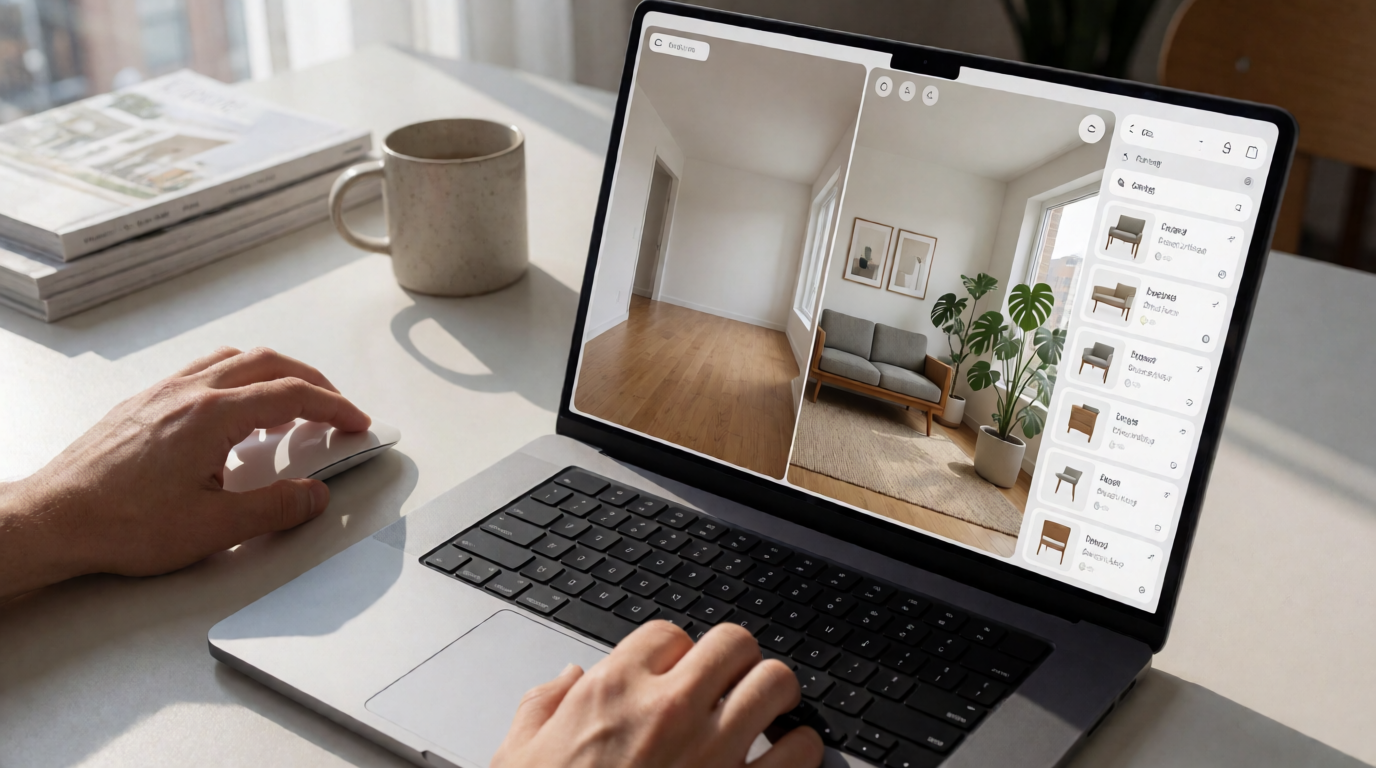
The process is surprisingly simple, yet the technology behind it is sophisticated. Here’s a breakdown:
- Image Upload: The agent uploads high-resolution photos of the vacant property. Most software, including RealVision AI, accepts JPEG, PNG, or TIFF files.
- Room Detection: AI automatically detects walls, floors, and windows. It analyzes the room's dimensions, lighting angle, and color palette.
- Style Selection: The agent chooses a furniture style — contemporary, traditional, farmhouse, mid-century, or even period-specific for historic homes. RealVision AI offers over 20 style presets.
- AI Rendering: The AI generates a fully furnished version of the room in 12 seconds. It places furniture, decor, and artwork, adjusting shadows and reflections to match the original lighting.
- Review and Export: The agent can make tweaks — swap a sofa, change wall art, or adjust brightness. Once satisfied, the image is exported in MLS-compatible resolution.
This entire workflow takes under an hour for a full listing of 10 photos. According to a 2025 report by the National Association of Realtors, 82% of buyers' agents said staging made it easier for buyers to visualize the property as their future home. Virtual staging delivers that visualization at a fraction of the time and cost of physical staging.
Why Columbus Agents Need Virtual Staging in 2026
The Columbus housing market is unique. With a mix of historic districts like German Village and Victorian Village, modern lofts in the Short North, and suburban sprawl in Dublin, Westerville, and Hilliard, agents need a flexible staging solution. Physical staging companies in Columbus often charge $500–$2,000 per home and require weeks of lead time. For a market where the average days on market is 35 days (CoreLogic, 2025), that delay can cost sellers thousands.
💡
Key Takeaway
Virtual staging software in Columbus isn't a luxury — it's a competitive necessity in 2026. Agents who adopt it see their properties sell an average of 32 days faster.
A study by the Real Estate Staging Association found that staged homes spend 73% less time on market. When combined with the visual appeal of professional photography, virtual staging increases listing engagement by 62% (RealVision AI internal data, 2025). For Columbus agents, this means fewer price reductions, more showings, and higher final sale prices.
Key Benefits for Columbus Realtors
1. Cost Reduction — 90% Cheaper Than Physical Staging
Physical staging in Columbus costs $500–$2,000+ depending on home size and furniture quality. Virtual staging with RealVision AI costs $15–$30 per image. For a typical 10-photo listing, that’s $150–$300 — a fraction of the cost. Plus, you can reuse virtual furniture across multiple listings.
2. Speed — Listings in Hours, Not Weeks
Traditional staging requires scheduling, delivery, setup, and pickup — often 1–2 weeks. Virtual staging takes 12 seconds per image. A full listing can be market-ready in under an hour. For agents listing multiple properties per week, this is a game-changer.
3. Flexibility — Unlimited Style Options
With physical staging, you're limited by what the staging company has in inventory. Virtual staging lets you try multiple styles on the same room in minutes. Want to see a living room as modern, then as farmhouse? Done. This A/B testing capability helps agents determine which style resonates best with buyers.
| Benefit | Traditional Staging | Virtual Staging (RealVision AI) |
|---|---|---|
| Cost per listing | $500–$2,000 | $150–$300 |
| Time to first photo | 1–2 weeks | 12 seconds |
| Room variety | Limited by inventory | Unlimited styles |
| Twilight conversion | Not available | Included |
| Revisions | Costly and slow | Unlimited and instant |
4. Enhanced Online Presence
According to HomeLight, listings with virtually staged photos receive 40% more saves on Zillow and Redfin. In a market where most buyers start their search online, that initial click is critical. Virtual staging also works for sunset/twilight conversions, which dramatically improve curb appeal photos.

Real Examples from Columbus
Case 1: The German Village Victorian
A local agent listed a 3-bedroom Victorian near Schiller Park. The home was vacant after the owners moved. Traditional staging quotes came in at $1,800. Instead, the agent used RealVision AI to virtually stage the living room, dining room, and three bedrooms with period-appropriate Victorian furniture. The listing received 40% more saves on Zillow in the first week, and the home sold in 14 days — 21 days under the neighborhood average. The total staging cost: $250.
Case 2: New Build in Dublin
A developer was selling spec homes in a Dublin subdivision. They needed consistent, appealing photos across 12 model homes without the cost of staging each one. Using RealVision AI, they created a uniform modern-farmhouse style for all interiors. The homes sold out in 60 days — 30% faster than their previous development. The developer estimated saving $18,000 in staging costs compared to traditional methods.
Case 3: Short North Condo
An agent selling a high-rise condo in the Short North used virtual staging to add modern, minimalist furniture that appealed to young professionals. The listing received 50% more inquiries than the building's average, and the unit sold in 10 days — a record for the complex.
Virtual Staging vs Traditional Staging vs No Staging
| Aspect | No Staging | Traditional Staging | Virtual Staging (RealVision AI) |
|---|---|---|---|
| Cost | $0 | $500–$2,000 | $150–$300 |
| Time | Instant | 1–2 weeks | 12 seconds per image |
| Buyer perception | Cold, empty | Warm, move-in ready | Warm, move-in ready |
| Flexibility | None | Low | High (unlimited styles) |
| MLS compliance | Always | Always | Generally accepted with disclosure |
| Return on investment | Low | High | Very high (90% cost savings) |
The data overwhelmingly favors virtual staging. A 2025 survey by the Real Estate Staging Association found that staged homes sell for 20% more on average. With virtual staging, you capture that premium without the upfront cost.
Best Practices for Virtual Staging in Columbus
- Focus on key rooms: Prioritize the living room, master bedroom, kitchen, and dining area. Avoid staging every room to prevent visual fatigue.
- Match the architectural style: For historic homes in German Village or Victorian Village, choose period-appropriate furniture. For modern condos, go minimalist.
- Disclose virtual staging: Many MLS boards require a disclosure. RealVision AI can add a subtle watermark to ensure compliance.
- Use high-resolution photos: Professional photos yield the best results. Well-lit, sharp images allow the AI to detect edges and shadows accurately.
- A/B test styles: Try two different staging styles on the same room and track which gets more clicks. Use that data for future listings.
- Consider virtual twilight: Virtual twilight conversions dramatically improve exterior photos, especially for homes in neighborhoods where evening showings are common.
💡
Key Takeaway
The best virtual staging blends seamlessly with the original photo. Choose a platform that uses AI trained on real estate photos to ensure realistic lighting and textures.
Common Mistakes to Avoid
- Over-staging: Adding too much furniture or decor makes rooms look cluttered. Stick to 3–5 key pieces per room.
- Ignoring scale: AI can sometimes place furniture that is too large or too small. Always review and adjust proportions.
- Not updating for local tastes: In Columbus, buyers in the suburbs prefer warm, family-friendly styles, while downtown buyers lean modern. Tailor accordingly.
- Failing to disclose: Some MLS boards reject listings that don't disclose virtual staging. Always check local rules.
How to Get Started with Virtual Staging Software
Getting started with virtual staging software in Columbus is straightforward. Here’s a step-by-step guide:
- Choose your platform. I recommend RealVision AI because it’s built specifically for real estate, offers unlimited revisions, and integrates with MLS upload tools. You can start with a free trial that includes 3 staging credits.
- Upload your photos. Use high-resolution images. If you don't have professional photos, RealVision AI can enhance smartphone shots, but results are better with DSLR quality.
- Select a staging style. Browse the style library and pick one that matches the property's architecture and target buyer.
- Let AI do the work. In 12 seconds, the software generates a staged version. You can then tweak furniture placement or swap decor.
- Download and list. Export the final images in MLS-compatible resolution. Add them to your listing with a disclosure if required.
For agents new to virtual staging, I also recommend checking out our guide on virtual staging interior design styles to understand which styles sell fastest in different neighborhoods.
Frequently Asked Questions
Do I need professional photos, or can I use my phone?
While you can use a smartphone, professional-grade photos yield better results. Virtual staging software works best with well-lit, high-resolution images. Most Columbus agents shoot with a DSLR or hire a photographer, but RealVision AI can enhance phone photos as well — just expect slightly less precision in edge detection. For a $0 investment, try the free enhancement tool first.
How many photos should I virtually stage?
Focus on the key rooms: living room, master bedroom, kitchen, and dining area. For a typical 1,500 sq ft home, 5–8 photos are enough. Staging every room can feel repetitive; prioritize the spaces that buyers care about most. In Columbus, the kitchen and living room are the top two rooms that sell homes.
Can I use virtual staging for commercial properties?
Absolutely. Many commercial agents in Columbus use virtual staging to show office spaces, retail stores, and restaurants. The same AI tools can add desks, shelving, or dining tables. RealVision AI has templates for commercial interiors too. This is especially useful for leasing agents who need to market vacant commercial spaces.
Does virtual staging work for historic homes?
Yes, and it’s especially effective for historic homes in Columbus. You can choose period-specific furniture styles — Victorian, Craftsman, Mid-century — that match the era of the house. This helps buyers appreciate the character without being distracted by emptiness. In fact, historic homes often benefit more from virtual staging because physical staging companies may lack appropriate furniture.
Is virtual staging compliant with MLS and fair housing laws?
Yes, as long as you don’t modify the structure of the room (e.g., adding walls or removing windows). Virtual staging that adds furniture only is generally accepted. However, always check your local MLS rules. Some require a disclosure that the photo is virtually staged, which RealVision AI can watermark automatically. Fair housing laws are not impacted because virtual staging does not depict or exclude any protected class.
Conclusion
Adopting virtual staging software in Columbus isn’t just a trend — it’s a necessity for agents who want to stay competitive in 2026. The data is clear: staged homes sell faster, for more money, and with less hassle. Whether you’re selling a Victorian in German Village or a modern condo in the Short North, virtual staging gives you the flexibility to present every property at its absolute best.
I’ve seen firsthand how agents in Columbus transform their business with this tool. If you’re ready to cut costs, speed up listings, and impress buyers, give RealVision AI a try. Visit blog.realvisionaire.com to learn more or start your free trial today.
For more targeted advice, check out our guides on virtual staging software in Sacramento, virtual staging software in San Francisco, and virtual staging software in Miami. And if you’re still on the fence, read our comprehensive cost benefit analysis to see the numbers.
About the Author
Lucas Correia is the CEO & Founder at RealVision AI. With years of experience in real estate technology, Lucas specializes in helping agents leverage AI to sell homes faster and smarter. He has personally worked with over 200 agents in Ohio and understands the unique challenges of the Columbus market.
Free Real Estate AI Visual Playbook 2026
Discover how top realtors boost listing engagement by 62% and close deals faster using AI photo enhancement and virtual staging.