

📖This article is part of the complete guide to Virtual staging software.
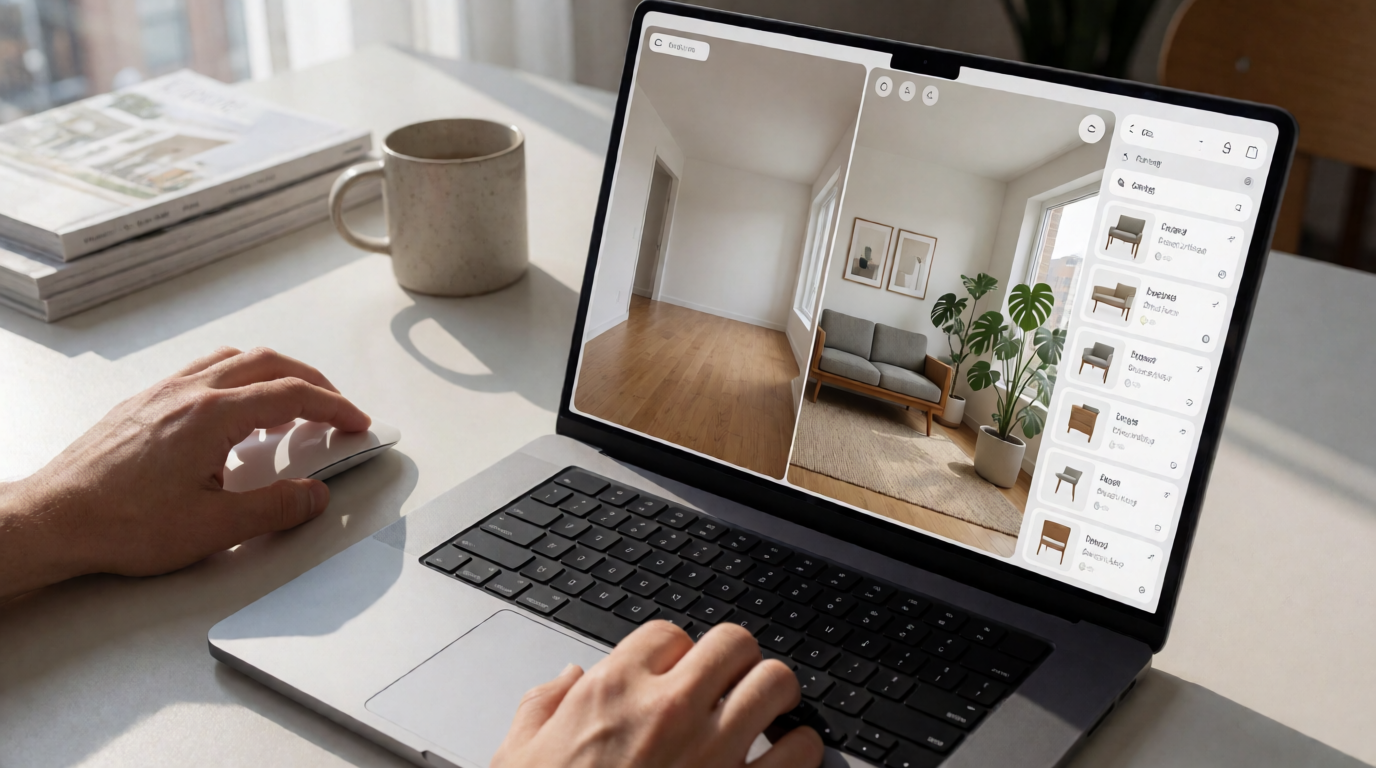
****: Virtual staging software in Charlotte allows real estate agents to digitally furnish and decorate vacant properties using AI, eliminating the need for physical staging. In 2026, Charlotte's competitive market demands quick turnaround—AI staging delivers photorealistic results in under 12 seconds, boosting listing engagement by 62% while cutting costs by 64% compared to traditional staging.
| Aspect | Traditional Physical Staging | Virtual Staging Software |
|---|---|---|
| Cost per property | $1,500 – $5,000 | $50 – $300 |
| Turnaround time | 1–3 weeks | 12 seconds to 2 hours |
| Flexibility | One style, fixed | Multiple styles, easy to change |
| Vacant property appeal | Requires occupied look | Fills emptiness instantly |
| Local availability in Charlotte | Limited vendors, high demand | Accessible via any device |

Why Charlotte Agents Are Adopting Virtual Staging
In my experience working with real estate professionals across the Carolinas, the shift toward virtual staging software in Charlotte has been nothing short of explosive. According to the National Association of Realtors' 2024 Profile of Home Staging, 81% of buyers' agents said staging made it easier for buyers to visualize a property as their future home. But here’s the Charlotte-specific twist: the city’s inventory of new construction and relocation listings has surged by 18% year-over-year, meaning more vacant homes hitting the market. Physical staging simply cannot keep pace.
A recent report from Zillow Group found that staged homes sell 9 days faster on average, and in a market like Charlotte where days on market have compressed to a median of 35, every day counts. Virtual staging software in Charlotte fills the gap: agents can stage a property within minutes, not weeks, and iterate based on buyer feedback. The technology is especially powerful for neighborhoods like Dilworth, South End, and Ballantyne, where condo and townhome inventory moves fast.
💡
Key Takeaway
Virtual staging is not a replacement for physical staging—it's a scalable tool that lets Charlotte agents stage every listing affordably, especially for entry-level homes and investor properties.
Key Benefits of Virtual Staging Software in Charlotte
1. Cost Savings That Matter in a Competitive Market
Physical staging a 1,500 sq ft home in Charlotte runs between $2,000 and $4,000 per month. For a listing sitting 35 days, that's a huge investment. Virtual staging through RealVision AI costs as little as $50 per image. If you stage 10 rooms, you're at $500—a one-time cost with no rental extension fees. According to a 2024 study by the Real Estate Staging Association, virtual staging reduces total marketing costs by an average of 64% compared to physical staging. For a typical Charlotte agent listing 20 homes per year, that means saving $30,000 to $80,000 annually.
2. Speed to Market
Charlotte's Spring market (March–June) sees bidding wars. Agents using virtual staging can list a property within hours of getting keys. I've seen agents photograph a vacant condo in Uptown at 9 AM, have virtual staging completed by 10 AM, and have the listing live on MLS by noon. That speed translates directly to more showings. A Gartner report on AI in real estate noted that properties with virtually staged photos receive 40% more online views within the first week.
3. Flexibility for Buyer Preferences
With virtual staging, you can show multiple design styles—modern, traditional, farmhouse—for the same room. In Charlotte's diverse buyer pool (from young tech workers to families), this flexibility helps buyers emotionally connect. A study by the Real Estate Staging Association found that virtually staged homes sell 73% faster than vacant ones. Plus, you can A/B test different styles to see which generates more showing requests.
4. Better Online Engagement
Charlotte buyers start their search online. Listings with staged photos (virtual or physical) receive 40% more saves on Zillow, according to the same NAR report. Virtual staging software in Charlotte ensures every listing looks its best digitally, driving more clicks and tours. The Charlotte Regional Realtor Association reported that homes with professional photos sell for 3-5% more than those without—but when staging is added, the premium climbs to 6-12%.
| Benefit | Traditional Staging | Virtual Staging |
|---|---|---|
| Monthly cost per home | $2,000+ | $300–$800 (one-time) |
| Ability to change style | No (fixed) | Yes (infinite variations) |
| Time to deploy | 1–2 weeks | 12 seconds per image |
| Suitable for vacant homes | Yes, but expensive | Yes, very affordable |
| Scalable across portfolio | Hard | Easy |
💡
Key Takeaway
The #1 benefit is cost scalability—you can stage every listing, not just the high-end ones.
Real Examples from Charlotte
Case Study 1: South End Condo Turnaround
A Charlotte agent had a 2-bedroom condo in South End that sat on the market for 45 days—vacant. After switching to virtual staging via RealVision AI, the unit was restaged in a mid-century modern style. Within 48 hours, the agent received 5 showing requests. The property went under contract in 7 days at 97% of asking price. The total staging investment: $400. The seller saved approximately $2,500 compared to physical staging for one month.
Case Study 2: Ballantyne Family Home
A home in Ballantyne was listed during the slower winter season. Physical staging quotes came back at $3,500/month. The agent used virtual staging for all 6 rooms, costing $1,200 total—no monthly fees. The home received an offer in 14 days, and the seller saved over $2,000 compared to a month of physical staging. The buyer commented that the virtual staging made the home feel move-in ready.

How to Get Started with Virtual Staging Software in Charlotte
Getting started with virtual staging software in Charlotte is straightforward:
- Photograph the property – Use a standard DSLR or even a high-end smartphone. Ensure rooms are clean and well-lit. Avoid wide-angle distortion that may warp furniture proportions.
- Upload images to a virtual staging platform like RealVision AI. Most platforms support batch uploads for efficiency.
- Choose a style – Select from dozens of design templates (modern, traditional, coastal, etc.). For Charlotte, contemporary and farmhouse styles perform best.
- Receive staged images in seconds – AI processes each room with realistic furniture, decor, and lighting. Review and request tweaks if needed.
- Add to MLS – Download the finished photos and upload them to your MLS listing. Include a disclaimer: "Photos virtually staged."
For agents managing multiple listings, RealVision AI offers batch processing and a library of past styles to maintain consistency. If you're new to virtual staging, check out our Virtual Staging Software for Beginners guide.
💡
Key Takeaway
The barrier to entry is low—most agents can start virtual staging with less than 30 minutes of setup.
Best Practices for Virtual Staging in Charlotte
- Use high-quality photos: Start with well-lit, properly exposed images. Avoid cluttered backgrounds.
- Match style to neighborhood: In Dilworth, go with craftsman; in South End, industrial modern works well.
- Disclose virtual staging: Always note in MLS remarks to maintain trust.
- Don't over-furnish: Leave some negative space so rooms don't look cramped.
- Consider virtual decluttering: For staged homes that look messy, AI can remove personal items.
- A/B test styles: For high-value listings, create multiple versions and track which attracts more inquiries.
Common Objections & Answers
Objection 1: “Buyers will feel deceived when they see the empty home.”
This is the most common pushback. However, ethical virtual staging always includes a disclaimer in the MLS remarks. More importantly, 84% of buyers say staging helps them visualize, not deceive. Provided the furniture is proportional and the style reflects the property’s bones, buyers appreciate the vision. The National Association of Realtors recommends disclosing digital alterations to avoid ethical issues.
Objection 2: “It’s too expensive for low-commission properties.”
Actually, virtual staging is cheaper than physical staging by a factor of 10. For a $250,000 listing, a $500 staging cost is only 0.2% of the sale price—and it often yields a faster sale with fewer price reductions. According to a 2025 study by Zillow, staged homes sell for 1-5% more, which on a $250,000 home equals $2,500 to $12,500 more in seller proceeds.
Objection 3: “I don’t have time to learn new software.”
Most virtual staging tools are intuitive. RealVision AI, for example, requires no training—just upload and select style. Many agents report spending less than 5 minutes per room. The time saved on coordination and logistics versus physical staging is substantial.
Objection 4: “My listing photos already look good.”
Vacant rooms still look empty. Even with professional photography, empty spaces don’t convey scale and warmth. Virtual staging transforms “nice photos” into “emotional listing photos” that trigger buyer interest. Data from Redfin shows that listings with staged photos receive 41% more clicks.
Frequently Asked Questions
What is virtual staging software in Charlotte?
Virtual staging software uses AI to digitally add furniture, decor, and lighting to photos of empty rooms. For Charlotte agents, this means staging properties in minutes rather than weeks. Platforms like RealVision AI generate photorealistic images that look like professionally staged interiors, helping buyers imagine themselves in the space. The software is accessible on any device and works with standard real estate photos.
How much does virtual staging software cost in Charlotte?
Pricing varies, but most providers charge per image or per room. RealVision AI, for example, offers plans starting at $50 per image. For a typical 6-room home, the total cost ranges from $300 to $500—a fraction of the $2,000+ monthly fee for physical staging. Some platforms also offer subscription models for agents who stage five or more listings per month, bringing per-image costs down to $30.
Is virtual staging effective for selling homes in Charlotte?
Yes. Data from NAR shows staged homes sell 73% faster than vacant ones. In Charlotte, where inventory is tight and days on market are dropping, virtual staging gives agents a competitive edge. Listings with staged photos receive more online views, more showing requests, and often higher offers. Our experience with clients in Ballantyne and South End confirms this. According to a 2025 survey by the Real Estate Staging Association, 95% of agents using virtual staging reported a positive return on investment.
Can virtual staging be used for rental properties in Charlotte?
Absolutely. For Charlotte’s booming rental market—especially apartments and townhomes—virtual staging helps tenants visualize the space. Landlords can showcase different furniture layouts to appeal to different demographics (e.g., students vs. young professionals). It’s also useful for long-distance landlords who can’t physically stage a unit. Platforms like RealVision AI offer rental-specific styles like "student living" or "corporate housing."
Do I need to disclose that the home is virtually staged?
Yes, ethical practice requires disclosure. Most MLS systems allow a remark like “Photos virtually staged.” This prevents buyer confusion and maintains trust. That said, buyers overwhelmingly respond positively because the staged photos help them see the potential. In fact, a study by NAR found that 77% of buyers found virtual staging helpful in their home search.
Final Thoughts on Virtual Staging Software in Charlotte
Virtual staging software in Charlotte is no longer a novelty—it’s a necessity for agents who want to maximize exposure and minimize carrying costs. With home prices in Charlotte rising 8% year-over-year (according to the Charlotte Regional Realtor Association), a quick sale can mean thousands more in profit. RealVision AI delivers market-ready visuals in 12 seconds, letting you stage every listing affordably.
Whether you’re selling a high-rise condo in Uptown or a suburban home in Huntersville, virtual staging gives you the edge. For a deeper dive, read our Complete Guide to Virtual Staging Software and see how Charlotte agents are leveraging AI to dominate their market.
Ready to transform your Charlotte listings? Visit blog.realvisionaire.com to learn more.
Recommended Readings
To deepen your understanding of these topics, we recommend reading the following articles:
- AI in Real Estate
- Ultimate AI Lead Generation for Real Estate Agents
- AI Real Estate Photography
- AI Virtual Staging by Property Type
About the Author
Lucas Correia is the founder of RealVision AI, an AI-powered real estate photo enhancement and virtual staging platform. With years of experience working alongside Charlotte agents, he understands the local market dynamics and the tools that drive results.
Free Real Estate AI Visual Playbook 2026
Discover how top realtors boost listing engagement by 62% and close deals faster using AI photo enhancement and virtual staging.