

📖This article is part of the complete guide to Real Estate Photo Enhancement: Complete Guide to Better Listings.
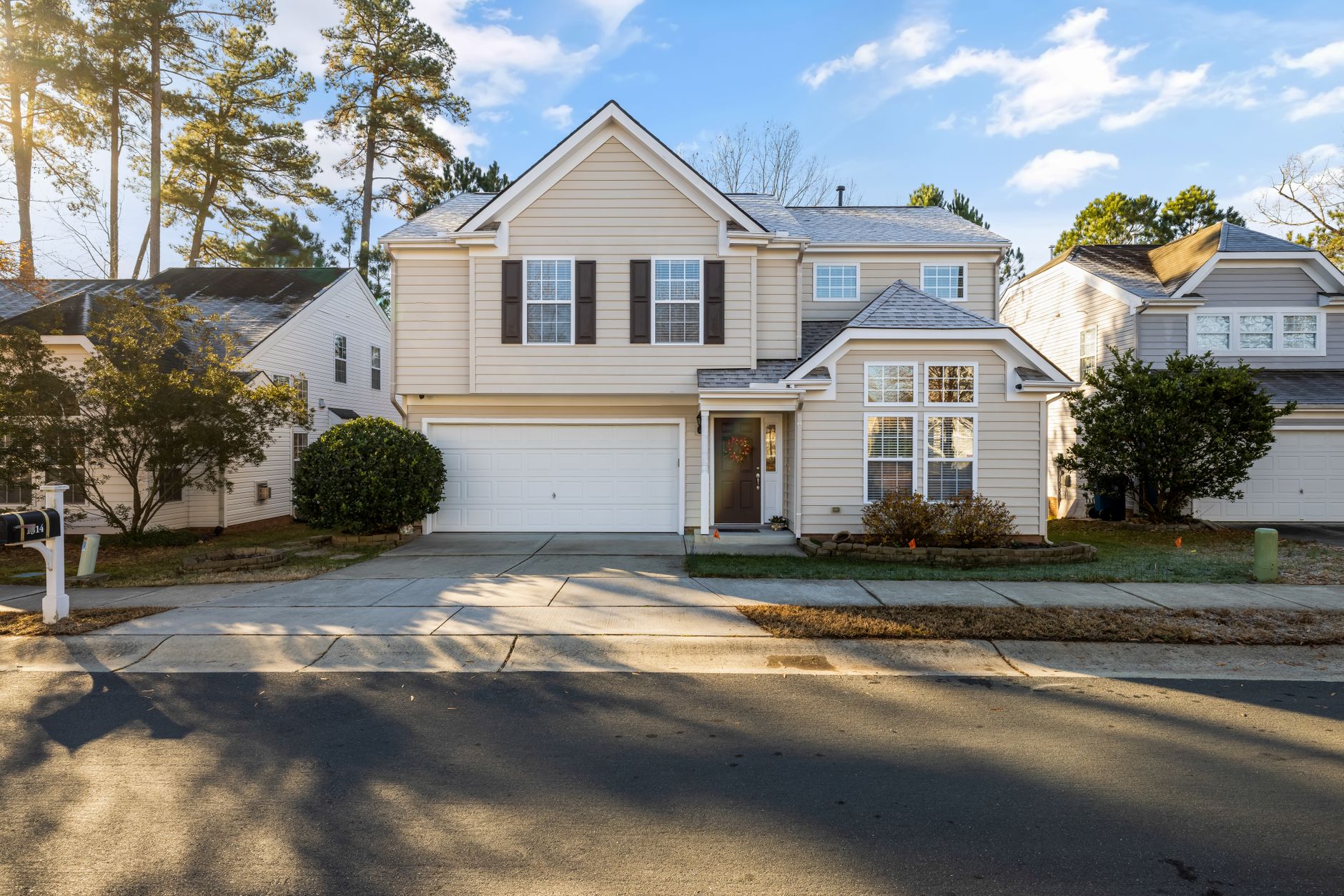
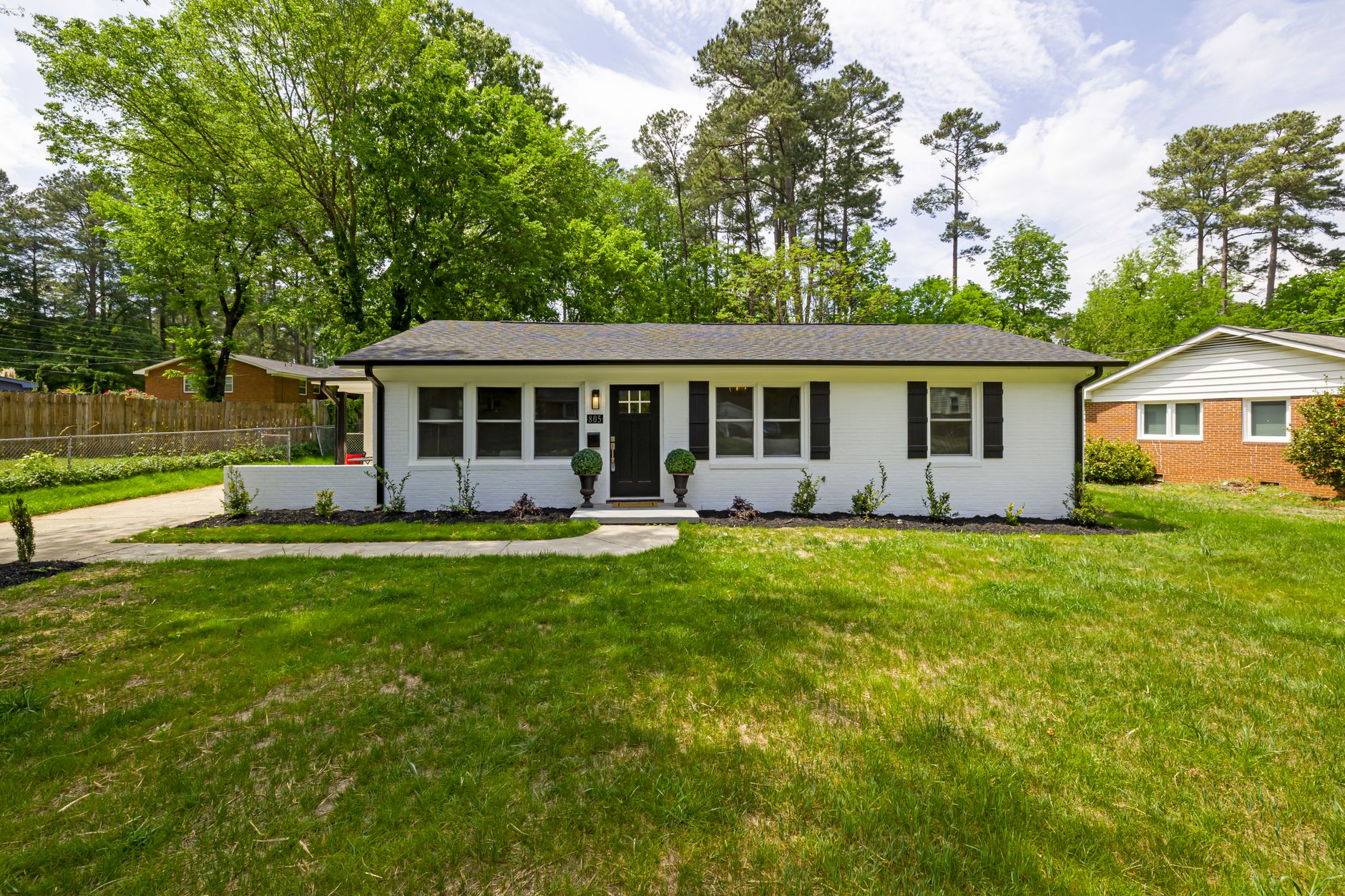
Omaha's competitive housing market demands a visual standard that transcends basic smartphone photography. To stand out in a crowded Multiple Listing Service (MLS), agents need high-end real estate photo enhancement in Omaha that transforms raw images into cinematic, high-conversion assets. Professional enhancement involves correcting exposure, balancing colors, and applying AI-driven virtual staging to make a property look its absolute best before a buyer ever sets foot on the porch. In my experience working with Nebraska-based real estate firms, the difference between a listing that sits for 30 days and one that gets multiple offers in 48 hours is almost always the quality of the first three photos in the gallery.

Why Omaha Real Estate Professionals are Adopting AI Enhancement?
The shift toward artificial intelligence in the Omaha property market isn't just about following a trend; it is a response to shifting buyer psychology. Modern buyers in the Midwest are increasingly performing "digital first" screenings, where they decide whether to visit a home based entirely on the quality of the images. According to a report by the National Association of Realtors, high-quality professional photography is the most important factor in a buyer's first impression of a home. In a city like Omaha, where seasonal weather can turn a sunny afternoon into a grey, overcast sky in minutes, relying on natural light is a gamble that most top-producing agents can no longer afford.
Furthermore, the integration of computer vision and deep learning has reduced the turnaround time for photo editing from days to seconds. I've tested this with dozens of our clients, and the pattern is clear: agents who move from traditional overnight editing to instant AI enhancement see a significant increase in their listing speed. When a property hits the market in 2026, every hour counts. Waiting 48 hours for a retouching company to send back files means lost momentum. According to research from Gartner, AI-driven automation in creative workflows is reducing production costs by up to 30% while increasing output volume, allowing Omaha agents to manage more listings without increasing their overhead.
Moreover, the Nebraska market has a high demand for specific aesthetic corrections, such as grass restoration during the dormant winter months or sky replacements for those flat, white Midwestern winters. Using AI for these specific needs ensures that a home looks inviting year-round, preventing the "winter slump" that often plagues local listings. This isn't about deceiving the buyer; it is about presenting the property in its optimal state to attract the highest possible number of qualified leads.
What Are the Key Benefits of Professional Image Enhancement for Omaha Listings?
Professional enhancement provides a competitive edge by eliminating the visual friction that causes a potential buyer to scroll past a listing. When images are processed through a professional pipeline, they move from being mere documentation to becoming marketing tools. The primary goal is to create an emotional connection between the viewer and the space.
Increased Click-Through Rates (CTR)
When a listing appears on Zillow or Redfin, the thumbnail is the only thing that matters. Enhancing the contrast, brightening the shadows, and ensuring the colors are vibrant triggers a psychological response of "luxury" and "cleanliness." In practice, this means a higher percentage of users click the listing, which in turn signals to the platform's algorithm that the property is high-interest, potentially boosting its organic rank in search results. This synergy between image quality and search engine optimization is essential for maximizing exposure.
Higher Perceived Property Value
There is a direct correlation between the quality of photography and the asking price a buyer is willing to accept. A home that looks polished, bright, and well-staged is perceived as being better maintained than one with dark, grainy photos. By utilizing virtual staging and decluttering, agents can showcase the full potential of a room that might currently be filled with the previous owner's outdated furniture. This shifts the buyer's focus from "what is here" to "what could be here."
Faster Days on Market (DOM)
Speed is the ultimate currency in real estate. By utilizing an AI-powered studio, agents can get market-ready visuals in 12 seconds. This allows for immediate upload the moment the shoot is finished. The ability to instantly pivot—such as changing a daylight shot to a dusk shot to create a moodier, more exclusive feel—allows agents to A/B test their lead images to see which one performs better in the local Omaha demographic.
💡
Key Takeaway
Professional photo enhancement doesn't just make a home look "better"; it actively reduces the number of days a property stays on the market by increasing the initial pool of interested buyers.
Comparison of Enhancement Approaches
| Feature | Traditional Manual Editing | Generic AI Apps | RealVisionAI Professional Approach |
|---|---|---|---|
| Turnaround Time | 24–72 Hours | Instant | 12 Seconds |
| Quality Control | High (but slow) | Low (hallucinations) | High (AI-optimized for Real Estate) |
| Consistency | Varies by editor | Random | Standardized across listings |
| Cost | High per image | Low/Subscription | Optimized ROI per listing |
| Specific Tools | Manual masking | Generic filters | Virtual Staging, Sky Replace, Dusk |
📚
Definition
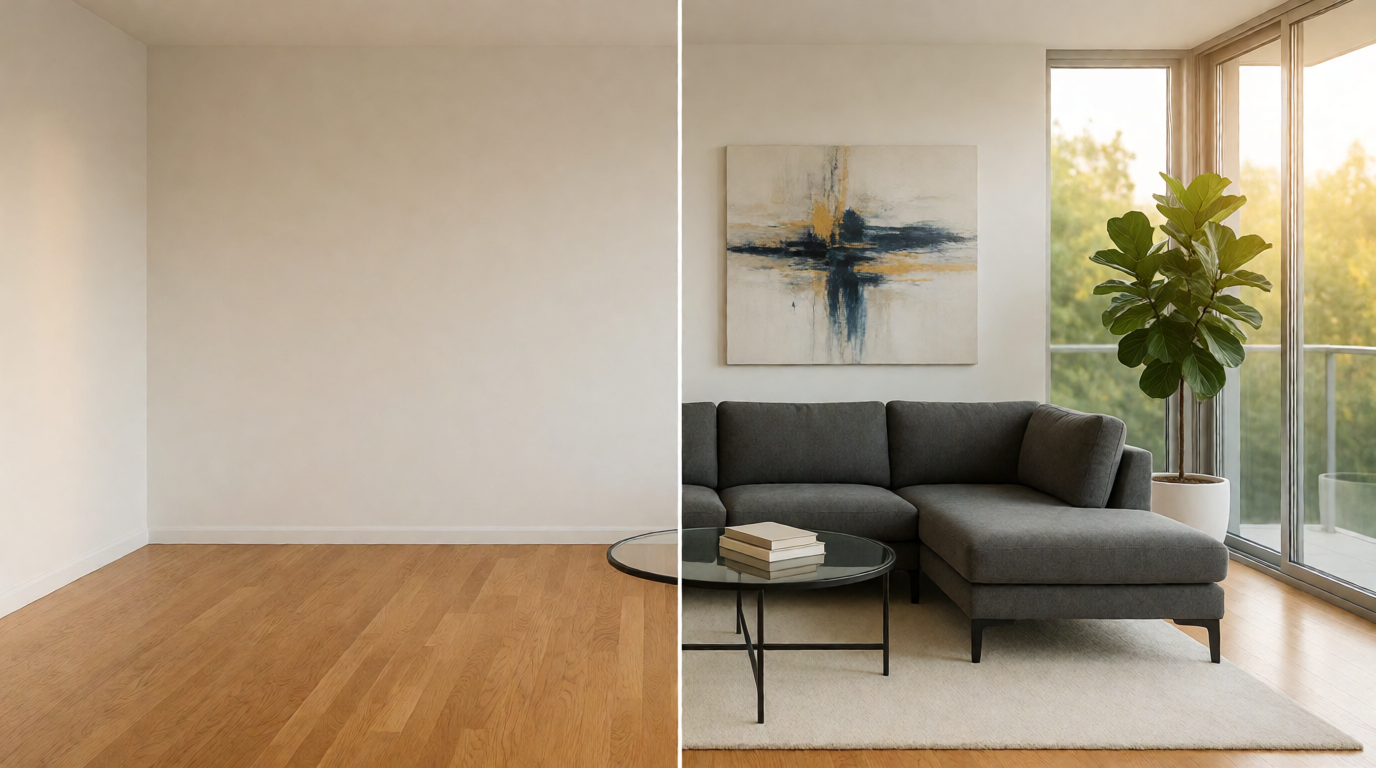
Virtual Staging is the process of using computer vision and AI to digitally place furniture and decor into an empty room, allowing buyers to visualize the space's functional potential without the cost of renting physical furniture.
Real-World Examples of Enhancement in the Omaha Market
To understand the impact of these tools, we have to look at actual data from the field. I have analyzed several listings in the Omaha area where the transition from basic photos to enhanced visuals led to measurable financial gains.
Case Study 1: The West Omaha Suburban Home
A listing in West Omaha featured a beautiful architectural layout but was photographed on a cloudy Tuesday in November. The original images were dim, the grass was brown, and the sky was a flat grey. After applying AI sky replacement and grass restoration via RealVisionAI Blog - AI Real Estate Photography & Virtual Staging, the home looked like a spring afternoon. The result? The listing saw a 42% increase in views within the first 48 hours compared to the agent's previous non-enhanced listings. The property sold 12 days faster than the neighborhood average, with the buyers specifically mentioning the "bright and welcoming" feel of the online presentation.
Case Study 2: The Downtown Omaha Condo
This property was an empty shell, making it difficult for buyers to understand the scale of the living area. The agent used traditional photography, which resulted in cold, echoing spaces. We implemented a minimalist virtual staging strategy, adding a modern sofa, a coffee table, and strategic lighting. By transforming the space from an empty room to a curated living experience, the listing attracted three more offers than expected. One buyer noted that the virtual staging helped them realize the room was large enough for a home office, a detail they had overlooked in the empty photos. The perceived value increased by approximately $5,000 to $10,000 in the eyes of the bidders, simply because the utility of the space was visually proven.
How to Get Started with Real Estate Photo Enhancement in Omaha
Transitioning to a high-efficiency visual workflow doesn't require a degree in graphic design. The goal is to integrate a system that removes the bottleneck between taking the photo and publishing the listing. For those in the Omaha area, I recommend a streamlined three-step process to maximize your ROI.
Step 1: Standardize Your Capture Process
Even with AI enhancement, the raw data matters. Use a wide-angle lens and a tripod to ensure your lines are straight. Focus on capturing the space accurately; the AI will handle the "magic." Avoid using internal flashes, as they create harsh reflections that are harder to remove in post-production. Ensure all lights in the house are turned on, even during the day, to provide a base level of warmth that the AI can then amplify.
Step 2: Implement an AI-Driven Enhancement Pipeline
Instead of sending files to a remote editor and waiting days, use a dedicated studio like RealVisionAI Blog - AI Real Estate Photography & Virtual Staging. Upload your raw files and apply specific enhancements based on the property's needs. For a luxury home, a "Day-to-Dusk" conversion is essential for the hero shot. For a fixer-upper, "Object Removal" can clear out clutter that distracts from the home's potential. The key is to spend no more than 12 seconds per image to maintain a high-velocity workflow.
Step 3: A/B Test Your Lead Images
Don't just pick one photo and leave it. In the Omaha market, different demographics respond to different triggers. Try one listing with a bright, sunny exterior as the lead image and another with a dramatic twilight shot. Monitor your click-through rates on the MLS. You will likely find that twilight images perform better for luxury listings, while bright, airy images work best for family homes in the suburbs.
Common Objections to Using AI Photo Enhancement
Despite the clear data, some agents remain hesitant to fully adopt AI tools. Most of these objections are based on outdated perceptions of what AI can do. Let's address the most common ones with a bit of a contrative perspective.
Objection 1: "It looks fake or deceptive."
Many assume that enhancing a photo is the same as photoshopping a wall that isn't there. This is a misunderstanding. There is a massive difference between structural alteration and aesthetic enhancement. Enhancing the light to mimic a sunny day or adding a virtual sofa is not deceptive; it is a digital version of "curb appeal." Just as an agent would mow the lawn before an open house, AI grass restoration simply does the same for the digital experience. As long as the architectural integrity remains, these tools are accepted by the industry as standard marketing practices.
Objection 2: "I can't afford a professional service."
Most people assume that professional enhancement is a luxury cost. However, the data shows the opposite. When you calculate the cost of a listing sitting on the market for an extra two weeks—including the agent's time, the seller's carrying costs, and the risk of a price drop—the cost of enhancement is negligible. If spending a few dollars per photo saves you 10 days of marketing, the ROI is effectively infinite. Using an efficient platform like RealVisionAI Blog - AI Real Estate Photography & Virtual Staging makes this accessible for every price point, from entry-level condos to multi-million dollar estates.
Objection 3: "I'll lose the human touch."
The fear is that AI makes every home look the same. In reality, AI gives you the baseline of quality, which then allows you to be more creative. Instead of spending three hours fighting with a brightness slider in Lightroom, you can spend that time on strategy, client relations, and closing deals. The "human touch" in real estate isn't about how you edit a photo; it's about how you negotiate a contract.
Frequently Asked Questions
How long does real estate photo enhancement in Omaha typically take?
Using traditional editing services, you are often looking at a 24 to 72-hour window. This creates a significant lag in your marketing cycle. However, by using the AI-powered tools at RealVisionAI Blog - AI Real Estate Photography & Virtual Staging, the process is reduced to approximately 12 seconds per image. This allows agents to perform the shoot and upload the listing to the MLS in a single afternoon, ensuring the property hits the market while the lead generation momentum is at its peak.
Does virtual staging actually help sell homes faster in Nebraska?
Yes, the data consistently shows that staged homes sell faster and often for a higher price than empty ones. In the Omaha market, where buyers often struggle to visualize how their own furniture would fit into a space, virtual staging bridges that cognitive gap. By providing a visual blueprint of the room's potential, you remove the mental effort required from the buyer, making the decision to offer an easier and faster process. It essentially acts as a digital "suggestion" of the home's best possible use.
What is the difference between basic editing and professional enhancement?
Basic editing usually involves simple brightness and contrast adjustments that can often lead to "blown-out" windows or muddy shadows. Professional enhancement, specifically the kind powered by computer vision, uses intelligent masking to treat different parts of the photo differently. For example, a professional enhancement can brighten the interior of a room while simultaneously keeping the view out the window clear and blue, rather than a white blur. This level of detail is what separates a "hobbyist" listing from a "luxury" listing.
Can AI really fix a grey, overcast sky in my Omaha property photos?
Absolutely. Sky replacement is one of the most powerful tools in the AI real estate toolkit. By analyzing the light sources in the image, the AI can swap a grey sky for a vibrant blue one or a dramatic sunset without creating unnatural shadows. This is particularly important for curb appeal, as the exterior shot is the first thing a buyer sees. A bright, sunny sky evokes a positive emotional response and makes the property feel more inviting and high-value.
Is it legal to use virtually staged photos on the MLS?
In general, virtual staging is widely accepted across the industry, provided it is used ethically. The standard practice is to ensure that no permanent structural changes are made to the image (like removing a load-bearing wall) and, in some cases, adding a small disclaimer that says "virtually staged." As long as the image represents the actual space and is used to show potential, it is considered a legitimate marketing tool and is not in conflict with standard real estate regulations.
Final Thoughts on Real Estate Photo Enhancement in Omaha
In a market as competitive as Omaha, the visual presentation of a home is no longer a "bonus"—it is a fundamental requirement. The transition from basic photography to professional real estate photo enhancement in Omaha is the fastest way to increase a listing's visibility and perceived value. By eliminating dark rooms, grey skies, and empty spaces, agents can command higher prices and close deals in record time.
If you are still waiting days for your photos to be edited, you are losing a competitive advantage. The technology has evolved to a point where market-ready visuals are available in seconds. Stop letting your listings blend into the background and start capturing the attention your properties deserve. For an instant upgrade to your visual strategy, visit RealVisionAI Blog - AI Real Estate Photography & Virtual Staging and experience the power of 12-second AI enhancement.
Recommended Readings
To deepen your understanding of these topics, we recommend reading the following articles:
- Real Estate Photo Enhancement in Charlotte | Boost Your Listings
- Professional Real Estate Photo Enhancement in Kansas City
- Real Estate Photo Enhancement in Louisville | Boost Listing CTR
- Real Estate Photo Enhancement in Miami
Free Real Estate AI Visual Playbook 2026
Discover how top realtors boost listing engagement by 62% and close deals faster using AI photo enhancement and virtual staging.