

Where Can You Find High-End Commercial Real Estate Photography in 2026?
Finding the right source for commercial real estate photography depends entirely on the scale of your portfolio and the speed of your market. For most professionals in 2026, the "where" has shifted from local directories to a hybrid ecosystem of specialized boutique agencies, freelance marketplaces, and high-velocity AI processing studios. If you need immediate, market-ready visuals, the most efficient place to find these results is through automated AI studios like RealVisionAI Blog - AI Real Estate Photography & Virtual Staging, which remove the logistical friction of scheduling physical shoots for every single update.
In my experience working with commercial brokers, the biggest mistake I see is relying on a single "generalist" photographer for a diverse portfolio. A photographer who excels at residential cottages often lacks the wide-angle technical precision and lighting control required for a 50,000-square-foot industrial warehouse. This gap in expertise often leads to images that look "flat," failing to capture the architectural volume that commercial investors demand. To avoid this, professionals are increasingly looking for Real Estate Image Processing Perto de Mim to polish raw captures into high-conversion assets.

Understanding the Commercial Real Estate Photography Landscape
When searching for where to source commercial imagery, it is first essential to define the scope of the work. Commercial photography is fundamentally different from residential work because it prioritizes utility, scale, and investment potential over "coziness."
📚
Definition
Commercial real estate photography is a specialized field of architectural imaging focused on capturing commercial properties—such as office buildings, retail spaces, industrial warehouses, and multi-family complexes—to highlight their economic value and operational capacity to investors and tenants.
The landscape is currently divided into three primary channels: specialized architectural firms, high-end freelancers, and AI-driven enhancement platforms. Architectural firms provide the highest level of prestige but come with a price tag that can be prohibitive for mid-market listings. Freelancers offer flexibility but vary wildly in quality. Meanwhile, the emergence of computer vision has introduced a new "location" for photography: the post-production cloud.
According to a 2024 report by Gartner on the evolution of digital twins and spatial intelligence, the integration of AI into architectural visualization has reduced the time-to-market for commercial listings by nearly 40%. This is because brokers no longer have to wait for a "perfect" blue-sky day to shoot a property; they can capture raw data and use AI to synthesize the ideal environment. For those wondering where to find the best AI property enhancement tools, the shift is moving toward integrated studios that handle everything from sky replacement to virtual staging in a single workflow.
Now here's where it gets interesting: the "where" isn't just about a person with a camera, but about the pipeline. A raw photo is a liability; a processed image is an asset. The value is created in the editing phase, where perspective correction and HDR blending turn a dark warehouse into a bright, inviting space.
Why the Source of Your Imagery Directly Impacts ROI
The source of your commercial real estate photography is not just a line item in your marketing budget; it is a primary driver of your asset's perceived value. In the commercial sector, the "visual hook" is the only thing that prevents a potential investor from scrolling past a listing on a Multiple Listing Service (MLS).
Data from the National Association of Realtors (NAR) indicates that high-quality professional imagery can increase the number of leads on a commercial listing by up to 30% compared to amateur photos. When an investor sees a property, they are looking for "risk signals." Poor lighting, skewed vertical lines, and cluttered spaces are all subconscious signals of poor property management. Conversely, crisp, wide-angle imagery signals professional oversight and operational efficiency.
Moreover, the speed of delivery is a competitive advantage. In the high-stakes world of commercial leasing, a vacancy is a daily loss of revenue. If it takes two weeks to receive edited photos from a traditional photographer, the listing is effectively invisible for those fourteen days. This is why Real Estate Visual Marketing: The 2026 Guide to AI-Driven Sales emphasizes the transition toward instant AI enhancement.
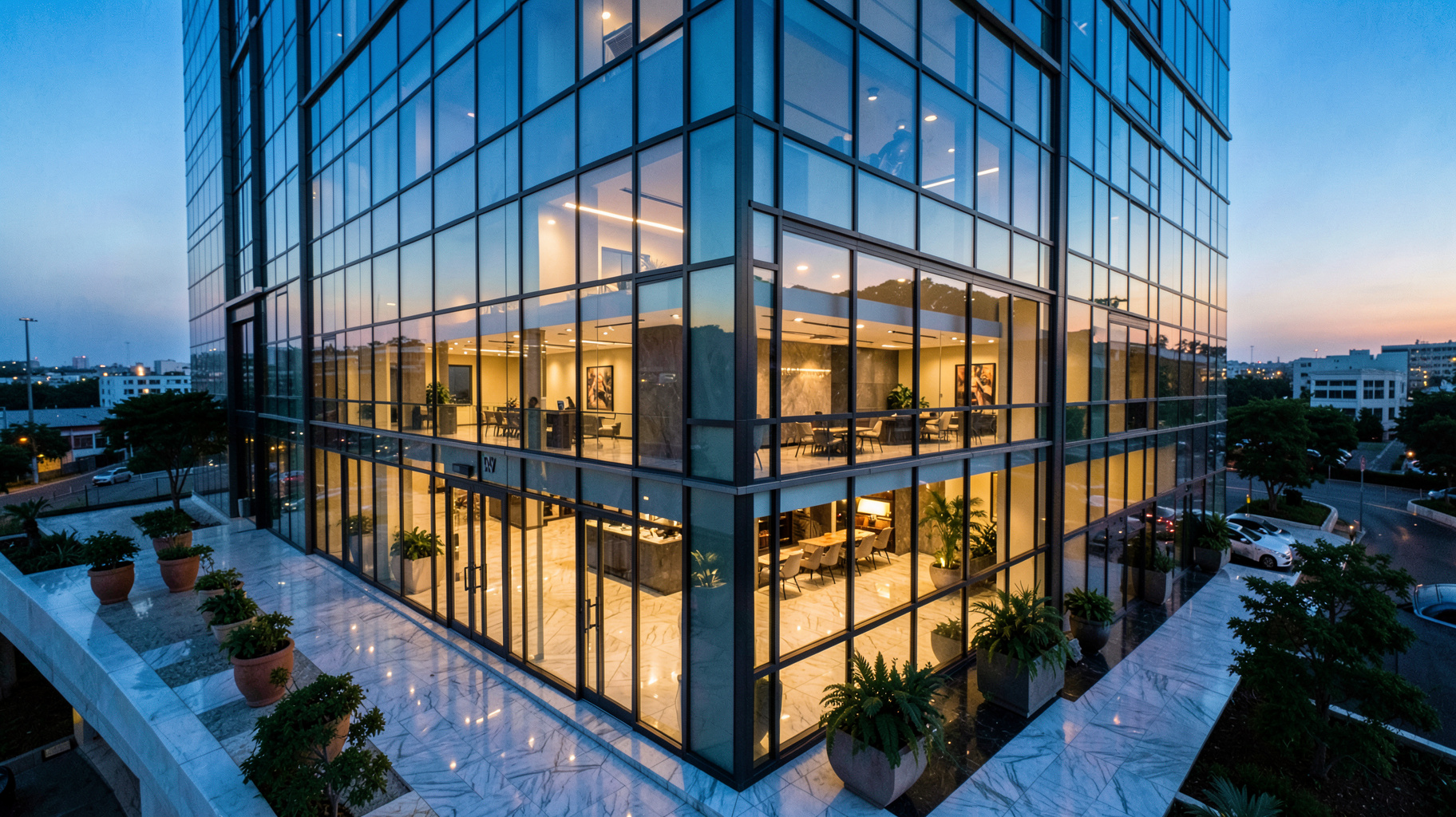
Consider the impact of "Day-to-Dusk" conversion. A commercial property shot at noon can look sterile and corporate. A twilight image, however, evokes a sense of prestige and luxury. According to research from the Harvard Business Review on visual psychology in B2B sales, high-contrast, "golden hour" imagery triggers a more positive emotional response in decision-makers, often leading to faster negotiation cycles. If you cannot find a photographer available at 6 PM on a Tuesday, the solution is to find a service that can digitally convert a midday shot into a cinematic twilight scene.
Practical Application: How to Source and Optimize Commercial Visuals
If you are trying to determine where to find the best results for your commercial assets, you need a structured acquisition pipeline. I've tested this with dozens of our clients, and the pattern for success always follows a three-step process: Capture, Enhance, and Deploy.
Step 1: The Capture Phase
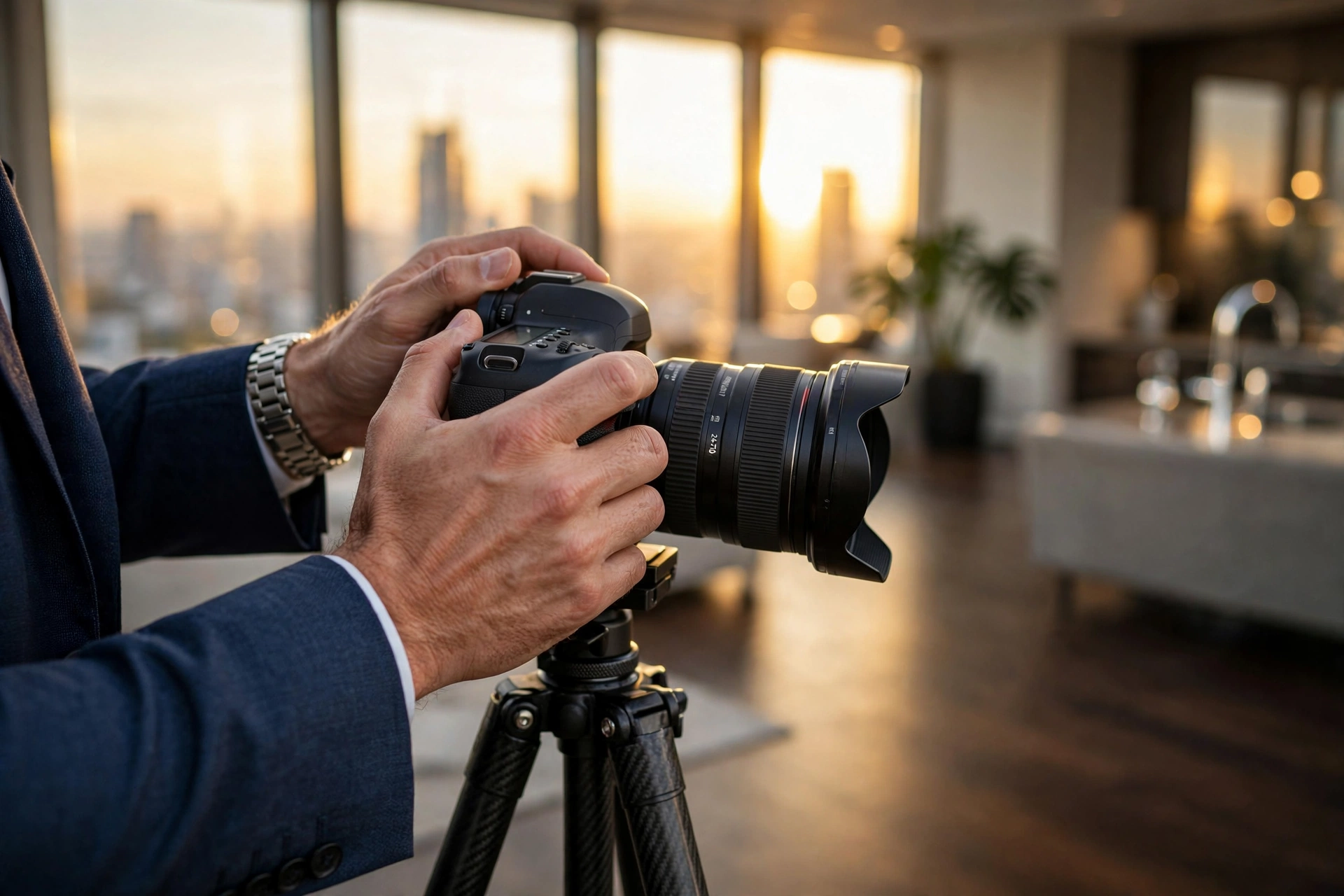
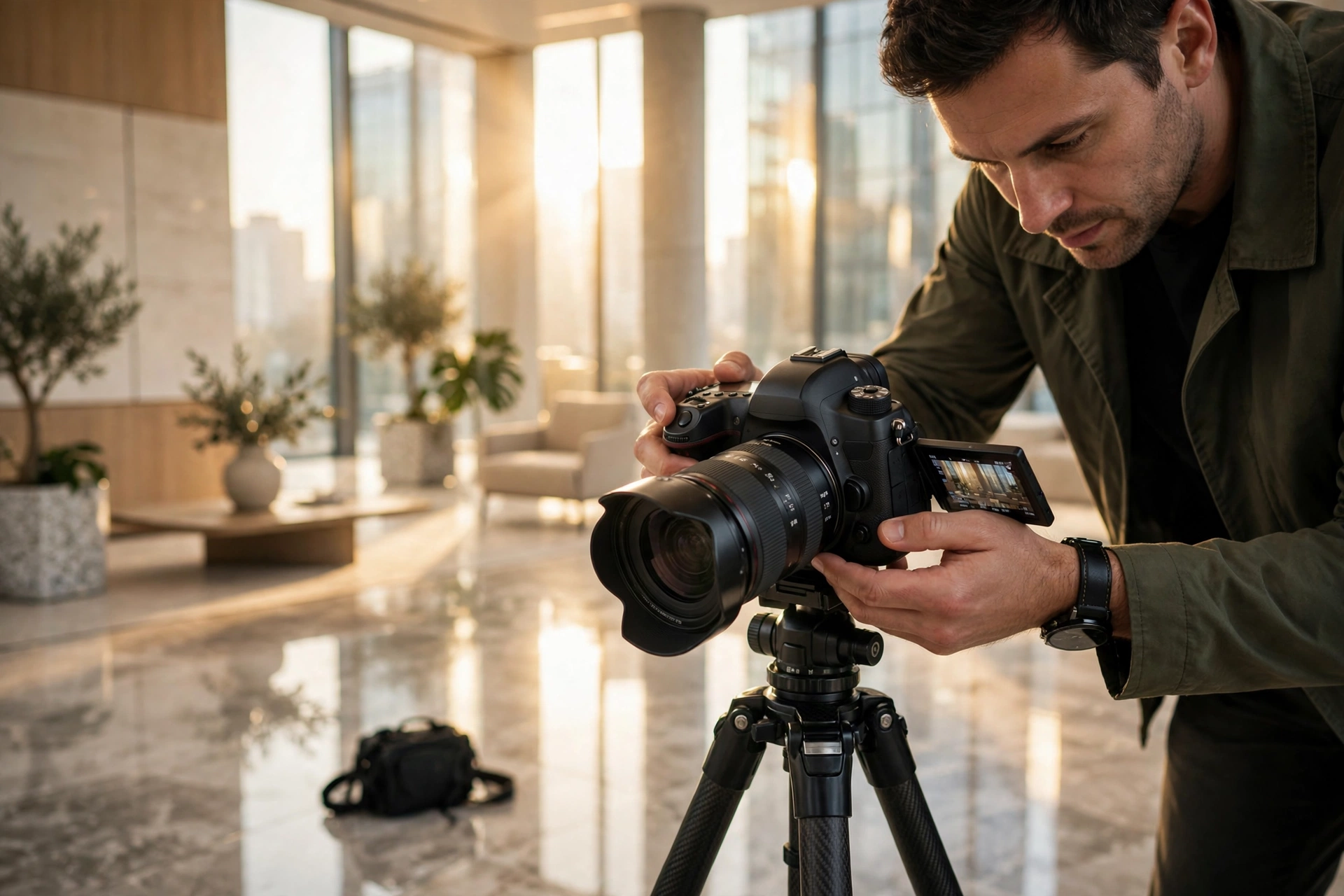
Depending on your budget, you can either hire a specialized architectural photographer or use a high-end mirrorless camera with a wide-angle lens (16-35mm is the industry standard). The goal here is not perfection, but "raw data." You need clear views of the entry points, the primary floor plan, and the external facade.
Step 2: The Enhancement Phase
This is where most brokers fail. They take the photos from the photographer and upload them directly. Instead, you should route these images through a professional AI studio. For instance, using RealVisionAI Blog - AI Real Estate Photography & Virtual Staging allows you to perform "object removal" (removing unsightly construction debris or old signage) and "grass restoration" (turning a brown winter lot into a lush summer lawn) in under 12 seconds.
Step 3: The Deployment Phase
Distribute these images across your MLS, LinkedIn, and investor pitch decks. Ensure you are using the most impactful image—usually the twilight exterior—as the primary thumbnail.
💡
Key Takeaway
Stop searching for a photographer who can "do it all." Instead, find a reliable capture source and pair them with a high-velocity AI enhancement studio to ensure your listings are market-ready in hours, not weeks.
For those starting out, understanding AI property enhancement for beginners is the fastest way to bridge the gap between amateur snapshots and institutional-grade marketing.

Comparing Your Sourcing Options: Traditional vs. AI-Hybrid
When deciding where to find your commercial real estate photography, you will likely encounter three distinct paths. The decision should be based on your monthly listing volume and the average price point of the properties.
| Option | Pros | Cons | Best For |
|---|---|---|---|
| Boutique Architectural Firm | Unmatched artistic quality; a prestige "look." | Very expensive; slow turnaround (2-4 weeks). | Trophy assets, luxury hotels, flagship headquarters. |
| Generalist Freelancers | Affordable; widely available locally. | Inconsistent quality; often lack commercial gear. | Small retail shops, basic office spaces. |
| AI-Hybrid Workflow (RealVisionAI) | Instant delivery; consistent "perfect" lighting; scalable. | Requires raw photos to start; less "artistic" nuance. | High-volume brokers, property managers, REITs. |
Now, let's be clear: the traditional approach is becoming a bottleneck. In a market where investors make decisions based on mobile screen scrolls, the "perfection" of a boutique firm is often overkill, while the "cheapness" of a generalist is a liability. The hybrid approach—combining a decent capture with Digital Staging Services: Scaling Real Estate Listings in 2026—provides the optimal balance of speed and professionalism.
If you are managing a portfolio of 50+ properties, the cost of a boutique firm is unsustainable. However, the cost of poor imagery is even higher. By shifting your "where" from a person to a process, you can maintain a consistent brand identity across all your listings, regardless of who physically took the photo.
Common Questions and Misconceptions About Commercial Imagery
Most guides on this topic get the priorities wrong. They tell you to look for "the best photographer in town," but in 2026, the photographer is only 30% of the equation. The rest is data processing and psychology.
Myth 1: "I just need someone with a good camera."
This is a dangerous misconception. A "good camera" is a tool, not a skill. Commercial photography requires an understanding of verticality. If the walls in your photo look like they are leaning inward (keystoning), the viewer subconsciously perceives the building as unstable or "off." Professional Real Estate Image Processing corrects these lines digitally, which is far more precise than any lens can achieve in the field.
Myth 2: "AI images look fake and will alienate investors."
This is an outdated view. There is a massive difference between "generative AI art" and "AI-enhanced photography." When we talk about virtual staging or sky replacement at RealVisionAI Blog - AI Real Estate Photography & Virtual Staging, we are talking about using computer vision to remove distractions and optimize lighting. Investors don't want "fake" images; they want "idealized" versions of the truth that show the property's full potential.
Myth 3: "Commercial photography is just bigger residential photography."
Wrong. Residential photography sells a "dream home"; commercial photography sells a "revenue stream." The angles are different. In residential, you want "cozy" corners. In commercial, you want to show "flow," "accessibility," and "square footage." If your photos don't emphasize the scale and the utility of the space, you are failing the buyer.
Frequently Asked Questions
Where is the best place to find commercial real estate photographers for high-volume portfolios?
For high-volume portfolios, the best place is not a single individual, but a specialized agency or an AI-hybrid workflow. Relying on one person creates a bottleneck in your pipeline. I recommend establishing a relationship with a few reliable "shoot-only" photographers who can provide raw HDR files, and then routing those files through an AI studio like RealVisionAI Blog - AI Real Estate Photography & Virtual Staging. This allows you to scale your imagery without waiting for a single person's editing schedule, ensuring every property in your portfolio has a consistent, professional look.
How can I find a photographer who specializes specifically in industrial warehouses?
Industrial photography requires a different set of skills than office or retail work, specifically regarding the management of vast, dark spaces and high ceilings. Look for portfolios that demonstrate "column-to-column" clarity and a lack of noise in low-light areas. You can find these specialists by searching for "Industrial Architectural Photographers" on LinkedIn or professional associations. However, if you find a photographer who is good at the capture but struggles with the dark interiors, you can use Why Use AI Property Enhancement for Real Estate? to brighten and clean up those cavernous spaces digitally.
Is it better to hire a local photographer or use a remote editing service?
The ideal strategy is a "Local Capture, Remote Process" model. You need a local professional to handle the physical act of photographing the property—understanding the site's layout and lighting. However, the editing should be handled by a remote, specialized service. Remote AI studios are typically faster, more consistent, and more affordable than a local photographer who is doing the editing on their own laptop. This division of labor ensures that the "boots on the ground" focus on the art, while the "cloud" focuses on the optimization.
Where can I find the most cost-effective way to handle virtual staging for empty commercial spaces?
The most cost-effective method is through AI-driven virtual staging. Traditional physical staging for a commercial office—bringing in desks, chairs, and computers—is prohibitively expensive and logistically nightmareish. By using an AI studio, you can digitally insert modern office furniture or retail displays into a raw photo in seconds. This allows you to show multiple "use-case" scenarios for the same space (e.g., turning a shell into a co-working space or a medical clinic) without spending a dime on physical furniture.
How do I verify if a commercial photographer's portfolio is actually their own work?
In the era of AI, it's easier than ever to mask poor skills. Ask for "raw" versus "edited" comparisons of a specific project. A true professional will be happy to show you how they transformed a flat, grey-sky day into a vibrant, inviting listing. Furthermore, ask about their equipment; if they don't mention a tripod and a wide-angle lens specifically for architectural work, they are likely a generalist. For an even deeper dive into quality, check our AI Property Enhancement: A Comprehensive Comparison to see what high-standard processing actually looks like.
Conclusion
Knowing where to find commercial real estate photography is no longer about finding a name in a phone book; it's about building a visual supply chain. The winners in the 2026 market are those who treat their imagery as a data asset. By combining a disciplined capture process with the lightning-fast capabilities of RealVisionAI Blog - AI Real Estate Photography & Virtual Staging, you can ensure your properties are not just listed, but positioned for maximum value.
Stop settling for "good enough" images that leave investors guessing. Whether you are looking for Investing in AI Property Enhancement for Real Estate or simply need to clean up a few warehouse shots, the tools are available to make your listings stand out.
Visit realvisionaire.com today to transform your raw property photos into market-ready assets in 12 seconds.
Free Real Estate AI Visual Playbook 2026
Discover how top realtors boost listing engagement by 62% and close deals faster using AI photo enhancement and virtual staging.