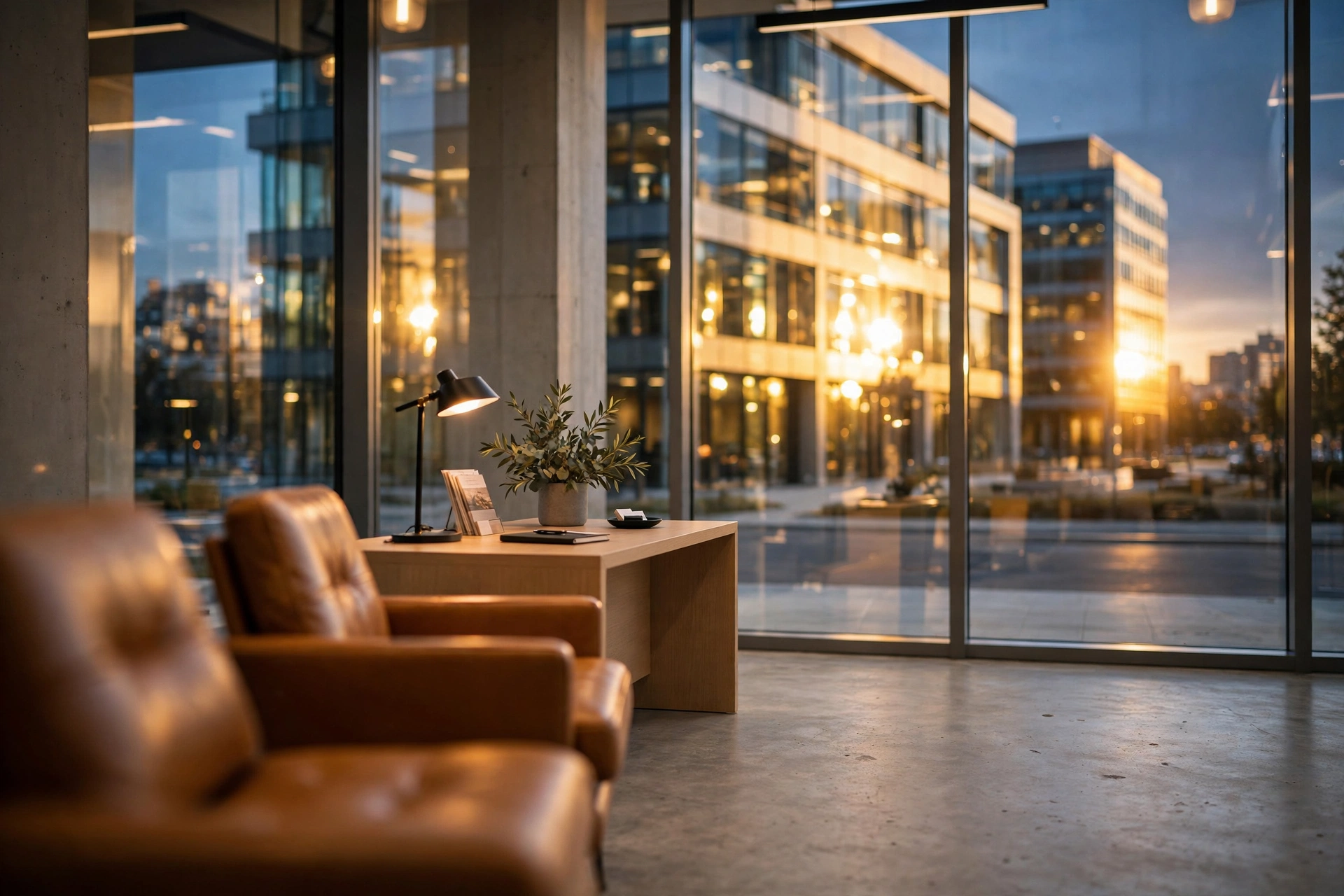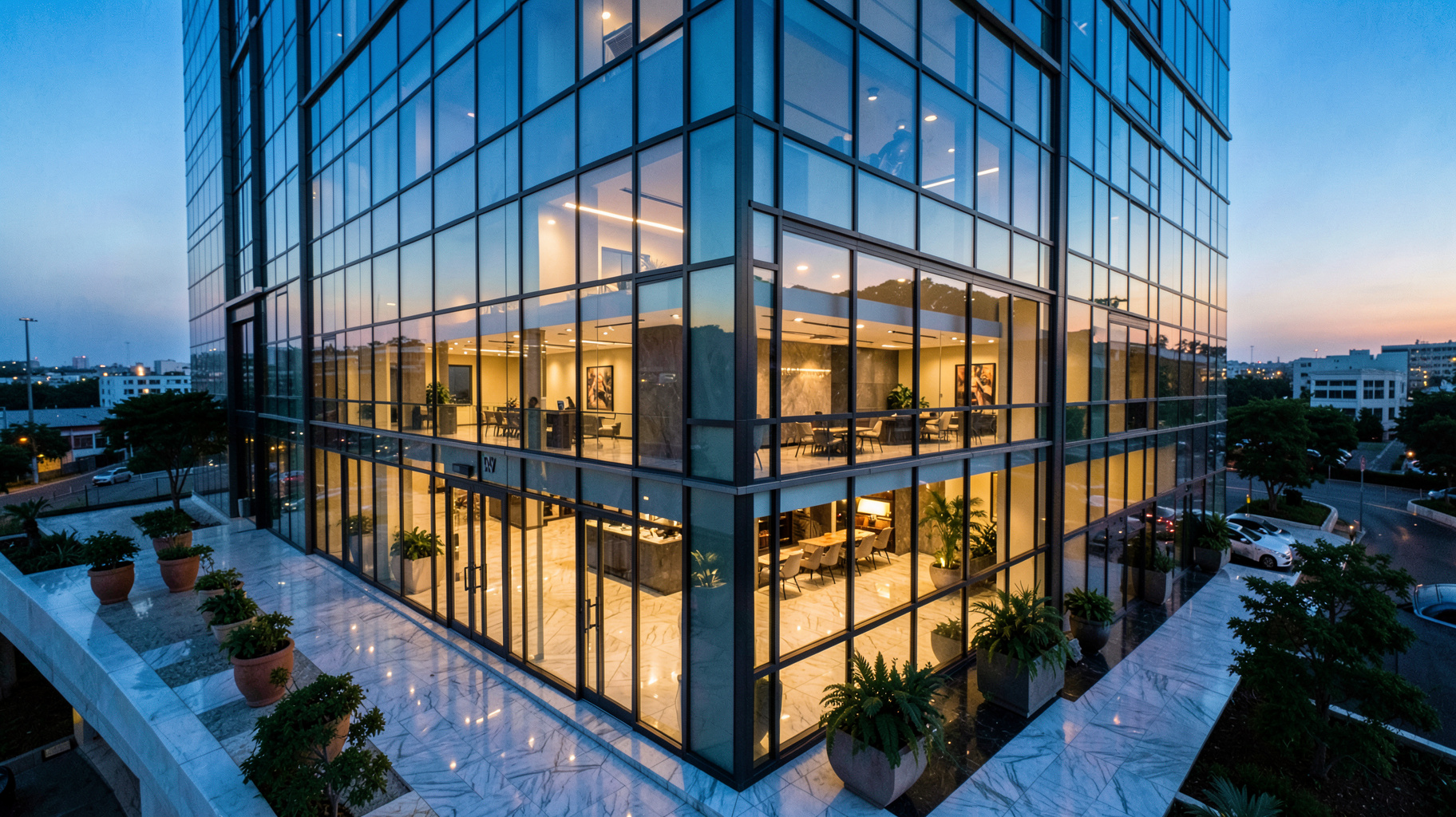


Which Option is Best for Your Commercial Real Estate Photography Needs?
Choosing the right visual strategy for a commercial property often comes down to a trade-off between raw authenticity and polished, high-conversion appeal. For most high-stakes listings, the best option is a hybrid approach: high-end professional photography paired with AI-driven enhancements. While a traditional photographer captures the physical scale of a warehouse or the layout of an office, AI tools solve the "empty room" problem and the "gray sky" issue that often plague commercial shoots.
In my experience working with luxury commercial brokers, the mistake I see constantly is relying solely on a photographer's raw output. A stunning architectural shot of a vacant retail space still looks like a vacant retail space. The real conversion happens when those images are transformed into a vision of a thriving business environment. For those seeking to maximize their ROI, the choice isn't just between "AI or Human," but rather how to integrate Real Estate Visual Marketing: The 2026 Guide to AI-Driven Sales into a cohesive brand strategy.

What Exactly Is Professional Commercial Real Estate Photography?
At its core, this discipline is less about "taking a picture" and more about "managing perception." Unlike residential photography, which focuses on emotional warmth and "homey" vibes, commercial work is about efficiency, scale, and potential. It requires a deep understanding of linear perspective and lighting to ensure that a 50,000-square-foot warehouse doesn't look like a dark cave.
📚
Definition
Commercial Real Estate Photography is a specialized branch of architectural photography focused on capturing non-residential properties—such as offices, retail spaces, industrial warehouses, and multi-family complexes—to highlight their commercial viability and investment potential.
The technical requirements are significantly higher than in the residential sector. You are often dealing with massive glass facades that create unpredictable reflections and interior spaces with mixed lighting (fluorescent, LED, and natural sunlight). According to a report by the Royal Institution of Chartered Surveyors (RICS), visual presentation remains one of the top three factors influencing initial investor interest in commercial assets. This means a slightly skewed vertical line or a dim corridor isn't just a technical error; it's a devaluation of the asset.
When we analyze the workflows of top-performing firms, we see a shift toward "Computer Vision" integration. This allows photographers to map out spaces more accurately and helps editors remove distracting elements—like old signage or construction debris—without leaving digital artifacts. For those wondering why use AI property enhancement for real estate, it is because the commercial sector demands a level of perfection that raw photography rarely achieves in a single shoot.
Why High-Quality Visuals are Mandatory for Commercial Assets
In the commercial sector, the "cost of a bad photo" is measured in vacancy months. A retail space that sits empty for an extra three months due to poor marketing can cost a landlord tens of thousands of dollars in lost rent. This is why the investment in high-end visuals is not an expense, but a risk mitigation strategy.
De acordo com relatórios recentes do setor de research from McKinsey's 2024 Digital Transformation report, B2B buyers now expect a "consumer-grade" digital experience. If a commercial tenant is browsing listings on a tablet, they expect a seamless, high-resolution experience. If the images are grainy or the lighting is poor, the subconscious assumption is that the property management is equally negligent.
The business impact is quantifiable. Data from the National Association of Realtors (NAR) suggests that listings with high-quality, professionally edited imagery see significantly higher engagement rates and faster closing times. In the commercial world, this translates to a shorter "days-on-market" metric. When a property looks "market-ready," it attracts a higher caliber of tenant, which in turn allows the landlord to command a higher price per square foot.
Furthermore, the use of AI property enhancement: pricing and value guide frameworks shows that the cost of enhancing a photo is a fraction of the cost of a physical staging project. Staging a 10,000-square-foot office with actual furniture is a logistical nightmare and a financial drain. Digital solutions provide the same psychological "trigger" for the tenant without the overhead.
How to Implement a Winning Visual Strategy Step-by-Step
Creating a high-conversion listing isn't about hiring the most expensive photographer; it's about the sequence of the workflow. Now here's where it gets interesting: the most successful brokers use a "Capture, Enhance, Scale" model.
Step 1: Strategic Capture
Don't just take wide shots. Capture "hero" images of the architecture, but also focus on "utility" shots. In commercial real estate, tenants want to see the loading docks, the HVAC systems, and the ceiling heights. Use a professional with a tilt-shift lens to avoid the "leaning building" effect.
Step 2: AI-Driven Cleanup and Restoration
Raw photos often contain distractions. This is where RealVisionAI Blog - AI Real Estate Photography & Virtual Staging becomes essential. Use AI to remove unsightly stains on the pavement, replace a gloomy gray sky with a bright, professional blue, and restore dull grass to a vibrant green. These "micro-improvements" signal quality and care.
Step 3: Virtual Staging for Conceptualization
A vacant warehouse is a blank canvas, but most humans struggle to imagine space. By using virtual staging, you can show a "Modern Open Office" layout in one photo and a "Industrial Co-working Space" in another. This allows the property to appeal to multiple different target demographics simultaneously.
Step 4: Twilight Conversion
Daylight photos are standard, but twilight photos are "emotional." Converting a midday shot into a "Golden Hour" image creates a prestige effect. This is a cornerstone of Digital Staging Services: Scaling Real Estate Listings in 2026.
💡
Key Takeaway
The goal of commercial imagery is not to document the property, but to sell the potential of the property. Moving from documentation to visualization is what increases the lease rate.

Comparing Your Options: Which Path Should You Take?
Depending on your budget and the value of the asset, you will likely fall into one of three categories. Most guides get this wrong by suggesting "one size fits all," but the trade-offs are significant.
| Option | Pros | Cons | Best For |
|---|---|---|---|
| Traditional Photography Only | Authentic, "as-is" representation. | Slow turnaround, fails to show potential, weather-dependent. | Low-value industrial sites or "as-is" sales. |
| Cheap AI Apps/Filters | Extremely fast, very low cost. | High risk of "hallucinations," looks fake, lacks professional scale. | Quick social media posts or internal records. |
| Hybrid AI Studio Approach | Maximum conversion, fast 12-second turnaround, high precision. | Requires an initial setup/subscription. | High-value commercial listings, luxury retail, corporate offices. |
That said, if you are managing a portfolio of 50+ properties, the "Hybrid AI Studio" approach is the only one that scales. Trying to coordinate 50 different shoots with manual editing would take months. Using a system like RealVisionAI Blog - AI Real Estate Photography & Virtual Staging allows you to maintain a consistent brand aesthetic across an entire portfolio in a matter of minutes. For those wondering is AI property enhancement worth it?, the answer lies in the consistency and the speed of the deployment.
Common Questions and Misconceptions
There is a lingering myth in the industry that AI "cheats" the buyer or is "dishonest." Most guides get this wrong by treating AI as a way to hide flaws. In reality, professional AI enhancement is about removing visual noise to highlight architectural value.
Myth 1: AI makes properties look fake.
Correction: When using consumer-grade apps, yes. However, professional tools like those at RealVisionAI Blog - AI Real Estate Photography & Virtual Staging use "Computer Vision" to maintain the structural integrity of the room. The goal isn't to change the room, but to optimize the lighting and atmosphere.
Myth 2: You don't need a professional photographer if you have AI.
Correction: This is a dangerous assumption. AI cannot fix a poorly composed photo or a blurry shot. You still need the "eye" of a professional to capture the correct angles. The AI is the "digital darkroom" that polishes the diamond; it doesn't create the diamond from nothing.
Myth 3: Commercial tenants don't care about "pretty" photos.
Correction: This is a relic of 1990s thinking. According to Gartner's research on B2B buying journeys, the "digital discovery" phase is where 70% of the decision is made. If the visual experience is poor, the tenant will simply skip to the next listing.
Frequently Asked Questions
Which is better: virtual staging or physical staging for commercial properties?
For almost every commercial scenario, virtual staging is the superior choice. Physical staging for a commercial space—like an office or a showroom—is prohibitively expensive and logistically complex. Virtual staging allows you to test multiple different "vibes" (e.g., minimalist, corporate, industrial) to see which attracts more leads. Moreover, virtual staging can be updated instantly if the target tenant profile changes. It provides the psychological prompt of "this is how my business will look here" without the cost of renting and moving furniture.
How do I know if my current commercial real estate photography is underperforming?
The most telling metric is your "Lead-to-Viewing" ratio. If you have high traffic on your listing but very few requests for physical tours, your images are likely failing to bridge the gap between "interest" and "desire." Other red flags include high bounce rates on your property landing pages and a lack of engagement on social media. If your photos look like they were taken with a smartphone in 2015, you are likely leaving money on the table. Consider exploring the best AI property enhancement tools to refresh your portfolio.
Can AI help with "Day-to-Dusk" conversions for commercial buildings?
Yes, and it is one of the most powerful tools for prestige listings. A "Twilight" shot creates an emotional response of luxury and success. Instead of paying a photographer to come back at 6:00 PM and wait for the perfect light (which is expensive and weather-dependent), AI can simulate the golden hour with perfect accuracy. This involves adjusting the color temperature, adding artificial interior glows to windows, and deepening the sky. It is a highly effective way to make a standard office building look like a landmark.
What are the legal implications of using AI in commercial real estate imagery?
Generally, enhancing lighting and removing a trash can from a parking lot is considered "standard editing." However, the key is avoiding "material misrepresentation." You should not use AI to remove a permanent structural pillar or a neighboring building. The goal is to enhance the aesthetic, not to deceive the buyer about the physicality of the asset. Most brokers include a small disclaimer stating that "some images have been digitally enhanced for conceptual purposes," which covers all legal bases while still allowing for high-impact visuals.
How long does it actually take to process commercial photos using AI?
In the past, high-end retouching took days or weeks. With the advent of specialized studios, that has plummeted. For example, RealVisionAI Blog - AI Real Estate Photography & Virtual Staging provides market-ready visuals in as little as 12 seconds. This speed is fundamental for the modern broker who needs to get a listing live the moment the contract is signed. When you can turn around a full set of enhanced, staged, and twilight images in minutes, you gain a massive competitive advantage in "time-to-market."
Final Thoughts on Commercial Real Estate Photography
The question of "which" option to choose depends on the value of your asset and the speed of your market. If you are dealing with high-value commercial properties, a "photography-only" approach is a missed opportunity. The most effective strategy for 2026 is to combine the structural accuracy of professional photography with the psychological power of AI enhancement.
By focusing on a hybrid workflow—capturing the scale and then using tools like RealVisionAI Blog - AI Real Estate Photography & Virtual Staging to optimize the atmosphere—you transform a simple listing into a compelling investment opportunity. Whether you need AI property enhancement for beginners or a full-scale portfolio overhaul, the goal remains the same: reduce vacancy and maximize rent.
To start transforming your listings today, visit realvisionaire.com and experience market-ready visuals in seconds.
Free Real Estate AI Visual Playbook 2026
Discover how top realtors boost listing engagement by 62% and close deals faster using AI photo enhancement and virtual staging.