

How to Master Commercial Real Estate Photography for High-Value Listings
Capturing a commercial property is fundamentally different from shooting a residential home; you aren't selling a "feeling" of coziness, but rather the potential for profit, efficiency, and professional scale. To execute high-end commercial real estate photography, you must prioritize wide-angle perspective, precise vertical alignment, and a strategic flow that guides a potential investor through the utility of the space. By combining professional lighting with an understanding of architectural lines and post-processing tools, you can transform a sterile warehouse or a cluttered office into a high-conversion asset.
For those looking to scale their visual output, incorporating Real Estate Visual Marketing: The 2026 Guide to AI-Driven Sales allows for a hybrid approach where raw architectural shots are enhanced by AI to remove distracting equipment or optimize lighting.

What Defines Professional Commercial Real Estate Photography?
At its core, this discipline is about documenting a business environment while emphasizing the architectural strengths and functional capacity of the site. Unlike residential shoots, where soft light and "homely" touches prevail, commercial work demands a clinical precision. You are often dealing with massive glass facades, industrial-scale ceilings, and challenging mixed lighting sources that can create extreme contrast.
📚
Definition
Commercial Real Estate Photography is the specialized practice of capturing images of business-oriented properties—such as office buildings, retail spaces, warehouses, and hotels—designed specifically to attract investors, tenants, or buyers by highlighting the property's utility and scale.
In my experience working with commercial brokers, the most common failure is a lack of "spatial storytelling." A photo of an empty lobby is just a photo; a sequence that shows the flow from the lobby to the executive suites and then to the loading docks is a narrative of operational efficiency. This requires a deep understanding of computer vision and how the human eye perceives large-scale volumes.
According to a recent report by Deloitte on PropTech trends, high-quality visual assets are now the primary driver for initial lead generation in commercial leasing, with listings featuring professional imagery seeing a significant increase in inquiry rates compared to those using amateur photos. This underscores the need for a systematic approach to capture, rather than a "point-and-shoot" mentality.
Why High-Quality Imagery Directly Impacts Commercial ROI
The financial stakes in commercial real estate are exponentially higher than in residential sales. A poorly lit warehouse listing doesn't just look "unprofessional"—it can suggest a lack of maintenance or poor infrastructure to a savvy investor. When a property is presented with crisp, vertically aligned images and a clear sense of scale, it reduces the perceived risk for the buyer.
Data from McKinsey indicates that digital transformation in the real estate sector, specifically through the use of advanced visual data, has shortened the commercial leasing cycle by up to 20% in some urban markets. This is because the "visual vetting" process happens long before the first physical walkthrough. If the photos don't prove the space can fit a specific industrial layout or a corporate headcount, the broker loses a lead before the first phone call.
The consequences of neglecting this are immediate. Properties with low-quality visuals often linger on the Multiple Listing Service (MLS) longer, leading to higher carrying costs for the owner. Furthermore, when the visual quality is low, buyers are more likely to negotiate aggressively on price, perceiving the property as a "fixer-upper" even if the structural integrity is perfect.
Investing in the right tools, such as Investing in AI Property Enhancement for Real Estate, ensures that these images remain competitive in a market where "first impressions" are quantified by click-through rates and time-on-page metrics.
Step-by-Step Implementation for Commercial Shoots
Executing a commercial shoot requires a rigorous checklist. You cannot wing it in a 50,000-square-foot facility. Here is the professional workflow I have refined over years of field experience.
1. Site Survey and Lighting Analysis
Before taking a single photo, walk the entire property. Identify the "hero" angles—the views that best showcase the ceiling height or the natural light. Note the direction of the sun; for exterior shots, you want the sun to hit the front of the building, not leave it in shadow. If you are shooting interiors with massive windows, you will likely deal with "blown-out" backgrounds. This is where HDR (High Dynamic Range) or bracketed exposures become mandatory.
2. Equipment Setup and Alignment
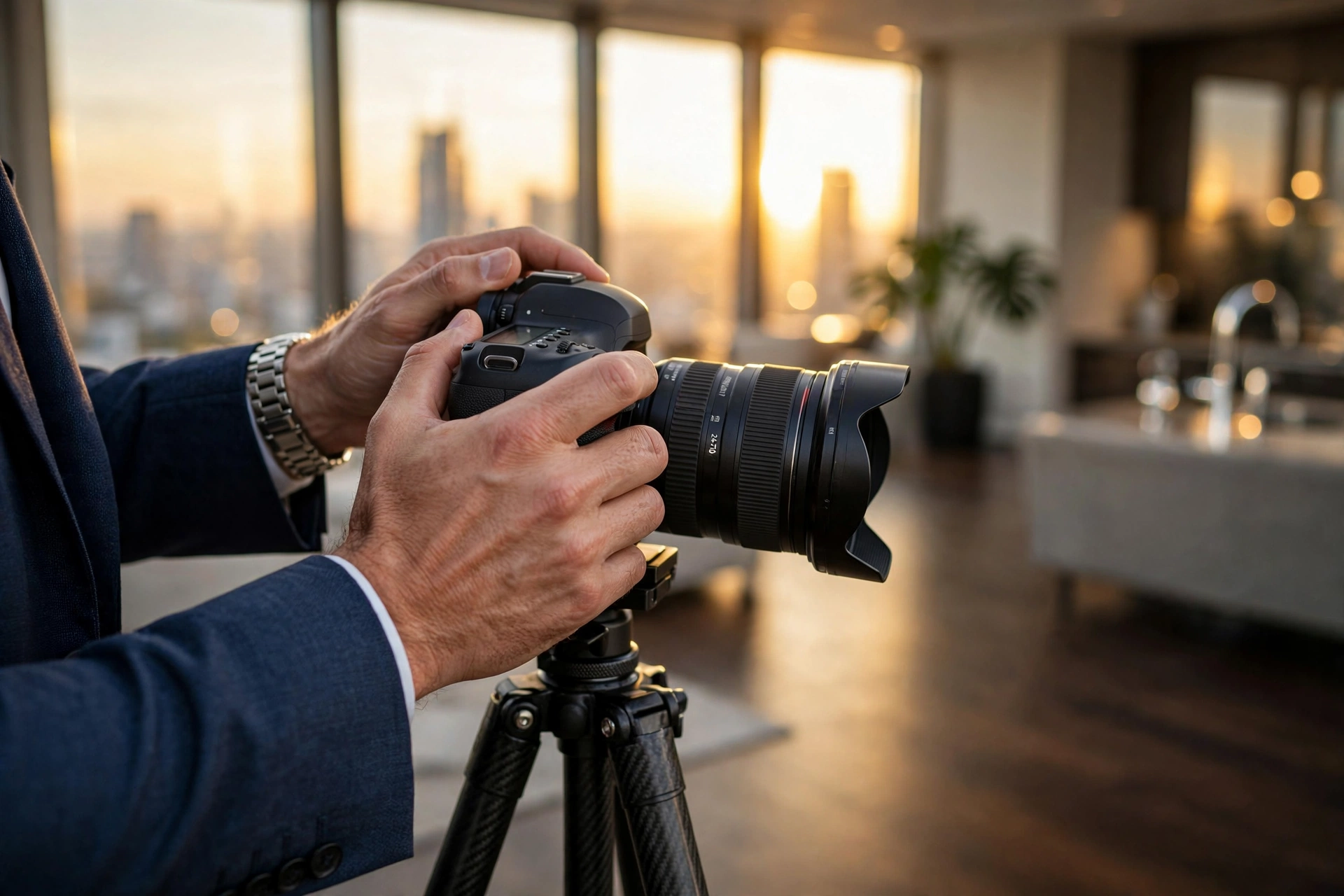
Use a wide-angle lens (typically 16mm to 24mm on a full-frame sensor), but avoid "fisheye" distortion. The most critical rule in commercial photography is keeping your verticals straight. If the walls look like they are leaning inward or outward, the photo looks amateur. Use a tripod with a leveling head or a bubble level to ensure the camera is perfectly parallel to the floor.
3. Capturing the Sequence
Start with the exterior "Hero Shot." Capture the building from a distance to show the surrounding infrastructure and accessibility. Then, move inside, starting from the public areas and moving toward the private ones. For industrial spaces, capture the scale by including a reference point—like a door or a piece of equipment—so the viewer can gauge the height of the ceilings.
4. Post-Processing and AI Enhancement
Raw photos are rarely ready for the web. They often contain "visual noise" like trash cans, stray cables, or outdated furniture. This is where the workflow integrates RealVisionAI Blog - AI Real Estate Photography & Virtual Staging. Instead of spending hours in manual cloning tools, AI can declutter a space in seconds.
💡
Key Takeaway
The secret to high-conversion commercial images is the combination of perfect vertical alignment during the shoot and strategic AI-driven decluttering during post-production to remove operational distractions.
By using Passo a Passo: AI Property Enhancement, you can perform "digital staging," adding a modern office layout to a vacant shell, allowing potential tenants to visualize the space's potential without the cost of physical furniture.

Choosing the Right Visual Strategy: Comparison Table
Depending on the budget and the goal of the listing, different approaches to commercial imaging are required. Not every property needs a 4K cinematic tour, but every property needs basic alignment.
| Strategy | Technical Approach | Pros | Cons | Best For |
|---|---|---|---|---|
| Traditional Manual | Manual HDR, heavy Photoshop retouching | Maximum control over every pixel | Extremely slow turnaround, high cost | Ultra-luxury corporate HQs |
| Generic AI-Only | Low-res uploads to basic AI filters | Very cheap, instant | High hallucination risk, distorted lines | Low-end rental listings |
| RealVisionAI Hybrid | Pro-capture + AI Enhancement/Staging | Fast, professional, scalable | Requires basic pro-capture base | Mid-to-high end commercial assets |
When deciding which path to take, consider the expected ROI of the property. A high-value industrial park warrants a hybrid approach where professional photography is scaled through Digital Staging Services: Scaling Real Estate Listings in 2026 to show multiple possible configurations of the warehouse.
Common Misconceptions in Commercial Imaging
Most guides get this wrong by treating commercial properties like "big houses." Here are the most common myths I see in the industry, corrected by real-world data.
Myth 1: "The wider the lens, the better."
Many photographers use ultra-wide lenses to make a small office look huge. However, this creates "barrel distortion" where the edges of the room curve. Investors recognize this immediately as a deceptive tactic. The goal is not to make the space look bigger than it is, but to show the full extent of the space accurately.
Myth 2: "Empty spaces are the best way to show potential."
Actually, completely empty commercial spaces often feel cold and cavernous, making them seem smaller or less inviting than they are. This is a psychological phenomenon. By using virtual staging to add a few professional desks or a reception area, you provide a sense of scale and purpose.
Myth 3: "Natural light is always the best choice."
In a warehouse with translucent roofing or a lobby with floor-to-ceiling glass, natural light can create "hot spots" that destroy the image's dynamic range. Often, a mix of timed flashes or sophisticated AI-driven light balancing is required to ensure the interior is visible while the exterior view remains clear.
Frequently Asked Questions
How do I handle distracting elements in a functional warehouse?
The biggest challenge in commercial photography is "operational clutter"—pallets, machinery, and wiring that are necessary for the business but ugly in a photo. The most efficient way to handle this in 2026 is through AI-driven object removal. Instead of asking a business owner to move tons of equipment, you capture the shot and use tools like those at RealVisionAI Blog - AI Real Estate Photography & Virtual Staging to cleanly remove the distractions. This ensures the architectural bones of the building are the star of the image.
What is the best time of day to shoot commercial exteriors?
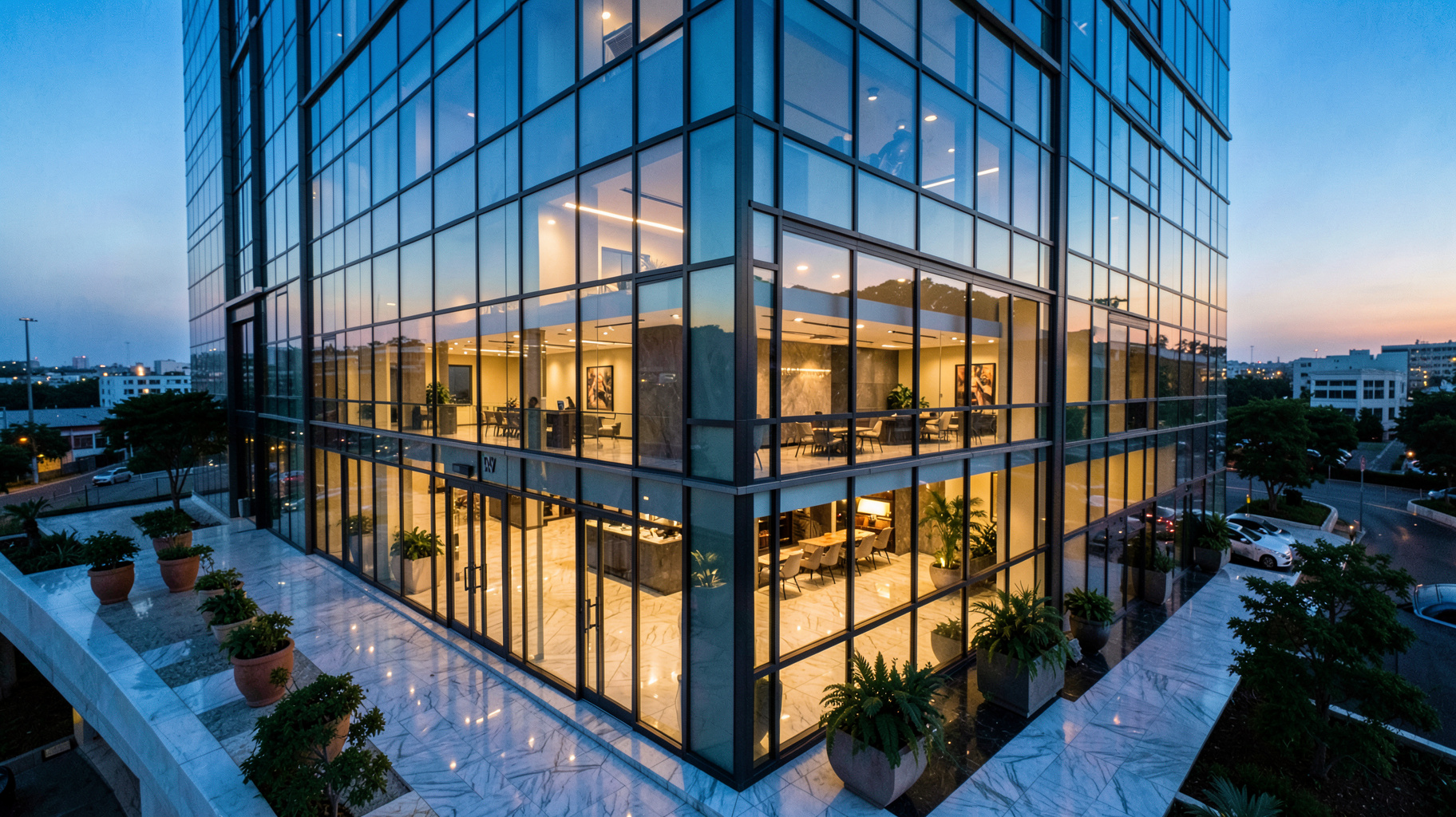
For most commercial buildings, the "Golden Hour" (shortly after sunrise or before sunset) is ideal, but the "Blue Hour" (just after sunset when the sky is deep blue and interior lights are on) is often more effective for corporate offices. The contrast between the cool blue exterior and the warm yellow interior lights creates a sophisticated, high-end look that suggests activity and prestige. This combination is highly effective for increasing the perceived value of the property.
Should I use a drone for every commercial listing?
Not every property needs an aerial shot, but for industrial and retail properties, it is almost mandatory. A drone provides the "site context"—showing the proximity to highways, loading dock accessibility, and the total acreage of the lot. In the commercial world, the land and the access points are often as valuable as the building itself. Ensure your drone shots include a top-down "plan view" to help investors understand the property's footprint.
How do I avoid "distorted" walls in my photos?
Distortion happens when the camera is tilted up or down. To fix this, the camera sensor must be perfectly vertical. If you cannot achieve this in-camera, you must use a "perspective crop" or "vertical correction" tool in post-production. However, over-correcting can make the image look unnatural. I always recommend using a tripod with a built-in level to get it right at the source, reducing the amount of manipulation needed later.
Is virtual staging acceptable for commercial real estate?
Yes, provided it is disclosed or used to show "potential." In commercial real estate, virtual staging is often used to show how a "shell" space could be converted into an open-plan office or a retail boutique. This removes the cognitive load from the buyer, who no longer has to imagine the layout. Using Types of AI Property Enhancement for Real Estate allows you to present three different layout options for the same room, significantly increasing the property's appeal to different types of tenants.
Final Thoughts on Commercial Real Estate Photography
Mastering commercial real estate photography requires a shift in mindset from artistic expression to strategic documentation. You are providing a visual audit of a business asset. By prioritizing vertical alignment, leveraging the power of the "Blue Hour," and utilizing modern AI tools to remove clutter and stage empty spaces, you create a listing that doesn't just look good—it sells.
The transition from raw captures to market-ready visuals is where the real value is created. Whether you are a photographer looking to speed up your workflow or a broker wanting to increase your lead conversion, the integration of professional capture and AI enhancement is the only way to remain competitive in 2026.
To elevate your current listings instantly, explore the professional suite at RealVisionAI Blog - AI Real Estate Photography & Virtual Staging. For more technical insights, check out our guide on When to Use Real Estate Image Processing for Your Listings.
Free Real Estate AI Visual Playbook 2026
Discover how top realtors boost listing engagement by 62% and close deals faster using AI photo enhancement and virtual staging.