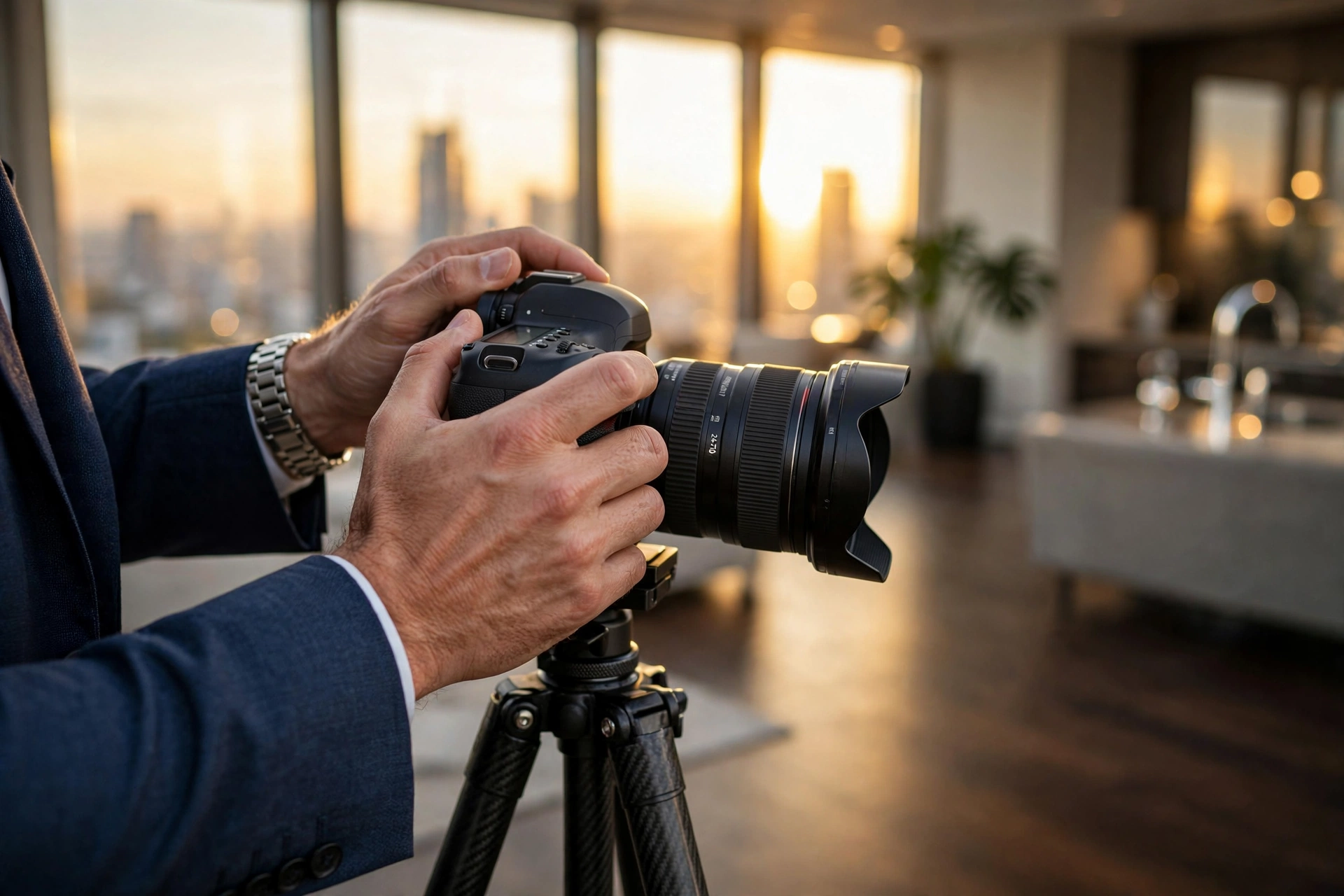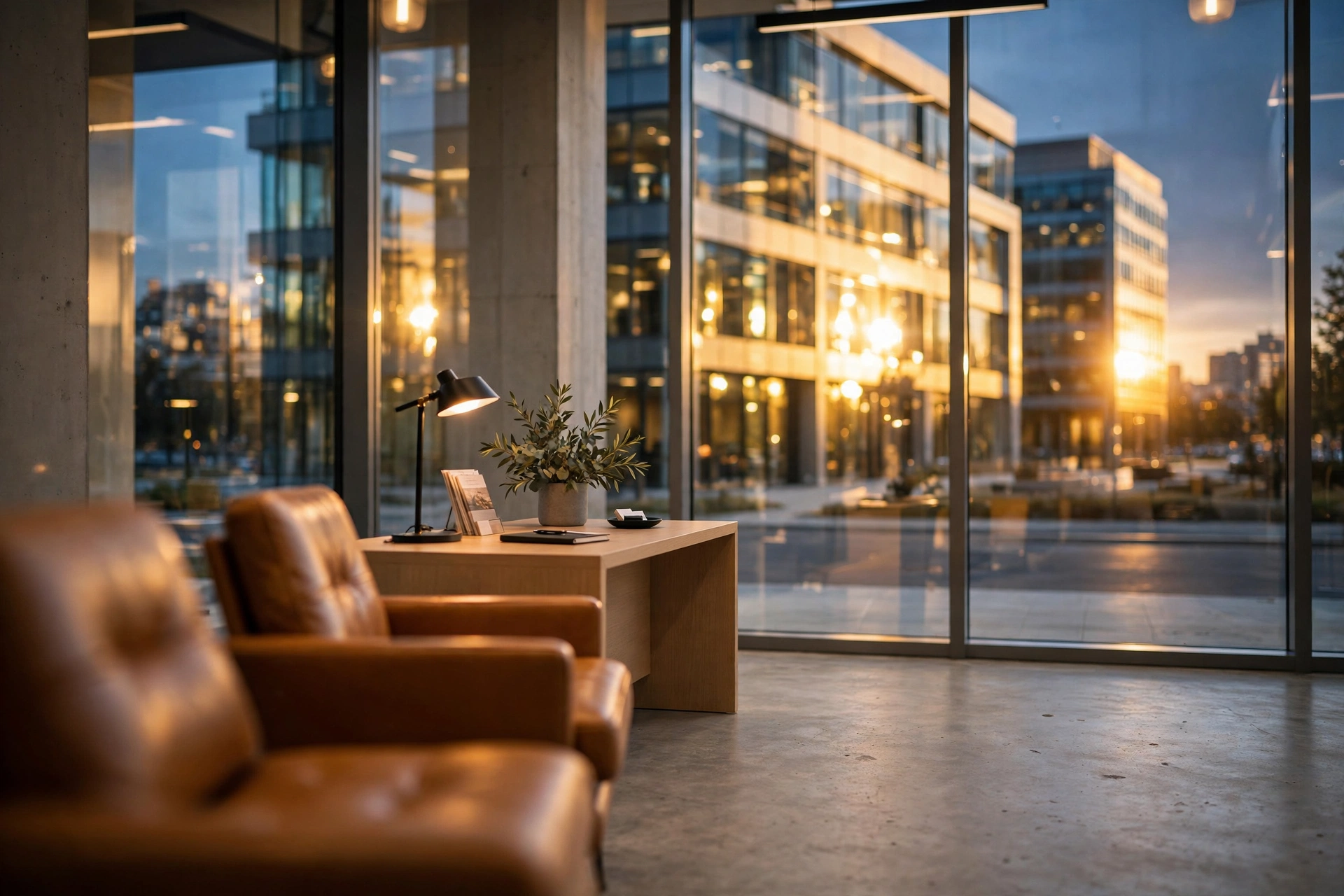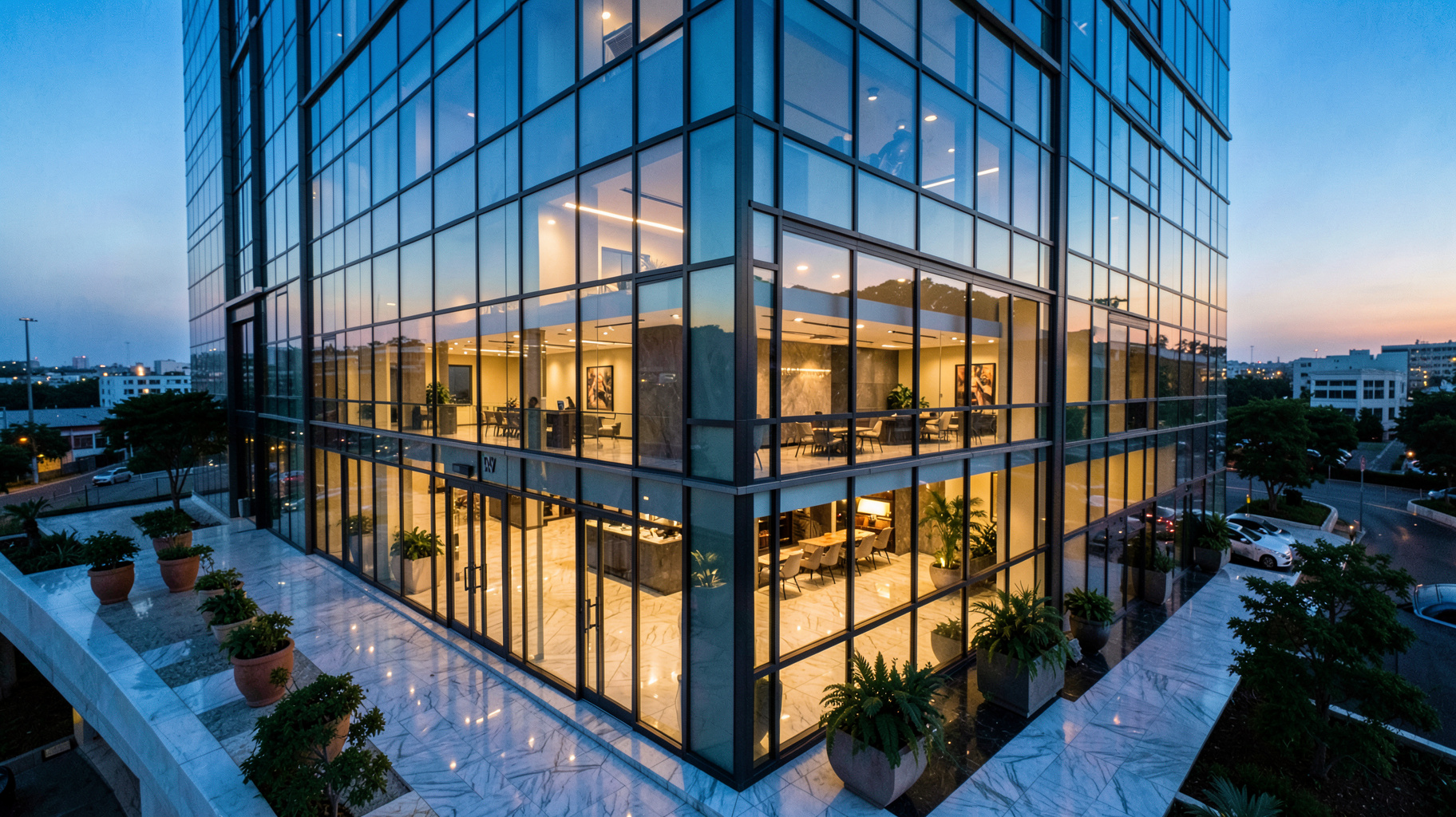


What Exactly Is Commercial Real Estate Photography?
Selling a 50,000-square-foot warehouse or a high-rise corporate office requires a fundamentally different visual strategy than selling a three-bedroom suburban home. High-stakes investors and corporate tenants do not buy based on "coziness"; they buy based on utility, scale, and ROI. This is why professional commercial real estate photography is the specialized practice of capturing non-residential properties—such as office buildings, retail spaces, industrial complexes, and mixed-use developments—to highlight their architectural value, operational efficiency, and market potential.
In my experience working with institutional landlords, the biggest mistake I see is treating a commercial listing like a residential one. Residential photography focuses on emotion and lifestyle. Commercial photography focuses on spatial capacity and logistical viability. If a potential tenant cannot visualize how their logistics chain fits into a warehouse or how their corporate culture fits into an office floor plan, the images have failed. For those looking to scale their visual assets, exploring Real Estate Visual Marketing: The 2026 Guide to AI-Driven Sales provides a roadmap for integrating these high-end visuals into a broader conversion funnel.

The Core Framework of Commercial Real Estate Photography
To understand this discipline, one must recognize that it is a hybrid of architectural photography and marketing psychology. While a residential photographer might focus on a "warm" kitchen, a commercial specialist focuses on "column spacing" in a warehouse or "natural light penetration" in a corporate suite. The goal is to provide a factual yet aspirational representation of a property that can be used for Multiple Listing Service (MLS) entries, investor pitch decks, and corporate brochures.
📚
Definition
Commercial Real Estate Photography is the professional capture of income-producing properties, emphasizing scale, architectural integrity, and functional utility to attract B2B tenants or institutional investors.
The technical requirements are significantly higher than in standard photography. Commercial spaces often suffer from "mixed lighting"—where harsh fluorescent overheads clash with natural light from floor-to-ceiling windows. Solving this requires advanced techniques like HDR (High Dynamic Range) blending or AI-driven light balancing. According to a report by Deloitte on the evolution of PropTech, the integration of high-fidelity visuals in commercial listings has directly correlated with a reduction in "days-on-market" for Class A office spaces, as digital due diligence now happens long before the first physical walkthrough.
Furthermore, the scope of a commercial shoot often extends beyond a few interior shots. It frequently involves drone photography to show the property's proximity to major highways, ports, or transit hubs. A warehouse is useless if the truck loading docks are inaccessible; therefore, the photography must prove the logistics. When we analyze Types of AI Property Enhancement for Real Estate, we see that the ability to digitally clean up a parking lot or enhance a grey sky is not just about aesthetics—it is about removing visual distractions that might make a multi-million dollar asset look neglected.
Why High-End Visuals Are Mandatory for Commercial Assets
In the commercial sector, the cost of a vacancy is measured in thousands of dollars per day. A listing with poor imagery doesn't just look "unprofessional"; it signals a lack of maintenance or a lack of urgency from the owner, which can either drive away high-quality tenants or lead to aggressive low-ball offers from investors.
The business impact of professional imagery is quantifiable. Research from Harvard Business Review suggests that high-quality visual storytelling in B2B transactions increases trust and perceived value by significantly narrowing the "information asymmetry" between the seller and the buyer. When an investor can see the exact condition of the HVAC system or the sheer volume of a retail floor through professional lenses, the perceived risk drops.
Here is the reality: institutional buyers often use AI-driven filters to scan listings. If the imagery is low-resolution or poorly lit, the property may be filtered out by automated procurement tools before a human ever sees it. This makes Property Listing Optimization: The 2026 Guide to Higher Conversion a necessity rather than a luxury. If you are not optimizing the visual data, you are essentially invisible to the modern institutional buyer.
The risk of ignoring this is a "valuation gap." A property that is functionally perfect but visually presented as "dated" can see a lower initial offer price. In a market where a 1% difference in capitalization rate can mean millions of dollars in asset value, the ROI on professional photography is perhaps the highest of any marketing expense in the real estate cycle.
Practical Implementation: Capturing and Enhancing Commercial Spaces
Executing a commercial shoot requires a phased approach. You cannot simply walk in and start snapping photos; the scale of these properties demands a tactical plan.
- The Site Audit: Before the camera comes out, the photographer must identify the "hero angles." In a retail space, this is the storefront and the main aisle. In a warehouse, it is the ceiling height and the loading bays.
- Lighting Synchronization: Using a combination of wide-angle lenses (to capture the breadth of the space without distorting the walls) and tripod-based long exposures to handle the difficult lighting of industrial zones.
- Post-Processing and AI Enhancement: This is where the magic happens. Raw commercial photos are often sterile or overly dark. Using tools like those found in RealVisionAI Blog - AI Real Estate Photography & Virtual Staging, professionals can perform "day-to-dusk" conversions to make an office building look vibrant and active, or use virtual staging to show how a vacant warehouse could be converted into a modern "last-mile" delivery hub.
💡
Key Takeaway
The value of commercial photography is not in the "photo" itself, but in the "vision" it provides. Converting a vacant shell into a staged corporate environment via AI is the fastest way to trigger an emotional "yes" from a corporate decision-maker.
If you are managing a large portfolio, the manual process of editing hundreds of photos is a bottleneck. This is why many firms are now asking When to Upgrade Your Real Estate Image Processing. Moving from manual Photoshop edits to an AI-driven workflow allows a property manager to go from "photo shoot" to "live listing" in hours instead of weeks.

Comparing Visual Approaches for Commercial Listings
Not all commercial photography is created equal. Depending on the asset class—whether it's a boutique retail shop or a massive distribution center—the approach must shift.
| Approach | Technical Focus | Pros | Cons | Best For |
|---|---|---|---|---|
| Traditional Architectural | Precision, Geometry, Lighting | Extremely high quality; "Magazine" look | Very slow turnaround; Expensive | Luxury Hotel, High-End Corporate HQ |
| Generic AI-Only | Rapid Filtering, Saturation | Fast; Cheap | Risk of "hallucinations"; Looks fake | Low-end rentals, Quick flips |
| Hybrid AI-Pro (RealVisionAI) | Scale, Accuracy, Speed | High precision; 12-second delivery; Realistic | Requires initial high-quality raw shots | Mid-to-High Tier Commercial, MLS Listings |
Now, here's where it gets interesting: the industry is moving toward "Dynamic Visuals." We are no longer just talking about static images. The modern commercial listing incorporates 3D tours and cinematic video. However, these are all built upon the foundation of the static photo. If the base photo is bad, the 3D tour will look like a low-budget video game. This is why understanding Why Use AI Property Enhancement for Real Estate? is fundamental—it cleans the "base layer" of the visual asset.
Common Misconceptions in Commercial Photography
Most guides get this wrong by suggesting that "more photos are better." In the commercial world, quantity is a liability. An investor does not want to scroll through 100 photos of a parking lot; they want 10 photos that prove the parking lot is compliant with zoning laws and has efficient traffic flow.
Myth 1: "Wide-angle lenses make everything look better."
Actually, over-using wide-angle lenses in commercial spaces creates "barrel distortion," making a square office look like an oval. This is a red flag to experienced brokers who know the space is being misrepresented. The goal is accuracy, not illusion.
Myth 2: "Staging is only for residential homes."
This is a costly mistake. A completely empty 10,000-square-foot office is intimidating and hard to visualize. Virtual staging allows a broker to show "Option A: Open Plan" and "Option B: Executive Suites" using the same photo. This versatility is why Digital Staging Services: Scaling Real Estate Listings in 2026 has become a cornerstone of B2B real estate.
Myth 3: "AI editing is just for removing trash from the floor."
AI in 2026 is doing much more. We are now using computer vision to automatically adjust the white balance of an entire industrial complex to match the golden hour of a specific city's latitude. It is about atmospheric control, not just "cleaning."
Frequently Asked Questions
How does commercial real estate photography differ from residential photography?
The primary difference lies in the intent of the viewer. Residential photography targets the "homebuyer" and focuses on intimacy, warmth, and emotional connection. Commercial photography targets the "investor" or "tenant" and focuses on utility, scale, and profit potential. While a residential shot might highlight a cozy reading nook, a commercial shot will highlight the ceiling height of a warehouse or the efficiency of an office's open-concept layout. The technical scale is also different; commercial shoots often require drones to show regional logistics and more complex lighting setups to handle massive industrial spaces.
Is virtual staging effective for commercial properties?
Absolutely. In fact, it is often more critical in commercial real estate than in residential. A vacant commercial shell is functionally a "blank canvas," and most corporate tenants struggle to visualize how their specific operations will fit into a raw space. By using virtual staging, you can demonstrate multiple use cases for the same square footage—such as showing a space as both a medical clinic and a boutique retail store. This increases the pool of potential tenants and justifies a higher price per square foot by proving the property's versatility.
How long should a commercial photo shoot take?
The duration depends on the asset class, but a professional commercial shoot is rarely a "quick visit." For a medium-sized office building, a shoot can take 4 to 8 hours to ensure every angle is captured during the best lighting windows. However, the turnaround time is where the industry has changed. In the past, you would wait two weeks for edited photos. With the implementation of RealVisionAI Blog - AI Real Estate Photography & Virtual Staging, the post-processing phase—such as sky replacement or decluttering—can now be completed in seconds, allowing listings to go live almost immediately.
Do I need drone photography for every commercial listing?
For industrial and retail assets, drone photography is practically mandatory. An investor needs to see the "macro" context: where are the loading docks located relative to the main road? Is there enough overflow parking for employees? How does the roof look for potential solar installation? Without aerial views, you are leaving the buyer to guess about the property's surroundings, which can create friction during the due diligence phase. Aerial shots provide the "logistical proof" that static ground photos simply cannot offer.
What is the ROI of investing in professional commercial photography?
The ROI is seen in three areas: speed of lease, higher rental rates, and lower marketing costs. Properties with high-quality, AI-enhanced visuals typically see a higher click-through rate on platforms like CoStar or LoopNet. According to industry benchmarks, a well-presented listing can reduce the vacancy period by 20-30%, which, for a large commercial asset, can save the owner tens of thousands of dollars in lost rent. When you consider the cost of the photography against the potential increase in asset valuation, the investment is negligible.
Final Thoughts on Commercial Real Estate Photography
Mastering the visual presentation of a commercial asset is not about making a property look "pretty"; it is about making it look profitable. In the high-stakes world of commercial real estate, imagery is the first step of the due diligence process. If the photos fail to communicate scale and utility, the property fails to attract the right caliber of investor.
Whether you are managing a portfolio of retail strips or a single corporate tower, the integration of professional capture and AI-driven enhancement is the only way to stay competitive in 2026. If you're wondering if the investment is worth it, ask yourself: "Would I buy a multi-million dollar asset based on a photo taken on a smartphone?" The answer is always no.
To elevate your listings and secure higher-value tenants, leverage the power of RealVisionAI Blog - AI Real Estate Photography & Virtual Staging. From instant sky replacements to professional virtual staging, we help you turn raw spaces into market-ready assets in seconds. For more insights on optimizing your workflow, see our AI Property Enhancement Pricing Guide.
Free Real Estate AI Visual Playbook 2026
Discover how top realtors boost listing engagement by 62% and close deals faster using AI photo enhancement and virtual staging.