Which AI Real Estate Photo Enhancement Is Best for Your Listings?
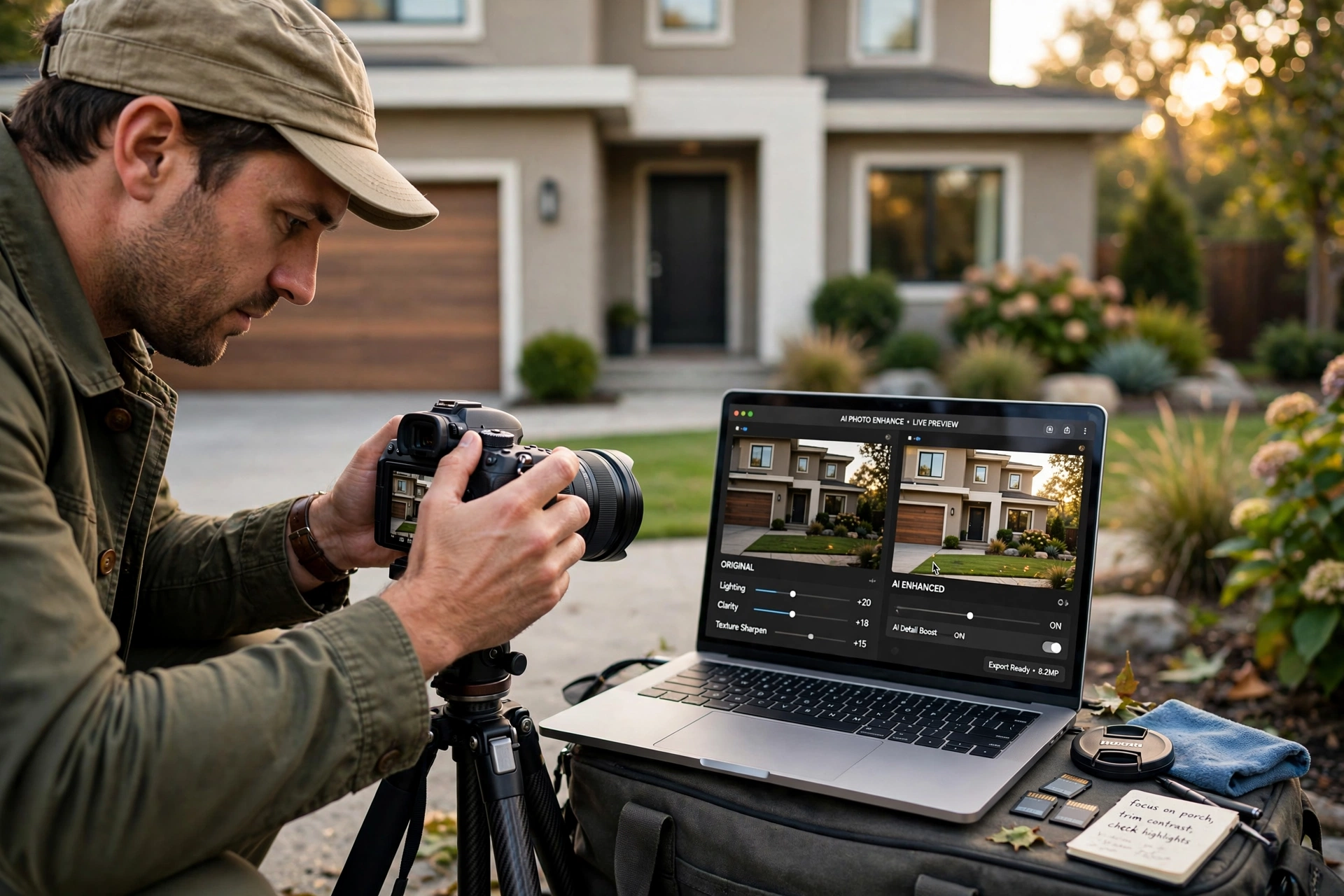
High-end real estate imagery is no longer a luxury; it is the baseline for survival in a digital-first market. When deciding which ai real estate photo enhancement tool is best, the answer depends on whether you prioritize raw speed, artistic control, or scalable automation. For most agents and photographers in 2026, the best choice is a specialized AI studio that combines computer vision with real estate-specific presets—such as sky replacement and virtual staging—rather than a generic image editor.
In my experience working with hundreds of property managers, the biggest mistake is choosing a tool based on "AI" as a buzzword. Many generic tools apply a global filter that blows out highlights or creates an "uncanny valley" effect where the room looks fake. The superior choice is always a tool that understands architectural geometry and lighting physics. For those scaling their business, a solution like Virtual Furniture Staging in Atlanta demonstrates how targeted AI enhancements can directly increase the perceived value of a listing.
Understanding the Mechanics of AI Real Estate Photo Enhancement
To choose the right tool, you must first understand that "AI enhancement" is not a single process but a suite of different technologies. Most professional platforms utilize a combination of Generative Adversarial Networks (GANs) and diffusion models to analyze a photo and "fill in" missing data or correct lighting anomalies.
📚
Definition
AI Real Estate Photo Enhancement is the use of machine learning algorithms and computer vision to automatically correct exposure, balance colors, replace overcast skies, and digitally stage furniture in property images to maximize buyer appeal.
When a tool performs a "day-to-dusk" conversion, it isn't just adding a blue filter. It is identifying the light sources in the image (the windows and lamps) and recalculating how those light sources would interact with a twilight environment. This requires a deep understanding of architectural photography. According to a recent report by Gartner, the integration of specialized computer vision in vertical markets—like real estate—has led to a 40% increase in production efficiency compared to using general-purpose AI tools.
The best tools separate "corrective" enhancement (removing a trash can from a backyard) from "creative" enhancement (adding a modern sofa to an empty room). When these two processes are handled by the same neural network, the results often look cohesive. However, if you use a cheap, generic tool, you'll notice "artifacts"—blurry edges around furniture or a sky that looks like a painting rather than a photograph. For professionals, this lack of realism is a liability that can lead to buyer distrust during a physical walkthrough.
Why High-Quality Image Enhancement Directly Impacts Your ROI
The psychological impact of a professional image cannot be overstated. In the current market, the first "showing" happens on a smartphone screen. If the photos are dim, cluttered, or grey, the buyer swipes past. Data shows that listings with high-quality, AI-enhanced visuals receive significantly more clicks and higher offer prices.
According to research from McKinsey, businesses that leverage AI-driven visual content see a measurable increase in customer engagement, as high-fidelity imagery reduces the cognitive load on the consumer, allowing them to visualize themselves in the space. In real estate, this translates to a shorter "Days on Market" (DOM) metric.
When we analyze the business impact, the numbers are clear:
- Increased Lead Volume: Enhanced photos typically generate 30% to 50% more inquiries on the Multiple Listing Service (MLS).
- Higher Perceived Value: Virtual staging and decluttering allow agents to present the "highest and best use" of a space, often justifying a higher asking price.
- Reduced Photography Costs: Instead of paying for a second shoot when the weather is bad, AI sky replacement allows you to get a "sunny day" look in seconds.
If you are operating in a competitive market, such as when using Virtual Furniture Staging in Miami, the difference between a "good" photo and an "AI-optimized" photo can be the difference between a bidding war and a stagnant listing. The risk of not acting is not just a loss of clicks; it is a loss of equity. A property that looks dated or dark in photos is often anchored to a lower price point in the buyer's mind before they even step foot on the property.
How to Implement AI Enhancements: A Professional Workflow
To get the best results, you shouldn't just upload a photo and hope for the best. There is a systematic approach to ai real estate photo enhancement that ensures the final product looks natural and trustworthy.
First, start with the "Corrective Layer." This involves adjusting the vertical lines (keystoning) and correcting the white balance. Many AI tools do this automatically, but you should always verify that the walls are perfectly vertical. Second, move to "Environmental Enhancement." This is where you handle sky replacement and grass restoration. A grey sky in a backyard photo can make a home feel depressing; replacing it with a soft blue sky can shift the entire mood of the listing.
Third, implement "Spatial Optimization." This is where RealVisionAI Blog - AI Real Estate Photography & Virtual Staging excels. Instead of spending thousands on physical furniture rentals, you use AI to virtually stage the room. You must choose a style—modern, traditional, or minimalist—that matches the target demographic of the neighborhood. For example, a luxury condo in a city center requires a different staging aesthetic than a suburban family home.
💡
Key Takeaway
The most effective AI workflow follows a "Correct $\rightarrow$ Enhance $\rightarrow$ Stage" sequence. By fixing technical errors before adding creative elements, you ensure the final image remains grounded in reality.
For those managing high volumes of properties, the manual process is impossible. This is why integrating a solution that delivers market-ready visuals in 12 seconds is a competitive necessity. Whether you are looking into Virtual Furniture Staging in Boston or managing rentals in the Midwest, the goal is to create a consistent visual brand across all your listings.
Comparing Your Options: Which Tool Should You Choose?
The market is flooded with "AI" tools, but they fall into three distinct categories. Choosing the wrong one can lead to wasted hours and unprofessional results.
| Option | Pros | Cons | Best For |
|---|---|---|---|
| Generic AI Editors (e.g., Canva, basic mobile apps) | Cheap, easy to access, fast for social media. | Poor architectural understanding, "plastic" look, no virtual staging. | Casual social media posts, non-professional listings. |
| Manual Professional Editing (Human Retouchers) | Highest level of artistic control, tailored to specific needs. | Extremely slow, expensive, difficult to scale. | Ultra-luxury estates ($5M+), architectural magazines. |
| Specialized AI Studios (RealVisionAI) | Instant results (12s), real estate-specific logic, scalable, integrated staging. | Requires an internet connection, slightly less "bespoke" than a human. | High-volume agents, property managers, professional photographers. |
Now, here's where it gets interesting: the gap between "manual" and "AI" is closing. In the past, you needed a human to mask out a window for a view replacement. Today, computer vision can identify a window frame with 99% accuracy. If you are focusing on growth, the "Specialized AI Studio" is the only logical choice because it provides the speed of software with the logic of a professional photographer.
If you're wondering about regional applications, consider how Virtual Furniture Staging in New Orleans requires specific attention to historic architectural details. A generic tool will ignore the crown molding or the unique floor plan, whereas a specialized AI tool recognizes these elements and stages around them, rather than over them.
Common Questions & Misconceptions
Most guides get this wrong by suggesting that "more AI is always better." In reality, over-processing is the fastest way to lose a buyer's trust.
Myth 1: AI staging is "dishonest" or misleading.
Some believe that adding furniture via AI is a form of deception. This is incorrect. Virtual staging is a visualization tool, much like a floor plan. The goal is to show the potential of a space. As long as you aren't removing structural defects (like a giant crack in the wall), enhancing the aesthetic appeal is a standard industry practice.
Myth 2: You can't get "realistic" lighting with AI.
Many agents still believe you need a photographer to return for a "golden hour" shoot. That said, modern AI can perform a daylight-to-dusk conversion that is indistinguishable from a real photo. By analyzing the light intensity and color temperature, the AI simulates the exact atmospheric conditions of sunset.
Myth 3: AI enhancement is only for high-end luxury homes.
This is a common mistake I see constantly. In fact, AI enhancement is more important for mid-range or fixer-upper homes. A home that needs work is harder to sell; AI decluttering and virtual staging help buyers overlook the current mess and see the future value. This is particularly effective when using Virtual Furniture Staging in Detroit to revitalize industrial or historic spaces.
Frequently Asked Questions
How long does it actually take to enhance a photo with AI?
Depending on the tool, the time varies wildly. Generic filters are instant but low-quality. Human retouchers take 24 to 48 hours. A specialized platform like RealVisionAI Blog - AI Real Estate Photography & Virtual Staging delivers market-ready results in approximately 12 seconds. This speed allows agents to upload photos immediately after a walkthrough, keeping the momentum of the listing high and reducing the window of time the property sits without professional imagery.
Will AI-enhanced photos look "fake" to a savvy buyer?
The "fake" look happens when there is a mismatch between the light source of the original photo and the added AI elements. For example, if a room is lit from the left but the virtual furniture has shadows casting to the left, the brain recognizes the error. Professional AI tools use computer vision to map the existing light sources and apply the same physics to the enhancements, ensuring the result looks natural and believable.
Can AI remove unwanted objects like old furniture or trash?
Yes, this is known as "object removal" or "decluttering." The AI analyzes the pixels surrounding the object and uses a process called "in-painting" to fill the void with a texture that matches the rest of the room. This is far more efficient than manual cloning in Photoshop. In my experience, decluttering a room via AI can increase a listing's appeal by 20% because it removes visual noise that distracts the buyer.
Is AI real estate photo enhancement expensive compared to a photographer?
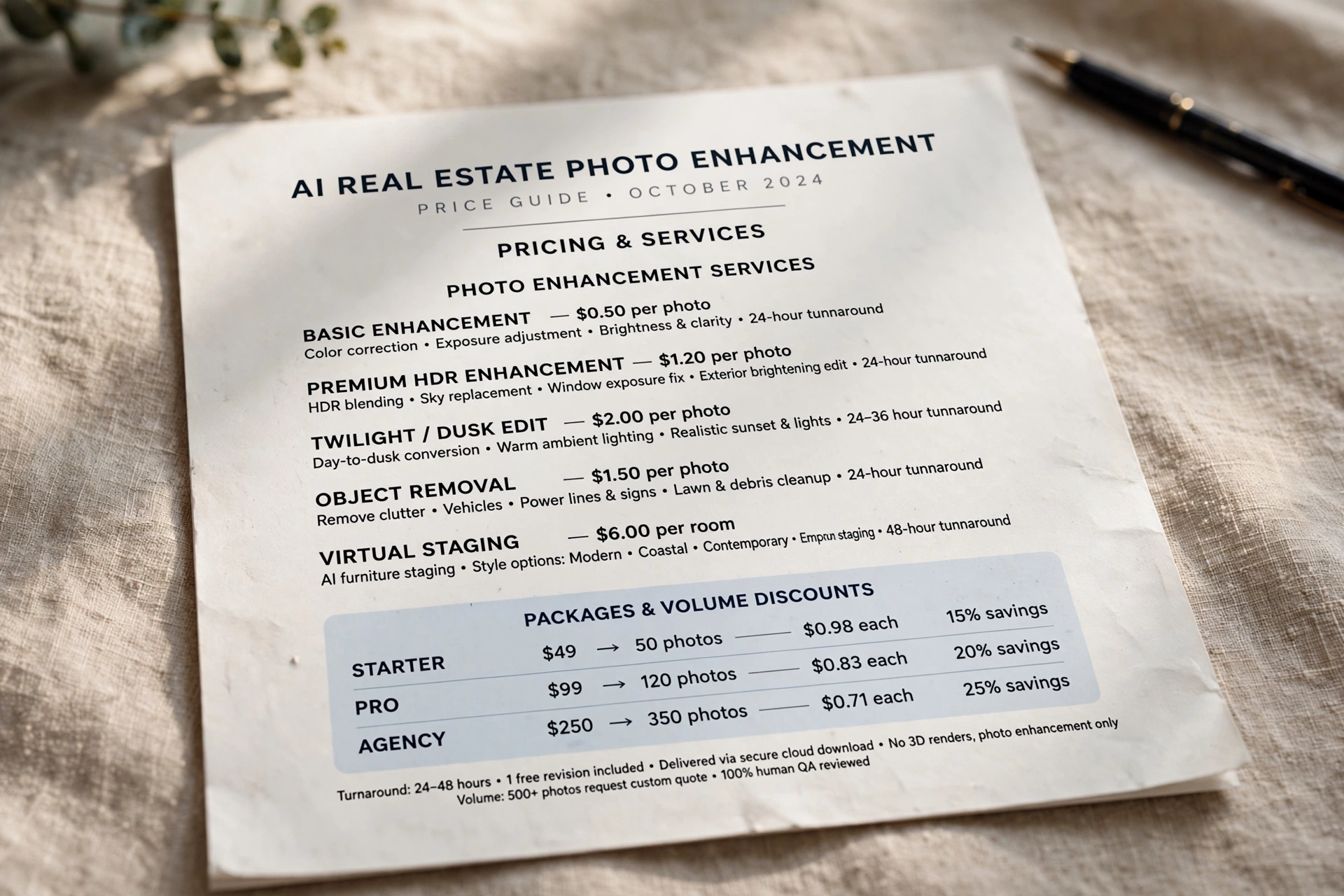
It is significantly more cost-effective. A professional photographer may charge hundreds of dollars per session, plus additional fees for retouching. AI enhancement allows you to take a high-quality photo with a modern smartphone and elevate it to a professional level for a fraction of the cost. When you factor in the time saved and the increased lead volume, the ROI is exponentially higher than traditional methods.
Does AI enhancement help with SEO and getting more views on Zillow or Redfin?
While AI doesn't change the metadata of the photo directly, it dramatically improves the "click-through rate" (CTR). Algorithms on platforms like Zillow and the Multiple Listing Service (MLS) often prioritize listings with high engagement. When more people click on your beautifully enhanced photos, the platform recognizes the listing as "high interest," which can lead to better organic placement in search results. For a deeper dive into scaling your visibility, explore Virtual Furniture Staging in Las Vegas.
Final Thoughts on AI Real Estate Photo Enhancement
Choosing the best ai real estate photo enhancement tool isn't about finding the most "powerful" software, but the most "contextual" one. You need a system that understands the difference between a kitchen and a bedroom and knows exactly how to light a living room to evoke a feeling of warmth and space.
The transition from manual editing to AI-driven studios is inevitable. Those who embrace the 12-second turnaround will outpace those who wait 48 hours for a retoucher. Whether you are optimizing properties via Virtual Furniture Staging in Nashville or managing a portfolio in the suburbs, the goal remains the same: eliminate friction between the buyer and the property.
To start transforming your listings today, visit RealVisionAI Blog - AI Real Estate Photography & Virtual Staging and experience the power of instant, professional visual enhancement.
Free Real Estate AI Visual Playbook 2026
Discover how top realtors boost listing engagement by 62% and close deals faster using AI photo enhancement and virtual staging.