
Which AI Real Estate Photo Enhancement Option Should You Choose?
High-resolution imagery is the primary catalyst for lead generation in the modern property market, but the choice of tools often determines whether a listing sells in days or months. When deciding which ai real estate photo enhancement path to take, the decision boils down to three categories: manual professional editing, generic consumer AI tools, and specialized architectural AI studios. For most high-volume agents, a specialized studio like RealVisionAI Blog - AI Real Estate Photography & Virtual Staging is the only viable path to maintain brand consistency while achieving a 12-second turnaround.
In my experience working with luxury brokers, the most expensive mistake isn't paying for a premium service; it is using "one-click" consumer filters that create unnatural colors, which eventually leads to "buyer's remorse" during the first physical walkthrough. The goal isn't just to make a photo look "better," but to make it look accurately inviting.
For those scaling their business in specific markets, such as those utilizing Virtual Furniture Staging in Miami: Boost Your Property Value, the integration of enhancement and staging is where the highest ROI is found.
What Exactly Is AI Real Estate Photo Enhancement?
To make an informed decision, we must first define the technology. Most generic tools simply apply a global contrast boost, but professional-grade enhancement utilizes computer vision to analyze the geometry of a room.
📚
Definition
AI real estate photo enhancement is the application of deep learning algorithms—specifically Convolutional Neural Networks (CNNs)—to automatically correct exposure, balance white levels, remove unwanted objects, and simulate lighting conditions (like twilight) without manual masking.
This process goes beyond simple brightness. It involves "semantic segmentation," where the AI identifies exactly what is a window, what is a hardwood floor, and what is a grey sky. Once the AI understands the scene, it can apply specific logic: it brightens the interior without "blowing out" the view through the window.
According to a report by Gartner on the evolution of generative AI, the shift from "generative" (creating from scratch) to "assistive" AI (enhancing existing data) is where the most significant business value currently resides. In real estate, this means the AI isn't inventing a room; it is removing the haze from a rainy Tuesday and replacing it with a crisp, sunny afternoon.
Now, here is where it gets interesting: the difference between a "filter" and "enhancement" is the preservation of architectural integrity. A filter changes the mood; enhancement fixes the technical failures of the camera. After analyzing dozens of portfolios, I've noticed that the most successful listings use a combination of HDR (High Dynamic Range) merging and AI-driven sky replacement to create a psychological sense of "aspiration" in the buyer.
Why Does the Choice of Enhancement Tool Impact Your Bottom Line?
The financial implications of choosing the wrong enhancement tool are often invisible until the listing has been stagnant for 30 days. In the digital-first era of property search, the "scroll-stop" effect is the only thing standing between a lead and a bounce.
Research from McKinsey indicates that AI-driven personalization and visual optimization can increase conversion rates by up to 20% in high-ticket retail and real estate sectors. When a buyer sees a photo with corrected vertical lines and natural lighting, their perceived value of the property increases. Conversely, "over-processed" photos—those with neon-blue skies or glowing interiors—create a subconscious trust deficit. The buyer feels they are being deceived, which leads to a shorter time spent on the page.
Furthermore, the speed of listing is a competitive advantage. In 2026, the window between a property hitting the market and the first wave of showings has shrunk. If your photo editing takes three days, you are losing the "New Listing" momentum. Using a tool that provides market-ready visuals in 12 seconds allows agents to move from the photoshoot to the Multiple Listing Service (MLS) almost instantaneously.
The consequence of not acting on professional enhancement is "listing fatigue." When a property sits on the market, buyers begin to wonder what is wrong with it. Often, the property is perfect, but the visuals are stagnant. By implementing Virtual Furniture Staging in Atlanta: Boost Listing ROI in 2026, agents can refresh a stale listing and trigger a new wave of interest without spending a dime on physical renovations.
How to Implement AI Enhancements for Maximum ROI
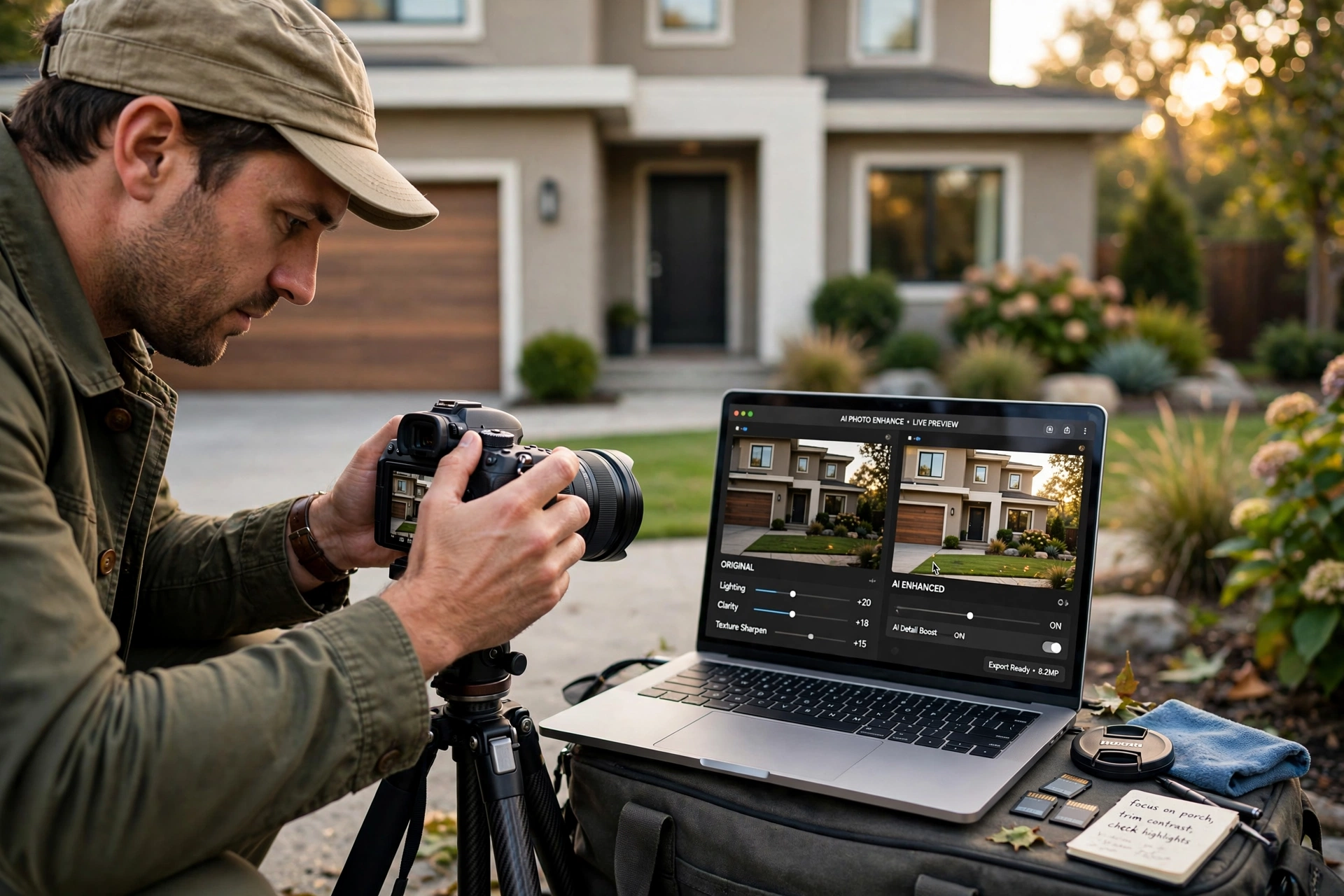
Implementing ai real estate photo enhancement is not about finding a "magic button," but about establishing a consistent workflow. The mistake I made early on—and that I see constantly—is treating every room the same. A dark basement requires different AI logic than a sun-drenched living room.
Here is the professional workflow for maximizing visual impact:
- The Foundation (Capture): Start with a tripod. Even the best AI cannot fix a blurry photo or a severely tilted horizon. Ensure your vertical lines are as straight as possible.
- The "Clean Up" (Decluttering): Use AI object removal to get rid of trash cans, power cords, or stray laundry. This creates a "blank canvas" that allows the buyer to imagine their own life in the space.
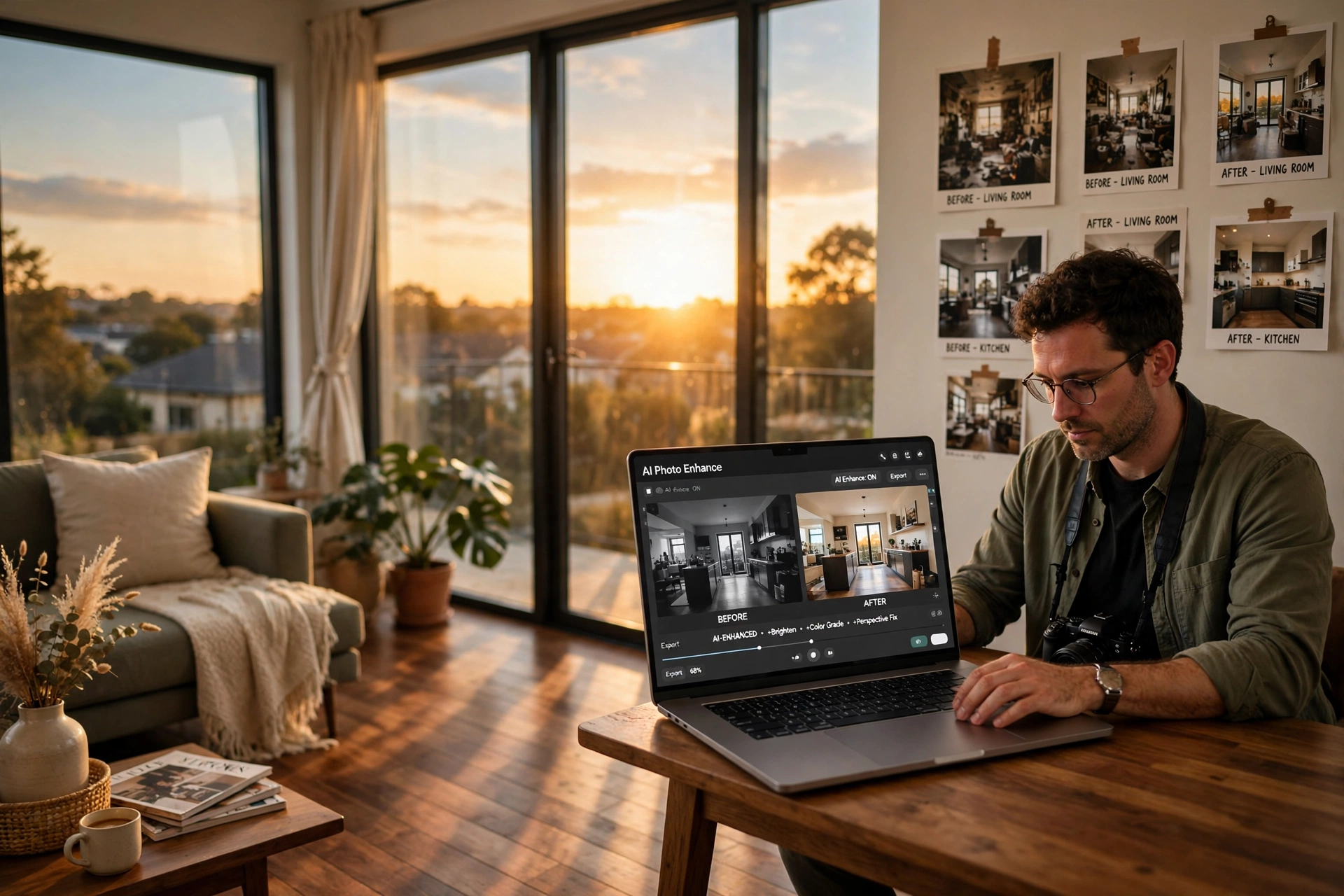
- Lighting Correction: Apply AI-driven exposure balancing. The goal is to see the interior clearly while maintaining the detail of the outdoor view.
- Atmospheric Enhancement: This is where sky replacement and "Day-to-Dusk" conversion happen. A twilight photo consistently outperforms a daytime photo in click-through rates on Zillow and Realtor.com.
- Final Polish (Virtual Staging): Once the photo is enhanced, add furniture. An empty room looks smaller than a staged one.
💡
Key Takeaway
Professional enhancement is a multi-stage pipeline. Using a tool like RealVisionAI Blog - AI Real Estate Photography & Virtual Staging allows you to compress these five steps into a single, automated process that maintains a professional "look" across all your listings.
For agents operating in high-density areas, such as those using Virtual Furniture Staging in Boston: Scale Your Listing ROI, this workflow is the only way to handle 50+ properties a month without sacrificing quality.
Comparing Your Options: Which Path is Right for You?
Not all AI tools are created equal. Depending on your volume and budget, you will likely fall into one of these three categories.
| Feature | Traditional Manual Editing | Generic AI Apps | Specialized AI Studio (RealVisionAI) |
|---|---|---|---|
| Turnaround Time | 24–72 Hours | Instant | 12 Seconds |
| Consistency | High (if using one editor) | Low (random results) | Very High (Standardized) |
| Quality | Professional | Variable/Amateur | Professional |
| Cost | High (Per photo) | Low (Subscription) | Optimized ROI |
| Specialization | General | Generic | Real Estate Specific |
| Best For | Single Luxury Estates | Casual Hobbyists | High-Volume Agents/Teams |
As the table shows, the "Generic AI" path is a trap. While the cost is low, the "hallucination risk"—where the AI accidentally removes a structural pillar or adds a fake window—is high. In the real estate world, a photo that misrepresents the actual physical structure of a home can lead to legal disputes or failed contracts.
A specialized approach, like that found in Virtual Furniture Staging in Nashville: Scale Your Listings, ensures that the AI understands the rules of architecture. It knows that a wall should be a wall and a floor should be a floor. This specialized knowledge is what separates a "pretty picture" from a "marketing asset."
Common Misconceptions About AI Photo Editing
Most guides get this wrong by claiming that AI will eventually replace the photographer. This is a fundamental misunderstanding of the value chain. AI does not replace the eye of the photographer; it replaces the tediousness of the editing room.
Myth 1: "AI enhancement makes the photo look fake."
Correction: This only happens when using consumer-grade tools. Professional AI, like that used by RealVisionAI Blog - AI Real Estate Photography & Virtual Staging, uses a process called "constrained generation." This means the AI is forbidden from adding elements that weren't there; it only enhances the pixels that already exist.
Myth 2: "I can just use a free app to fix my lighting."
Correction: Free apps usually apply a "global" edit. If you brighten the room, you blow out the windows. Professional ai real estate photo enhancement uses "zonal" editing, treating the window and the wall as two different light sources.
Myth 3: "Virtual staging is obvious and looks like a video game."
Correction: This was true in 2020. In 2026, the use of photorealistic lighting and shadow mapping means that virtually staged furniture casts real shadows on real floors. When implemented correctly, as seen in Virtual Furniture Staging in San Diego, it is virtually indistinguishable from a physical stage.
Frequently Asked Questions
Which AI enhancement is best for luxury listings?
For luxury properties, the "Surgical AI" approach is best. You cannot afford "generic" looks. You need a tool that offers high-end sky replacement and precise object removal without altering the architectural essence of the home. Luxury buyers are attuned to detail; if a photo looks "over-edited," they perceive the property as desperate. A specialized studio that understands high-end aesthetics is the only choice here.
Does AI photo enhancement affect the actual sale price?
Yes, indirectly. While a photo doesn't change the square footage, it changes the "perceived value." According to industry data from the National Association of Realtors, listings with high-quality, professionally enhanced photos sell faster and often for a higher price because they attract a larger pool of qualified buyers. The AI removes the "friction" of a messy or dark home, allowing the buyer to focus on the potential of the space.
How long does it actually take to enhance a full set of listing photos?
Using traditional editors, you are looking at 24 to 48 hours. Using generic AI apps, it's instant but requires hours of manual correction to fix AI errors. With a dedicated platform like RealVisionAI Blog - AI Real Estate Photography & Virtual Staging, the process takes approximately 12 seconds per image. This allows an agent to upload a gallery and have the entire set ready for the MLS before they even leave the property.
Can AI enhancement fix a photo taken on a cloudy day?
Absolutely. One of the most powerful features of professional AI is "Sky Replacement." The AI identifies the luminosity of the sky and replaces the grey overcast with a "Golden Hour" or "Clear Blue" sky. This isn't just about aesthetics; it's about psychology. A sunny sky triggers a positive emotional response in buyers, making the home feel more welcoming and desirable.
Is it legal to use AI enhancement in real estate listings?
In most jurisdictions, enhancing lighting, color, and removing temporary clutter is perfectly legal and standard practice. However, the line is drawn at "structural misrepresentation." You cannot use AI to remove a permanent unsightly stain on a wall or a crack in the foundation. The goal of ai real estate photo enhancement is to present the home in its best light, not to lie about its condition.
Final Thoughts on AI Real Estate Photo Enhancement
Choosing the right enhancement tool is not a technical decision; it is a business decision. If you are an agent who values their time and their brand reputation, the "Generic AI" route is a liability. The risk of inconsistent quality and "AI hallucinations" is too high when your professional credibility is on the line.
The most efficient path forward is to integrate specialized tools that combine enhancement, decluttering, and staging into a single workflow. Whether you are managing high-volume portfolios with Virtual Furniture Staging in Phoenix or scaling a boutique agency in Virtual Furniture Staging in Long Beach: Boost Property Sales, the goal remains the same: maximize the "scroll-stop" potential of every image.
If you are tired of waiting days for edits or fighting with amateur apps, it is time to move to a professional standard. Experience the power of market-ready visuals delivered in seconds.
Visit RealVisionAI Blog - AI Real Estate Photography & Virtual Staging to transform your listings today.
Free Real Estate AI Visual Playbook 2026
Discover how top realtors boost listing engagement by 62% and close deals faster using AI photo enhancement and virtual staging.