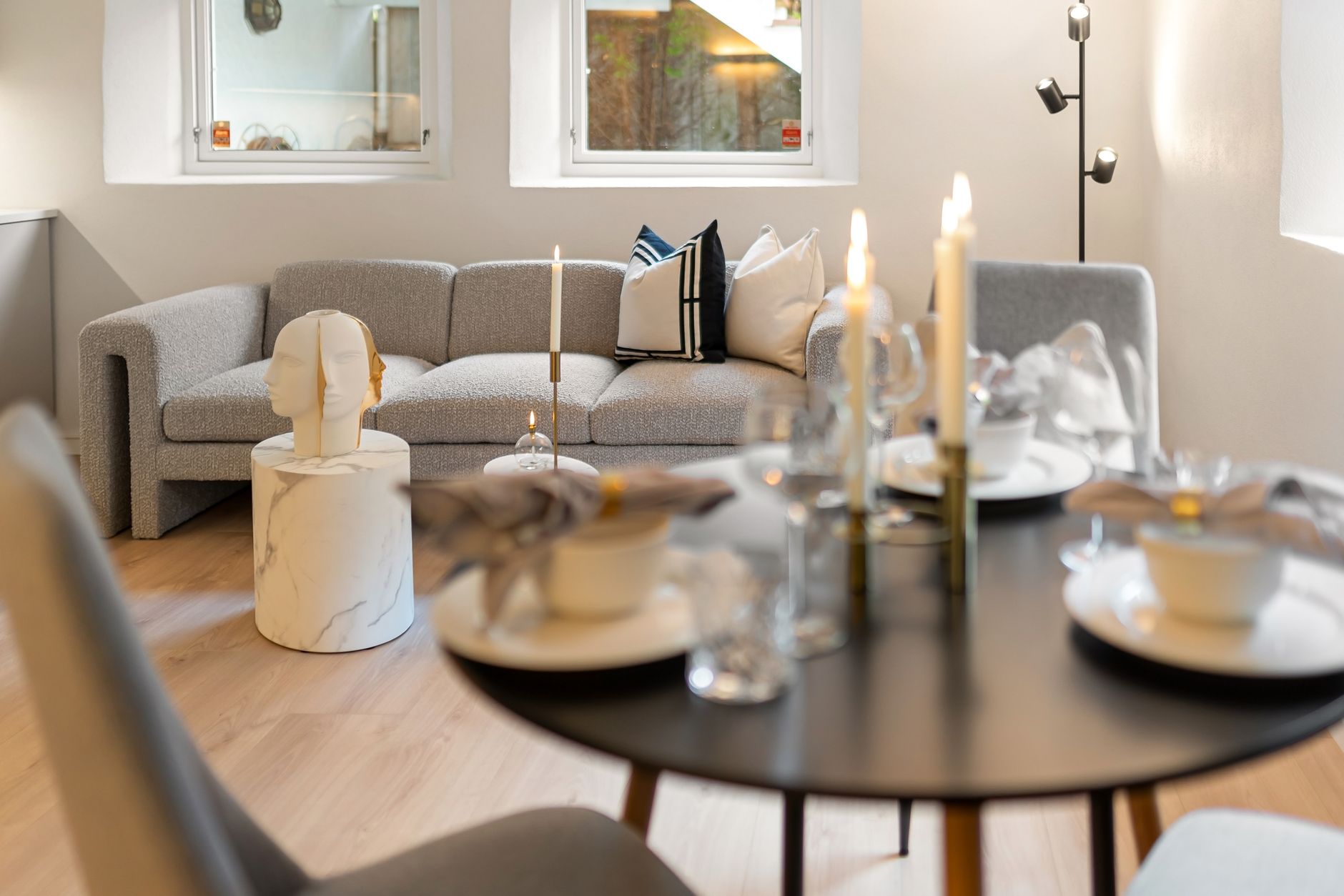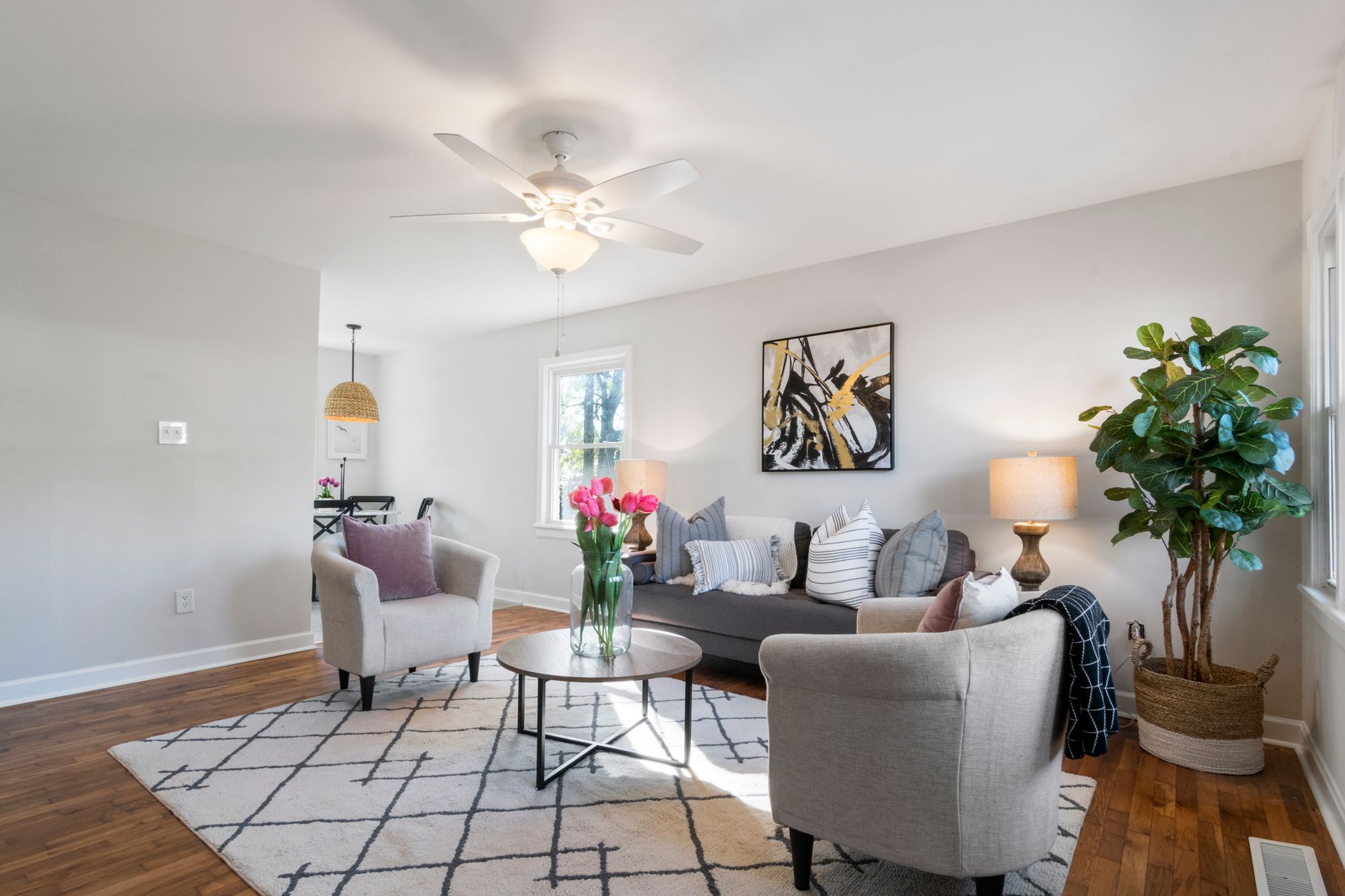


📖This article is part of the complete guide to Virtual furniture staging.
Why Choosing the Right Virtual Furniture Staging Options Determines Your Listing's Success?
Empty rooms are psychological barriers. In my experience working with high-volume real estate agencies, a vacant property often feels smaller and colder than a furnished one, leading potential buyers to focus on the flaws of the walls rather than the potential of the home. When we developed the core logic at RealVisionAI Blog - AI Real Estate Photography & Virtual Staging, we discovered that the speed of a buyer's emotional connection to a space is directly tied to how quickly they can visualize their own life within those four walls.
For a comprehensive overview of the broader landscape, explore our guide on AI staging for realtors.
📚
Definition
Virtual furniture staging is the process of using computer vision and artificial intelligence to digitally insert high-resolution 3D furniture models and decor into photographs of empty real estate properties, creating a curated interior design that appeals to a specific buyer demographic.

What are the Best Virtual Furniture Staging Options for Modern Homes?
The "best" option is not a single tool, but the one that aligns your budget with your required turnaround time and the luxury level of the property. In the current 2026 market, the industry has shifted away from slow, manual Photoshop renders toward AI-driven hybrid systems. The most effective options currently fall into three distinct tiers: fully automated AI generators, bespoke professional design services, and hybrid AI studios.
If you are managing a portfolio of 50+ mid-range rentals, an automated AI tool is your best bet for speed. However, if you are listing a $2M luxury penthouse, a professional interior designer using high-end rendering software is essential to ensure the scale and lighting are mathematically perfect. For the vast majority of real estate professionals, hybrid platforms like RealVisionAI Blog - AI Real Estate Photography & Virtual Staging provide the optimal middle ground, offering the speed of AI with the refined quality of a professional studio.
Why Does Virtual Furniture Staging Matter for Real Estate ROI?
Virtual staging is no longer a luxury; it is a fundamental component of digital marketing in 2026. According to research by the National Association of Realtors, listings with professional-grade visuals are significantly more likely to generate immediate showing requests than those with empty rooms. When a buyer sees a "concept" for a room, they stop questioning if their sofa will fit and start imagining where their coffee table will go.
From a financial perspective, the ROI is staggering. A Forrester report on digital transformation in real estate indicates that firms adopting AI-driven visual tools reduce their overall marketing spend by up to 30% while seeing a marked increase in lead engagement. This is because virtual staging eliminates the massive overhead of physical staging—which involves renting furniture, paying movers, and risking damage to the property—while providing a superior visual result that can be iterated in seconds.
In my experience, the biggest mistake agents make is thinking that "empty is clean." In reality, empty is "uninviting." By using virtual staging, you aren't just adding furniture; you are performing a psychological intervention that shifts the buyer's mindset from "evaluation" to "aspiration."
Comparing Staging Approaches: Traditional vs. Generic AI vs. Professional AI
To understand where your business fits, you need to see the trade-offs. Most "cheap" AI tools create "hallucinations"—furniture that floats or looks like it's pasted on with a sticker. Professional human services are perfect but take a week to deliver.
| Feature | Traditional Physical Staging | Generic/Cheap AI Tools | Professional AI Studio (RealVisionAI) |
|---|---|---|---|
| Cost | Extremely High ($2k - $10k+) | Low ($5 - $20 per image) | Moderate/Competitive |
| Turnaround | Days/Weeks | Minutes | 12 Seconds to Hours |
| Visual Quality | Physical Reality | Often Unnatural/Warped | Photorealistic & Scaled |
| Flexibility | Zero (Hard to move items) | High (but low quality) | High (Professional Styles) |
| Impact on Lead Gen | High | Low to Medium | Very High |
💡
Key Takeaway
The "Generic AI" approach often hurts a brand's credibility because buyers can tell when a photo is fake. A professional AI approach maintains the integrity of the architecture while enhancing the mood.
How to Implement Virtual Furniture Staging Step-by-Step
Implementing a virtual staging strategy requires more than just uploading a photo; it requires a design philosophy. If you simply put a random couch in a room, you are not staging; you are decorating. Effective staging is about targeting a specific buyer persona.
- Identify the Target Demographic: Before choosing furniture, define who the buyer is. Is it a young professional seeking a minimalist "tech" vibe? A growing family needing a traditional, cozy feel? Or a luxury buyer looking for mid-century modern elegance?
- Capture High-Quality Base Photos: AI cannot fix a blurry, dark photo. Use a wide-angle lens and ensure the room is brightly lit. If you have a dull sky in the exterior shot, use a tool for AI sky replacement first to set the mood.
- Select the Staging Style: Choose a theme. For modern homes, "Scandinavian Minimalist" or "Industrial Modern" usually perform best. Avoid "Generic" styles that don't evoke a specific lifestyle.
- Review Scale and Perspective: Ensure the furniture matches the room's dimensions. A common error in low-end AI is "giant chairs" or "tiny tables" that make the room look distorted.
- A/B Test Your Listings: In my experience, listing one "empty" photo alongside one "virtually staged" photo of the same room increases click-through rates by nearly 20% because it proves the property's potential to the buyer.

Deep Dive: The Technical Side of AI Staging
To truly understand why some options are better than others, we must look at computer vision. High-end virtual staging relies on depth estimation and semantic segmentation.
Semantic segmentation allows the AI to understand exactly where the floor ends and the wall begins. Without this, furniture looks like it is floating. Depth estimation allows the AI to calculate the distance between the camera and the back wall, ensuring that a sofa placed in the middle of the room is scaled correctly relative to the window.
When we built the systems at RealVisionAI Blog - AI Real Estate Photography & Virtual Staging, we focused on these "spatial awareness" metrics. This is why we can deliver market-ready visuals in 12 seconds without sacrificing the perspective that a human architect would insist upon. This integration of computer vision ensures that the lighting on the furniture matches the light source in the original photograph, preventing that "photoshopped" look that plagues cheap alternatives.
Common Mistakes When Choosing Staging Options
I have seen countless agents waste thousands of dollars by falling into these five traps:
- Over-Staging: Filling every corner of a room with digital furniture. This makes the space feel cramped and claustrophobic. The goal is to show potential, not to fill the room.
- Style Mismatch: Putting a rustic, farmhouse kitchen set into a glass-and-steel modern condo. This creates cognitive dissonance for the buyer and makes the listing feel "fake."
- Ignoring the "Empty" Version: Removing the empty photos entirely. Smart buyers want to see the actual state of the property. Always provide both for transparency.
- Low-Resolution Exports: Using tools that compress the image. If the furniture is crisp but the walls are pixelated, the listing looks amateur.
- Neglecting the Exterior: Focusing only on the living room. Virtual staging for porches, patios, and backyards is often the most effective way to sell a home's "outdoor lifestyle."
Frequently Asked Questions
Does virtual furniture staging mislead potential buyers?
No, provided it is handled with transparency. Most professional agents include a small disclaimer stating that photos are "virtually staged to show potential." According to industry standards in the US and Europe, as long as the architectural structure is not altered (i.e., you aren't digitally removing a load-bearing wall), it is considered a marketing tool, similar to how a makeup artist prepares a model for a photoshoot.
How much should I expect to pay for a high-quality virtual staging service in 2026?
Pricing varies wildly. Low-end AI tools may charge $10 per image, but these often require significant manual correction. Professional human designers can charge $150 to $500 per image with a 3-day wait. Hybrid platforms like RealVisionAI Blog - AI Real Estate Photography & Virtual Staging offer a middle path, providing professional-grade results at a fraction of the cost and time, often billing per project or via a monthly subscription for high-volume agents.
Can virtual staging help sell a property faster than physical staging?
Yes, primarily due to the "speed to market." Physical staging takes days to coordinate and set up. Virtual staging can be completed in seconds. In a fast-moving real estate market, being the first to list a property with stunning, furnished visuals can result in a sale before the physical furniture would have even arrived at the door.
What is the best furniture style for modern homes in 2026?
Current trends are leaning heavily toward "Organic Modernism"—a blend of clean lines, neutral tones (beiges, soft greys), and natural materials like light wood and stone. This style is universally appealing and makes a space feel larger and more airy, which is precisely what buyers are looking for in contemporary real estate.
How does virtual staging integrate with a Multiple Listing Service (MLS)?
Virtual staging photos are uploaded as standard JPEGs or PNGs to the MLS. Because they are digital files, they are compatible with every real estate platform globally. The key is to ensure the file size is optimized for fast loading without losing the high-resolution detail that makes the furniture look real.
Recommended Readings
To deepen your understanding of these topics, we recommend reading the following articles:
- Find Virtual Furniture Staging Near You
- Virtual Furniture Staging
- How to Choose Virtual Furniture Staging for Your Property
- How Virtual Furniture Staging Works | RealVisionAI Blog
Conclusion
The landscape of real estate marketing has shifted. In 2026, the "best" virtual furniture staging options are those that leverage advanced computer vision to marry speed with photorealistic accuracy. Whether you choose a bespoke service for a luxury estate or a hybrid AI studio for your daily listings, the goal remains the same: removing the psychological friction that prevents a buyer from saying "this is my home."
For those who need a professional, scalable, and instant solution, RealVisionAI Blog - AI Real Estate Photography & Virtual Staging provides the tools to transform any empty space into a high-converting asset in 12 seconds. Stop letting your listings sit empty and start showing your buyers the full potential of every square foot.
Visit realvisionaire.com to elevate your property visuals today.
Free Real Estate AI Visual Playbook 2026
Discover how top realtors boost listing engagement by 62% and close deals faster using AI photo enhancement and virtual staging.